



Latest Version
September 13, 2026
Amanotes Pte. Ltd.
Music
iOS
0
Report a Problem
More About :game
The game combines music, reflexes, color matching and fast movement into a simple format that is easy to learn but becomes increasingly challenging. You can collect coins and gift boxes along the road while progressing through levels with different music and themes.
What Is Dancing Road Color Match & Hop?
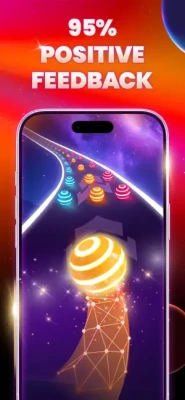
Dancing Road Color Match & Hop is a music-based arcade game developed by Amanotes Pte. Ltd. The App Store lists it in the Music category and describes it as a rolling-ball rhythm experience with color matching at its core.
The basic idea is straightforward: control the ball, match the correct color, stay on the road and keep moving with the music.
What makes it more challenging is that the ball can suddenly change color. You need to recognize the new color and quickly move toward the correct matching ball while avoiding the wrong ones.
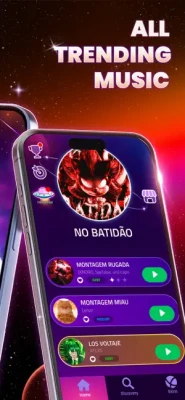
The game also features music from several styles, including piano, guitar, pop, K-pop, hip-hop, rock and EDM.
Main Gameplay Features
Color Matching
Color matching is the central mechanic.
Your ball needs to connect with another ball of the same color. Choosing the wrong color can end your run, so recognizing colors quickly is one of the most important skills to develop.
Rhythm-Based Movement
The road is synchronized with music, turning ordinary movement into a rhythm challenge.
Instead of simply watching where the ball is going, you can use the beat to anticipate the timing of upcoming movements.
Ball Color Changes
The ball can change color during a run. These sudden changes are designed to test your visual reaction and coordination.
Coins and Gift Boxes
Coins and gift boxes appear along the road. Collecting them adds another objective beyond simply surviving the level and reaching the finish.
Multiple Levels
Dancing Road features multiple levels with increasing difficulty and individual themes or stories.
Different Music Genres
The game includes a variety of musical styles, giving different levels a different atmosphere. The current store description mentions piano, guitar, pop, K-pop, hip-hop, rock and EDM.
Practice Mode
A practice mode is available with hold-and-drag controls, giving players a way to become comfortable with movement before tackling harder sections.
How to Play Dancing Road
The basic gameplay loop is easy to understand:
- Start a level and listen to the music.
- Watch the color of your ball.
- Look for a matching ball ahead.
- Move toward the matching color.
- Avoid balls with the wrong color.
- Collect coins and gift boxes when it is safe.
- React immediately when your ball changes color.
- Continue along the road and complete the level.
The controls are simple, but success depends heavily on timing, visual recognition and quick decisions.
Complete Dancing Road Strategy Guide
1. Focus on Color Before Collectibles
Coins and gift boxes are tempting, but staying alive should always come first.
If collecting a coin forces you toward the wrong-colored ball, ignore the collectible.
A completed level is usually more valuable than a risky collection attempt.
2. Watch for Color Changes
One of the biggest challenges is the sudden change in your ball's color.
Don't immediately move based on where you were heading before the color change.
Instead:
New color → locate matching ball → choose your path → move.
This simple mental sequence can prevent many unnecessary mistakes.
3. Look Farther Down the Road
Beginners often focus on the ball directly in front of them.
Try to scan farther ahead.
Seeing several upcoming options gives you more time to decide where to move, especially when the road becomes crowded.
4. Don't Make Panic Movements
A sudden color change can make you want to swipe immediately.
That reaction is often what causes mistakes.
Take a fraction of a second to identify the correct color before committing to the movement.
5. Use the Music as a Timing Cue
The rhythm can help you anticipate movement.
Instead of treating the music as background noise, listen for the beat and use it to establish a consistent timing pattern.
With practice, your eyes and ears begin working together.
6. Keep Your Movements Controlled
Large movements can make it harder to line up with the correct ball.
Use smooth, deliberate movement whenever possible.
This is especially important when two or more matching opportunities are close together.
7. Learn the Level Pattern
If you repeatedly fail at the same location, don't simply replay the level in exactly the same way.
Remember what caused the mistake.
Was it:
- A sudden color change?
- A difficult turn?
- Too many balls?
- A collectible placed near danger?
- A timing problem?
Once you know the cause, you can prepare for it on the next attempt.
8. Prioritize Survival Over Coins
Coins are useful, but they shouldn't control your route.
A good player knows when a collectible is safe and when it is a distraction.
If the route toward a coin puts you near an incorrect color, stay on the safer path.
9. Practice Difficult Sections
When a particular sequence repeatedly causes failure, focus on that section rather than worrying about the entire level.
The goal is to turn an unfamiliar sequence into a predictable one.
10. Stay Relaxed During Faster Sections
As the difficulty increases, your natural reaction may be to make faster and larger movements.
Try the opposite.
Stay controlled and let your eyes identify the correct target before moving.
Accuracy becomes more important as the pace increases.
Advanced Tips and Tricks
Scan From Left to Right
When several colored balls appear, quickly scan the road rather than staring at a single position.
This helps you recognize the matching target sooner.
Anticipate Before the Color Changes
If you notice that the game frequently places a color change before a difficult section, prepare yourself mentally.
Don't move early, but be ready to react.
Separate Rhythm From Panic
Fast music doesn't necessarily mean you should make random fast movements.
The music establishes the rhythm, while the color determines your target.
Use both pieces of information together.
Don't Chase a Bad Route
If you realize that you've started moving toward the wrong side, don't keep forcing the movement simply because you already committed to it.
Correct your position as early as possible.
Replay Levels for Consistency
Completing a level once is different from being able to complete it consistently.
Replay difficult levels until the important transitions become familiar.
How to Collect More Coins
Coins are secondary objectives, so the safest approach is to collect them when they naturally fit your route.
Safe Collection
If a coin is directly along the correct-color path, collect it.
Risky Collection
If you need to make a sharp movement toward a coin while your ball is heading toward a different color, prioritize survival.
Best Strategy
Think of coins as bonuses rather than requirements.
This keeps your main objective clear: stay on the correct path and finish the level.
How to Handle Sudden Color Changes
Color changes are one of the most important mechanics in Dancing Road.
When the ball changes:
Stop thinking about the previous target.
Immediately identify the new color and search for the corresponding ball.
Don't assume that the next target will be in the same position as the previous one.
The faster you develop this habit, the more comfortable the harder sections become.
Common Mistakes to Avoid
Mistake 1: Watching Only the Ball
The ball shows your current position, but the road ahead tells you what to do next.
Mistake 2: Ignoring Color Changes
A previously correct route can become completely wrong after the ball changes color.
Mistake 3: Chasing Every Coin
Collectibles are not worth sacrificing a run.
Mistake 4: Moving Too Early
Reacting before you clearly identify the target can send the ball toward the wrong color.
Mistake 5: Making Huge Swipes
Overcorrection can be just as dangerous as under-correction.
Mistake 6: Ignoring the Music
The rhythm provides useful timing information, especially after you've become familiar with a song.
Mistake 7: Repeating the Same Failed Movement
If you repeatedly fail at one section, change your approach instead of simply playing it faster.
Best Beginner Strategy
If you're new to Dancing Road Color Match & Hop, use this simple progression:
First: Learn the movement.
Second: Concentrate on matching colors.
Third: Start using the music for timing.
Fourth: Add coins and gift boxes when they're safe.
Finally: Practice difficult levels until your movements become automatic.
This prevents you from trying to master every mechanic at the same time.
Music and Soundtrack
Music is one of the defining elements of Dancing Road.
The current App Store description highlights several genres, including piano, guitar, pop, K-pop, hip-hop, rock and EDM. It also mentions frequently updated songs and artists such as Charlie Puth, Alan Walker and Sia.
The music isn't simply decoration. It is integrated into the gameplay, giving the road a rhythmic flow and helping players anticipate movement.
Graphics and Visual Style
Dancing Road uses bright colors and a visually energetic presentation designed around the music.
The combination of colored balls, moving roads, themed backgrounds and rhythm effects gives each run a lively arcade feel.
The visual simplicity also makes the color-matching mechanic easy to understand at a glance.
Controls
The game is designed around straightforward movement rather than complicated controls.
The App Store specifically describes a practice mode using hold-and-drag controls, allowing players to become familiar with guiding the ball.
The simplicity of the controls makes the game accessible, but the challenge comes from deciding when and where to move.
Difficulty Progression
Dancing Road starts with an accessible concept and gradually introduces more demanding situations.
Easy
Basic color matching and slower movement give beginners time to understand the mechanic.
Medium
Color changes and more complicated paths require greater attention.
Hard
Fast sequences, sudden changes and limited reaction time test visual coordination and rhythm.
The official listing confirms that the game includes multiple levels with increasing difficulty.
Platforms and Compatibility
The current U.S. App Store listing supports iPhone and iPad and requires iOS/iPadOS 15.0 or later. It is free with advertising and optional in-app purchases.
Google Play currently lists Dancing Road Color Balls Match for Android and Windows. The listing reports 100M+ downloads, 775K reviews and an update dated August 27, 2026.
In-App Purchases
The App Store listing identifies advertising and optional purchases. Current U.S. prices shown include several VIP options, All Access, diamond packages and a 24-hour infinite-lives purchase.
The game can therefore be played without purchasing premium content, while optional purchases provide additional features or resources.
Is Dancing Road Color Match & Hop Worth Playing?
Yes, especially if you enjoy casual rhythm games that combine music with quick visual decisions.
The game's strongest feature is the combination of rhythm and color matching. Many music games concentrate primarily on tapping notes, while Dancing Road adds a moving ball and changing colors to create a more active challenge.
Its simple controls also make it easy to pick up for a short session, while increasingly difficult levels give experienced players a reason to keep practicing.
The main drawbacks are the advertising and optional purchases, while the large amount of content can make the experience feel more focused on repeated play than traditional story-driven gaming.
Pros and Cons
Pros
- Simple controls
- Colorful presentation
- Rhythm-based gameplay
- Multiple music genres
- Increasing level difficulty
- Coins and gift boxes to collect
- Practice mode
- Easy to learn
- Challenging enough for repeated play
- Available on multiple platforms
Cons
- Contains advertising
- Optional in-app purchases
- Fast sections can be difficult for beginners
- Sudden color changes can be unforgiving
- Some collectibles require risky movement
Frequently Asked Questions
What is Dancing Road Color Match & Hop?
It is a rhythm-based color-matching game where players guide a rolling ball along a music road and match it with balls of the same color.
Who developed Dancing Road?
Dancing Road was developed by Amanotes Pte. Ltd.
Is Dancing Road free?
Yes. The game is free to download, although it contains advertising and optional in-app purchases.
How does the color matching work?
You guide your ball toward another ball with the same color. If your ball changes color, you need to quickly identify a new matching target.
Does Dancing Road have music?
Yes. Music is a central part of the game, with genres including pop, K-pop, hip-hop, rock, EDM, piano and guitar.
How do I get better at Dancing Road?
Focus on color recognition first, then use the music as a timing cue. Look ahead, make controlled movements and practice difficult sections repeatedly.
How do I collect more coins?
Collect coins when they are safely positioned along your correct-color route. Don't risk the entire run just to collect one coin.
What should I do when the ball changes color?
Immediately identify the new color and search for a matching ball. Don't continue following your previous target.
Is Dancing Road difficult?
The basic controls are easy, but later levels become more challenging because of faster movement, color changes and more demanding road patterns.
Is Dancing Road available on Android?
Yes. Google Play currently lists Dancing Road Color Balls Match for Android and Windows and reports more than 100 million downloads.
Can I play Dancing Road on iPhone?
Yes. The current App Store listing supports iPhone and requires iOS 15.0 or later.
Does Dancing Road have a practice mode?
Yes. The App Store description specifically mentions a practice mode using hold-and-drag controls.
Final Verdict
Dancing Road Color Match & Hop takes the familiar idea of a music game and combines it with a fast-moving color-matching challenge.
The objective is simple: follow the rhythm, guide the ball and match the correct colors. However, sudden color changes, increasingly difficult levels and collectible items create enough pressure to make the later stages surprisingly demanding.
The best way to play is to look ahead, identify colors quickly, listen to the rhythm and avoid unnecessary risks.
If you enjoy rhythm games, music games, color matching games, rolling ball games and casual arcade challenges, Dancing Road is a strong choice for quick sessions and repeated play.
Rate the Game
User Reviews














Popular Games


















 Android
 iOS
iOS Windows
 Xbox
Xbox