




Latest Version
September 13, 2026
Amanotes Pte. Ltd.
Music
iOS
0
Report a Problem
More About :game
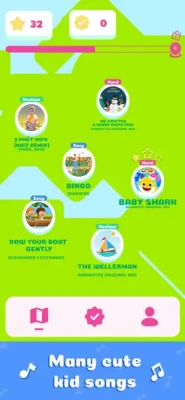
The game combines simple one-touch gameplay with bright animations and an easy-to-understand interface, making it accessible to children who are new to rhythm games. Its music library includes nursery rhymes, classical pieces and modern songs adapted for a younger audience.
What Is Magic Tiles Kid?
Magic Tiles Kid takes the familiar falling-tile formula of piano rhythm games and gives it a child-friendly presentation.
As musical tiles move down the screen, the player needs to tap the correct tiles at the right moment. Successful taps keep the song moving, while missed notes can interrupt the run.
The concept is deliberately simple: watch, listen and tap to the beat.
That simplicity makes it suitable for younger players while still giving them an opportunity to improve their timing and coordination as they play.
The App Store currently lists Magic Tiles Kid as a free Music game from Amanotes Pte. Ltd., with a 4+ age rating.
Main Features of Magic Tiles Kid
Easy Piano Tile Gameplay
The core controls are extremely straightforward.
Colorful tiles appear on the screen and the player taps them according to the rhythm. There is no complicated control scheme to learn, making it possible for a child to understand the basic idea after only a short introduction.
The real challenge is developing accurate timing.
Kid-Friendly Music
Music is at the center of the experience.
The App Store describes a selection that includes:
- Nursery rhymes
- Classical music
- Modern songs
- Catchy tunes adapted for younger players
This gives children different musical styles to explore while keeping the gameplay familiar.
Colorful Graphics and Animations
The game uses bright visual effects and animated tiles to keep the screen engaging.
The colorful presentation also makes it easier for younger players to understand where they should tap.
Rhythm and Coordination
Beyond entertainment, the game is designed around skills such as:
- Timing
- Rhythm recognition
- Hand-eye coordination
- Musical exploration
- Reaction speed
The developer specifically presents these as potential benefits of playing the game.
Simple Interface
Magic Tiles Kid is designed so that children can concentrate on the music and tiles rather than complicated menus or controls.
That simplicity is one of its biggest strengths for younger players.
How to Play Magic Tiles Kid
The basic gameplay can be broken down into a few steps:
- Start a song.
- Watch the tiles moving toward the tapping area.
- Listen to the rhythm.
- Tap each tile at the correct moment.
- Maintain your timing as the song continues.
- Avoid unnecessary taps.
- Practice songs that give you trouble.
The objective isn't simply to tap quickly.
The goal is to tap accurately.
Full Magic Tiles Kid Strategy Guide
1. Start Slowly
Don't try to play as quickly as possible when learning.
The most important skill is recognizing when a tile should be tapped.
Start by concentrating on accuracy. Speed will naturally improve as the rhythm becomes familiar.
2. Listen to the Music
Don't rely entirely on your eyes.
The soundtrack provides an important timing cue. Encourage players to listen for the beat and connect what they hear with the movement of the tiles.
Once the rhythm becomes familiar, incoming notes become easier to anticipate.
3. Watch the Lower Part of the Screen
A common beginner mistake is watching the tiles too early.
Instead, keep your attention near the point where the tiles need to be tapped.
This reduces the temptation to react prematurely.
4. Use Both Eyes and Ears
The best rhythm-game players combine visual and audio information.
Think of the process as:
See the tile → hear the beat → tap at the right moment.
With practice, these three actions become almost automatic.
5. Don't Panic After Missing a Note
Missing one tile isn't a reason to immediately give up.
Stay focused on the next note.
One mistake can easily turn into several if you become distracted by what just happened.
The better approach is:
Miss → recover → listen → continue.
6. Learn the Song's Pattern
Songs often contain repeating musical patterns.
After playing the same track several times, you may begin to recognize when groups of tiles are coming.
This allows you to prepare rather than simply react.
7. Focus on Accuracy Before Speed
Fast tapping isn't useful if the timing is wrong.
A player who taps fewer notes accurately can make better progress than someone who taps rapidly without following the rhythm.
Accuracy should always come first.
8. Practice Difficult Songs
If a particular song is challenging, don't treat failure as wasted time.
Every attempt teaches you something about:
- The rhythm
- Tile spacing
- Timing
- Repeated patterns
- Difficult sections
Use those observations during the next attempt.
9. Keep Your Hands Comfortable
For younger players, comfort matters.
Avoid gripping the device too tightly and keep the playing position stable. A comfortable posture makes it easier to make small, precise taps.
10. Take Breaks
Because Magic Tiles Kid is designed for children, short sessions can be more enjoyable than playing continuously.
If concentration starts dropping, take a break and return later.
A fresh attempt often produces better timing than repeated frustrated attempts.
Advanced Piano Tile Tips
Follow the Beat
Try to feel the rhythm instead of treating every tile as an isolated object.
Don't Chase the Tiles
Keep your attention near the tapping area instead of constantly moving your eyes toward the top of the screen.
Anticipate Patterns
If you recognize a repeating musical sequence, prepare for the next group of tiles.
Keep Your Taps Controlled
Small, accurate taps are generally more useful than large or frantic movements.
Learn From Mistakes
When a note is missed, identify why:
- Too early?
- Too late?
- Didn't see the tile?
- Lost the rhythm?
- Became distracted?
Knowing the reason makes the next attempt more productive.
Magic Tiles Kid for Younger Players
One of the main differences between Magic Tiles Kid and many conventional piano-tile games is its intended audience.
The App Store specifically describes it as a rhythm game designed for children and gives it an age rating of 4+. It is also listed under Apple's Made for Ages 0–5 classification.
The interface uses bright colors and simple mechanics, while the music library is designed around songs considered appropriate for younger players.
This makes the game particularly suited to children who are beginning to experiment with rhythm-based mobile games.
Educational Value
Magic Tiles Kid is primarily an entertainment game, but its gameplay naturally involves several skills.
Rhythm
Players need to recognize the timing of musical notes and respond to the beat.
Hand-Eye Coordination
The player watches moving tiles while simultaneously controlling taps.
Timing
Successful gameplay depends on performing an action at the right moment rather than simply reacting as quickly as possible.
Musical Exploration
The variety of songs gives children an opportunity to hear different styles of music while interacting with them.
The developer specifically highlights rhythm, coordination and musical exploration in the App Store description.
Music Library
The current description says the game includes several categories of music, including nursery rhymes, classical pieces and modern hits adapted for a younger audience.
That variety helps prevent the experience from feeling like the same song repeated with different tile patterns.
The music is also important for learning the game's rhythm because familiar melodies can make timing easier to understand.
Difficulty and Progression
Magic Tiles Kid is designed to be accessible, but that doesn't mean every section will feel equally easy.
The developer's version 1.1 update specifically mentioned making the early levels easier and preparing Christmas songs.
For a young player, the most useful approach is gradual improvement rather than trying to master everything immediately.
Start with songs that feel comfortable, then move toward more challenging tracks as timing improves.
Best Strategy for Beginners
If you're introducing Magic Tiles Kid to a child, this is a good progression:
First Session
Learn how the falling tiles work.
Second Session
Concentrate on tapping in time with the music.
Third Session
Try to complete songs with fewer mistakes.
Later Sessions
Work on recognizing patterns and improving timing.
This approach keeps the game enjoyable while allowing skills to develop naturally.
Parents' Perspective
Magic Tiles Kid is clearly designed with younger players in mind, and the App Store listing describes its advertising as curated for kids.
However, parents should still be aware that the game contains advertising. One US App Store reviewer reported being frustrated by the frequency of advertisements after mistakes, while another reviewer praised the selection of music for young players. These are individual experiences, but they are useful context when deciding whether the game suits a particular child.
The current US App Store listing shows only 3 ratings, so the overall 2.3/5 rating should be treated cautiously because the sample is very small.
Is Magic Tiles Kid Safe for Children?
The App Store currently assigns Magic Tiles Kid a 4+ rating and lists it under Music. The developer describes the experience as a safe environment for children and says advertising is curated for kids.
Parents should nevertheless review the app's advertising and privacy information themselves, particularly because the App Store indicates that the developer may collect identifiers and usage data for advertising, analytics and other purposes.
Game Information
| Feature | Details |
|---|---|
| Game | Magic Tiles Kid |
| Developer | Amanotes Pte. Ltd. |
| Genre | Music / Rhythm |
| Category | Music |
| Platforms | iPhone, iPad, iPod touch |
| Age Rating | 4+ |
| Languages | English |
| Size | 222.9 MB |
| Price | Free |
| iPhone Requirement | iOS 12.0 or later |
| iPad Requirement | iPadOS 12.0 or later |
| Main Gameplay | Piano tile rhythm tapping |
| Music | Nursery rhymes, classical pieces and modern songs |
| Latest Listed Version | 1.1 |
The current App Store listing states that the game requires iOS 12.0 or later on iPhone and iPadOS 12.0 or later on iPad.
Recent Updates
The current version history shows:
Version 1.1 — November 27, 2024
The update notes mention easier early levels and preparations for Christmas songs.
Version 1.0 — November 14, 2024
This was the original release.
At the time of checking, the App Store listing does not show newer version-history entries beyond version 1.1.
Pros and Cons
Pros
- Designed specifically for children
- Very simple controls
- Colorful graphics
- Piano-style rhythm gameplay
- Nursery rhymes and other child-friendly music
- Encourages timing and coordination
- Easy for beginners to understand
- 4+ age rating
- Free to download
Cons
- Advertising can interrupt gameplay
- The current US App Store rating is only 2.3/5, although it is based on just three ratings
- Limited version history
- English is the only listed language
- Some parents may prefer an experience with fewer advertisements
Frequently Asked Questions
What is Magic Tiles Kid?
Magic Tiles Kid is a piano rhythm game designed for children. Players tap colorful falling tiles in time with music while developing timing and coordination.
Is Magic Tiles Kid free?
Yes. The App Store currently lists Magic Tiles Kid as free.
What age is Magic Tiles Kid for?
The App Store currently gives the game a 4+ age rating and lists it as Made for Ages 0–5.
What type of music is included?
The game includes nursery rhymes, classical pieces and modern songs adapted for younger players.
Does Magic Tiles Kid help with rhythm?
The game's design involves repeatedly matching taps to musical timing. The developer says it can help children develop a sense of timing and rhythm, hand-eye coordination and musical exploration.
Does Magic Tiles Kid have advertisements?
Yes. The App Store description states that the game contains advertising curated for children.
Can Magic Tiles Kid be played on iPad?
Yes. The current listing supports iPad and requires iPadOS 12.0 or later.
What is the latest version of Magic Tiles Kid?
The current App Store version history lists version 1.1, released November 27, 2024.
Final Verdict
Magic Tiles Kid is a straightforward piano-tile game aimed at younger children rather than experienced rhythm-game players.
Its strongest qualities are its simple controls, bright visuals, child-focused music selection and emphasis on rhythm and coordination. The game is easy to understand, which makes it a reasonable introduction to music-based mobile games for young players.
The biggest issue is advertising. The current App Store feedback includes one particularly negative review focused on frequent advertisements, although another reviewer praised the music selection. Because there are only three US ratings, the current overall rating should not be treated as a definitive measure of the game's quality.
For families looking for a simple piano game for kids, a beginner rhythm game or a colorful music game for young children, Magic Tiles Kid offers an accessible starting point.
The best way to play is simple: listen to the music, watch the tiles, tap accurately and don't worry about speed. With practice, children can gradually become more comfortable recognizing rhythm and coordinating their taps with the music.
Rate the Game
User Reviews














Popular Games



















 Android
 iOS
iOS Windows
 Xbox
Xbox