

Latest Version
February 20, 2024
Supercell
Simulation
Android
15
Report a Problem
More About :game
Hay Day is a farming and trading game where players transform a small piece of land into a productive and attractive farm. The main objective is to grow crops, collect resources, care for animals, manufacture goods, and earn coins and experience points to progress through the game.
Unlike many competitive simulation games, Hay Day lets players advance at their own pace. You can concentrate on making money, unlocking new machines, decorating your land, completing orders, or working with friends. There is always another crop to harvest, another product to manufacture, or another section of the farm to improve.
The game also includes activities beyond the main farm. Players can explore the Fishing Area, serve customers in the Town, participate in Valley seasons, and join a Neighborhood to trade resources and compete in community events.
Hay Day Gameplay Features
Crop Farming and Harvesting
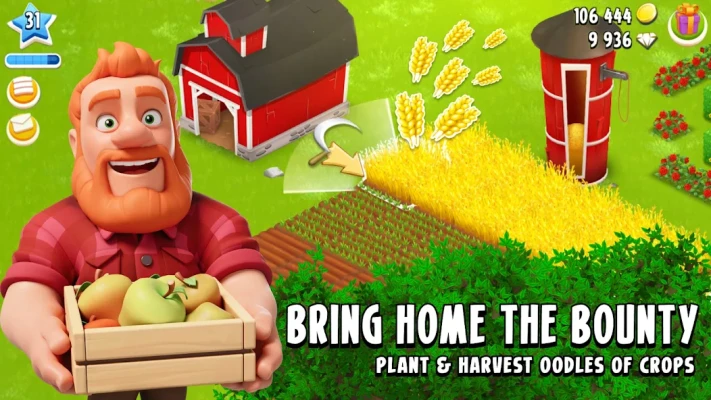
Crops are the foundation of your farm's economy. Plant seeds in available fields, wait for them to grow, and harvest them when they are ready. Most crops can be replanted using the seeds collected from harvesting, allowing you to maintain a steady supply without constantly purchasing more seeds.
Wheat and corn are useful early-game crops because they support animal feeding, product manufacturing, and sales. As you unlock additional crops, you can use them to create more valuable products and fulfill increasingly varied orders.
Farm Animals and Animal Products
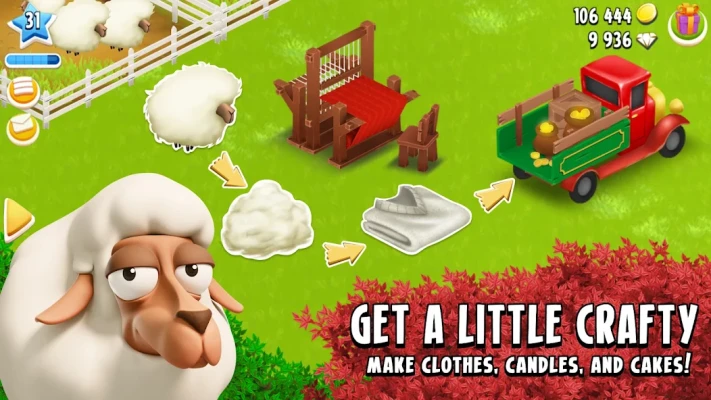
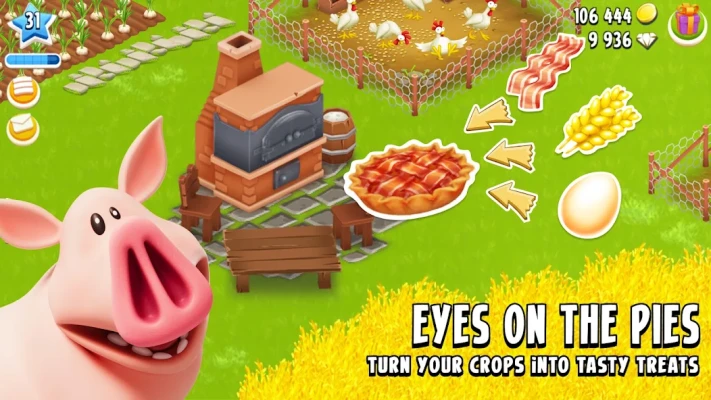
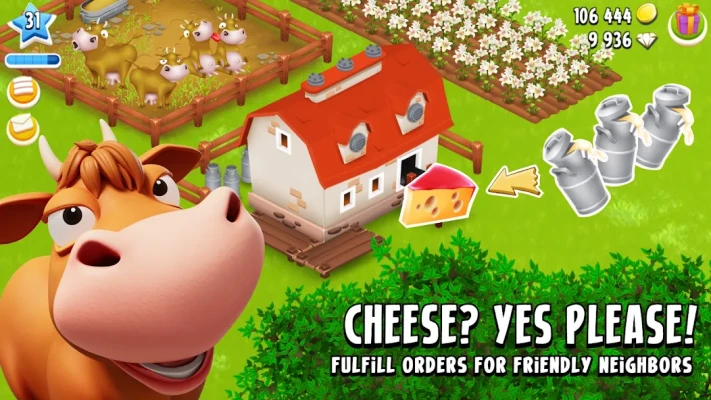
Animals turn harvested crops into useful resources. Chickens produce eggs, cows provide milk, pigs supply bacon, and sheep produce wool. These materials are essential ingredients for many production recipes.
Keep animal feed available so that you can collect products regularly. A farm with a consistent supply of eggs, milk, bacon, and wool can keep production machines running and fulfill more customer requests.
Production Buildings
Production buildings transform raw ingredients into goods that can be sold or used in other recipes. Depending on your progress, you can unlock facilities such as the Bakery, Dairy, Sugar Mill, Loom, Sewing Machine, and Cake Oven.
Each machine serves a different purpose, and many products require ingredients from several production chains. Planning production in advance helps prevent shortages and makes better use of your available time.
Roadside Shop and Trading
The Roadside Shop allows you to sell surplus crops and manufactured goods to other players. It is an important source of coins, particularly when you have products that are not needed for immediate orders.
Choosing what to sell is just as important as choosing what to produce. Selling every spare ingredient can leave you unable to manufacture valuable goods later, so maintain a practical balance between earning coins and keeping essential supplies.
Truck and Boat Orders
Truck orders request particular products in exchange for rewards, including coins and experience. Boat orders require players to prepare goods for shipment and can provide useful rewards for completing their requests.
Neither system should consume all your available inventory. Review the requested items before committing, and prioritize orders that fit your current production capacity and goals.
Fishing Area, Town, and Valley
Hay Day gradually introduces additional areas that expand the farming experience.
Fishing Area: Catch fish and collect fishing-related resources.
Town: Serve visitors and earn rewards by fulfilling their requests.
Valley: Explore a shared seasonal area, complete activities, and collect tokens for rewards.
Neighborhoods: Cooperate with other players, exchange goods, and participate in the Derby.
These activities give you more ways to earn rewards and make use of resources beyond ordinary crop farming.
Farm Decoration and Customization
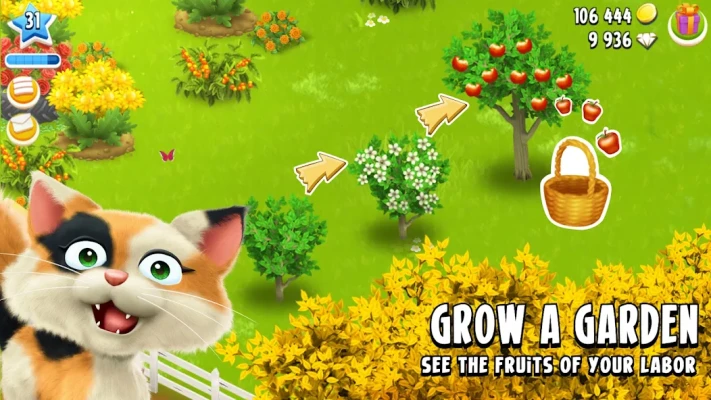
Decorating your farm is an important part of the experience. You can arrange buildings, fields, trees, paths, fences, and decorative objects to create a layout that reflects your preferred style.
A well-organized farm can also make daily management easier. Keep frequently used machines and animal areas accessible, leave enough room for future buildings, and group similar facilities together whenever possible.
How to Start Playing Hay Day
New players benefit most from learning the basic farming cycle before investing heavily in decorations or expensive upgrades.
Plant the available crops and harvest them as soon as they are ready.
Replant seeds to maintain a reliable supply of essential ingredients.
Feed your animals and collect their products regularly.
Use production machines to turn raw ingredients into useful goods.
Sell suitable surplus items through the Roadside Shop.
Complete manageable orders to earn coins and experience.
Save coins for important buildings, machines, and farm improvements.
Expand storage and land as your needs increase.
The most effective early-game strategy is to keep your farm productive without spending all your coins as soon as you earn them.
Best Hay Day Tips for Beginners
1. Plant Crops According to Your Schedule
Choose crops based on how long you expect to be away from the game. Fast-growing crops are convenient when you can check your farm frequently, while longer-growing crops are useful when you plan to return later.
Before leaving the game, plant crops that will be ready around your next session. This helps reduce idle time and ensures that you have ingredients available when you return.
2. Keep Your Animal Feed Production Running
Animal products are essential for making many farm goods. Try to maintain a dependable supply of feed ingredients and collect eggs, milk, bacon, and wool whenever they are ready.
Avoid using all your crops for selling if your animals need those crops for feed. A balanced supply chain is more valuable than a quick sale that leaves your farm without essential resources.
3. Save Coins for Important Upgrades
Coins are necessary for purchasing production buildings, animals, trees, bushes, and other improvements. Spending too much on decorations early in the game can delay access to useful machines.
Prioritize purchases that increase your production capacity or unlock new ways to earn coins. You can always improve your farm's appearance once your economy becomes more stable.
4. Expand Your Barn and Silo Wisely
The Barn stores manufactured goods and animal products, while the Silo holds crops and other farming materials. Both can fill up quickly as your farm grows.
Collect expansion materials whenever possible and upgrade storage regularly. When space becomes limited, sell genuine surplus items instead of immediately selling ingredients needed for important production recipes.
5. Use the Roadside Shop Strategically
Check which items you have in abundance before placing goods in your shop. Crops and products that are easy to replace can be useful for generating coins, while scarce ingredients may be better reserved for production.
Keep prices competitive within the game's permitted pricing options, and pay attention to which goods sell quickly. Over time, this helps you understand which products are worth producing specifically for the market.
6. Avoid Completing Every Order Automatically
Truck and boat orders can provide useful rewards, but some requests may require products that take a long time to manufacture.
Review each order before completing it. If an order would consume most of your available stock, consider whether the reward justifies the cost. Discarding an unsuitable truck order can sometimes be more practical than disrupting your entire production schedule.
7. Take Advantage of Events
Check the event board regularly to see which activities offer additional rewards. Depending on the event, ordinary farming tasks, truck deliveries, boat shipments, or other activities may become more rewarding.
Prepare the necessary crops and products before starting an event whenever possible. This allows you to take advantage of its rewards without rushing to manufacture every requested item at the last minute.
How to Make Coins Faster in Hay Day
Coins are among the most important resources in Hay Day. A healthy coin balance makes it easier to unlock production buildings, purchase equipment, and improve your farm.
Sell Surplus Crops
Growing and selling crops is a straightforward way to generate income. Wheat can be particularly useful because it grows quickly and supports a continuous farming cycle.
Plant crops that match your available time, harvest them regularly, and sell the excess when you have enough seeds and ingredients reserved for your own needs.
Produce Goods Before Selling Them
Raw ingredients are useful, but manufactured products can provide additional value. For example, crops can be transformed into baked goods or combined with animal products to create more advanced items.
Compare the effort and ingredients required before choosing what to manufacture. The best product is not necessarily the one with the highest selling price; it is the one you can produce efficiently without creating shortages elsewhere.
Keep Production Machines Busy
A machine that sits idle cannot contribute to your farm's income. Whenever possible, start producing useful goods before logging out, particularly items with longer production times.
When you return, collect the finished products and begin another batch. This routine makes better use of time and helps build a steady inventory for the Roadside Shop.
Sell Goods That Other Players Need
The Roadside Shop connects your farm with the wider player community. Keeping a varied selection of useful goods can make your shop more attractive to potential buyers.
Pay attention to the products you can replace easily and the ingredients that your farm consumes frequently. Sell the former when you have a surplus, and retain enough of the latter to keep production moving.
Avoid Unnecessary Spending
Coins can disappear quickly when you buy every available decoration or item. Before making a purchase, consider whether it helps you produce goods, unlock a useful feature, or expand your farming capacity.
A disciplined spending strategy is especially valuable during the early and middle stages of progression.
Best Farming Strategy for Hay Day
A successful farm depends on maintaining a steady flow of crops, animal products, and manufactured goods.
Create a Balanced Crop Rotation
Do not plant only one crop unless you have a specific reason to do so. Different crops support different animals and production recipes, so a varied supply makes your farm more flexible.
Keep frequently used ingredients available and grow additional crops when a particular recipe or event requires them.
Build a Reliable Production Chain
Think of your farm as a connected system rather than a collection of separate buildings.
Crops support animal feed and manufacturing. Animals provide ingredients. Production buildings turn those ingredients into finished products, which can then be sold or used to complete orders.
When one part of this chain runs short, several other activities may slow down. Keeping a reserve of essential ingredients helps prevent these interruptions.
Plan Around Production Times
Use short production tasks when you expect to play actively, and start longer tasks before taking a break. This approach reduces waiting and makes it easier to collect finished goods at convenient times.
Do not start a long production task if you urgently need the same machine to complete an order. Planning ahead prevents unnecessary delays.
Maintain a Reserve of Essential Goods
Keep some frequently needed products in storage, particularly items that take time to manufacture or require several ingredients.
Your reserve does not need to be enormous. The goal is to avoid situations where one missing product stops multiple activities.
Upgrade Storage Before It Becomes a Constant Problem
If your Barn or Silo fills up repeatedly, consider making storage upgrades a priority. More space provides greater flexibility when harvesting, collecting animal products, and preparing for events.
Collect expansion materials consistently instead of waiting until storage becomes unmanageable.
How to Level Up Faster in Hay Day
Experience points help you reach new farm levels and unlock additional features. However, leveling up quickly is not always the same as building a financially strong farm.
Complete Suitable Orders
Truck orders provide coins and experience points. Focus on requests you can complete without draining essential supplies, and pay attention to events that increase order rewards.
Harvest and Replant Regularly
Every farming session is an opportunity to collect crops, replenish ingredients, and continue the production cycle. Regular harvesting keeps your farm active and contributes to steady progression.
Collect Animal Products
Feed your animals consistently and gather their products when available. These resources support recipes and help you complete orders without having to purchase missing ingredients from other players.
Participate in Available Events
Some events provide opportunities to earn additional experience, coins, or other useful rewards. Check the requirements before participating and focus on activities that fit your current level and inventory.
Avoid Leveling Up Without Preparing Your Economy
Unlocking new crops, machines, and products can increase your operating costs. Before advancing too quickly, make sure you have enough coins and storage space to manage your growing farm.
A balanced approach allows you to unlock new content while maintaining a dependable income.
How to Manage the Barn and Silo
Storage management becomes increasingly important as the number of available products grows.
Barn Management Tips
Keep room for animal products and manufactured goods.
Avoid collecting large quantities of items you rarely use.
Reserve ingredients for recipes you produce regularly.
Sell surplus goods when you need to free up space.
Collect upgrade materials and increase capacity as your needs grow.
Silo Management Tips
Replant crops after harvesting whenever possible.
Maintain a supply of common animal-feed ingredients.
Avoid storing excessive quantities of crops that are easy to grow again.
Keep additional ingredients for important recipes.
Sell surplus crops when storage is close to capacity.
The best storage strategy depends on your level and play style. Players who produce many finished goods may need more Barn space, while players who farm and collect large quantities of crops may benefit from additional Silo capacity.
Hay Day Animals Guide
Animals are an essential part of farm management because they provide ingredients for a wide range of products.
Chickens
Chickens produce eggs after being fed. Eggs are useful in several recipes, making a steady supply valuable for both production and order completion.
Cows
Cows produce milk, which is an important ingredient for dairy products and other manufactured goods. Try to keep milk production consistent so that your machines do not run short.
Pigs
Pigs provide bacon after being fed. Bacon is used in various recipes, so avoid selling your entire supply if you regularly manufacture products that require it.
Sheep
Sheep produce wool, which supports textile production and clothing-related recipes. Keeping wool available helps you use the Loom and Sewing Machine more efficiently.
Pets
Pets add life to your farm and can provide useful rewards when cared for. Depending on the pet, feeding and waking them can grant experience points and other items. Check the requirements for each pet and make sure you have the appropriate pet house before purchasing one.
Hay Day Roadside Shop Strategy
The Roadside Shop is one of the most useful features for players who want to earn coins without relying entirely on delivery orders.
What Should You Sell?
Consider selling items that are easy to replace, products you have in excess, and goods that are not required for your immediate farming plans.
Avoid selling every unit of a rare ingredient simply because another player may buy it quickly. A short-term coin gain can become expensive if you later need to purchase the same item to finish a recipe.
When Should You Restock?
Restock your shop after harvesting crops or collecting finished products. A regular supply of useful goods gives other players more opportunities to purchase from your farm.
If you are short on storage space, the shop can also help clear surplus inventory while earning coins.
Should You Sell Crops or Finished Products?
Both approaches can work. Selling crops is convenient when you need quick inventory space, while selling finished products may provide better value depending on their ingredients and production requirements.
The most efficient choice is the one that balances immediate income with the future needs of your farm.
Truck Orders and Boat Orders Guide
Delivery activities offer an alternative to selling directly through the Roadside Shop.
Truck Order Tips
Check the items required for each order before sending your truck. Prioritize requests that match your current inventory, and avoid repeatedly manufacturing expensive or scarce products just to complete low-priority orders.
Some truck orders offer additional rewards under special conditions or events, so check the available information before deciding which requests to complete.
Boat Order Tips
Boat orders require preparation because the requested goods must be available when needed. Review the cargo requirements and start manufacturing missing products early.
Ask for help when the game allows it and when other players can reasonably assist. Do not commit valuable resources to a shipment without considering whether you can complete the remaining crates.
Which Is Better: Truck Orders or Boat Orders?
Neither activity is always the best choice. Truck orders can be convenient for earning coins and experience, while boat orders provide their own rewards and may be especially useful during certain events.
Choose the activity that best supports your current goals, inventory, and available time.
Hay Day Town Guide
The Town expands the game beyond ordinary farming and introduces visitors who request products and services.
Once the Town becomes available, you can develop its facilities and serve visitors using goods produced on your farm. Completing visitor requests contributes to progression and offers additional rewards.
Town Management Tips
Keep common products available for visitor requests.
Improve service buildings when upgrades become affordable.
Use the personal train and other available features as you unlock them.
Avoid accepting more demanding requests when your inventory is already low.
Balance Town activities with farming, production, and order completion.
The Town is particularly useful for players who enjoy managing several connected activities rather than concentrating exclusively on crops and animals.
Hay Day Fishing Guide
The Fishing Area provides another way to gather resources and explore the game's wider world.
After unlocking and developing this area, players can catch fish using available fishing equipment. Different fishing methods and resources become accessible as progress continues.
Fishing Tips for Beginners
First, learn how the fishing mechanics work and pay attention to the available equipment. Use your fishing resources thoughtfully, and explore new options as they become available.
Fishing can complement your regular farm activities by providing materials and supporting additional objectives. It is worth developing gradually rather than neglecting the main farm to focus exclusively on it.
Hay Day Valley Guide
The Valley is a seasonal multiplayer activity in which players travel around a shared map and complete tasks to collect tokens.
The tokens can be exchanged for rewards in the Valley Shop. Available objectives depend on the active Valley season and game mode.
How to Get More from the Valley
Check the available daily quests.
Plan your movements around nearby tasks when practical.
Collect tokens regularly rather than waiting until the end of the season.
Review the Valley Shop before spending tokens.
Coordinate with Neighborhood members when cooperation can help.
Since Valley seasons are limited, regular participation gives you more opportunities to collect rewards before the season ends.
Neighborhoods and Derby Strategy
Neighborhoods allow players to interact, exchange goods, request help, and participate in cooperative activities.
Joining an active Neighborhood can make farming easier because members may share advice, offer resources, and help with eligible orders.
How to Choose a Neighborhood
Look for a group whose activity level matches your own. Some Neighborhoods emphasize relaxed social play, while others focus on Derby performance and completing tasks regularly.
Read the group's expectations before joining, especially if participation requirements are important to its members.
How to Perform Better in the Derby
The Derby rewards Neighborhood members for completing selected tasks within the available time limits.
Choose tasks that match your available resources.
Prepare crops and products before selecting demanding tasks.
Check task timers and requirements carefully.
Coordinate with teammates when your Neighborhood organizes its activities.
Avoid selecting tasks that you are unlikely to finish on time.
Good preparation is usually more useful than rushing into a task without checking what it requires.
Common Hay Day Mistakes to Avoid
Spending All Your Coins on Decorations
Decorations can make your farm attractive, but essential production buildings and upgrades should generally come first when your budget is limited.
Selling Every Ingredient
Selling all your crops and animal products can create shortages that interrupt production. Maintain a sensible reserve of frequently used materials.
Ignoring Storage Upgrades
A full Barn or Silo can prevent you from collecting new goods and crops. Plan upgrades before limited storage becomes a daily obstacle.
Starting Orders Without Checking Requirements
Some orders demand products that take a long time to manufacture. Check your inventory first and decide whether the rewards justify the effort.
Producing Goods Without a Plan
Making random products can fill your Barn with items you do not immediately need. Prioritize ingredients and finished goods that support your current goals.
Neglecting Events and Community Features
Events and Neighborhood activities can provide rewards and additional ways to progress. Check what is available and participate when the benefits suit your plans.
Spending Diamonds Too Quickly
Diamonds are a premium currency, so consider carefully before using them to speed up production or purchase items. Save them for situations where the convenience or benefit is genuinely worthwhile.
Advanced Hay Day Strategy
Once your farm has a reliable economy, you can improve efficiency by organizing your daily routine around production, storage, and market demand.
Use a Daily Farming Routine
Begin by harvesting ready crops and collecting animal products. Check your Barn and Silo, refill production machines, and review orders before deciding what to sell.
During the remainder of your session, focus on the activities that best support your current objectives. Before logging out, plant appropriate crops and start longer production tasks.
Identify Your Farm's Bottlenecks
A bottleneck is the part of your farm that regularly prevents other activities from progressing. You might run out of milk, lack Barn space, or have too few coins to purchase a necessary machine.
Identify the problem that causes the most delays and work on resolving it first. Improving the right part of your farm can be more effective than upgrading everything at once.
Balance Experience and Profit
Orders can provide experience points, but selling goods through the Roadside Shop may be preferable when your primary goal is earning coins.
Consider your next major purchase before choosing how to spend your time. If you need coins for a production building, prioritize profitable activities. If you are preparing to unlock new content, completing suitable experience-earning tasks may be more useful.
Prepare for Events in Advance
When an event is announced, review its requirements and determine which crops, ingredients, and products you will need.
Build a manageable reserve before the event starts. This allows you to participate without sacrificing your normal production needs or spending unnecessarily to obtain missing goods.
Keep Your Farm Flexible
Avoid committing your entire inventory to a single activity. A flexible farm can respond to changing orders, event requirements, and production needs without having to rebuild its stock from scratch.
Is Hay Day Free to Play?
Hay Day is free to download and play, although it includes optional in-app purchases. Players can progress by farming, producing goods, selling items, completing orders, and participating in available activities without making purchases.
Progress may take time, especially when unlocking expensive buildings or waiting for production to finish. Careful resource management and consistent play can help free-to-play players develop a productive farm without spending real money.
Is Hay Day Worth Playing?
Hay Day is a good choice for players who enjoy farming simulation games, relaxing gameplay, resource management, and gradual progression.
Its combination of crops, animals, production chains, trading, decoration, fishing, and community activities offers several ways to play. You can focus on making money, designing an attractive farm, completing orders, or cooperating with other players.
The game is especially appealing to people who prefer steady progress over constant competition. However, players who dislike waiting for crops and products to finish may find its time-based mechanics less enjoyable.
Frequently Asked Questions About Hay Day
What is the main goal in Hay Day?
The main goal is to develop your farm by growing crops, raising animals, manufacturing goods, earning coins, and unlocking additional buildings and activities. You can also customize your farm and participate in social features.
How do you make money quickly in Hay Day?
Grow crops, sell surplus goods through the Roadside Shop, and manufacture products when the ingredients and production time justify the effort. Keep enough resources for animal feed and essential recipes before selling your inventory.
What is the best crop for beginners?
Wheat is a practical early-game crop because it grows quickly and can support a regular harvest-and-replant routine. Corn and other crops are also useful for feeding animals and manufacturing products.
How can you level up faster in Hay Day?
Complete suitable truck orders, harvest crops, collect animal products, and participate in activities that reward experience points. Maintain enough coins and storage space to handle the additional content you unlock.
How do you get more Barn and Silo space?
Collect the relevant expansion materials and use them to upgrade your storage. Manage your inventory carefully while working toward the required materials.
Is Hay Day an offline game?
Hay Day requires an internet connection to play. An active connection is needed for its online features and normal gameplay.
Can you play Hay Day with friends?
Yes. You can interact with other players, trade goods, join Neighborhoods, request help where available, and participate in cooperative activities such as the Derby.
What are diamonds used for in Hay Day?
Diamonds are a premium currency used for certain purchases and convenience options, including speeding up some activities. Use them thoughtfully because they are more limited than ordinary coins.
What is the Roadside Shop used for?
The Roadside Shop lets you offer crops and other goods for sale to players. It is useful for earning coins, clearing surplus inventory, and trading items you do not currently need.
Is Hay Day suitable for beginners?
Yes. The game introduces farming and production gradually, making it accessible to new players. Learning to manage coins, storage, and ingredients early makes later progression easier.
Final Thoughts
Hay Day offers a rewarding farming experience built around growing crops, caring for animals, producing goods, and managing resources. The key to developing a successful farm is maintaining a reliable production cycle while making careful decisions about spending, storage, and trading.
Start with essential crops and animal products, invest in useful production buildings, and sell surplus goods when you need additional coins. As your farm grows, explore the Town, Fishing Area, Valley, and Neighborhood activities to discover more ways to progress.
With a little planning and a consistent routine, you can turn a small farm into a thriving countryside business while enjoying the freedom to build and decorate it your own way.
Rate the Game
User Reviews












Popular Games



















 Android
 iOS
 Windows
 Xbox