

Latest Version
October 20, 2026
SayGames Ltd
Simulation
0
com.cww.cubecraft
Report a Problem
More About :game
Whether you enjoy relaxing resource collection or want to expand your production system and battle monsters, CubeCrafter offers a mixture of simulation, adventure, and strategic progression.
What Is CubeCrafter?
CubeCrafter is a mobile crafting adventure that challenges players to transform basic resources into valuable materials, useful structures, and larger construction projects. Rather than focusing exclusively on building, the game combines gathering, production, worker management, upgrades, and exploration.
The main objective is to develop your operations efficiently enough to complete construction goals and unlock new areas. Each stage introduces fresh opportunities to collect resources, improve production, and discover more of the game's world.
The gameplay is easy to understand, making CubeCrafter suitable for casual players, while its interconnected crafting and upgrade systems provide plenty of reasons to keep progressing.
CubeCrafter Game Information
Game title: CubeCrafter
Developer: SayGames Ltd
Genre: Crafting, simulation, adventure, and casual role-playing
Platform: Android
Gameplay style: Resource gathering, construction, production management, and exploration
Main activities: Mining, logging, farming, crafting, selling resources, hiring workers, and fighting monsters
Environments: Forests, deserts, underwater areas, and other progressively unlocked settings
Progression: Complete construction projects, upgrade abilities, and advance through new areas
Monetization: Free to download, with advertisements and in-app purchases
Player experience: Accessible mechanics with increasingly demanding resource and production goals
Main Features of CubeCrafter
1. Resource Gathering and Mining
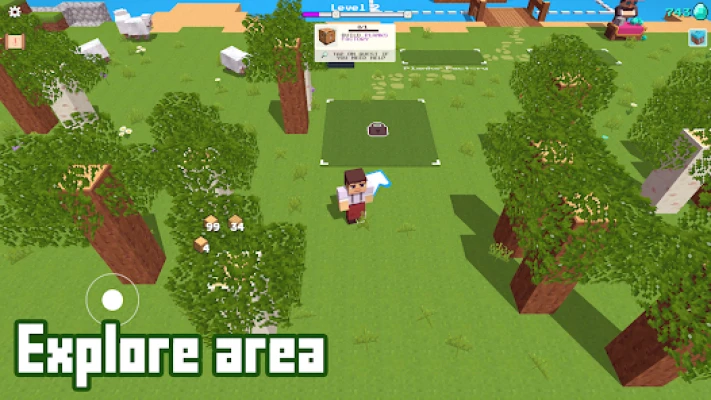
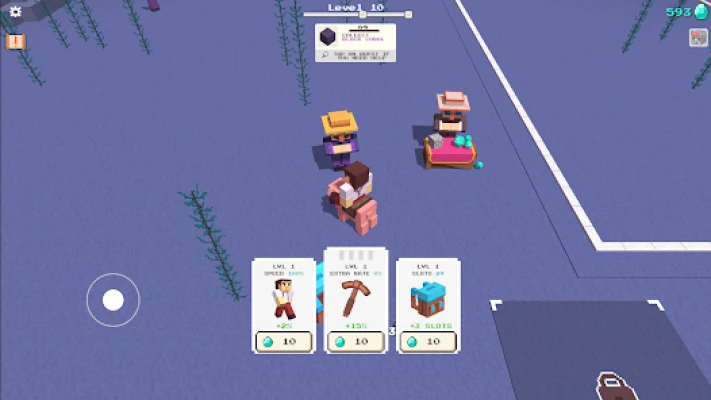
Collecting resources is the foundation of CubeCrafter. Players gather block-shaped materials such as wood, stone, clay, and wool to support construction and manufacturing.
Each material has a practical purpose. Wood can contribute to wooden building materials, while stone and clay support the creation of more advanced construction supplies. Wool provides another resource to collect and manage.
Learning which resources are needed for upcoming projects helps prevent unnecessary trips and makes progression more efficient.
2. Crafting and Manufacturing
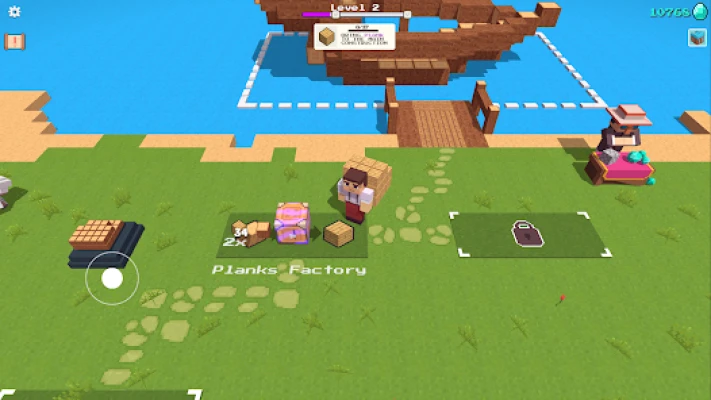
Raw materials are only the beginning. As you progress, you'll need to establish production facilities that transform basic resources into more useful materials, including boards, bricks, and shingles.
Manufacturing adds another layer of strategy because collecting enough raw materials is not always sufficient. You must also ensure that your production operations can supply the materials required for construction.
3. Construction and World Development
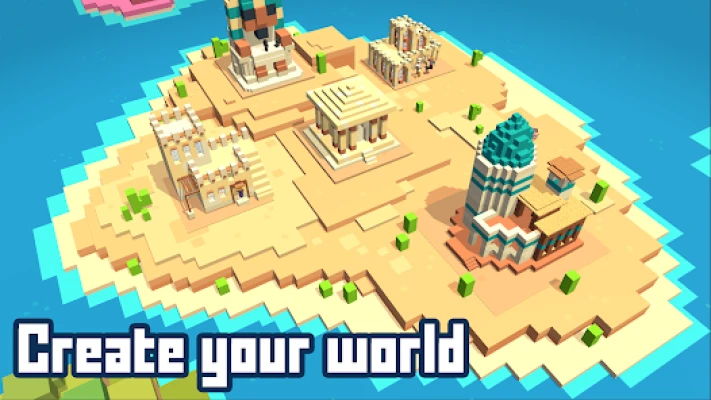
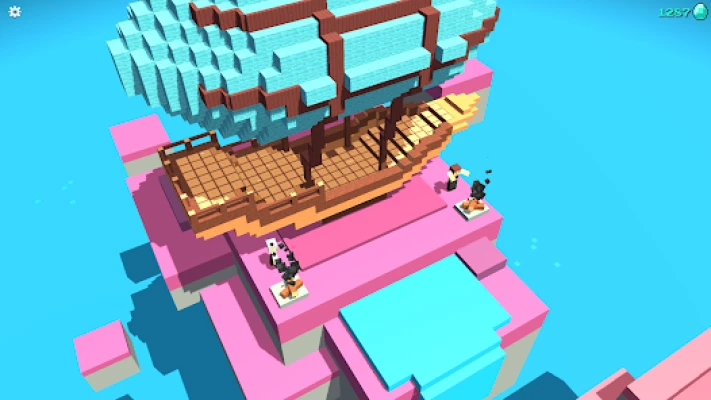
Building is one of the central goals in CubeCrafter. Players use collected and processed materials to complete structures and advance through increasingly ambitious projects.
Every completed construction task represents progress toward developing your world. Successful planning involves gathering the right materials, maintaining production, and upgrading the abilities that make resource collection faster.
4. Worker Recruitment and Automation
Managing every resource manually becomes more demanding as your crafting operations expand. CubeCrafter allows players to hire specialized workers, including lumberjacks, miners, stone masons, and farmers.
These workers help reduce the amount of repetitive gathering required and make larger production goals easier to manage.
Recruiting workers strategically can improve your overall efficiency, particularly when several resource types are needed at the same time.
5. Skills and Upgrades
Players can sell surplus resources to merchants and use the resulting currency to improve their character and workers.
Available improvements include greater carrying capacity, faster movement, and improved gathering or crafting efficiency. These upgrades become increasingly valuable as projects demand more materials.
A well-chosen upgrade can save time on many future collection trips, making it more useful than a small improvement that only helps with one immediate task.
6. Multiple Environments to Explore
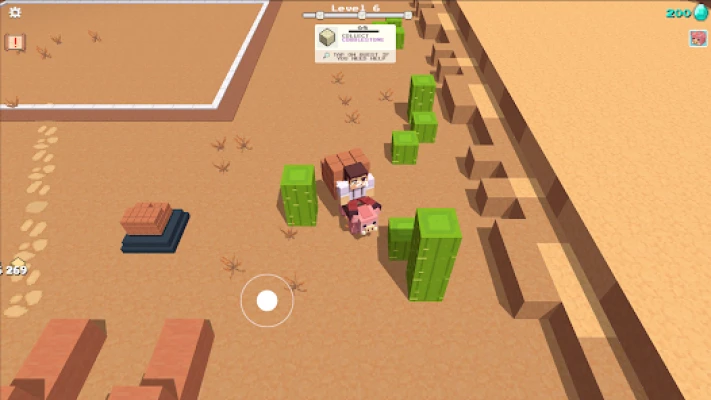
CubeCrafter takes players beyond a single starting area. Progression can lead to different environments, including forests, deserts, and underwater settings.
New locations keep the experience fresh by giving players additional areas to explore and new construction objectives to pursue.
Although you may need to rebuild much of your production setup when entering another area, previously earned skill improvements are retained, helping later stages feel more manageable.
7. Monsters and Combat
CubeCrafter also includes action elements. Zombies and other monsters can threaten your progress, adding combat to the usual cycle of gathering and construction.
Players must balance resource management with dealing with these threats. Ignoring enemies when they interfere with your activities can disrupt your plans, so learning when to fight and when to focus on production is important.
8. Casual Gameplay With Strategic Progression
The controls and basic objectives are straightforward, but efficient progression depends on making sensible decisions about resources, workers, and upgrades.
You can enjoy short sessions by collecting materials or selling surplus supplies, or spend longer periods working toward major construction goals and exploring new environments.
This combination makes CubeCrafter appealing to players who enjoy incremental progress without needing to master complicated controls.
How to Play CubeCrafter
Getting started in CubeCrafter is simple, but building an efficient operation takes planning. Follow these steps to establish a strong foundation and progress through the game.
Step 1: Learn the Basic Controls
Begin by getting familiar with moving your character around the environment and interacting with resources, production facilities, merchants, and construction areas.
Pay attention to the available objectives and resource requirements. Understanding where to gather materials and where to deliver them will help you avoid unnecessary movement.
Beginner tip: Focus on completing the current objective before spending too much time exploring areas that do not contribute to your immediate progress.
Step 2: Gather Essential Resources
Start by collecting the basic materials available in your current environment. Wood and stone are particularly important early resources, while clay and wool contribute to the wider crafting system.
Collect enough materials to meet immediate construction requirements, but avoid carrying unnecessary quantities when your inventory is limited.
Try to develop a routine that combines gathering, processing, and construction instead of collecting everything without a clear purpose.
Step 3: Complete Your First Construction Projects
Use the resources you collect to begin building the structures required by your objectives.
Construction projects help introduce the game's progression system and establish the foundation for more advanced crafting activities.
Before committing time to additional gathering, check which materials are missing from your current project. This allows you to prioritize the resources that will actually move your progress forward.
Step 4: Establish Production Facilities
As your world develops, raw materials become less useful on their own. Build and use the available manufacturing facilities to produce processed materials such as boards, bricks, and shingles.
Pay attention to the relationship between gathering and manufacturing. If a facility requires wood, for example, your collection efforts should ensure that enough wood reaches the production process.
A balanced production system reduces interruptions and makes it easier to complete larger construction projects.
Step 5: Hire Workers
Recruit workers when manual gathering begins to slow your progress.
Lumberjacks help with wood collection, miners support mining operations, stone masons contribute to stone-related work, and farmers assist with farming activities.
Choose workers according to your current bottleneck. If you constantly run short of one resource, prioritize the worker who can help increase its supply.
Step 6: Sell Surplus Materials
Visit merchants to sell resources you do not currently need. The currency you earn can be used to purchase useful upgrades.
However, do not sell materials indiscriminately. Some resources that appear unnecessary may be required for a later construction stage or a manufacturing process.
Keep a practical reserve of materials needed for your active objectives, and sell genuine surplus whenever doing so supports your next upgrade.
Step 7: Upgrade Your Character and Workers
Use your earnings to improve the abilities that save the most time.
Greater carrying capacity can reduce repeated collection trips. Faster movement makes travel between gathering areas and construction sites more efficient. Improved gathering and crafting speed can help keep your production system moving.
Choose upgrades based on the problems you experience most often rather than purchasing improvements randomly.
Step 8: Explore New Areas
Once you meet the requirements to advance, explore the newly available environment and identify its resources, facilities, and construction goals.
New settings can require a different approach to gathering and production. Review your objectives before deciding how to organize your activities.
Remember that the game retains your skill upgrades across new areas, so earlier improvements continue to benefit your overall progression.
Step 9: Prepare for Monster Encounters
Combat becomes another consideration as you encounter zombies and other hostile creatures.
When enemies interfere with your activities, deal with the threat before returning to resource collection and construction. Avoid letting combat distract you from essential objectives when the area is otherwise safe.
Balancing exploration, combat, and production is important for steady progress.
Complete CubeCrafter Strategy Guide
1. Prioritize Resources That Unlock Progress
One of the biggest beginner mistakes is collecting every available resource without checking what the current objective requires.
Instead, use a simple priority system:
Identify the next construction or progression requirement.
Check which raw materials are needed.
Collect the materials that are currently missing.
Process them if the project requires manufactured supplies.
Deliver the finished materials and complete the objective.
This approach reduces wasted trips and makes every gathering session more productive.
2. Improve Carrying Capacity Early When Needed
Carrying capacity directly affects how many resources you can transport before making another trip.
If you regularly fill your inventory after collecting only a small amount, consider upgrading capacity. Larger loads can reduce repeated travel between resource areas, production facilities, and construction sites.
However, carrying capacity is not automatically the best upgrade in every situation. If your main problem is slow production rather than frequent travel, a crafting-related improvement may provide greater value.
3. Build a Balanced Production Chain
Efficient progression depends on keeping resource collection and manufacturing aligned.
For example, a construction project that requires boards needs a reliable supply of the appropriate raw material and access to the relevant production facility.
If you collect plenty of raw resources but cannot process them quickly enough, manufacturing becomes the bottleneck. If production is fast but your resource supply is limited, your facilities cannot operate efficiently.
The best strategy is to identify whichever stage is slowing you down and improve that part of the process first.
4. Hire Workers to Reduce Repetitive Tasks
Workers are particularly valuable once the number of required resources increases.
Instead of manually managing every collection task, recruit workers who support the materials needed for your next objectives. This helps you spend more time completing construction, exploring, and handling other important activities.
Avoid hiring workers without considering your needs. Specialized labor is most useful when it addresses a real shortage or improves an important part of your production chain.
5. Make Smart Use of Merchant Sales
Selling resources is an important way to fund your progression, but the best selling strategy requires restraint.
Use these guidelines:
Retain materials required by active construction projects.
Keep enough raw resources available to support manufacturing.
Sell excess materials when they are not needed for immediate objectives.
Spend earnings on upgrades that solve recurring problems.
Reassess your resource reserves when a new construction requirement appears.
The goal is to turn surplus resources into useful improvements without creating shortages elsewhere.
6. Avoid Unnecessary Backtracking
Repeatedly traveling between distant resource areas and construction sites can slow progress.
Whenever possible, organize your activities around your current objective. Gather the materials you need, process them, and deliver them in a sensible sequence.
Before leaving a location, check whether you can collect any additional resource that is genuinely needed for the same project. This can reduce the number of separate trips.
Do not gather extra materials simply because they are nearby if doing so delays an important objective.
7. Approach New Worlds With a Plan
A new environment can introduce different resources, production needs, and construction challenges.
When entering a new area, take a moment to understand the available materials and current objectives. Establish the essential gathering and crafting operations before committing to unnecessary activities.
Because skill upgrades carry forward, your character should become more efficient as you progress. Make the most of those improvements by applying the same resource-management principles in every environment.
8. Balance Combat With Construction
Monster encounters add variety, but fighting should not completely interrupt your development strategy.
When enemies threaten your activities, address the immediate danger and then return to gathering and manufacturing.
Before exploring an unfamiliar area, consider whether you have completed the nearby objectives and whether your current equipment and character improvements are adequate for the encounter.
A balanced approach helps you enjoy the adventure elements without losing sight of the main construction goals.
9. Use Advertisements and Purchases Carefully
CubeCrafter includes advertisements and optional in-app purchases. Depending on the available offer, an advertisement may provide a temporary reward or boost.
Consider whether a reward meaningfully improves your progress before choosing to watch an advertisement. Similarly, evaluate in-app purchases according to your preferences and budget.
You can make progress by focusing on resource management, worker recruitment, and upgrades without treating every paid option as necessary.
10. Maintain Consistent Progress
CubeCrafter rewards a steady cycle of gathering, crafting, selling, upgrading, and building.
Rather than spreading your attention across too many activities, focus on the task that unlocks your next meaningful improvement. Once you complete it, reassess your resources and choose the next priority.
This simple habit helps prevent wasted effort and makes larger projects easier to manage.
Best Upgrade Priorities in CubeCrafter
The most useful upgrade depends on the problem you need to solve. Use this guide to make better decisions.
| Upgrade or improvement | Best time to prioritize it | Main benefit |
|---|---|---|
| Carrying capacity | When you make frequent collection trips | Transports more resources per trip |
| Movement speed | When traveling consumes too much time | Speeds up movement around the map |
| Gathering efficiency | When raw materials are your main bottleneck | Helps improve resource collection |
| Crafting speed | When processing facilities slow your progress | Supports faster material production |
| Worker improvements | When automated labor is central to your operations | Improves the efficiency of your workforce |
Best overall approach: Improve your weakest part of the production chain first. A balanced character and workforce are generally more useful than investing heavily in a single ability while other activities remain inefficient.
Common CubeCrafter Mistakes to Avoid
Collecting Without a Goal
Gathering resources without knowing what you need can fill your inventory with materials that do not help your immediate objective.
Solution: Check construction and crafting requirements before starting another collection run.
Selling Important Materials
Selling every surplus-looking resource can leave you short when a new project requires it.
Solution: Retain enough materials for active construction and essential manufacturing.
Ignoring Worker Recruitment
Relying entirely on manual collection can become inefficient as projects grow.
Solution: Recruit workers when they can address a recurring resource shortage or reduce repetitive tasks.
Buying Upgrades Randomly
An upgrade may offer limited value if it does not address your current bottleneck.
Solution: Identify whether movement, inventory capacity, gathering, or manufacturing is slowing you down before spending currency.
Neglecting Production Facilities
Collecting raw materials is not enough when construction requires processed products.
Solution: Keep your manufacturing operations aligned with the materials needed for upcoming projects.
Exploring Before Completing Important Objectives
Wandering into new areas without a clear purpose can delay construction and progression.
Solution: Finish nearby requirements first, then explore when it supports your next goal.
Forgetting About Enemies
Hostile creatures can interrupt otherwise productive activities.
Solution: Deal with immediate threats and return to your resource-management routine when the area is safe.
Is CubeCrafter Suitable for Casual Players?
CubeCrafter is a good option for players who enjoy simple controls, incremental progression, and a mixture of crafting and adventure.
Its basic gameplay is easy to understand, while the interaction between resources, manufacturing, workers, and upgrades provides additional depth.
Players who enjoy watching a small operation develop into a larger production system may particularly appreciate its progression loop. The different environments also provide new goals as players advance.
However, players who prefer completely uninterrupted gameplay should consider that the game contains advertisements and in-app purchases. The experience is best suited to people who enjoy casual management and steady progression rather than a traditional open-ended building game with unrestricted creative freedom.
Frequently Asked Questions
What is CubeCrafter?
CubeCrafter is a casual mobile crafting and world-building game from SayGames Ltd. It combines mining, resource collection, manufacturing, construction, worker management, exploration, and monster combat.
Is CubeCrafter free to play?
Yes. CubeCrafter is free to download on Android, with advertisements and optional in-app purchases.
How do you progress faster in CubeCrafter?
Focus on the resources required for your current objective, improve the abilities that save the most time, recruit useful workers, and keep your production facilities supplied. Avoid unnecessary collection trips and prioritize upgrades that solve recurring problems.
What resources can you collect in CubeCrafter?
The game features resources including wood, stone, clay, and wool. These materials support construction and manufacturing, with processed materials such as boards, bricks, and shingles becoming important as you progress.
Can you hire workers in CubeCrafter?
Yes. You can hire specialized workers, including lumberjacks, miners, stone masons, and farmers, to help with resource collection and production.
What should you upgrade first in CubeCrafter?
There is no single best upgrade for every situation. Carrying capacity is useful when you make frequent trips, movement speed helps when travel is slow, and gathering or crafting improvements are valuable when resources or production are limiting your progress.
Does CubeCrafter include combat?
Yes. Players encounter zombies and other monsters. Combat adds an action element to the game's main activities of gathering, crafting, and construction.
Can you explore different worlds in CubeCrafter?
Yes. Progression takes players through different environments, including forests, deserts, and underwater areas. New locations provide additional exploration and construction objectives.
Is CubeCrafter similar to Minecraft?
Both games use a block-inspired visual style and include resource gathering and crafting. However, CubeCrafter emphasizes structured progression, production management, hiring workers, and completing construction objectives rather than offering the same unrestricted creative building experience associated with Minecraft.
Is CubeCrafter suitable for children?
The game has a family-friendly visual style and a simple control system, but it includes monster combat, advertisements, and in-app purchases. Parents should review the current age rating and purchase settings before allowing younger children to play.
Does CubeCrafter require advanced gaming skills?
No advanced gaming skills are necessary to understand the basic mechanics. Success depends more on planning resource collection, managing production, selecting upgrades, and completing objectives efficiently.
What is the best strategy for completing large construction projects?
Break the project into manageable stages. Identify the required materials, gather the raw resources, maintain manufacturing supplies, and use workers to reduce repetitive tasks. Upgrade the ability that most directly addresses your current bottleneck, then deliver the materials needed to finish each stage.
Final Verdict: Is CubeCrafter Worth Playing?
CubeCrafter offers an enjoyable combination of crafting, mining, construction, resource management, and adventure. Its strongest feature is the way these activities work together: basic materials become manufactured goods, manufactured goods support construction, and successful projects unlock further opportunities.
The worker system and skill upgrades provide useful ways to improve efficiency, while different environments and monster encounters add variety beyond routine resource collection.
For fans of casual crafting games, idle-style progression, and management simulators, CubeCrafter is worth considering. The best way to enjoy it is to plan each gathering session, maintain a balanced production system, spend currency carefully, and approach every new environment with a clear objective.
With a thoughtful strategy, even the largest construction goals become easier to manage, and every resource collected can contribute to building a more developed world.
Rate the Game
User Reviews











Popular Games



















 Android
 iOS
 Windows
 Xbox