
Latest Version
December 31, 2024
SayGames LTD
Puzzle
iOS
0
Report a Problem
More About :game
The game features physics-based movement, chain reactions, helpful boosters, and endless merging challenges. Every drop matters because fruits can bounce, roll, and shift as the container fills up. With simple controls and relaxing visuals, Fruit Clash offers an enjoyable experience for casual players who like strategic puzzles, satisfying combinations, and high-score challenges.
What Is Fruit Clash: Sort & Merge?
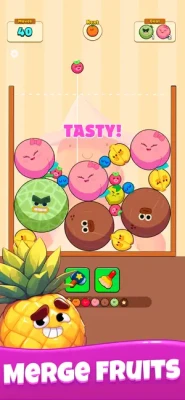
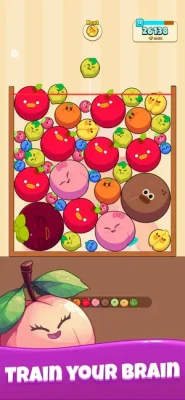
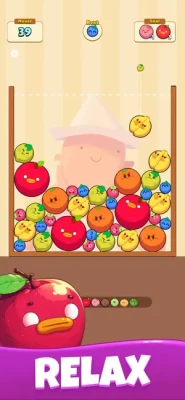
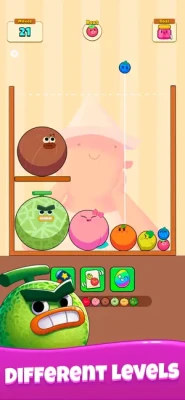
Fruit Clash: Sort & Merge is a physics-based puzzle game that challenges players to combine matching fruits and create progressively larger varieties. The main objective is to merge smaller fruits into bigger ones until you produce a watermelon while preventing the container from overflowing.
The gameplay is simple to understand but requires careful planning. You drop fruits into a container, and when two matching fruits touch, they merge into a larger fruit. This creates space for additional drops and allows you to build longer combinations.
Unlike traditional match-three games, Fruit Clash relies on gravity and physical movement rather than a fixed grid. Fruits can bounce off one another, roll into gaps, and shift unexpectedly after a merge. These mechanics make every placement important.
The game offers an endless merging experience, colorful graphics, playful sound effects, and useful boosters. Players can focus on improving their merging strategy, creating watermelons, and achieving better results with each attempt.
How to Play Fruit Clash: Sort & Merge
The main objective is to drop fruits into the container, combine identical fruits, and work toward creating the largest fruit in the game: the watermelon.
You control where each fruit falls by choosing its horizontal position before releasing it. Once a fruit lands, gravity determines how it moves and whether it connects with other fruits.
When two identical fruits touch, they merge into a larger fruit. This process creates opportunities for additional combinations and can free valuable space inside the container.
The challenge becomes more difficult as the container fills. If fruits pile up too close to the top, you risk ending your run.
To succeed, think about the immediate placement and its future consequences. A good drop can trigger multiple merges, while a poorly positioned fruit can block useful combinations and create an overcrowded pile.
The key is to keep the container organized, build combinations deliberately, and avoid filling the available space with disconnected fruits.
Understanding the Fruit Merge System
Fruit Clash uses a progression system in which smaller fruits combine to create larger varieties. Each successful merge advances your progress toward the ultimate watermelon.
The exact fruit sequence depends on the game's current version, but the basic rule remains the same: two matching fruits combine into one larger fruit.
For example, merging two identical small fruits creates the next fruit in the progression. Combining two of those larger fruits produces another upgrade, allowing you to continue building toward the watermelon.
Every successful merge also changes the arrangement of nearby fruits. Because the game uses physics, surrounding pieces may roll into the newly created space and trigger additional combinations.
Learning the fruit progression helps you recognize which combinations to prepare. Instead of dropping each fruit without a plan, look for opportunities to position matching pieces close together.
The more familiar you become with the merging sequence, the easier it is to identify useful placements and avoid unnecessary clutter.
Best Beginner Tips for Fruit Clash
Start by learning how fruits behave when they land. Their movement can be less predictable than it appears, especially when they collide with several other pieces.
Try to keep similar fruits close together so that future drops can trigger merges. This reduces the number of isolated pieces and helps maintain a more organized container.
Avoid dropping every fruit into the center. Although the middle may seem like the easiest target, repeated central placements can create a tall pile and leave little room for future combinations.
Use the edges carefully. Side placements can help you organize smaller fruits, but they can also trap pieces in corners where they are difficult to merge.
Look at the next fruit whenever the game provides a preview. Knowing what is coming allows you to prepare a useful landing position instead of reacting after the fruit has already been dropped.
Keep the container as low and balanced as possible. A stable arrangement provides more flexibility and makes it easier to create larger combinations.
Finally, be patient. Rushing drops without considering the surrounding fruits often leads to unnecessary clutter and premature game over.
Best Strategy for Creating a Watermelon
Creating a watermelon is the main long-term objective in Fruit Clash. Reaching this goal requires more than merging whenever two matching fruits appear; you need to manage space and prepare combinations in advance.
Build Merges from the Bottom Up
Start by combining smaller fruits near the bottom of the container. Lower merges help create a stable foundation and can free space above them.
A well-organized lower section makes it easier to place new fruits without creating a tall, unstable pile.
Avoid allowing too many small fruits to accumulate in the upper half of the container. These pieces can block incoming drops and limit your options.
Prepare Matching Pairs
Whenever possible, position identical fruits close enough that a future drop can bring them together.
If you have one fruit on the left and another on the right, consider how you can move the next matching piece into a position that encourages a merge.
Planning these combinations helps reduce clutter and increases the chances of triggering multiple merges in a single sequence.
Use Chain Reactions
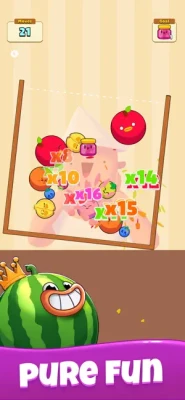
A chain reaction occurs when one merge causes nearby fruits to move together and create additional merges.
These combinations are especially valuable because they can clear several pieces while creating larger fruits.
To encourage chain reactions, place matching fruits near one another and leave enough space for them to move naturally after a merge.
You cannot control every physical movement, but you can improve your chances by creating sensible arrangements.
Keep Space Near the Top
The top of the container is your most important safety area. When fruits approach the limit, you have fewer opportunities to make careful placements.
Prioritize merges that reduce congestion in the upper section. If you must choose between creating a large fruit and leaving several smaller pieces near the top, consider which option gives you more room for future drops.
Avoid unnecessary high placements when a safer position is available.
Think Several Drops Ahead
Before releasing a fruit, consider what the resulting arrangement will look like after it lands.
Ask yourself whether the fruit can merge immediately, whether it blocks another pair, and whether it leaves enough room for the next drop.
Planning even two or three moves ahead can make a significant difference in longer runs.
How to Manage Space Inside the Container
Space management is one of the most important skills in Fruit Clash. Even a promising run can end when too many unmatched fruits accumulate.
The first rule is to avoid creating tall columns of unrelated fruits. A high stack reduces your flexibility and can cause the container to overflow.
Try to distribute smaller fruits in a way that supports future merges. However, do not spread everything too widely because separated matching pieces may become difficult to combine.
Maintain a stable lower layer and look for opportunities to merge fruits before the upper section becomes crowded.
When a merge creates a gap, consider how nearby fruits may move into that space. Sometimes, a seemingly small opening is enough to bring two matching fruits together.
If the pile becomes uneven, focus on placements that help reduce the tallest section. A balanced arrangement is usually easier to manage than one with a single dangerous column.
Most importantly, remember that empty space has strategic value. Do not sacrifice the entire container for a small immediate merge if doing so leaves no room for the next fruit.
How Physics Affects Fruit Merging
Physics is what makes Fruit Clash different from a conventional matching puzzle. Fruits respond to gravity, collisions, and the positions of surrounding pieces.
A fruit may bounce after landing, roll down a slope, or become wedged between larger fruits. These movements can help you create combinations, but they can also produce unexpected results.
When you drop a fruit onto a crowded pile, do not assume it will remain exactly where it first makes contact. Nearby pieces may shift and alter the arrangement.
Use this behavior to your advantage by looking for slopes and open spaces that guide fruits toward matching pieces.
Avoid making overly precise plans that depend on every fruit landing in an exact position. Instead, create arrangements that offer several possible merging opportunities.
Understanding the physical behavior of fruits makes it easier to adapt when a drop produces an unexpected result.
How to Use Boosters Effectively
Fruit Clash includes helpful boosters that can assist when the container becomes difficult to manage. These tools can rescue a promising run, remove troublesome pieces, or create additional merging opportunities.
Hammer Booster
The hammer can smash a selected fruit and help remove an unwanted piece from the container.
Use it when a fruit blocks an important merge, occupies valuable space, or contributes to a dangerous stack near the top.
Avoid using the hammer on a fruit that is already close to merging with a matching piece unless removing it provides a greater strategic benefit.
Brush Booster
The brush booster can burst smaller berry fruits, helping clear space and simplify a crowded arrangement.
It is particularly useful when many small fruits have accumulated and are preventing larger combinations from forming.
Consider using it when the container becomes cluttered with low-level fruits that are difficult to organize into useful pairs.
Other Available Boosters
Additional boosters may be available depending on the current game version and mode. Review each item's in-game description before using it so you understand its effect.
Save valuable boosters for situations where they can make a meaningful difference. Using them too early may leave you without assistance when the container becomes dangerously full.
The best booster strategy is to identify the main problem first. Remove a blocking fruit, clear unwanted smaller pieces, or use an available tool to restore enough space for a better arrangement.
How to Achieve Higher Scores
Improving your score requires consistent merging and effective space management. The more efficiently you combine fruits, the more opportunities you create to continue playing and build larger combinations.
Prioritize merges that create space instead of focusing exclusively on the largest fruit available.
Look for opportunities to trigger multiple merges from one drop. Chain reactions can help clear the container and improve your overall progress.
Avoid unnecessary placements that leave isolated fruits scattered around the container. These pieces often become obstacles later.
Learn which positions work best for your usual fruit sequence and adjust your strategy when the next fruit differs from your expectations.
Do not rush to create a watermelon if doing so would leave the rest of the container in a dangerous condition. A stable arrangement gives you more opportunities to continue merging and improve your score.
Over time, careful planning and better control of the available space will help you achieve more consistent results.
Common Mistakes to Avoid
One of the most common mistakes is dropping fruits without checking the surrounding arrangement. A placement that appears harmless may block a useful pair or create an unstable pile.
Another mistake is concentrating every fruit in the center. This can quickly build a tall stack and reduce your available landing space.
Ignoring the next fruit preview is also a missed opportunity. When the next piece is visible, use that information to prepare a suitable landing position.
Some players spread matching fruits too far apart. Although this may create short-term space, it can make future merges more difficult.
Using boosters too early can also hurt your progress. Save them for moments when they can remove a serious obstacle or create meaningful space.
Finally, do not ignore the top of the container. Once fruits approach the limit, every drop becomes more dangerous. Prioritize safe merges and avoid unnecessary risks.
Advanced Tips for Experienced Players
Once you understand the basics, focus on controlling the overall shape of the fruit pile rather than considering each drop individually.
Build combinations in a way that encourages matching fruits to meet naturally. Sloped arrangements can guide smaller pieces toward one another, while a stable lower layer provides more room for future drops.
Think about the consequences of a merge before committing to a placement. A successful combination may cause nearby fruits to shift, so consider where those pieces are likely to move.
Keep track of the next available fruit and use it to prepare combinations whenever possible.
Avoid filling the corners with disconnected pieces. Although side placements can be useful, too many isolated fruits make it harder to maintain a balanced arrangement.
Use boosters strategically rather than waiting until there is almost no space left. If a tool can prevent a dangerous pile from forming, using it at the right time may be more valuable than saving it for a last-second rescue.
Most importantly, stay flexible. Physics-based movement means that no plan is guaranteed to work exactly as expected. Good players adapt their strategy to the arrangement that actually appears.
Is Fruit Clash: Sort & Merge Suitable for Casual Players?
Fruit Clash is designed for players who enjoy simple puzzle mechanics and relaxing gameplay. Its basic controls are easy to understand, and a single session can fit into a short break.
The fruit-merging system provides a clear objective, while physics-based movement adds enough unpredictability to keep each attempt interesting.
The colorful visuals, playful fruit designs, and sound effects create a lighthearted atmosphere. Players can focus on making combinations without needing to learn complicated controls.
At the same time, the need to manage space and plan future drops provides a strategic challenge for players who want to improve their performance.
The game includes advertisements and optional in-app purchases, so the overall experience may vary depending on individual preferences.
Frequently Asked Questions
What is Fruit Clash: Sort & Merge?
Fruit Clash: Sort & Merge is a physics-based puzzle game developed by SayGames Ltd. Players drop fruits into a container, merge matching pieces into larger fruits, and work toward creating a watermelon.
How do you merge fruits?
Drop a fruit into the container and bring it into contact with an identical fruit. Matching fruits combine into a larger fruit, creating opportunities for additional merges.
How do you create a watermelon?
Continue combining matching fruits through the game's progression sequence. Plan your placements carefully, manage the available space, and create chain reactions whenever possible.
What happens when the container becomes full?
If fruits rise to the top limit of the container, your run can end. Prevent this by maintaining enough space, combining matching fruits, and avoiding unnecessary piles.
What does the hammer booster do?
The hammer booster can smash a fruit and remove an unwanted piece from the arrangement. It is useful when a particular fruit blocks a valuable merge or occupies critical space.
What does the brush booster do?
The brush booster can burst smaller berry fruits, helping clear clutter and create additional room for future drops.
How can you get a higher score?
Focus on efficient merges, chain reactions, and balanced fruit placement. Keeping the container organized allows you to continue playing and create larger fruits.
Is Fruit Clash an endless game?
The game offers an endless merging mode in which you continue dropping and combining fruits until the container reaches its limit. Additional modes or features may vary by version.
Is Fruit Clash free to play?
Fruit Clash: Sort & Merge is available as a free download on the Apple App Store and includes advertisements and optional in-app purchases.
Can beginners enjoy Fruit Clash?
Yes. The controls and objective are straightforward, making the game accessible to beginners. More experienced players can develop advanced strategies for managing space and creating longer merging chains.
Final Thoughts on Fruit Clash: Sort & Merge
Fruit Clash: Sort & Merge combines colorful visuals, satisfying fruit combinations, and physics-based puzzles into an accessible mobile gaming experience. The objective is simple, but achieving a watermelon requires careful placement, smart space management, and the ability to adapt when fruits move unexpectedly.
The best strategy is to keep the container balanced, prepare matching pairs, take advantage of chain reactions, and use boosters when they provide a clear benefit. Avoid rushing your drops and pay attention to the available space near the top.
Whether you enjoy casual puzzle games, high-score challenges, or the satisfaction of creating larger combinations, Fruit Clash offers an entertaining way to test your planning skills. With practice and a thoughtful approach to every drop, you can build better combinations, manage the container more effectively, and work toward creating the perfect watermelon.
Rate the Game
User Reviews











Popular Games



















 Android
 iOS
 Windows
 Xbox