


Latest Version
September 08, 2024
Puzzle Cats
Sports
Android
0
Report a Problem
More About :game
The controls are easy to understand: swipe to shoot, adjust the direction of your attempt and use curved shots when a direct strike is not the best option. As you progress, the goalkeeper becomes more challenging, making accuracy and shot selection increasingly important.
The game also includes level progression, cup objectives, different football teams, high-score challenges and offline play. Its short matches make it particularly suitable for players who want quick football sessions without committing to a full-length match.
Football Games: Mobile Soccer Overview
Football Games: Mobile Soccer takes a simplified approach to football. Its main attraction is the free-kick challenge rather than full-team management or traditional match simulation.
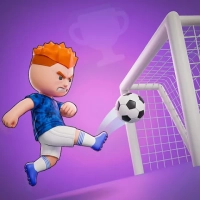
Each attempt gives you an opportunity to beat the goalkeeper. The challenge comes from finding the right angle, controlling the swipe and learning when to use a normal shot or a curved strike.
The game is deliberately easy to pick up, but later stages become more demanding. The goalkeeper improves as you advance, so simply shooting toward the same area repeatedly is unlikely to remain effective.
Game Information
Game: Football Games: Mobile Soccer
Developer: Puzzle Cats
Genre: Sports / Football
Platform: Android
Main Gameplay: Free-kick shooting
Controls: Swipe-based shooting
Progression: Level-based
Gameplay Style: Arcade football
Offline Play: Available
In-App Purchases: Available
Ads: Included
Challenge: Increasing goalkeeper difficulty
Objective: Score goals and progress through challenges
Latest indexed version: 8.5
Recent update: August 2026
What Makes Football Games: Mobile Soccer Different?
The biggest difference is its focus.
You are not expected to spend a long time managing formations, making substitutions or playing complete matches. Instead, Football Games: Mobile Soccer concentrates on the most immediately satisfying part of football: taking the shot.
That makes the game accessible for short sessions while still giving experienced players room to improve their accuracy.
The difficulty also develops gradually. The goalkeeper becomes stronger at later stages, forcing you to think more carefully about placement and shot variation.
Main Features
Free-Kick Shooting
Free kicks are the heart of the experience. Your objective is to find a route past the goalkeeper and into the goal.
A successful attempt depends on more than simply aiming toward the net. Shot direction, timing and curve can all influence the result.
Swipe Controls
The shooting system is designed around simple swiping. This keeps the controls accessible while giving you direct control over the direction of your shot.
Small changes in your swipe can produce noticeably different results, so developing consistent finger movement is important.
Curved Shots
Curving the ball is one of the most useful techniques in the game.
Instead of sending the ball directly toward the target, you can create a bending trajectory that makes it harder for the goalkeeper to reach.
Increasing Goalkeeper Difficulty
The goalkeeper becomes more challenging as you progress. This prevents the game from becoming completely predictable and encourages you to change your shooting approach.
Level Progression
The game uses progressive challenges rather than keeping every attempt at the same difficulty. Later levels require greater accuracy and better understanding of shot placement.
Cup Challenge
One of the game's objectives involves scoring 25 goals to win the cup, giving players a longer-term target beyond individual free kicks.
Offline Gameplay
Football Games: Mobile Soccer can be played offline, making it convenient for short sessions when an internet connection is unavailable.
World Football Tournament
Recent versions have included a World Football Tournament mode featuring national teams and the ability to build a World XI.
How to Play Football Games: Mobile Soccer
The basic idea is straightforward:
Study the goal and goalkeeper position.
Choose where you want the ball to finish.
Swipe in the desired direction.
Use a curve when a straight shot is too easy to save.
Learn from missed attempts.
Adjust your next shot instead of repeating the exact same movement.
Continue progressing through increasingly difficult levels.
The controls may take only seconds to understand, but mastering them requires practice.
Complete Football Games: Mobile Soccer Strategy Guide
1. Learn Straight Shots Before Curving the Ball
Do not immediately rely on complicated curved shots.
Start by learning how much power and direction your normal swipe produces. Once you understand your basic shot, you can begin adding curves.
This creates a much more reliable foundation.
2. Aim for Placement Rather Than Power
A powerful shot is not automatically a good shot.
If the goalkeeper can easily reach the ball, increasing the force does not solve the problem. Placement is often more important.
Try to send the ball toward areas where the goalkeeper has less time to react.
3. Use the Corners Intelligently
The corners are natural targets because they give the goalkeeper less room to make a comfortable save.
However, constantly targeting exactly the same corner can become predictable.
Rotate your targets and adjust your shot based on the goalkeeper's position.
4. Master the Curved Shot
A curved shot becomes especially useful when the goalkeeper appears to have a clear path to your intended target.
Instead of aiming directly at the corner, create a trajectory that bends around the goalkeeper.
Practice the movement repeatedly until you can reproduce the same curve consistently.
5. Watch the Goalkeeper Before Shooting
Do not treat every free kick as identical.
Take a moment to examine the goalkeeper's position. If the goalkeeper is positioned toward one side, the opposite side may provide a better opportunity.
This simple habit can make difficult attempts considerably easier.
6. Change Your Shooting Pattern
One of the biggest mistakes is using the same swipe repeatedly.
If several attempts fail in the same way, change something:
Change the target
Adjust the swipe angle
Try a curved shot
Reduce or increase the movement slightly
Aim around the goalkeeper instead of directly toward the goal
Small adjustments can produce much better results.
Beginner Tips
Start Slowly
There is no need to rush your swipe. Accuracy matters more than speed.
Practice One Technique at a Time
Learn straight shots first, then introduce curved shots.
Watch the Goalkeeper
The goalkeeper's position should influence your decision.
Avoid Random Swiping
Every shot should have a deliberate target.
Learn From Misses
A missed shot provides useful information. Ask whether the problem was direction, curve or target selection.
Advanced Shooting Strategy
Once you become comfortable with basic free kicks, start thinking about shot variety.
The Corner Switch
If your first attempt targets one corner, consider switching to the opposite side on the next opportunity.
This prevents you from becoming dependent on a single shooting pattern.
The Curve Around the Keeper
When the goalkeeper appears to cover your direct route, use a curved trajectory to approach the target from a different angle.
The Controlled Shot
Do not assume that the largest swipe is always the best swipe. A controlled movement can be more accurate and easier to repeat.
The Adjustment Method
If your shot consistently misses just outside the target, do not completely change your technique.
Make a small adjustment.
For example, if the ball repeatedly travels too far to one side, slightly reduce the directional movement rather than starting from scratch.
How to Beat Increasingly Difficult Goalkeepers
The goalkeeper becomes one of the main sources of difficulty as you advance.
A good strategy is to stop thinking of the goalkeeper as an obstacle that must simply be overpowered.
Instead, treat the goalkeeper's position as information.
If the goalkeeper covers your preferred area, select another target.
If direct shots become predictable, introduce curves.
If your curved shots become inaccurate, return to controlled straight shots and rebuild your consistency.
The strongest approach is to have several reliable shooting techniques rather than one favorite shot.
Level Progression Strategy
Progressing through the levels is largely about consistency.
Do not judge your performance only by spectacular goals. A reliable scoring technique is much more valuable than an occasional difficult shot.
When entering a harder section:
Use your safest shot first.
Observe how the goalkeeper responds.
Identify which areas are difficult to defend.
Change your target when necessary.
Use curves selectively.
Avoid repeating failed attempts without adjustment.
The goal is to build a repeatable method rather than depend on luck.
How to Win the Cup Challenge
The cup objective gives you a longer-term scoring target.
To work toward it efficiently, focus on avoiding unnecessary misses.
A few useful habits are:
Use your most reliable shot early.
Avoid experimenting on every attempt.
Save more complicated curves for situations where they provide a clear advantage.
Keep changing your target when the goalkeeper begins anticipating your preferred side.
Treat every successful attempt as a chance to reinforce a technique that works.
Scoring consistently is more important than trying to produce a highlight-reel goal every time.
World Football Tournament Strategy
The World Football Tournament content adds a national-team angle to the game.
When playing tournament-style challenges, concentrate on consistency rather than trying to make every attempt spectacular.
Build your preferred World XI around the available choices, then focus on improving your shooting technique.
The most important skill remains the same: putting the ball beyond the goalkeeper.
Recent game information indicates that the tournament includes national teams such as England, Brazil, Germany, France, Argentina and the USA.
Offline Playing Tips
Because the game supports offline play, it can work well for quick sessions during travel or when connectivity is limited.
Offline sessions are also useful for practice because you can concentrate entirely on improving your shooting technique without distractions.
Use these sessions to practice:
Straight shots
Corner placement
Curved shots
Different swipe lengths
Changing shooting directions
Goalkeeper reactions
Common Mistakes to Avoid
Shooting at the Same Spot Every Time
A predictable target gives the goalkeeper an easier job.
Using Curves Without Control
Curved shots are useful, but an inaccurate curve is still an inaccurate shot.
Focusing Only on Power
A hard shot that goes away from the target is worse than a controlled shot placed correctly.
Ignoring the Goalkeeper
Always consider where the goalkeeper is positioned before deciding where to shoot.
Changing Everything After One Miss
One failed attempt does not necessarily mean your entire technique is wrong.
Make small adjustments first.
Playing Too Quickly
Rushing can cause inconsistent swipes and unnecessary misses.
Best Practice Routine
If you want to improve quickly, use a simple practice routine.
Stage 1: Straight Shots
Practice placing the ball toward both corners.
Stage 2: Controlled Direction
Work on producing the same shot direction repeatedly.
Stage 3: Curved Shots
Introduce curves and learn how different swipe movements affect the trajectory.
Stage 4: Goalkeeper Adaptation
Practice changing your target according to the goalkeeper's position.
Stage 5: Mixed Shooting
Combine straight and curved attempts so you are not dependent on one technique.
Football Games: Mobile Soccer Tips at a Glance
Aim for placement rather than simply power.
Learn straight shots before advanced curves.
Watch the goalkeeper's position.
Use both sides of the goal.
Change your target when a technique becomes predictable.
Practice curved shots gradually.
Avoid random swipes.
Make small corrections after misses.
Build a consistent shooting routine.
Use offline sessions to practice your technique.
Focus on consistency when progressing through difficult levels.
Pros and Cons
Pros
Simple swipe controls
Quick football challenges
Free-kick-focused gameplay
Curved shooting mechanics
Increasing difficulty
Level progression
Offline play
Easy to understand
Suitable for short gaming sessions
Cons
Focuses heavily on free-kick shooting rather than complete football matches
Advertising can interrupt the experience
Players looking for deep football management may find the gameplay limited
Difficulty can become frustrating when goalkeeper reactions improve
Current third-party tracking and user-review summaries also indicate that advertising, performance and goalkeeper behavior are recurring areas of criticism among some players, although individual experiences vary.
Is Football Games: Mobile Soccer Worth Playing?
If you enjoy quick football challenges rather than full-length football simulations, Football Games: Mobile Soccer is worth trying.
Its strongest feature is its simplicity. You can launch the game, take a few free kicks and immediately start working on your accuracy.
The experience becomes more interesting when you stop treating each shot as a simple swipe and start thinking about placement, goalkeeper positioning, curves and shot variation.
It is less suitable for players who specifically want complete 11-versus-11 matches, detailed tactics or deep team management.
Who Should Play Football Games: Mobile Soccer?
This game is a good fit for:
Football and soccer fans
Players who enjoy quick arcade challenges
Fans of free-kick games
Casual mobile gamers
Players who like score-based progression
People looking for an offline sports game
Players who enjoy improving precision and timing
Frequently Asked Questions
What is Football Games: Mobile Soccer?
Football Games: Mobile Soccer is a mobile football game focused primarily on free-kick shooting, scoring challenges and level progression.
How do you shoot in Football Games: Mobile Soccer?
The game uses swipe controls. You swipe in the direction you want the ball to travel and can use different movements to create curved shots.
Does Football Games: Mobile Soccer have curved shots?
Yes. Curved shooting is one of the game's main mechanics and can be used to send the ball around the goalkeeper.
Does Football Games: Mobile Soccer work offline?
Yes. The game supports offline gameplay.
Does the goalkeeper get harder?
Yes. The goalkeeper becomes more challenging as you progress through the game.
Can you play with different football teams?
The game allows players to represent different world or league football teams, with recent tournament content also featuring national teams.
How can I score more goals?
Focus on accurate placement, study the goalkeeper's position, vary your targets and practice curved shots rather than relying on maximum power.
What is the best strategy for difficult levels?
Use a controlled shooting style, avoid repeating the same target and adjust your shot based on how the goalkeeper responds.
Is Football Games: Mobile Soccer a full football simulation?
No. Its gameplay is primarily built around free-kick shooting challenges rather than full traditional football matches.
Final Verdict
Football Games: Mobile Soccer takes one of football's most exciting moments—the free kick—and turns it into a quick arcade challenge.
Its accessible swipe controls make the game easy to start, while progressively stronger goalkeepers, curved shots and level progression provide reasons to keep practicing.
The key to becoming better is not simply shooting harder. Learn the controls, study the goalkeeper, vary your targets and develop a small collection of reliable shooting techniques.
For players who want quick football action, free-kick challenges and offline gameplay, Football Games: Mobile Soccer offers a straightforward and accessible experience.
Rate the Game
User Reviews












Popular Games



















 Android
 iOS
iOS Windows
 Xbox
Xbox