




Latest Version
September 15, 2024
Fansipan Limited
Role Playing
0
com.fansipan.epic.stickman.survival.rpg.idle.game
Report a Problem
More About :game
The game offers four main character paths—Warrior, Rogue, Mage and Summoner—along with weapons, armor, skills, loot and other progression systems. Battles are designed around auto-combat, making the game accessible for players who enjoy RPG progression without having to control every attack manually.
Epic Stickman Game Information
- Game: Epic Stickman: Idle RPG War
- Developer: Fansipan Limited
- Genre: Role-Playing / Idle RPG
- Platform: Android and Windows
- Game Style: Stickman, stylized, single-player
- Combat: Auto-battle / AFK
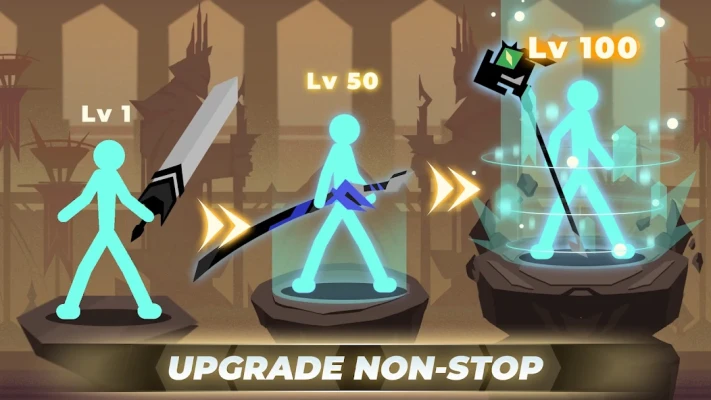
- Progression: Offline rewards, gear, skills, classes and character upgrades
- Setting: Shadow Realm
- Business Model: Free-to-play with ads and in-app purchases
- Google Play Rating: 4.8 stars
- Google Play Downloads: 10M+
- Content Rating: Teen
- Latest listed update: September 21, 2026
Google Play currently identifies the game as an idle RPG, casual, single-player and offline title, while also listing Android and Windows availability.
What Is Epic Stickman: Idle RPG War?
Epic Stickman puts you in control of a customizable stickman hero fighting through waves of monsters in a dark fantasy world.
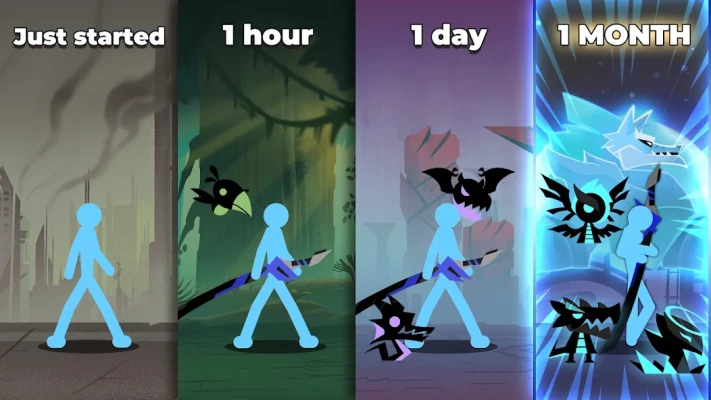
The main appeal comes from its combination of idle RPG mechanics and automatic battles. Your character can continue progressing while you are offline, meaning your progress does not completely stop when you leave the game.
The core gameplay loop is simple:
Battle → Earn rewards → Upgrade → Push further → Farm → Repeat
As you advance, the game introduces more systems and stronger enemies, giving you additional ways to improve your hero.
The Shadow Realm
The Shadow Realm is the game's dark fantasy setting, filled with monsters, bosses, treasures and progressively harder battles.
Rather than relying only on active combat, the game encourages long-term character development. Your objective is to create a stronger stickman champion capable of surviving increasingly difficult encounters.
The official Google Play description specifically highlights waves of enemies, bosses, treasures and the Shadow Realm as major parts of the experience.
Classes in Epic Stickman
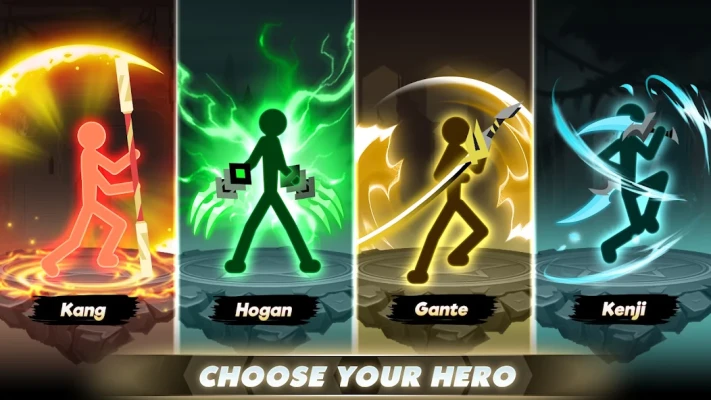
One of the most important decisions is choosing your character class.
Warrior
The Warrior is designed around direct combat. This class is a natural option for players who prefer a straightforward fighting style and want their character to stay involved in the action.
When developing a Warrior, consider balancing offensive power with enough durability to survive difficult encounters.
Rogue
The Rogue focuses on an aggressive combat style.
Rogue builds can be particularly attractive to players who prefer fast offensive pressure. When building this class, pay attention to offensive statistics and skills that increase your overall damage output.
Mage
The Mage uses magical abilities and provides a different approach to combat.
Mage builds are particularly interesting for players who enjoy skill-focused gameplay. Look for abilities and upgrades that complement your preferred spell-based strategy.
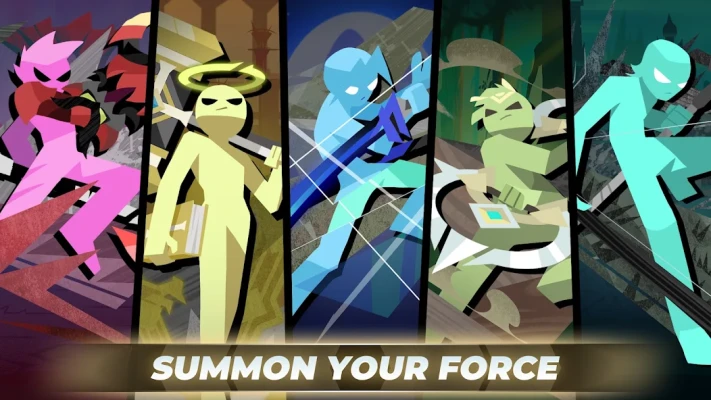
Summoner
The Summoner uses creatures or summoned forces as part of its combat strategy.
This class is useful for players who enjoy seeing multiple sources of damage working together automatically.
The four class choices—Warrior, Rogue, Mage and Summoner—are specifically identified in the current Google Play description.
Epic Stickman Strategy Guide
1. Build Around One Main Hero
One of the most important early-game principles is to avoid spreading valuable resources too widely.
Choose a primary hero and concentrate your strongest upgrades around that character.
A focused build makes it easier to:
- Increase combat power
- Clear stages faster
- Defeat bosses
- Farm better rewards
- Reach higher progression milestones
Once your main character is well developed, you can begin investing more heavily in secondary systems.
2. Keep Pushing Your Highest Reliable Stage
Do not automatically farm the easiest stage.
Instead, find the highest stage that your character can complete consistently.
If you are defeating enemies quickly, continue pushing forward.
When you reach a stage where your character repeatedly fails, return to farming and use the additional resources to strengthen your build.
This creates a simple progression cycle:
Push → Hit a wall → Farm → Upgrade → Push again
3. Make AFK Progression Work for You
AFK progression is one of the defining features of Epic Stickman.
Before leaving the game, make sure your hero is farming an appropriate stage.
If your character can comfortably handle a more advanced area, there is little reason to leave it farming an old stage unless you specifically need a particular resource.
When you return, collect your accumulated rewards and immediately look for meaningful upgrades.
4. Upgrade Damage When You Are Surviving Easily
If your character rarely dies but takes too long to defeat enemies, offensive upgrades should become a priority.
Increasing your damage can help you:
- Clear normal enemies faster
- Finish boss battles more efficiently
- Reach higher stages
- Improve farming speed
- Generate more progression resources
Do not increase defensive statistics simply because they are available if your real problem is insufficient damage.
5. Improve Defense When You Keep Dying
The opposite situation is also important.
If your hero has enough damage to defeat enemies but dies before completing the stage, additional offensive power may not solve the problem.
In that situation, investigate defensive or survivability improvements.
The objective is not to maximize one statistic blindly.
The objective is to solve the specific problem preventing progression.
6. Choose Skills That Work Together
Your skills should complement one another.
A useful setup can combine:
- Area damage
- Single-target damage
- Sustained attacks
- Powerful active abilities
- Supporting effects
- Class-specific abilities
For ordinary enemy waves, area damage can be particularly useful.
For bosses, single-target damage and powerful burst abilities may become more important.
7. Don't Judge Gear by Appearance Alone
Epic Stickman includes weapons, armor and other loot.
When you receive a new piece of equipment, examine its actual benefits instead of simply equipping it because it looks newer.
Ask:
Does this item improve my current build?
For an offensive build, prioritize relevant offensive bonuses.
For a struggling character, a defensive item can sometimes be more valuable than a small damage increase.
8. Save Important Resources
Idle RPGs often contain multiple currencies and upgrade materials.
Avoid spending everything as soon as you receive it.
Before making a large investment, consider:
- Is this upgrade permanent?
- Does it directly improve my main character?
- Will I unlock a more important system soon?
- Can I obtain this resource again easily?
- Does the upgrade solve my current progression problem?
This simple habit can prevent a lot of inefficient spending.
9. Use Boss Battles as Progression Tests
Bosses are useful indicators of whether your build is balanced.
If you destroy ordinary enemies but cannot defeat the boss, your build may need stronger single-target damage.
If you can damage the boss substantially but die before finishing it, survivability may be the problem.
Use the result of the battle to determine what to upgrade next.
10. Don't Panic When You Hit a Progression Wall
Getting stuck is normal in an idle RPG.
Instead of repeatedly attempting the same impossible stage, switch to farming.
Allow your hero to generate additional rewards, make several meaningful upgrades, and then try again.
This is more efficient than spending resources randomly in an attempt to force immediate progress.
Gear and Equipment Guide
Equipment is a major part of character development.
Your gear should support your chosen class and combat style.
A useful way to evaluate equipment is:
Main statistic → Secondary bonuses → Synergy with your build → Upgrade cost
Do not automatically replace every item simply because another piece has a higher overall number.
An item with useful bonuses for your particular build can sometimes be more practical than a piece with less relevant statistics.
Skill Upgrade Strategy
When resources are limited, prioritize skills that you use frequently.
A good upgrade should have a noticeable effect on your actual battles.
For example:
- If normal waves are difficult, improve area damage.
- If bosses are the problem, improve single-target damage.
- If survival is the issue, consider defensive or supportive abilities.
- If your character takes too long to finish battles, prioritize reliable damage improvements.
This approach makes every upgrade more purposeful.
Dungeon Strategy
Dungeons provide additional challenges beyond normal stage progression.
Treat each dungeon as a separate test rather than assuming that your normal farming build will always perform perfectly.
If you fail repeatedly:
- Check your gear.
- Review your skills.
- Look at your character's main statistics.
- Identify whether damage or survivability is the problem.
- Make a focused upgrade.
- Try again.
A recent Google Play user review also described inconsistent results in a relic dungeon despite having significantly higher displayed power. The developer responded that gear and skill upgrades could be relevant factors. This is useful context because displayed combat power does not necessarily guarantee identical results in every encounter.
How to Progress Faster
A practical daily routine is:
Step 1 — Collect AFK Rewards
Start by collecting everything accumulated while you were away.
Step 2 — Upgrade Your Main Hero
Spend resources where they create a meaningful increase in combat power.
Step 3 — Push Stages
Try to advance until you reach a genuine progression wall.
Step 4 — Farm
Once progress stops, move to the highest reliable farming point.
Step 5 — Improve Gear and Skills
Use the accumulated resources to strengthen the parts of your build that need improvement.
Step 6 — Test Again
Return to the difficult stage and see whether the upgrades solved the problem.
New Earrings System
The current Google Play listing reports Earrings as a new feature, together with UI/UX improvements, bug fixes and performance optimization.
Because this is a recently added system, players should treat earrings as another part of their overall equipment strategy rather than automatically prioritizing them over established upgrades.
When evaluating an earring upgrade, consider how its bonuses interact with your current class and build.
Common Beginner Mistakes
Spending Resources Everywhere
A focused build is generally easier to develop than a character with dozens of partially upgraded systems.
Ignoring AFK Rewards
Offline progression is a central part of the game. Make sure you regularly return to collect accumulated rewards.
Pushing Too Far Without Farming
Repeatedly failing a stage does not generate meaningful progress. Farm, upgrade and return.
Changing Builds Constantly
Experimentation is useful, but constantly rebuilding your character can waste resources.
Looking Only at Combat Power
Combat power is useful as a general indicator, but actual performance can depend on gear, skills, class choices and encounter mechanics.
Ignoring New Equipment
Check new gear whenever you obtain it. A better item can make a noticeable difference if it fits your build.
Epic Stickman Tips for Beginners
- Choose one main character to develop first.
- Keep your strongest gear on your primary hero.
- Push stages whenever you can clear them reliably.
- Farm when you hit a progression wall.
- Use AFK rewards to fund your next upgrades.
- Match your skills to the type of enemy you are fighting.
- Improve damage when battles are too slow.
- Improve survivability when your hero dies too quickly.
- Save valuable resources for meaningful upgrades.
- Reconsider your build when new equipment or systems become available.
- Test new systems rather than blindly investing in them.
- Keep an eye on updates because balance and progression systems can change.
Latest Update
The Google Play listing currently shows the game updated on September 21, 2026. The listed update includes:
- New Earrings feature
- UI/UX improvements
- Bug fixes
- Performance optimizations
The game is actively maintained, so individual mechanics and progression recommendations can change with future updates.
Epic Stickman: Idle RPG War Pros and Cons
Pros
- Automatic idle combat
- Offline progression
- Four distinct class paths
- Large range of character upgrades
- Equipment and loot system
- Dark fantasy Shadow Realm setting
- Bosses and challenging encounters
- Single-player gameplay
- Regular updates
- Easy to play in short sessions
Cons
- Numerous upgrade systems can initially feel complicated.
- Progression can slow down at higher stages.
- Randomized equipment and other systems can make results less predictable.
- The game contains advertisements and optional in-app purchases.
- Some progression systems require time and resource management.
Google Play currently labels the game as containing ads and in-app purchases, including random items.
Is Epic Stickman: Idle RPG War Worth Playing?
Epic Stickman: Idle RPG War is built for players who enjoy seeing a character become stronger over time without needing constant manual combat.
Its combination of stickman action, AFK progression, automatic battles, character classes, gear, skills, bosses and long-term upgrades gives the game a broad progression system.
The best way to approach it is patiently: develop a focused character, use AFK rewards efficiently, push stages when possible and change your strategy when a particular enemy or dungeon exposes a weakness.
Frequently Asked Questions
What is Epic Stickman: Idle RPG War?
Epic Stickman: Idle RPG War is an idle role-playing game from Fansipan Limited featuring stickman heroes, automatic combat, offline progression, classes, gear, skills, bosses and the Shadow Realm.
Is Epic Stickman an idle RPG?
Yes. Google Play categorizes the game as an Idle RPG and describes its automatic and offline progression mechanics.
What classes are available?
The current game description lists Warrior, Rogue, Mage and Summoner as the four class paths.
Can the hero fight while I am offline?
Yes. Offline progression is one of the game's central mechanics, allowing the stickman hero to continue progressing while you are away.
Does Epic Stickman have bosses?
Yes. The Shadow Realm includes bosses alongside waves of enemies and treasure.
Does Epic Stickman have gear?
Yes. The game includes weapons, armor, loot and character upgrades.
What is the best class?
There is no permanent answer that applies to every player and every game version. Warrior, Rogue, Mage and Summoner each provide different combat approaches, so the useful choice depends on your preferred playstyle and current build.
What should I upgrade first?
Focus on your primary hero and the skills, gear and statistics that directly support that character. Avoid spreading valuable resources too thinly.
What should I do when I get stuck?
Farm the highest stage you can reliably clear, collect AFK rewards, improve your gear and skills, then return to the difficult stage.
Does Epic Stickman receive new content?
Yes. The current Google Play listing shows ongoing updates, with the latest listed update adding Earrings along with UI/UX improvements, bug fixes and performance optimization.
Is Epic Stickman available on Windows?
The current Google Play listing indicates availability on Android and Windows, with Windows access powered by Intel technology.
Final Thoughts
Epic Stickman: Idle RPG War takes the familiar stickman formula and combines it with a substantial idle RPG progression system. Automatic combat makes it easy to play casually, while classes, equipment, skills, bosses and additional upgrade systems provide longer-term goals.
For the best progression, concentrate on a clear build instead of upgrading everything at once. Push when your hero is strong enough, farm when you reach a wall, and use each new upgrade to address the specific weakness holding your character back.
For players searching for an Epic Stickman RPG guide, Epic Stickman tips, idle RPG strategy, AFK RPG guide, stickman RPG gameplay, or Epic Stickman class guide, the key is understanding how all of these progression systems work together.
Rate the Game
User Reviews













Popular Games



















 Android
 iOS
 Windows
 Xbox