


Latest Version
August 04, 2025
Rollic Games
Puzzle
iOS
0
Report a Problem
More About :game
What Is Drop Away: Color Puzzle?
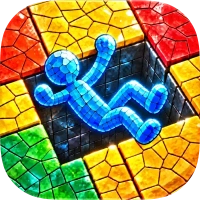
Drop Away: Color Puzzle is a casual puzzle game developed by Rollic Games. It combines the familiar appeal of color-matching games with a distinctive block-based challenge in which players must position and use holes to collect matching characters.
The main objective is to solve each board by moving the available pieces, creating the right paths, and collecting characters in the correct order. What begins as a straightforward puzzle gradually becomes more demanding as additional obstacles and mechanics change how the board works.
Unlike simple matching games that rely primarily on speed or quick reactions, Drop Away: Color Puzzle rewards observation and planning. Every move can affect the available space, the accessibility of characters, and the options left for subsequent actions.
The game also introduces additional mechanics as players progress, including hidden characters, locked holes, containers, pressure plates, and other obstacles. These features make later puzzles more varied and encourage players to adapt their strategies rather than rely on a single approach.
Main Features of Drop Away: Color Puzzle
Creative Color-Matching Gameplay
The game revolves around matching colorful stick figures with the appropriate puzzle mechanics. Players must recognize which characters can be collected and determine how to position the available holes to reach them.
Drag-and-Drop Controls
The controls are easy to understand. Players drag and drop furniture-shaped blocks and other interactive pieces into useful positions. The challenge comes from choosing the right movement and understanding its consequences.
Increasingly Complex Levels
Early stages introduce the basic rules, while later puzzles require more careful planning. New obstacles, restricted paths, and layered layouts make it important to examine the board before committing to a move.
Strategic Space Management
Space is one of the most important resources in the game. Moving a piece can open a path, block another route, or make a previously inaccessible character available. Successful players learn to preserve useful positions and avoid unnecessary movements.
Special Obstacles and Mechanics
As the game develops, additional elements introduce new problems to solve. Depending on the level, you may encounter cones that block access, bolts that lock holes, containers that need to be moved into position, or pressure plates that disable obstacles.
Hidden Characters and Surprises
Some levels conceal characters beneath platform layers or behind special mechanics. Clearing the visible surface can reveal new elements and change the best route through the puzzle.
A Mix of Logic and Planning
The game encourages players to think about movement order, color combinations, available space, and the consequences of each action. Careful planning can make complicated boards much easier to manage.
How to Play Drop Away: Color Puzzle
Examine the Puzzle Board
Start by studying the entire layout. Identify the visible characters, available holes, movable blocks, and obstacles. Look for paths that are already accessible and determine which pieces are preventing progress.
Understanding the board before making your first move helps you avoid creating unnecessary blockages.
Move the Pieces Into Position
Use the drag-and-drop controls to position the available pieces where they can help collect the required characters. Consider how each movement changes the surrounding space and whether the new position will support your next action.
Match the Correct Colors
Pay attention to the colors of the characters and the requirements of the puzzle. Choose movements that help collect the intended characters without blocking access to others.
If a character cannot be reached, examine whether an obstacle or another piece is preventing the hole from moving into the correct position.
Clear Obstacles
Some puzzles cannot be completed until special obstacles have been handled. You may need to move a container, release a locked hole, activate a pressure plate, or approach a character from a different direction.
Read the visual clues carefully and determine what each obstacle requires before attempting to move past it.
Discover Hidden Areas
Certain stages include layered platforms or concealed characters. Clearing the visible surface can reveal new puzzle elements underneath, so do not assume that everything important is visible at the beginning.
Complete the Level
Continue moving the pieces, collecting the correct characters, and opening new paths until the level's objective is satisfied. If a sequence fails, review the board and identify which movement caused the problem before trying again.
Complete Strategy Guide for Drop Away: Color Puzzle
Plan Your Moves Before Acting
One of the most useful habits is to study the board before making a move. Identify the characters you need to collect, the obstacles restricting movement, and the pieces that control access to important areas.
Think about what each move will accomplish. Will it open a route, reveal a hidden character, or help collect a specific color? If a move does not contribute to your plan, consider whether another option would be more useful.
Planning ahead reduces unnecessary movements and helps you avoid difficult situations later in the level.
Prioritize Important Blockages
Some obstacles affect only a small part of the board, while others prevent access to several characters. Focus on the blockages that limit the greatest number of useful moves.
Look for narrow passages, locked pieces, and objects positioned between your holes and the characters you need. Removing or bypassing a major obstruction can open multiple possibilities at once.
Manage Space Carefully
Limited space makes every placement important. A piece that is useful in one position may become an obstacle when moved somewhere else.
Before dragging a block, consider where it will end up and whether it will interfere with another route. Try to preserve open areas that allow you to reposition pieces when new characters or obstacles appear.
Avoid filling useful spaces simply because they are available. Keep your options open whenever possible.
Work on the Most Accessible Characters First
Characters that can be collected without disturbing the rest of the board are often good starting points. Removing them may create room for more complicated movements and make it easier to reach characters hidden behind obstacles.
However, accessibility alone should not determine your decision. If collecting one character would block a critical route, it may be better to handle another part of the puzzle first.
Think Several Moves Ahead
Before committing to a movement, imagine how the board will look afterward. Consider which routes will open, which ones will close, and what you will be able to do next.
You do not need to predict every move in advance. Planning two or three steps ahead is a practical starting point. As you become more familiar with the mechanics, you will recognize useful sequences more quickly.
Understand the Relationship Between Holes and Characters
The position of a hole determines which characters can be reached. A direct route may not always be available, particularly when other objects or special obstacles are involved.
Pay attention to the surrounding layout and consider whether moving a hole to another position would provide a better approach. Sometimes, a small adjustment can make a previously inaccessible character much easier to collect.
Avoid Unnecessary Movements
Random movements can make a puzzle harder by placing blocks in inconvenient positions or reducing the space available for future actions.
Give each move a clear purpose. You might be opening a path, collecting a character, preparing to reveal a hidden area, or setting up the next stage of the puzzle.
If you cannot identify a benefit, take another look at the board before moving anything.
Learn From Failed Attempts
Some levels require experimentation. If an approach does not work, try to identify the exact reason rather than simply repeating the same sequence.
Perhaps a hole became trapped, an obstacle remained active, or a character could no longer be reached. Use that information to change your next attempt.
A failed attempt can still be useful when it teaches you something about the level's rules or the order in which its obstacles should be handled.
Adapt to New Mechanics
Do not assume that a strategy that worked in an earlier level will solve every later puzzle. Special objects can change the rules of movement and introduce additional requirements.
When a new mechanic appears, observe what it does before acting. Look for visual clues that explain how it interacts with holes, characters, or nearby obstacles. Adjust your plan to account for the new behavior.
Advanced Tips for Difficult Levels
Identify the Critical Path
The critical path is the sequence of movements needed to reach the most important characters or unlock the areas required to finish the level.
Begin by identifying the major obstacles and determining what must happen before each one can be passed. Then work backward from the final objective to establish which actions are necessary.
This approach can reveal the order of operations more clearly than focusing on individual characters in isolation.
Use Pressure Plates Strategically
Pressure plates can help control obstacles and open routes. When a level includes this mechanic, examine which plate affects which blockage and determine how long the useful opening will remain available, if the puzzle's rules make that relevant.
Position holes carefully so that activating a plate supports your next movement. Avoid moving away from a plate too soon if doing so would allow an important obstacle to return.
Approach Cone Obstacles From the Correct Direction
Traffic cones can prevent holes from reaching characters. When this mechanic appears, look for an alternate route and consider the direction from which you approach the blocked area.
Do not repeatedly attempt the same movement if the cone continues to obstruct it. Repositioning a hole or clearing another route may be necessary before you can collect the character.
Deal With Bolted Holes
Some holes are locked with bolts. These cannot be treated like ordinary movable pieces until their locking mechanism has been addressed.
Inspect the bolt and nearby puzzle elements to understand what is required to release it. Once the hole is unlocked, reconsider the available routes because the board may now support movements that were previously impossible.
Use Containers to Unlock New Possibilities
Containers may need to be moved to specific positions to reveal their contents or activate a new part of the puzzle.
Think about where a container must go and which movements are necessary to get it there. Moving it without considering its destination can waste space or interfere with another task.
Reveal Hidden Characters Carefully
When characters are hidden beneath a platform or inside a concealed area, focus on clearing the relevant surface or unlocking the required section.
After revealing new elements, pause to reassess the board. The new characters may change which color you should prioritize or which route is most useful.
Manage Water Balloon Mechanics
Some stages feature characters carrying water balloons that can reveal the colors of other characters. When this mechanic is present, consider which characters need to be revealed and how collecting the balloon carriers will affect the remaining puzzle.
Avoid assuming that every hidden color can be accessed immediately. Work through the required actions in an order that preserves access to the characters you still need.
Handle Moving or Changing Obstacles
Certain levels introduce obstacles that change as you collect characters or close holes. A snake mechanic, for example, can retreat as holes are closed, gradually opening more space.
Pay attention to how the board changes after each successful action. A route that is unavailable now may become accessible later, so plan around the mechanic instead of treating the initial layout as permanent.
Common Mistakes to Avoid
Moving Pieces Without a Plan
A movement that looks convenient can create a new problem elsewhere. Always consider how the piece's new position affects the rest of the board.
Ignoring Obstacles
Trying to reach a character without addressing the obstacle blocking it often leads to wasted effort. Identify the obstacle's rules and determine the correct way around or through it.
Blocking Your Own Routes
Placing a hole or block in the wrong position can restrict future movements. Before confirming a placement, check whether you are leaving enough room to complete the remaining tasks.
Focusing on Only One Color
Collecting a single color may seem like the most obvious objective, but some puzzles require you to coordinate several colors and routes. Keep track of the overall board rather than concentrating exclusively on the nearest character.
Forgetting About Hidden Elements
A board's visible characters may not represent everything required to finish the stage. If the game includes layers, containers, or concealed characters, consider what might become available after clearing the current obstacles.
Using Boosters Too Early
If the game offers boosters, extra time, or other assistance, first determine whether a better move sequence can solve the problem. Save optional resources for situations where they provide a meaningful advantage.
Repeating the Same Failed Sequence
When an approach leads to a dead end, change the order of your movements. Identify the decision that caused the problem and test a different solution instead of repeating the same actions.
How to Handle Timed Levels
Some players may encounter stages with time limits, making efficient planning especially important.
Inspect the Board Quickly
At the beginning of a timed level, identify the major blockers, the required colors, and the most obvious route toward the objective. Avoid spending the entire countdown studying minor details.
Learn the Sequence Before Replaying
If you fail a timed puzzle, use the attempt to discover the correct order of actions. On your next try, follow the useful sequence more confidently rather than stopping to reconsider every move.
Prioritize Essential Actions
Focus on movements that directly support progress. Unnecessary repositioning and repeated attempts at blocked routes can waste valuable seconds.
Use Time Assistance Carefully
If the game offers an option to add time or temporarily pause the countdown, review its cost and effect before using it. Consider whether a more efficient sequence could solve the level without additional assistance.
How to Improve at Drop Away: Color Puzzle
Build a Consistent Routine
Approach each level using the same basic process: inspect the board, identify the objective, locate the obstacles, plan your first movements, and reassess after significant changes.
A consistent routine makes it easier to spot patterns and reduces mistakes caused by rushing.
Improve Your Spatial Reasoning
Try to visualize where each piece will go before moving it. Think about the spaces it will occupy and the routes it might open or close.
With practice, you will become better at predicting the consequences of a movement without needing to test every possibility.
Recognize Repeating Patterns
Some puzzles share similar structures even when their colors and obstacles differ. Learning how to handle common layouts can help you solve new stages more efficiently.
Pay attention to recurring situations involving narrow passages, locked holes, limited space, and hidden characters.
Stay Patient With Complicated Boards
A difficult level may have one critical move that is easy to overlook. If you become stuck, step back and examine the entire layout again.
Consider whether you have overlooked an alternate route, misunderstood an obstacle, or moved an important piece too early. A fresh perspective can reveal a simpler solution.
Is Drop Away: Color Puzzle Difficult?
Drop Away: Color Puzzle is easy to understand at first because its drag-and-drop controls and color-based objectives are straightforward. The challenge increases as the game introduces more complicated layouts, limited movement options, and special mechanics.
Simple stages help players learn the basic rules, while later puzzles demand stronger planning and a better understanding of how different elements interact. Timed stages can add another layer of pressure for players who prefer to solve puzzles at their own pace.
The game is a good fit for people who enjoy working through a problem, testing possible solutions, and improving their approach after each attempt.
Is Drop Away: Color Puzzle Free to Play?
Drop Away: Color Puzzle is available as a free download with in-app purchases. Optional purchases can include coins, bundles, and other game-related items, depending on the current offering.
The game may also present advertisements and paid options. The availability, prices, and terms of these features can vary by region and version.
Players who prefer not to spend money can focus on learning the puzzle mechanics and improving their movement strategy. If you choose to make a purchase, review the price and the specific benefit before confirming it.
Who Should Play Drop Away: Color Puzzle?
Drop Away: Color Puzzle is a suitable choice for fans of casual puzzle games, color-matching challenges, block puzzles, and brain teasers.
It may appeal to players who enjoy spatial reasoning, planning ahead, and discovering solutions to increasingly complex problems. The simple controls make the game approachable for beginners, while the additional mechanics provide variety for experienced puzzle fans.
Players who prefer fast action with little planning may find the more demanding levels less appealing, particularly when movement order and time limits become important.
Frequently Asked Questions
What is Drop Away: Color Puzzle?
Drop Away: Color Puzzle is a casual logic game in which players drag and drop furniture-shaped blocks and use holes to collect matching colored characters. The goal is to solve each level by managing space and overcoming obstacles.
How do you play Drop Away: Color Puzzle?
Study the board, move the available pieces into useful positions, and collect the required characters. Pay attention to colors, blocked paths, and special mechanics that affect how holes and characters interact.
What is the best strategy for winning difficult levels?
Identify the main obstacles first, plan several moves ahead, and prioritize actions that open useful routes. Avoid unnecessary movements and change your approach when a sequence leads to a dead end.
What are the special obstacles in Drop Away: Color Puzzle?
Depending on the level, special mechanics can include traffic cones, bolted holes, containers, pressure plates, lamps, water balloons, snakes, and layered platforms. Each introduces a different challenge that may require a specific movement or sequence.
How do you deal with hidden characters?
Look for mechanics that reveal concealed areas, such as clearing platform layers, opening containers, or using special character interactions. Once new characters appear, reassess the board and adjust your plan.
Does Drop Away: Color Puzzle require strategy?
Yes. Although the controls are simple, the game rewards careful planning, spatial awareness, color recognition, and an understanding of how obstacles affect movement.
Can beginners play Drop Away: Color Puzzle?
Yes. The basic controls are accessible to new players, and early puzzles help introduce the core mechanics. Later stages provide more challenging layouts for players who want to improve their problem-solving skills.
Is Drop Away: Color Puzzle available on iPhone and iPad?
Yes. The game is listed for iPhone and iPad on Apple's App Store. Check the current compatibility requirements to confirm that your device supports the game.
Does Drop Away: Color Puzzle have a time limit?
Some stages may include timed challenges. The exact requirements depend on the level and current game version. When a countdown is present, planning the movement sequence before replaying can help you complete the puzzle more efficiently.
Are there in-app purchases?
Yes. The game is free to download and offers optional in-app purchases. Review the available items and prices within the game before spending money.
Final Verdict
Drop Away: Color Puzzle offers a distinctive mix of color matching, block movement, and strategic problem-solving. Its simple controls make it easy to start playing, while the increasingly complex levels challenge you to think carefully about space, movement order, and special obstacles.
The key to success is to plan ahead, preserve useful routes, understand each new mechanic, and learn from unsuccessful attempts. Whether you enjoy relaxing brain teasers or more demanding logic challenges, Drop Away: Color Puzzle provides plenty of opportunities to sharpen your problem-solving skills and discover creative solutions.
Rate the Game
User Reviews









Popular Games



















 Android
 iOS
 Windows
 Xbox