

Latest Version
November 10, 2026
Supercharge Mobile
Racing
0
com.creativemobile.DragRacing
Report a Problem
More About :game
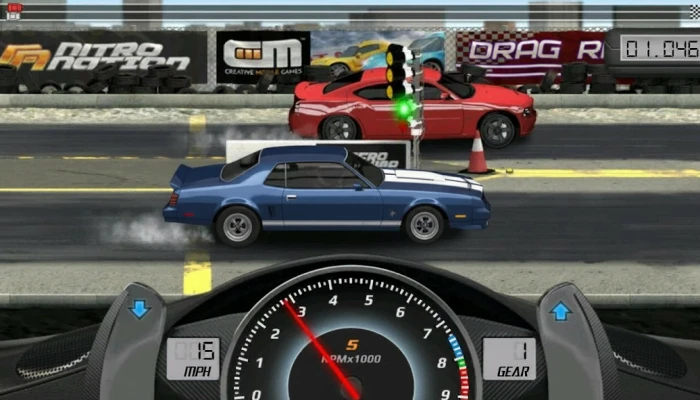
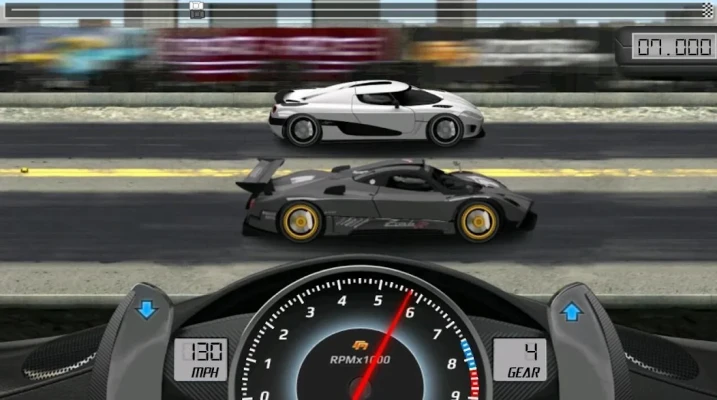
The game features more than 50 car styles inspired by Japanese, European and American vehicles. Players can upgrade their cars, adjust gear ratios, balance power and grip, customize their vehicles with unique designs, and challenge other racers in online competitions. With offline racing, one-on-one duels and real-time multiplayer events, Drag Racing offers plenty of opportunities to improve driving skills and build a competitive garage.
What Is Drag Racing?
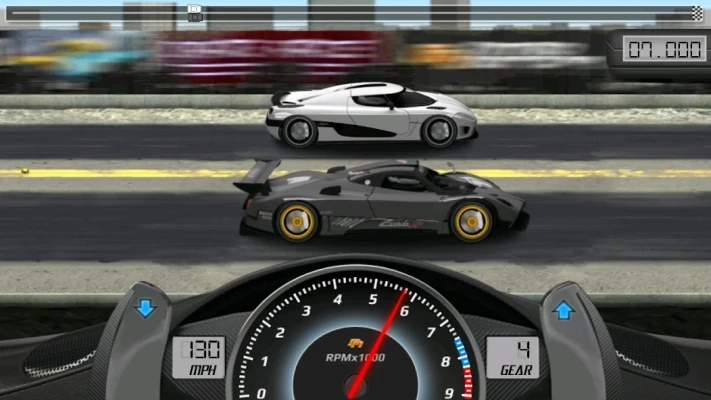
Drag Racing is a classic mobile racing game developed by Supercharge Mobile. Its main attraction is the simplicity of straight-line competition combined with a surprisingly detailed vehicle tuning system.
Players purchase cars, improve their performance and enter races against increasingly challenging opponents. Winning requires more than simply choosing the vehicle with the highest power. Acceleration, traction, gear ratios and nitrous timing all influence how quickly a car reaches the finish line.
The game also includes online competitions, allowing players to test their builds against other racers. Whether someone enjoys improving a vehicle in single-player races or competing against real opponents, the game provides several ways to enjoy drag racing.
One of its strongest features is the balance between mechanical performance and visual customization. Players can create a garage that reflects their personal style while developing cars capable of winning competitive races.
Main Features of Drag Racing
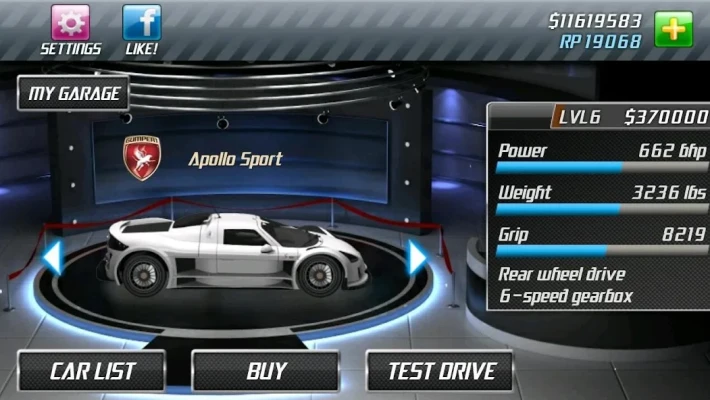
More Than 50 Different Car Styles
The game offers a collection of more than 50 vehicle styles inspired by three major automotive cultures:
Japanese performance cars.
European sports and performance vehicles.
American muscle cars.
Each vehicle provides a different starting point for building a competitive racing machine. Players can experiment with different cars, discover which models suit their racing preferences and develop their garage over time.
Detailed Vehicle Tuning
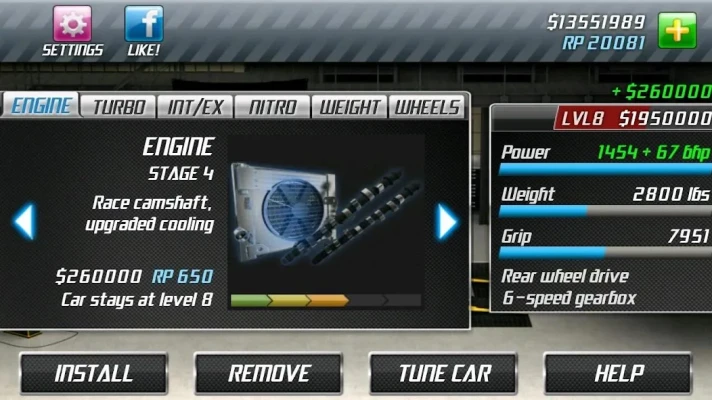
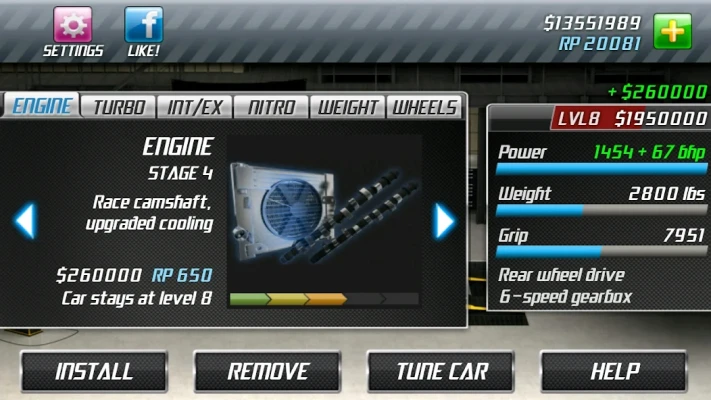
Tuning is one of the most important parts of Drag Racing. Players can adjust vehicle performance to improve acceleration and overall race times.
The game emphasizes finding the right balance between power and grip. Increasing engine performance may make a vehicle faster, but poor traction can reduce its effectiveness during a race.
Gear ratios also play an important role. Adjusting them can help a vehicle accelerate more efficiently and maintain its performance throughout the run.
Nitrous Oxide
Nitrous provides an additional burst of acceleration during races. However, using it at the wrong moment can reduce its effectiveness.
Successful racers learn when to activate nitrous based on their vehicle's acceleration, gear changes and available traction. Timing this boost correctly can help close a gap or secure a narrow victory.
Extensive Visual Customization
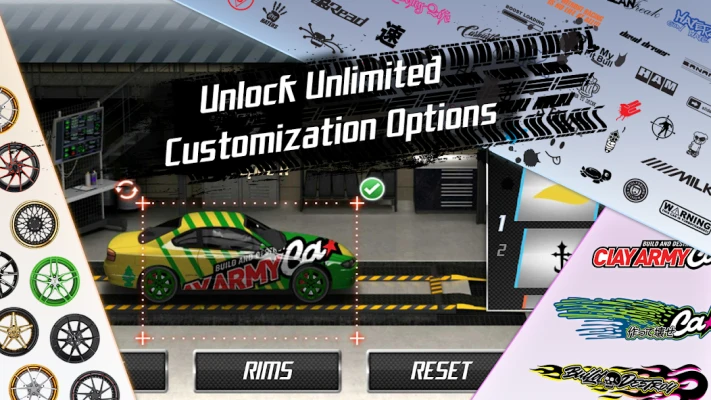
Drag Racing gives players many ways to personalize their vehicles. Stickers, liveries and different visual combinations allow racers to create distinctive designs.
The game also features custom artwork created in collaboration with CIAY Studio and Sumo Fish.
Customization is not just about making a car look attractive. It gives players an opportunity to develop a recognizable garage and express their individual taste.
Competitive Online Racing
Players can challenge friends and other racers through online competitions.
Available multiplayer activities include:
One-on-one races against other players.
Challenges involving an opponent's car.
Real-time Pro League competitions with up to ten players.
Team participation and sharing vehicle tuning strategies.
These modes provide additional challenges beyond the regular single-player experience.
Ten Levels of Cars and Race Categories
The game features ten levels of cars and racing categories. This progression gives players opportunities to develop their vehicles and compete in increasingly demanding events.
Improving a car while staying within its class is an important part of building a successful racing strategy.
Offline Racing
Drag Racing also supports offline play, making it possible to enjoy races without always needing an internet connection. Online features naturally require connectivity.
Gameplay and Racing Mechanics
Understanding the Start
Every drag race begins with the launch. Getting off the starting line effectively is essential because a slow start can create a disadvantage that is difficult to overcome.
Players should become familiar with the game's starting controls and timing. A consistent launch provides a better foundation for the rest of the race.
Managing Gear Changes
Gear changes are central to the racing experience. Players must shift at appropriate moments to keep the engine performing effectively.
Changing gears too early can reduce acceleration, while waiting too long may prevent the vehicle from making the most of its power.
The best approach is to learn how each car responds rather than relying on the same shifting pattern for every vehicle.
Balancing Power and Grip
Engine power is important, but it is not the only factor that determines performance.
A vehicle needs sufficient grip to transfer its power effectively. If the balance is poor, additional power may not produce the expected improvement in race times.
This is why tuning should involve testing different combinations rather than upgrading everything without a plan.
Using Nitrous Strategically
Nitrous can make a major difference during close races, but activating it immediately is not always the best decision.
Players should learn how their cars accelerate and identify moments when the boost can deliver the greatest advantage.
Improving Through Repeated Races
Each race provides an opportunity to understand a vehicle's strengths and weaknesses.
Pay attention to:
How quickly the car launches.
Whether acceleration remains consistent.
How effectively the gears work together.
Whether traction limits performance.
How much difference nitrous makes.
These observations help players make more informed tuning decisions.
Complete Strategy Guide for Drag Racing
Start With a Vehicle You Can Afford to Develop
New players should avoid spending all their available resources on expensive vehicles immediately.
A more practical approach is to begin with a manageable car and improve it gradually. This makes it easier to understand the relationship between upgrades, performance and race results.
A vehicle that has received several well-planned improvements can be more useful than an expensive car with an unsuitable setup.
Prioritize Useful Performance Upgrades
When upgrading a vehicle, think about what is limiting its performance.
If acceleration feels weak, focus on improvements that address that weakness. If the car struggles to use its power effectively, investigate traction and tuning instead of simply increasing engine output.
A balanced vehicle is often more competitive than one built around a single statistic.
Learn the Importance of Gear Ratios
Gear ratio adjustment is one of the most valuable skills to develop.
A poorly configured transmission can prevent an otherwise powerful car from performing efficiently. Experiment with different ratios and compare race results after each adjustment.
Avoid changing several settings at once. Making one adjustment at a time makes it easier to understand what actually improved the car.
Do Not Activate Nitrous Too Early
Nitrous should be treated as a strategic resource during a race.
Using it without considering the vehicle's current acceleration can waste part of its potential. Practice different activation moments and observe which approach produces the best results.
There is no single timing rule that works perfectly for every car and setup.
Stay Within Your Racing Category
Vehicle class matters when preparing for competitive events.
Improving a car without considering its category can create problems when entering races with specific class requirements.
Before investing heavily in upgrades, understand the category in which you intend to compete. Build a vehicle that performs well within those limits instead of pursuing power without considering the wider setup.
Test Every Major Tuning Change
A useful tuning setup should be tested on the track.
After changing gear ratios or improving performance, enter a race and compare the result with your previous setup. If the car becomes slower, reconsider the adjustment.
Keeping track of successful configurations can also help you avoid repeating experiments that produced poor results.
Build a Garage With Different Strengths
Owning several vehicles can provide more flexibility as you progress.
Rather than developing every car in exactly the same way, consider creating vehicles for different racing situations and categories.
This approach gives you more options when a particular setup is no longer competitive.
Improve Your Starting Consistency
A strong launch is one of the foundations of successful drag racing.
Practice the starting sequence until you can perform it consistently. Even a well-upgraded vehicle can lose if its launch is poorly executed.
Try to identify whether your losses come from the start, gear changes, tuning or nitrous timing before spending more resources on upgrades.
Learn From Multiplayer Opponents
Online races provide a useful way to understand how other players build their cars.
Pay attention to opponents who consistently achieve better results. Their vehicle configurations and racing approaches may provide ideas for improving your own setup.
The option to race using an opponent's car is especially useful because it gives you another way to experience different vehicle configurations.
Join a Team
Team participation can make progression more interesting and provide access to shared racing knowledge.
Players can exchange tuning ideas, discuss strategies and share achievements. Learning from experienced racers may help beginners avoid common mistakes.
Customize Your Vehicles After Planning Performance
Visual customization is an enjoyable part of the game, but players who are still developing their garage may benefit from prioritizing performance upgrades first.
Once a vehicle has a reliable setup, experiment with stickers, liveries and other available design options.
This creates a satisfying balance between building a fast car and creating a unique appearance.
Advanced Tips for Competitive Players
Focus on Consistency Rather Than Maximum Power
A powerful car is not automatically a winning car. The relationship between power, grip and gearing is what makes a vehicle effective.
Try to create a setup that delivers predictable performance across multiple races.
Compare Results Instead of Guessing
Do not assume that an upgrade is beneficial simply because it increases a performance statistic.
The most useful measure is how the vehicle actually performs on the track. Compare race results before and after adjustments to identify genuine improvements.
Avoid Copying Every Opponent's Setup
Other players may have different vehicles, upgrades and racing preferences.
A tuning configuration that works well for one car might not produce the same results on another. Use other players' setups as inspiration, then adjust them to suit your own vehicle.
Develop Category-Specific Vehicles
As you progress through the game's racing categories, maintaining suitable vehicles for different classes can make your garage more versatile.
This also helps prevent unnecessary upgrades that could make a car unsuitable for a particular competition.
Treat Multiplayer as a Learning Opportunity
Competitive races can reveal weaknesses that are not always obvious during offline play.
If another player repeatedly beats your vehicle, examine the difference in performance before making changes. Consider whether the issue is related to the car, its tuning or your race execution.
Common Mistakes to Avoid
Upgrading power without considering grip
More power does not always mean better race times. Make sure the vehicle can use its performance effectively.
Ignoring gear ratios
Transmission settings can have a significant effect on acceleration. Leaving them poorly configured may limit an otherwise capable car.
Using nitrous without timing
Activating nitrous too early can waste its potential. Learn how your vehicle responds before deciding when to use it.
Changing too many settings simultaneously
When several tuning adjustments are made together, it becomes difficult to identify which change helped or hurt performance.
Spending resources on too many vehicles
Developing several cars at once can slow down progress. Focus on a smaller number of useful vehicles before expanding your garage.
Ignoring racing categories
A vehicle should be developed with its intended class in mind. Unplanned upgrades can make it less suitable for certain competitions.
Treating appearance as more important than performance
Custom liveries and stickers make cars look distinctive, but a competitive setup still depends on effective upgrades and tuning.
Frequently Asked Questions
What is Drag Racing?
Drag Racing is a mobile car racing game focused on straight-line competitions, vehicle upgrades, gear tuning, nitrous use and online multiplayer challenges.
Is Drag Racing free to play?
The game is available as a free download on Google Play. It contains advertisements and offers in-app purchases.
Can I play Drag Racing offline?
Yes. The game supports offline racing, although online multiplayer competitions and other connected features require an internet connection.
How many cars are available?
The official game description advertises more than 50 different car styles inspired by Japanese, European and American vehicles.
Does Drag Racing have multiplayer?
Yes. Players can compete in one-on-one races, challenge other players using their cars and participate in real-time Pro League events with up to ten players.
What is the purpose of tuning?
Tuning helps improve vehicle performance by adjusting factors such as power, grip and gear ratios. Proper tuning can reduce race times and make a car more competitive.
When should I use nitrous?
Nitrous should be activated at a moment when its acceleration boost can be used effectively. The ideal timing depends on the vehicle and its current setup.
Can I customize my cars?
Yes. Players can use different customization options, including stickers and liveries, to create distinctive vehicle designs.
Does the game have different racing categories?
Yes. The game features ten levels of cars and race categories, giving players a progression system to work through.
Is Drag Racing suitable for beginners?
Yes. Its straightforward racing format makes it accessible to new players, while its tuning and multiplayer systems provide additional depth for experienced racers.
Final Verdict
Drag Racing remains an appealing choice for players who enjoy competitive car racing, vehicle upgrades and detailed performance tuning. Its straight-line racing format is easy to understand, but mastering gear ratios, traction, acceleration and nitrous timing takes practice.
The variety of car styles, extensive customization options and online competitions give players plenty of reasons to keep improving their garages. Offline racing also makes the game convenient for shorter sessions when an internet connection is unavailable.
Its strongest quality is the combination of simple racing controls and meaningful tuning decisions. Instead of relying entirely on vehicle power, players must understand how their cars behave and make adjustments that improve actual race performance.
For fans of drag racing, car customization and competitive mobile racing games, Drag Racing offers a rewarding experience built around speed, precision and experimentation.
Rate the Game
User Reviews














Popular Games



















 Android
 iOS
 Windows
 Xbox