


Latest Version
October 25, 2024
SayGames Ltd
Puzzle
0
com.playstrom.dop3
Report a Problem
More About :game
Each level presents a humorous situation that requires logical thinking, careful observation, and creative problem-solving. With colorful cartoon graphics, entertaining animations, and more than 100 puzzles highlighted in its store description, DOP 3 offers an engaging experience for fans of brain teasers and casual logic games.
DOP 3: Displace One Part is the third installment in the popular DOP puzzle series, bringing a fresh twist to picture-based brain games. Instead of simply drawing missing objects or erasing unwanted details, players must place items in the correct locations to complete a scene and trigger the intended outcome.
The central challenge is understanding what each picture represents and determining how its objects should interact. A seemingly ordinary scene might hide an unexpected solution, while a familiar situation may require an unusual sequence of actions.
The game combines visual reasoning, experimentation, and lighthearted humor. Its simple touch controls make it easy to start playing, but some riddles require players to think beyond the obvious answer.
Whether you enjoy casual mobile games, tricky picture puzzles, or funny brain teasers, DOP 3 offers a distinctive way to test your problem-solving skills.
Main Features of DOP 3: Displace One Part
Creative Picture Puzzles
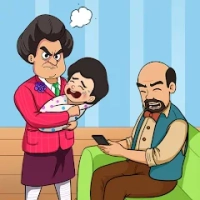
Each challenge presents an illustrated scene with objects that must be moved into suitable positions. The goal is to discover the relationship between the available items and the situation shown on the screen.
Order-Based Puzzle Solving
Finding the right objects is only part of the challenge. Their placement order can also determine whether the solution works, so players must think about how the scene should develop.
Humorous Cartoon Animations
Successful solutions trigger entertaining animations that reveal the result of your actions. These funny outcomes give each puzzle personality and make the experience more rewarding.
More Than 100 Puzzles
The game's store description highlights a collection of over 100 puzzles, each built around a distinctive situation. Players encounter different visual scenarios that encourage experimentation and lateral thinking.
Simple Touch Controls
The game uses straightforward interaction mechanics, allowing players to focus on the riddles rather than complicated controls. Moving objects and testing solutions is easy to understand.
Bright Graphics and Cheerful Audio
Colorful illustrations, cartoon-style characters, and upbeat music create a relaxed atmosphere that complements the game's playful approach to logic.
Casual Single-Player Gameplay
DOP 3 is designed for individual play, making it suitable for short sessions whenever you want a quick mental challenge. The store listing also identifies it as an offline game, although certain features or advertisements may depend on connectivity.
How to Play DOP 3: Displace One Part
Start by examining the illustrated scene and identifying the objects available for placement. Look at the characters, their surroundings, and anything that appears unusual or incomplete.
Next, consider what the scene is trying to communicate. Determine the likely objective, then think about which object could change the situation or help the characters achieve their goal.
Move the relevant object to a plausible location. If the puzzle requires multiple placements, pay attention to the order in which you perform them.
Watch the resulting animation to determine whether you have solved the challenge. If the outcome is incorrect, reconsider the scene and try a different approach.
The game encourages experimentation, so an unsuccessful attempt is an opportunity to discover what the puzzle requires. With practice, you will become better at recognizing visual clues and predicting how objects should interact.
Complete Strategy Guide for DOP 3
Study the Entire Scene Before Moving Anything
One of the most effective ways to solve DOP 3 puzzles is to pause before interacting with the screen. Examine every visible object, character, and background detail.
Something that looks decorative may provide an important clue. A character's expression, an unusual object, or a detail in the surroundings can reveal the problem that needs to be solved.
Avoid focusing exclusively on the most obvious object. The solution may depend on a relationship between several elements in the picture.
Identify the Main Problem
Before moving an item, ask yourself what is happening in the scene and what needs to change.
A character may need an object to complete a task, a situation may require an unexpected intervention, or the illustration may be setting up a humorous surprise.
Once you understand the likely objective, you can narrow down the possible solutions. This is much more effective than moving objects without a clear reason.
Match Each Object to Its Function
Think about what each item normally does and how it might be used in the illustrated situation.
An object could serve its ordinary purpose, become a tool for another character, or create an unexpected result through a visual joke. Consider both realistic uses and the playful logic common in cartoon puzzles.
The best placement is usually the one that makes the entire scene work, rather than one that merely looks reasonable in isolation.
Pay Close Attention to Placement Order
DOP 3 emphasizes placing items correctly and in the right order. This means you should consider not only where an object belongs but also when it needs to be moved.
Think of the scene as a short sequence of events. An early action might prepare the situation for a later action, while reversing those steps could prevent the puzzle from working.
When a placement appears correct but the level remains unsolved, reconsider the sequence before assuming that you chose the wrong objects.
Use Trial and Error Intelligently
Experimentation is part of the gameplay, but random movement can make difficult puzzles more confusing.
Try one reasonable placement at a time and observe the result. If it fails, change one part of your approach rather than repeating the same action.
This makes it easier to understand which objects matter and how the game's logic works. Even failed attempts can provide useful information about the intended solution.
Look for Unexpected and Funny Solutions
Some DOP 3 riddles use absurd situations, exaggerated reactions, and surprising visual outcomes. A perfectly realistic solution is not always the intended one.
If an ordinary interpretation fails, think about what would create a funny or unexpected result. Consider whether the characters, objects, or setting suggest a visual joke.
This shift in perspective is particularly helpful when a puzzle seems deliberately strange or illogical.
Use Hints When You Are Stuck
If the game offers a hint for a difficult puzzle, use it when you have exhausted the most plausible possibilities.
First, inspect the picture carefully and test a few logical placements. If nothing works, a hint can help you move forward without spending too much time on a single level.
After solving the puzzle, think about why the correct placement works. Understanding the solution helps you recognize similar patterns in later challenges.
Learn From Every Completed Level
Pay attention to the relationship between the scene, the selected objects, and the final animation. Successful solutions can reveal how the game interprets visual clues and humorous situations.
Some puzzles reward literal thinking, while others rely on unusual connections or unexpected actions. Recognizing these differences will help you approach future levels more confidently.
Advanced Tips and Tricks for DOP 3
Think Outside the Box
When a straightforward placement does not work, explore alternative interpretations of the picture. An object may have a purpose that is different from its usual function, or a character may need something unexpected to change the scene.
Creative thinking is especially valuable in puzzles designed around visual humor.
Check the Background for Hidden Clues
Background elements can help explain what is happening. Look for unusual details, nearby objects, character expressions, and anything that seems connected to the puzzle's main objective.
A complete understanding of the scene can make the correct placement much easier to identify.
Break Complicated Scenes Into Smaller Problems
If a picture contains several characters and objects, focus on the most important problem first. Identify what needs to happen, determine which objects could help, and consider whether any actions depend on one another.
Solving the scene mentally in smaller stages makes it easier to choose a sensible sequence of placements.
Avoid Repeating Failed Moves
If an object placement produces no useful result, remember that outcome and try a different location or order. Repeating an unsuccessful action without changing anything is unlikely to reveal new information.
A methodical approach makes experimentation more productive and helps you understand the puzzle's intended logic.
Stay Patient With Unusual Riddles
Some levels may seem confusing because their solutions rely on cartoon logic rather than everyday expectations. If you feel stuck, take a short break and return to the scene with a fresh perspective.
Sometimes, changing how you interpret one object is enough to reveal the entire solution.
Common Mistakes to Avoid in DOP 3
Moving Objects Without a Clear Goal
Randomly dragging items around the picture can waste time. Begin by identifying the problem and choosing an object that could reasonably help solve it.
Ignoring the Required Sequence
A correct object in the wrong position or order may not produce the expected outcome. Consider how the actions relate to one another before making your next move.
Overlooking Small Visual Details
A character's expression or a seemingly insignificant background object may provide a useful clue. Examine the full illustration rather than concentrating on a single area.
Expecting Every Solution to Be Realistic
DOP 3 is a humorous puzzle game, so some solutions are intentionally exaggerated or absurd. If common sense does not explain the scene, try thinking in terms of visual jokes and unexpected interactions.
Giving Up After One Failed Attempt
An unsuccessful move does not necessarily mean you misunderstood the entire puzzle. Adjust your interpretation, test another placement, and use the result to guide your next decision.
Beginner's Guide to Mastering DOP 3
New players should begin by learning the basic interaction mechanics and understanding how objects affect the illustrated scenes. Focus on identifying the central problem before attempting to solve each riddle.
As you gain experience, pay closer attention to placement order, unusual visual details, and the relationship between characters and objects.
Try to explain the intended solution to yourself before making a move. This simple habit encourages logical thinking and makes it easier to identify why a particular action succeeds.
Do not worry about solving every puzzle immediately. The game is designed to encourage experimentation, and developing a feel for its unusual logic takes practice.
Is DOP 3: Displace One Part Worth Playing?
DOP 3 is a good choice for players who enjoy visual riddles, casual brain teasers, and humorous puzzle games. Its simple controls make it accessible, while the requirement to position objects in the correct order adds an interesting twist to traditional picture puzzles.
The short challenges are convenient for quick gaming sessions, and the animated results provide a playful reward for finding a solution.
However, players should be aware that the game includes advertisements and optional in-app purchases. Its Google Play content rating is Teen, and the listed content descriptors include crude humor, fantasy violence, and sexual content. Parents should review the rating and content details before allowing younger children to play.
Overall, the game is most appealing to people who enjoy creative problem-solving and do not mind occasionally experimenting with unusual solutions.
Frequently Asked Questions About DOP 3
What is DOP 3: Displace One Part?
DOP 3: Displace One Part is a casual puzzle game developed by SayGames Ltd. Players solve illustrated riddles by moving objects into the correct positions and following the appropriate order.
How do you solve puzzles in DOP 3?
Examine the scene, identify its main problem, and determine which objects could change the situation. Place the objects thoughtfully, paying attention to both their locations and the order of your actions.
What makes DOP 3 different from other puzzle games?
Unlike traditional matching or word puzzles, DOP 3 focuses on interactive picture riddles. Players manipulate objects within illustrated scenes to discover solutions, often triggering funny animations when they succeed.
How many levels are in DOP 3?
The game's Google Play description highlights more than 100 puzzles. The exact number of available challenges may change as the game is updated.
Is DOP 3 free to play?
DOP 3 is available as a free download on Google Play. The listing indicates that it contains advertisements and optional in-app purchases.
Can you play DOP 3 offline?
The Google Play listing identifies DOP 3 as playable offline. However, advertisements and certain connected features may require an internet connection.
Who developed DOP 3: Displace One Part?
DOP 3: Displace One Part was developed and published by SayGames Ltd.
Is DOP 3 suitable for children?
The Google Play listing carries a Teen content rating and identifies crude humor, fantasy violence, and sexual content. Parents should check the current rating and review the game's content before deciding whether it is appropriate for a child.
What should you do if a puzzle seems impossible?
Review the entire scene, reconsider the purpose of each object, and experiment with different placements or sequences. If the game provides hints, use one when you have exhausted your reasonable options.
Final Thoughts on DOP 3: Displace One Part
DOP 3: Displace One Part delivers a playful puzzle experience built around creative thinking, interactive illustrations, and surprising outcomes. Its distinctive placement mechanics encourage players to examine scenes carefully, understand the problem, and discover how objects work together.
The best way to progress is to combine observation with logical experimentation. Study the picture, consider alternative uses for objects, pay attention to the required order, and learn from each completed challenge.
Whether you are a fan of casual mobile games, funny brain teasers, or visual logic puzzles, DOP 3 offers an entertaining way to challenge your thinking one unusual riddle at a time.
Rate the Game
User Reviews









Popular Games



















 Android
 iOS
 Windows
 Xbox