
Latest Version
October 25, 2024
Snapbreak
Puzzle
0
com.snapbreak.doors2
Report a Problem
More About :game
With detailed 3D graphics, atmospheric music, and a mysterious storyline, Doors: Origins offers a thoughtful experience for fans of escape games and brain-teasing adventures.
The Story Behind Doors: Origins
The world is falling into chaos. The sky changes in strange ways, storms refuse to stop, and familiar places begin to feel increasingly unreal. Just when everything seems lost, a mysterious portal offers a possible way forward.
Your journey takes you through a series of unusual doors, each leading to a new setting with its own visual identity and puzzle challenges. Progress depends on discovering how these environments work and finding the mechanisms that allow you to continue.
The story is delivered through the places you visit and the mysteries you uncover. Rather than relying on constant dialogue or action sequences, the game encourages you to piece together the situation as you explore.
This approach gives every solved puzzle a sense of purpose. Opening a door is not simply about completing a challenge; it is another step toward understanding the strange world surrounding you.
Main Features of Doors: Origins
Detailed 3D Environments
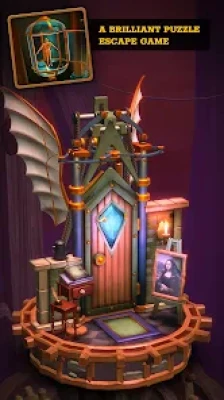
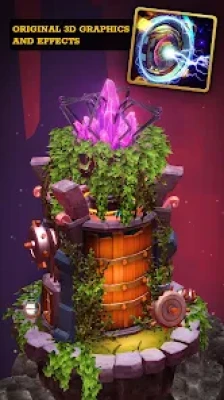
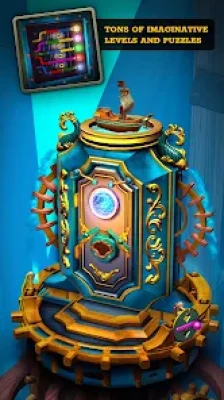
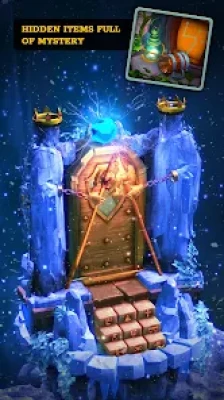
The game features handcrafted scenes with unusual architecture, distinctive objects, and carefully arranged mechanisms. Rotating the camera helps reveal details that are easy to miss from the front.
Challenging Escape-Room Puzzles
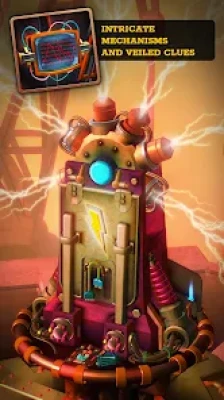
Each level combines observation, logical reasoning, and interaction with the environment. You may need to unlock compartments, activate controls, align components, or interpret visual clues.
A Mysterious Storyline
The world is changing, and the portals appear to offer a path through the growing disorder. Solving puzzles gradually moves the adventure forward.
Atmospheric Music and Sound
The soundtrack and environmental sounds create a mysterious mood. Mechanical clicks and other audio cues also make interactions feel more tangible.
Free Opening Levels
Players can try the first eight levels before deciding whether to unlock the remaining content. The game also offers additional levels through in-game purchases.
Relaxed Single-Player Gameplay
Doors: Origins emphasizes thinking rather than combat or competitive action. It is suitable for players who enjoy taking their time with a puzzle and working through a challenge at their own pace.
Gameplay Mechanics and Controls
The basic controls are straightforward, but solving the puzzles requires careful attention.
Rotate the camera: Examine the environment from different angles to find hidden objects, symbols, switches, and mechanical details.
Inspect interactive objects: Tap objects to see whether they can be opened, moved, turned, or otherwise manipulated.
Collect and use tools: When the game provides an item, consider what it might operate or reveal. An object discovered in one part of a scene may be useful elsewhere.
Activate mechanisms: Operate controls, move pieces, and test mechanical components to discover how they function.
Interpret clues: Compare symbols, shapes, patterns, and numbers to determine how a puzzle should be solved.
Unlock the next door: Complete the required mechanisms and progress to another mysterious environment.
The key is to understand the relationship between objects instead of treating each one as an isolated challenge.
Beginner's Guide: How to Progress Faster
1. Explore Before You Start Solving
At the beginning of a level, rotate the camera around the scene. Examine the main door, the surrounding structure, and any visible mechanical components.
Take note of anything unusual. A small symbol, a locked compartment, or an object that looks different from the rest of the environment may become important later.
2. Find Every Accessible Clue
Do not focus exclusively on the main door. Check the surrounding structures and inspect objects that can be interacted with.
Some clues become useful only after another mechanism has been activated, so remember what you discover even if you cannot use it immediately.
3. Solve Simple Mechanisms First
When several puzzles are visible, begin with the one that has the clearest clue. Completing a smaller challenge may reveal an item or unlock another part of the scene.
This approach makes complicated levels easier to understand because you gradually reduce the number of unknowns.
4. Use Objects With a Purpose
When you find a tool or movable object, look for a mechanism that appears to match its shape or function. Avoid trying it randomly on every part of the environment.
If an interaction fails, reconsider whether the object belongs somewhere else or whether you need to discover additional information first.
5. Observe Changes Carefully
After operating a lever, rotating a component, or opening a compartment, inspect the entire scene again.
A successful action may cause a small change elsewhere. Recognizing that connection can be the difference between making progress and becoming stuck.
6. Think About Patterns and Sequences
Symbols, colors, numbers, and repeated shapes may provide information about the correct order of operations. Compare the clues you find rather than relying on guesses.
If a puzzle involves several controls, search for an indication of how those controls relate to one another.
7. Use Hints When Necessary
If you have inspected the environment thoroughly and still cannot find a solution, use an available hint or skip option if the game offers one.
Trying to solve everything without assistance can be satisfying, but a hint can help you return to the story when a particular mechanism becomes frustrating.
Advanced Puzzle-Solving Strategies
Think About Cause and Effect
Every interaction should tell you something. If a switch moves but the door remains closed, look for another component that may have changed.
Understanding the consequences of an action is more useful than repeating it without examining the result.
Keep Track of Unfinished Challenges
If a locked mechanism cannot be solved yet, remember its location and the information it seems to require. Return to it after finding new objects or clues.
Separate Observation From Experimentation
First determine what you can see, then test one possibility at a time. This makes it easier to identify which action produced a particular result.
Examine New Areas Immediately
When a mechanism opens a compartment or reveals a new object, inspect the newly accessible area before continuing. It may contain the clue needed for the next puzzle.
Reconsider Your Assumptions
A puzzle may not work the way you initially expect. If your interpretation does not fit the available evidence, return to the clues and look for another explanation.
Step-by-Step Walkthrough Strategy
Doors: Origins contains individual puzzle environments, and each one has its own mechanics. The following walkthrough provides a reliable method for progressing without inventing specific symbol combinations or level solutions.
Step 1: Inspect the door. Look at its locks, markings, handles, and other visible components. Identify anything that appears interactive.
Step 2: Rotate the scene. Explore every accessible angle and check for hidden compartments, tools, symbols, and unusual objects.
Step 3: Identify the first solvable mechanism. Choose a puzzle for which you already have a clue or can clearly understand the available interactions.
Step 4: Complete the smaller challenge. Operate the relevant components carefully and observe whether anything unlocks or changes.
Step 5: Collect newly revealed information. Inspect any opened compartment or newly accessible object. Consider how it relates to the other mechanisms.
Step 6: Connect the clues. Look for matching shapes, symbols, colors, or sequences that explain what to do next.
Step 7: Return to unfinished mechanisms. Apply the information you have discovered to puzzles that were previously inaccessible.
Step 8: Unlock the door. Once the necessary mechanisms are complete, interact with the exit and continue your journey.
If You Get Stuck
Ask yourself these questions before restarting a level:
Have I inspected every side of the environment?
Is there a tool or object I have collected but not used?
Did a previous action change something elsewhere?
Does a symbol on the door match a marking in another part of the scene?
Is there a compartment I can now open?
Am I following an actual clue, or simply guessing?
This checklist helps you find overlooked information without wasting time repeating unsuccessful actions.
Common Mistakes to Avoid
Looking only at the front of the door: Important mechanisms may be located around the sides or behind other structures.
Ignoring small objects: A minor detail may be the clue that connects two larger parts of a puzzle.
Using tools randomly: Look for a logical relationship between the object and the mechanism you want to operate.
Forgetting what you have already discovered: A clue from an earlier part of the level may explain a later challenge.
Changing multiple controls at once: Experiment with one component at a time so you can understand the result.
Expecting every puzzle to follow the same pattern: Different stages may require different approaches, including observation, object use, sequence recognition, or mechanical manipulation.
Rushing through the atmosphere: The environments are part of the experience. Taking a moment to explore can make both the puzzles and the story more rewarding.
Graphics, Sound, and Atmosphere
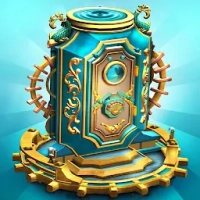
One of the most appealing aspects of Doors: Origins is its visual presentation. The environments feel like carefully constructed miniature worlds, with unusual architecture, detailed objects, and distinctive lighting.
The camera lets you inspect the scenes from different angles, making exploration an important part of the gameplay. The visual design also helps establish the game's unsettling setting, where changing skies and strange weather suggest that the world is no longer behaving normally.
The soundtrack and environmental effects strengthen this atmosphere. Mechanical sounds emphasize interactions, while the music gives each location a mysterious quality. Playing with sound enabled can make the experience more immersive.
Difficulty and Replay Value
Doors: Origins is accessible to casual players, but some puzzles require patience and close observation. Players experienced with escape-room games may recognize familiar mechanics, while newcomers can learn by experimenting with the objects and studying the clues.
The difficulty comes primarily from understanding how each scene works. There is no need to defeat enemies or react under combat pressure, allowing you to concentrate on the puzzle in front of you.
Replay value depends on how much you enjoy solving mechanical challenges and revisiting environments. The game is particularly suitable for short sessions, since each level presents a contained problem rather than requiring a lengthy uninterrupted playthrough.
Pros and Cons
Pros
Attractive 3D environments with detailed objects.
A mysterious setting that encourages exploration.
A variety of logic puzzles and mechanical challenges.
Simple controls that are easy to learn.
Atmospheric music and sound design.
Relaxed gameplay without combat.
Eight free opening levels to try before unlocking more content.
Cons
Some clues can be easy to overlook.
Certain puzzles may feel confusing without a hint.
Players seeking action or extensive character development may find the gameplay limited.
The complete adventure requires an additional purchase.
Players who prefer direct instructions may find the trial-and-observation approach challenging.
Who Should Play Doors: Origins?
Doors: Origins is a strong choice for players who enjoy escape rooms, interactive puzzle boxes, and atmospheric adventures.
It is especially suitable for:
Fans of 3D escape games.
Players who like solving locks and mechanical puzzles.
Casual gamers who prefer thoughtful challenges to fast action.
People who enjoy exploring detailed environments.
Players who like mysteries revealed gradually through exploration.
It may be less appealing to people who want competitive multiplayer, frequent combat, open-world exploration, or a story focused heavily on dialogue and character relationships.
Helpful Tips for New Players
Rotate the camera before attempting to solve a puzzle.
Inspect unusual objects and markings carefully.
Start with the most understandable mechanism.
Watch for changes elsewhere after every successful interaction.
Keep track of tools and clues you have already found.
Return to locked mechanisms after discovering new information.
Use hints when a puzzle stops being enjoyable.
Try the free levels to decide whether the complete adventure suits your tastes.
Frequently Asked Questions
What is Doors: Origins?
Doors: Origins is a 3D escape-room puzzle game from Snapbreak. Players explore mysterious environments, solve mechanical puzzles, uncover clues, and open doors to advance through the story.
Is Doors: Origins free?
The game offers eight levels for free. Additional levels can be unlocked through an in-game purchase.
Can Doors: Origins be played offline?
The game is listed as supporting offline play. Internet access may still be needed for certain store, purchase, or account-related functions.
Is Doors: Origins difficult?
The game is generally approachable, but some puzzles require careful observation and logical reasoning. Difficulty varies according to the mechanisms and clues in each stage.
Does Doors: Origins have a story?
Yes. The adventure follows a world threatened by strange environmental changes and mysterious portals. Players uncover more about the situation as they solve puzzles and progress.
Does Doors: Origins include combat?
The main gameplay focuses on exploration, object interaction, and puzzle solving rather than combat.
How do I solve a difficult puzzle?
Rotate the environment, inspect all interactive objects, and identify clues that connect to the mechanism. Test one action at a time and look for changes elsewhere in the scene.
Is Doors: Origins suitable for short sessions?
Yes. Its individual puzzle stages make it suitable for short play sessions whenever you have free time.
Is Doors: Origins worth playing?
If you enjoy 3D escape rooms, atmospheric environments, and logic-based challenges, it is worth trying the free levels. Whether to purchase the remaining content depends on how much you enjoy its puzzle design.
Final Verdict
Doors: Origins combines attractive 3D environments, thoughtful escape-room puzzles, and an intriguing setting built around a world falling into chaos. Its greatest strength is the way it encourages players to inspect their surroundings, connect clues, and discover how each mechanism works.
The game is not about speed or combat. It is about paying attention, experimenting carefully, and enjoying the satisfaction of opening a door that initially seems impossible to solve.
For fans of puzzle adventures, Doors: Origins offers a worthwhile experience. Try the opening levels, take your time with the clues, and let curiosity guide you through its mysterious worlds.
Rate the Game
User Reviews













Popular Games



















 Android
 iOS
 Windows
 Xbox