


Latest Version
December 12, 2024
GameHouse LLC
Casual
0
com.gamehouse.d1.delicious.cooking.emily.deluxe
Report a Problem
More About :game
The game combines restaurant management, food preparation, customer service, upgrades, mini-games, and increasingly demanding time-management challenges across 80 levels and 8 unique restaurants. It also includes an Endless mode for players who want to continue serving customers after completing the main campaign.
Unlike the story-heavy entries in the Delicious Emily series, The First Course focuses primarily on classic restaurant gameplay and the satisfying rhythm of preparing orders, serving customers, earning money, and improving each location.
What Is Delicious: The First Course?
Delicious: The First Course is a modern version inspired by the original Delicious game. Its focus is straightforward: run restaurants, serve customers efficiently, earn high scores, upgrade your business, and master increasingly busy kitchens.
The game takes Emily through 8 different restaurants, with each location introducing its own atmosphere, cuisine, customers, and gameplay challenges.
The campaign is built around classic time-management gameplay rather than a large narrative.
Your success depends on how quickly and accurately you can:
Take customer orders
Prepare food
Combine ingredients
Serve dishes
Collect payments
Keep the restaurant moving
Manage multiple customers
Upgrade equipment and menu items
Use helpers effectively
80 Time Management Cooking Levels
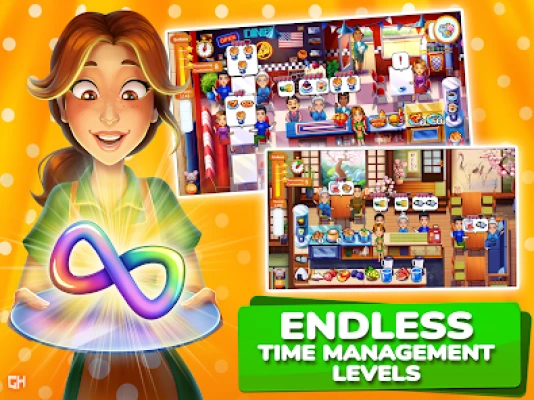
The main campaign contains 80 time-management levels.
Each level tests your ability to keep several tasks under control at the same time.
At first, the restaurant routine is relatively simple. As new dishes, customers, preparation steps, and restaurant features appear, you'll need to become much more efficient.
The key isn't simply cooking quickly.
It's learning how to organize your actions so that several tasks are completed with as little wasted time as possible.
8 Unique Restaurants
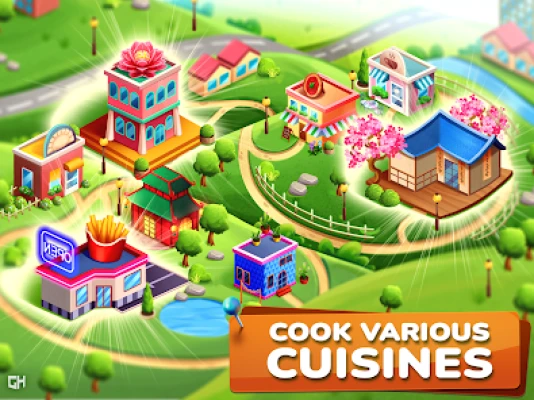
The game takes Emily through 8 different restaurant locations, each with its own setting and culinary identity.
The variety prevents the campaign from feeling like one restaurant repeated 80 times.
The different locations also introduce new dishes, customer demands, and management challenges, requiring you to adjust your strategy as you progress.
Global Cuisines
One of the game's major features is its variety of food.
Emily's journey covers cuisines inspired by different parts of the world, including American classics, Mexican dishes, and Indian flavors.
This variety is important because new food items don't simply add visual variety. They also make the restaurant-management process more complicated.
As more dishes become available, you'll need to remember preparation sequences and manage your inventory more carefully.
How the Cooking Gameplay Works
The basic gameplay loop is simple:
Customers arrive → Take orders → Prepare food → Serve customers → Collect payments → Repeat
The challenge comes from doing everything quickly enough while keeping customers happy.
Some orders can be served immediately, while others require preparation or combinations of ingredients.
As the restaurant becomes busier, you'll need to decide which customer should receive attention first and which food should be prepared in advance.
Full Delicious: The First Course Strategy Guide
1. Learn the Restaurant Before Playing for High Scores
During your first attempts at a new location, don't worry exclusively about earning the maximum score.
Instead, learn:
Which dishes customers request
Which foods require preparation
Which items can be prepared ahead of time
Where each restaurant station is located
Which tasks take the longest
When customers tend to arrive
Once you understand the layout, you can start optimizing your movements.
2. Prepare Items Before You Need Them
One of the most useful time-management habits is preparing items before a customer becomes impatient.
If you know a particular dish takes longer to prepare, start working on it while you're completing another task.
This creates a continuous workflow instead of forcing you to wait for every order.
3. Avoid Standing Idle
In a time-management cooking game, idle time is lost score.
If food is cooking, use the waiting period to:
Serve another customer
Collect payment
Prepare another ingredient
Restock
Clean the restaurant
Start another order
The goal is to keep Emily busy without creating unnecessary mistakes.
4. Serve Customers in Smart Groups
When several customers arrive at once, don't automatically serve them in the order they entered.
Look at what each customer wants.
If one order is already prepared while another requires several steps, delivering the ready order first may help keep the restaurant moving.
5. Keep Your Workflow Organized
Try to develop a repeatable routine:
Prepare → Serve → Collect → Prepare → Serve
Avoid constantly moving back and forth between unrelated tasks.
The fewer unnecessary movements you make, the more customers you can handle during a level.
Customer Management Tips
Customers are the center of the game.
A successful restaurant isn't just about preparing food quickly. You also need to prevent customers from becoming impatient.
Watch Customer Patience
If several customers are waiting, identify which ones are closest to becoming unhappy.
Prioritize them when practical.
Complete Easy Orders Quickly
If an order can be fulfilled immediately, completing it can clear space and reduce pressure on the restaurant.
Don't Ignore Payments
Serving food isn't the final step.
Collecting payments promptly keeps the restaurant flowing and ensures customers leave so new ones can arrive.
Inventory and Food Preparation
As the campaign progresses, food preparation becomes more complicated.
Some dishes require multiple ingredients or preparation stages.
The most important habit is learning which products should be prepared in advance.
If an ingredient has a long preparation time, starting it early can save valuable seconds later.
How to Earn More Stars
Your objective isn't simply to finish a level.
You want to complete it efficiently enough to achieve the best possible rating.
To improve your score:
Serve customers quickly
Avoid making mistakes
Keep customer patience high
Chain actions efficiently
Prepare slow dishes early
Keep the restaurant organized
Use helpers intelligently
Upgrade useful menu items
Replay difficult stages
Don't be discouraged by a low score on your first attempt.
Knowing the restaurant makes a huge difference on subsequent attempts.
Restaurant Upgrades
The game allows you to improve your restaurants through different types of upgrades.
You can upgrade menu items and unlock interior improvements that help make the restaurants more effective.
Upgrade decisions should be strategic.
If a particular dish is ordered constantly, improving it can have a larger impact than spending resources on something customers rarely request.
Menu Item Upgrades
Menu upgrades can make food service more efficient and improve your restaurant's earning potential.
When deciding what to upgrade first, consider:
Frequently ordered dishes
Slow preparation items
Items involved in complicated orders
Products that frequently cause bottlenecks
The best upgrade isn't necessarily the most expensive one.
It's the upgrade that solves your biggest problem.
Interior Upgrades
Interior upgrades are another part of the restaurant progression system.
Improving the restaurant can make the overall workflow smoother while also giving each location a more developed appearance.
If you're trying to maximize progress, don't ignore these upgrades completely.
Restaurant Helpers
The game lets you hire useful staff members, including a waiter, entertainer, and cleaner.
These helpers can reduce the amount of work Emily has to handle herself.
Waiter
A waiter can help manage customer service and reduce pressure when multiple orders arrive.
Entertainer
An entertainer can help keep customers occupied and improve the overall restaurant experience.
Cleaner
A cleaner can take care of restaurant messes, allowing Emily to concentrate on food preparation and serving.
Best Helper Strategy
Think of helpers as a way to remove your biggest bottleneck.
If customers are overwhelming you, prioritize assistance with service.
If cleaning constantly interrupts your cooking routine, a cleaner can be more valuable.
Choose staff based on the problem you're actually experiencing.
Mini-Games
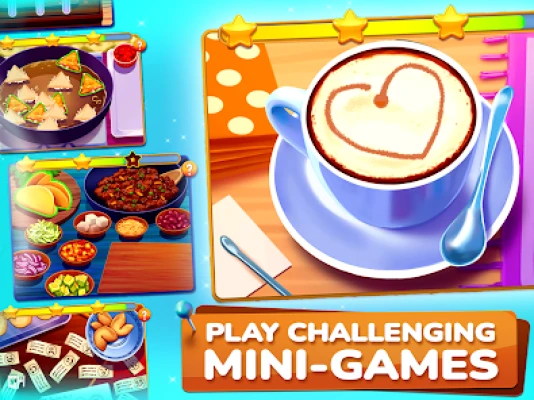
Delicious: The First Course includes a variety of mini-games that add something different to the regular restaurant routine.
These challenges give players a break from the standard serving cycle while adding another way to test timing and coordination.
Don't ignore them.
Learning the mini-games can help you become more comfortable with the game's timing-based mechanics overall.
Endless Mode
After progressing through the campaign, players can unlock Endless mode, which provides an effectively unlimited restaurant challenge.
Endless mode is particularly appealing if you enjoy:
High-score chasing
Fast-paced restaurant management
Testing your multitasking skills
Improving reaction speed
Playing beyond the main campaign
It's also a useful way to practice your restaurant-management skills without worrying about completing a specific story objective.
Restaurant Decoration
The game allows you to decorate the restaurants and personalize their appearance.
Decoration isn't just about making the locations look different.
It contributes to the sense of progression as each restaurant develops alongside Emily's culinary career.
Advanced Time Management Strategy
Batch Your Actions
Try to complete multiple related actions during the same movement sequence.
For example, instead of:
Pick up → Serve → Walk back → Pick up → Serve
look for opportunities to prepare several items and serve multiple customers efficiently.
Prepare While Waiting
Whenever an item is cooking or otherwise taking time, don't simply watch it.
Use that window to complete another task.
Use Your Helpers as Extensions of Your Workflow
Don't wait until you're overwhelmed before relying on staff.
A helper is most useful when integrated into your normal routine.
Keep the Restaurant Moving
A clean, organized restaurant creates more opportunities for customers to be served.
Small delays accumulate quickly in time-management games.
Learn the Order Patterns
After playing a location several times, you'll begin recognizing which dishes appear frequently.
Use that knowledge to prepare popular items earlier.
How to Beat Difficult Levels
When you repeatedly miss the highest score, don't simply play faster.
Instead, identify the exact bottleneck.
Ask yourself:
Am I waiting too long for food?
Am I walking unnecessarily?
Are customers becoming impatient?
Am I forgetting payments?
Am I using helpers effectively?
Do I need a menu upgrade?
Am I trying to do too many tasks at once?
Once you've identified the problem, change one part of your strategy and replay the level.
This is usually more effective than trying to make every action faster simultaneously.
Beginner Tips
If you're new to Delicious: The First Course, use these simple rules:
Learn one restaurant at a time.
Don't rush until you understand the workflow.
Prepare slow dishes early.
Watch customer patience.
Collect payments quickly.
Keep Emily moving.
Use helpers strategically.
Upgrade frequently used menu items.
Practice the mini-games.
Replay levels to improve your scores.
Common Mistakes to Avoid
Waiting for Food to Finish
Don't stand around while something cooks.
Use the time to complete another task.
Ignoring Customers
Even if you're preparing food perfectly, unhappy customers can ruin your score.
Forgetting Payments
A completed order isn't fully finished until the customer leaves.
Cleaning Too Late
A dirty table can interfere with the restaurant's flow.
Spending Upgrades Randomly
Prioritize upgrades that address your biggest gameplay problems.
Trying to Do Everything Yourself
The game provides helpers for a reason. Use them to reduce workload.
Difficulty and Replayability
The core mechanics are easy to understand, but achieving high scores requires increasingly good multitasking.
The game's 80 levels across 8 restaurants, combined with upgrades, mini-games, helpers, and Endless mode, gives it considerably more replay value than a short casual cooking game.
Players who enjoy perfecting their performance can replay stages to improve their scores rather than simply moving forward once a level is completed.
Story and Presentation
The First Course is deliberately different from the more story-focused Delicious Emily games.
GameHouse describes it as a modern take on the very first Delicious game, designed to revisit the origins of Emily's cooking journey.
That means the emphasis is on classic restaurant-management gameplay rather than an elaborate narrative.
This approach makes the game especially suitable for players who enjoy the mechanics of the Delicious series and want a more straightforward cooking challenge.
Is Delicious: The First Course Worth Playing?
If you enjoy cooking games, restaurant simulators, and fast-paced time-management challenges, The First Course has a lot to offer.
Its biggest strengths are the combination of:
80 cooking levels
8 restaurants
Multiple cuisines
Mini-games
Restaurant upgrades
Menu upgrades
Helpful staff
Decoration
Endless mode
The Google Play listing currently shows a 4.8-star rating from more than 6,000 reviews, although some recent player reviews criticize the advertising and monetization structure.
Pros and Cons
Pros
80 time-management cooking levels
8 unique restaurants
Variety of cuisines
Endless mode
Multiple mini-games
Restaurant decoration
Menu upgrades
Interior upgrades
Three different types of helpers
Easy to learn but challenging to master
Offline support is listed on Google Play
Strong rating from players
Cons
The game can become repetitive for players who prefer story-driven gameplay
Some players have criticized the amount of advertising
Some reviews report technical or loading issues
Monetization may not appeal to every player
Recent Google Play reviews include complaints about advertising frequency, pricing, and occasional technical problems, while GameHouse has acknowledged some player feedback.
Game Information
| Information | Details |
|---|---|
| Game | Delicious: The First Course |
| Developer | GameHouse LLC |
| Genre | Cooking / Time Management / Simulation |
| Main Campaign | 80 levels |
| Restaurants | 8 |
| Endless Mode | Yes |
| Mini-Games | Yes |
| Helpers | Waiter, entertainer, cleaner |
| Menu Upgrades | Yes |
| Interior Upgrades | Yes |
| Restaurant Decoration | Yes |
| Game Mode | Single player |
| Platform | Android |
| Content Rating | Everyone |
| Business Model | Free with ads and in-app purchases |
| Offline | Listed as supported |
| Developer Update | November 28, 2025 |
The Google Play listing identifies the game as a single-player simulation/time-management title available on Android and notes offline support, ads, and in-app purchases.
Frequently Asked Questions
How many levels are in Delicious: The First Course?
The game contains 80 time-management cooking levels across eight restaurants.
How many restaurants are in the game?
There are 8 unique restaurants, each offering its own setting and culinary challenges.
Does Delicious: The First Course have Endless mode?
Yes. Endless mode can be unlocked after progressing through the game and provides continuing restaurant-management challenges.
Can I upgrade the restaurants?
Yes. Players can upgrade menu items, unlock interior improvements, and decorate the restaurants.
Can I hire staff?
Yes. You can hire a waiter, entertainer, and cleaner to help manage different parts of the restaurant.
Does the game have mini-games?
Yes. Delicious: The First Course includes several mini-games alongside its main time-management gameplay.
Is Delicious: The First Course story-driven?
Unlike many later Delicious Emily games, The First Course focuses primarily on classic time-management gameplay and celebrates the origins of the series rather than presenting a large story campaign.
Can I play Delicious: The First Course offline?
Google Play currently lists the game as supporting offline play.
Is Delicious: The First Course free?
The Google Play listing says the game can be played for free with ads and also includes in-app purchases. GameHouse+ offers additional options, including an ad-free VIP experience.
Final Verdict
Delicious: The First Course is a focused return to classic restaurant time management. Instead of relying heavily on a dramatic story, it puts the emphasis on what made the Delicious series popular in the first place: serving customers, preparing food, managing several tasks at once, upgrading restaurants, and chasing better scores.
With 80 levels, 8 restaurants, global cuisines, mini-games, helpers, upgrades, decoration, and Endless mode, there is plenty of content for fans of cooking and time-management games.
If you enjoy cooking games, restaurant management, time-management challenges, and the Delicious Emily series, The First Course is a strong choice—especially if you prefer gameplay-focused experiences over long story sequences.
Rate the Game
User Reviews















Popular Games



















 Android
 iOS
 Windows
 Xbox