


Latest Version
October 05, 2026
Gamehouse LLC
Simulation
iOS
0
Report a Problem
More About :game
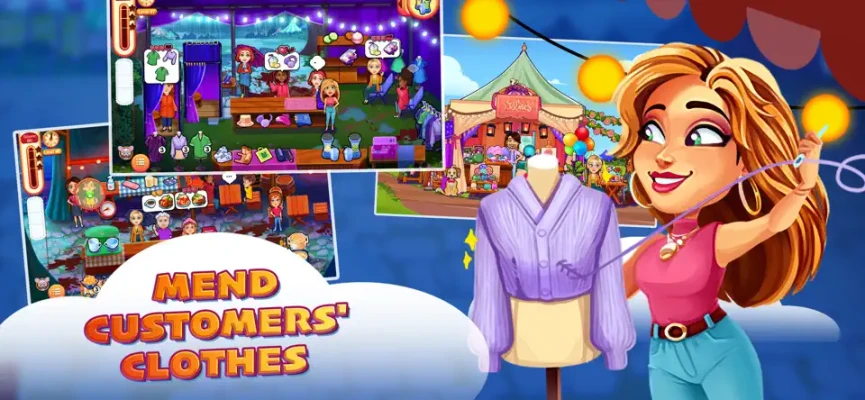
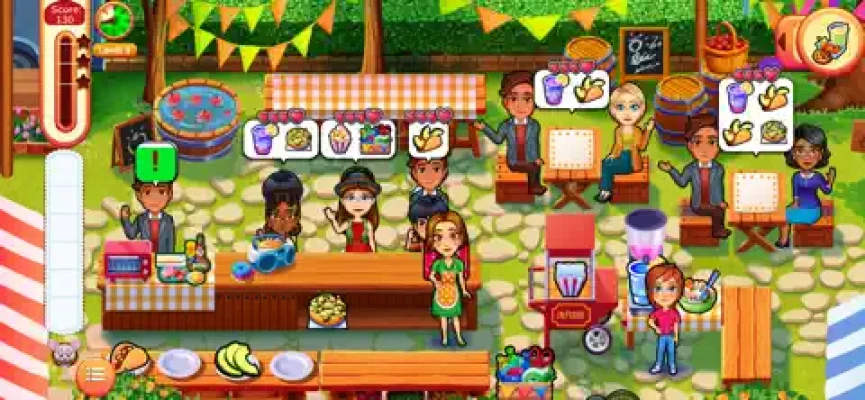
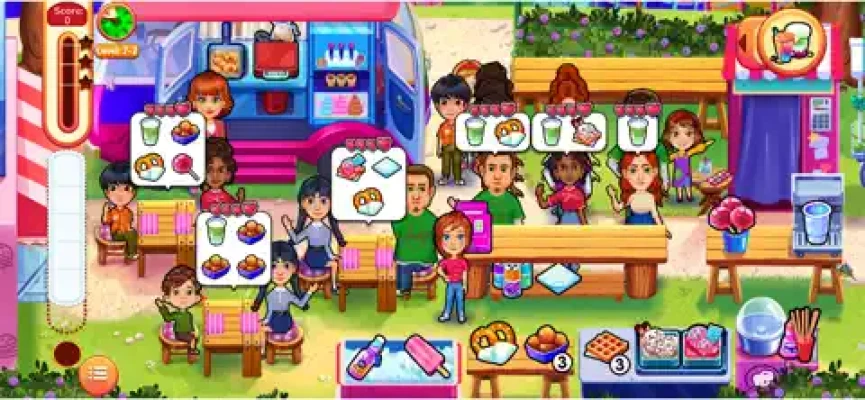
Instead of focusing only on restaurant service, the game expands the Delicious formula into several different types of festival work. You will cook and serve with Emily, help Dr. Heart treat patients, work with Angela to repair clothing, and assist Francois with creating warmth, light, and shelter.
The main campaign contains 60 time-management levels spread across six festival locations, followed by 30 additional bonus levels for players who want a greater challenge.
Story and Atmosphere
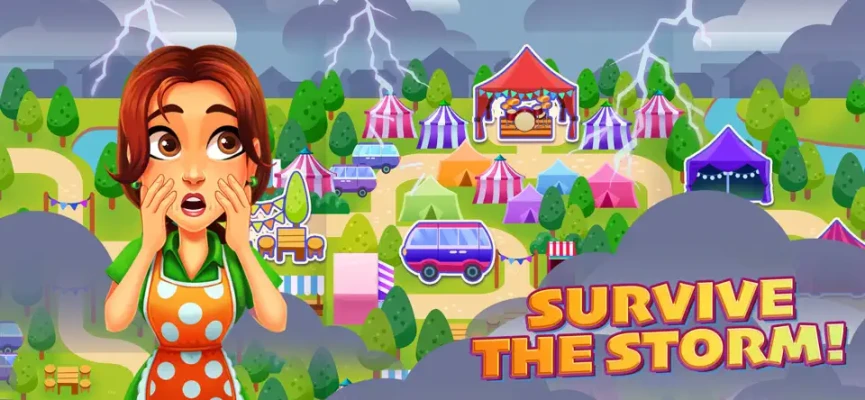
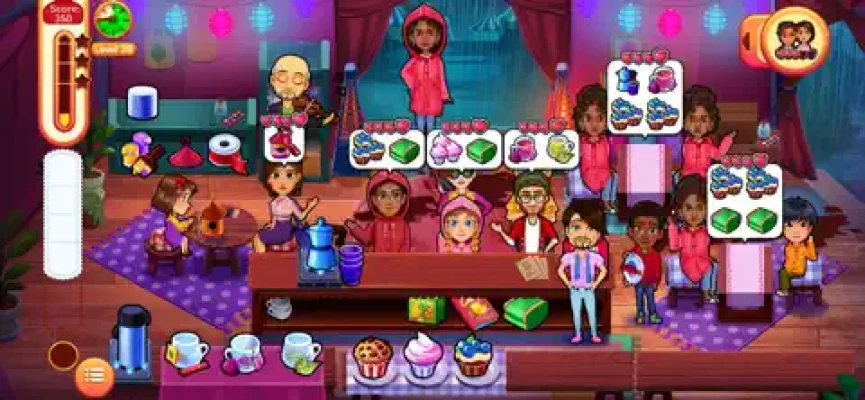
The Festival of Dreams is supposed to be a joyful event, but a powerful storm changes everything.
As conditions become more difficult, the characters have to abandon the normal rhythm of a festival and concentrate on helping people survive the changing conditions. Kitchens can become chaotic, visitors need assistance, medical emergencies appear, and improvised shelters have to be prepared.
This gives the game a more urgent atmosphere than a traditional cooking-focused Delicious adventure.
The story also brings familiar characters into the wider festival situation, including Emily, Dr. Heart, Angela, and Francois. The result is a mixture of cooking, emergency assistance, creativity, and classic Delicious-style time management.
How the Gameplay Works
The basic objective is simple:
Serve customers, complete tasks quickly, maintain good service, and finish each level while earning the best possible score.
However, the game becomes more complicated as additional responsibilities appear.
You may need to:
Prepare and serve food
Respond to customer requests
Treat injured people
Manage medical supplies
Repair or prepare clothing
Provide dry clothing for festival visitors
Create light and warmth
Build safer spaces
React to changing weather conditions
Complete interactive mini-games
Handle several tasks at the same time
The key difference from a straightforward restaurant game is that the same time-management principles are used across multiple types of festival activities.
Six Festival Locations
The main campaign takes place across six festival locations, with each area introducing different demands and priorities.
Rather than treating every level as another restaurant shift, the game gradually changes the type of work you are performing.
Festival Kitchens
Emily's cooking sections are the most recognizable part of the Delicious formula.
The goal is to keep orders moving while avoiding unnecessary delays. Watch what customers want, prepare items in an efficient order, and avoid allowing several impatient customers to accumulate at once.
Medical Relief
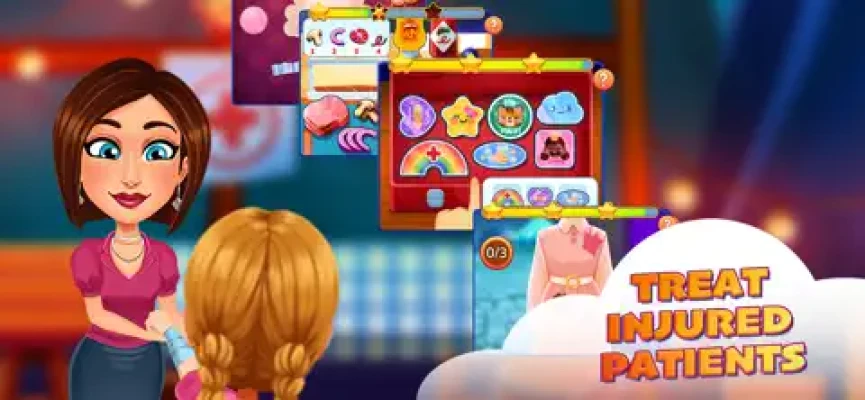
Dr. Heart's sections change the rhythm considerably.
Medical tasks require you to pay attention to who needs assistance and what action should happen next. These levels reward players who keep their attention moving around the entire screen rather than focusing on one customer or patient.
Fashion and Clothing
Angela's tasks involve repairing outfits and helping festivalgoers who have been affected by the weather.
These sections are useful reminders that the game is about overall festival management rather than cooking alone.
Shelter and Interior Work
Francois handles the practical side of keeping people comfortable.
You will work with repurposed materials to create things such as warmth, light, and shelter. These levels emphasize task prioritization and quick reactions.
Full Strategy Guide
1. Learn the Layout Before Chasing Speed
Your first attempt at a level should be about understanding the layout.
Identify:
Where customers appear
Where finished products are collected
Which stations are used repeatedly
Where special tasks occur
Which actions require returning to the same location
Where distractions or mini-games can interrupt your rhythm
Once you understand the physical flow of a level, you can start optimizing it.
Do not try to play every new level at maximum speed immediately.
Learning the layout first often saves more time than frantic clicking.
2. Prioritize Tasks Instead of Simply Clicking Fast
Fast clicking does not automatically produce a high score.
The better approach is to decide what matters most at each moment.
A useful priority system is:
Urgent customer → nearly finished task → new preparation → lower-priority task
If a customer is about to lose patience while another order has only just appeared, finish the urgent interaction first.
The same principle applies outside the kitchen.
When several people require attention, identify the task with the greatest immediate consequence.
3. Build Efficient Action Chains
One of the strongest techniques in Delicious-style games is completing several actions in a logical sequence.
For example:
Start a preparation task.
While it is running, complete another short task.
Collect the finished item.
Serve the waiting customer.
Immediately handle the next prepared item.
Return to the station before another task becomes urgent.
The goal is to reduce empty movement.
Every unnecessary trip costs time.
When you learn a level's rhythm, try to combine actions so your character is almost always doing something useful.
4. Watch Customer Patience Carefully
Customer patience is one of the easiest things to overlook when concentrating on food preparation.
Do not become so focused on making the perfect sequence that you ignore someone who has already been waiting.
A slightly less efficient preparation sequence that keeps everyone satisfied can be better than a theoretically perfect sequence that causes a customer to become impatient.
Keep checking the entire screen rather than staring at one station.
5. Prepare Before the Rush
If a level gives you a brief period without immediate pressure, use it.
Prepare items that you know will be needed frequently, complete available setup tasks, and put yourself in a position where the next customer can be served quickly.
This becomes particularly important when the level introduces multiple simultaneous responsibilities.
Preparation creates breathing room later.
6. Learn Each Character's Gameplay Style
One of the game's strengths is that the responsibilities change depending on who you are helping.
Emily
Think in terms of:
orders → preparation → serving → customer flow
Keep the kitchen moving and avoid letting orders pile up.
Dr. Heart
Think in terms of:
patient priority → treatment → supplies → next patient
Do not become fixated on a single action while another urgent medical task is waiting.
Angela
Think in terms of:
request → repair/preparation → delivery
Try to recognize repeated patterns so you can react faster the next time they appear.
Francois
Think in terms of:
materials → creation → placement/use
The objective is to keep the festival environment functioning rather than simply serving customers.
7. Treat Weather Changes as a Gameplay Mechanic
The storm is more than a story element.
The changing festival conditions force you to adapt your priorities.
When the environment becomes more demanding, don't continue playing as though you are in a normal restaurant.
Ask yourself:
What has become urgent?
Which task can wait?
Which customer or visitor is closest to losing patience?
Can I combine two actions?
Is there a special objective I need to complete?
Adaptation is more important than memorizing one fixed sequence.
8. Use Mini-Games Carefully
The game includes interactive mini-games that test reflexes.
Do not treat them as completely separate from the time-management system.
A successful mini-game can help maintain your momentum, while mistakes can disrupt your rhythm.
When you encounter a new mini-game:
Learn the interaction.
Identify the timing pattern.
Avoid unnecessary movements.
Focus on accuracy first.
Increase speed once the pattern becomes familiar.
Accuracy generally becomes easier when you stop trying to rush an interaction you have not yet learned.
9. How to Improve Your Three-Star Performance
If your goal is to replay levels for better scores, don't simply try to click faster.
Instead, identify where you lost time.
Ask:
Did I walk too far?
Did I leave a customer waiting?
Did I forget an item?
Did I start tasks in the wrong order?
Did I waste time switching between stations?
Did I react too slowly to an unexpected event?
Did I spend too much time on a low-priority task?
Then replay the level specifically to eliminate that mistake.
This is much more effective than randomly attempting the same level again.
10. Use Replay Runs to Optimize Your Route
A good strategy for difficult levels is to divide your attempts into three stages.
First Run – Learn
Ignore the score.
Understand what happens and where the pressure points are.
Second Run – Improve
Try to remove obvious mistakes and unnecessary movement.
Third Run – Optimize
Now focus on timing, customer chains, task combinations, and special objectives.
This approach is especially useful when trying to improve your three-star results.
Tips for the 30 Bonus Levels
The 30 bonus levels provide additional challenges after the main campaign.
Expect these levels to reward players who have already learned the basic mechanics.
Before attempting them, make sure you are comfortable with:
Rapid task switching
Customer prioritization
Efficient movement
Multi-tasking
Mini-game timing
Recognizing repeated patterns
The biggest mistake is approaching a bonus level as if it were simply another normal campaign stage.
Go into bonus challenges expecting tighter time management.
Festival Tent and Customization
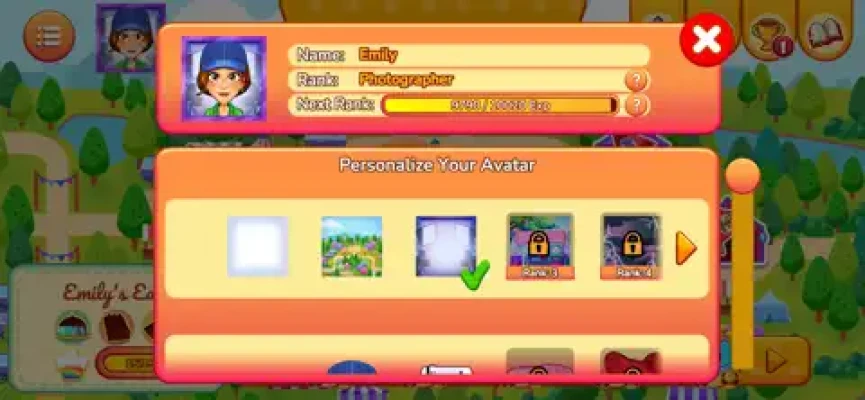
The game also allows you to build and customize your own festival tent.
This adds a creative element to the otherwise fast-paced management gameplay.
Customization is particularly appealing if you enjoy having something persistent to work toward beyond simply completing individual levels.
It also gives the festival setting a more personal feel instead of making every location purely functional.
Difficulty: Is Festival of Dreams Hard?
The difficulty depends heavily on your objective.
If you simply want to complete the campaign, the game is approachable for players familiar with time-management games.
If your goal is to maximize scores and complete challenging bonus levels, the game becomes much more demanding.
The hardest part is usually not one individual action. It is maintaining control when several things happen simultaneously.
Players who enjoy multitasking, fast reactions, and replaying levels for better scores will get more depth from the game.
Beginner Mistakes to Avoid
Trying to serve everyone immediately
Sometimes preparation or another urgent task should come first.
Moving without a plan
Repeated trips across the screen quickly destroy your available time.
Ignoring the whole screen
A new task can appear while you are concentrating on another station.
Restarting without identifying the problem
If you do not know what caused the poor result, another attempt may produce the same mistake.
Playing every location exactly the same way
Cooking, medical relief, fashion tasks, and shelter work require different priorities.
Chasing speed before accuracy
Learn the interaction first. Speed comes naturally once the pattern is familiar.
Pros and Cons
Pros
60 main time-management levels
Six different festival locations
30 bonus challenges
Cooking and serving gameplay
Medical relief activities
Fashion-related tasks
Shelter and festival-support activities
Interactive mini-games
Festival tent customization
Familiar Delicious characters
Strong multitasking gameplay
Suitable for short play sessions
Cons
Some players may find the campaign easier than expected
Players looking primarily for a deep cooking simulator may find the wider festival tasks unusual
The advertising/subscription model may not appeal to everyone
The game's emphasis on rapid task management can become repetitive for players who prefer slower gameplay
Platforms and Requirements
The current Apple listing supports:
iPhone
iPad
Mac with Apple silicon under the listed compatibility requirements
Apple Vision
The iPhone and iPad versions require iOS/iPadOS 15.0 or later. The listed app size is approximately 326.8 MB. The game is published by GameHouse LLC.
The game is also available on Android and PC platforms, with the same core 60-level festival adventure and additional bonus content.
GameHouse+ and Pricing
The game can be played through the GameHouse+ ecosystem, with a free advertising-supported option and a VIP subscription offering ad-free access and additional benefits.
The current U.S. App Store listing also shows a $14.99 full-game purchase, while GameHouse+ VIP is listed at $9.99 monthly or $89.99 yearly. Prices can vary by platform and region.
Ratings and Player Feedback
The U.S. App Store listing currently shows 4.9 stars from around 1,000 ratings, although ratings naturally change as more players review the game.
Player feedback is somewhat mixed beyond the headline rating. Some long-time Delicious players praise the familiar gameplay and characters, while other reviews criticize the shorter-feeling story, repetitive sections, or monetization experience.
That makes the game particularly easy to recommend to players who primarily enjoy the time-management gameplay, while fans who play Delicious mainly for long character-driven stories may have different expectations.
Is Delicious: Festival of Dreams Worth Playing?
Delicious: Festival of Dreams is a good choice if you enjoy fast-paced time-management games where success depends on multitasking rather than traditional combat or exploration.
Its biggest strength is variety. Emily's cooking gameplay is joined by medical assistance, clothing repair, shelter creation, mini-games, and festival customization.
The most enjoyable way to play is to treat each level like a small optimization puzzle: learn the layout, identify the important tasks, reduce unnecessary movement, and gradually improve your score.
If you are a long-time Delicious player, the familiar characters and time-management formula provide plenty of reasons to try it. If you are new to the series, the straightforward controls make it relatively easy to understand while still giving experienced players room to improve.
Frequently Asked Questions
How many levels are in Delicious: Festival of Dreams?
There are 60 main time-management levels across six festival locations, plus 30 bonus levels.
Is Delicious: Festival of Dreams only a cooking game?
No. Cooking is an important part of the game, but you also help with medical treatment, clothing repairs, shelter, warmth, lighting, mini-games, and other festival activities.
Who do you play as in Festival of Dreams?
Emily is central to the cooking sections, but the game also features activities involving Dr. Heart, Angela, and Francois.
Does the game have bonus levels?
Yes. There are 30 bonus levels designed to provide additional time-management challenges.
Can you customize anything?
Yes. The game includes a feature for building and customizing your own festival tent.
Does Festival of Dreams have mini-games?
Yes. Interactive mini-games are included alongside the main time-management gameplay.
What is the best strategy for difficult levels?
Learn the level layout first, prioritize urgent tasks, reduce unnecessary movement, combine actions whenever possible, and replay the stage specifically to eliminate the mistakes that cost you the most time.
Is Delicious: Festival of Dreams suitable for beginners?
Yes. The basic gameplay is easy to understand, but achieving high scores and mastering bonus challenges requires better multitasking, timing, and route planning.
Final Verdict
Delicious: Festival of Dreams expands the familiar Delicious formula into a storm-hit festival where cooking is only one part of the challenge. Its 60 main levels, six locations, 30 bonus stages, mini-games, and multiple character roles give the game plenty of time-management content.
For the best results, don't confuse speed with efficiency. The strongest players are the ones who understand the level, predict what will happen next, and turn several small actions into one smooth sequence.
If you enjoy cooking games, time-management challenges, multitasking, and the Delicious series, Festival of Dreams is well worth adding to your playlist.
Rate the Game
User Reviews













Popular Games


















 Android
 iOS
iOS Windows
 Xbox
Xbox