







Latest Version
November 19, 2026
AppQuantum
Simulation
0
com.lumber.inc
Report a Problem
More About :game
Game Overview
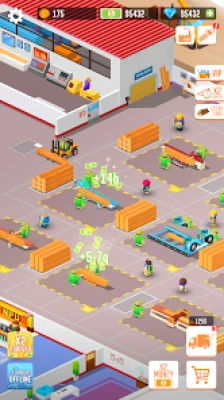
Idle Lumber Empire: Tycoon Inc is a business management and idle simulation game developed by AppQuantum. It puts players in charge of a growing timber business, beginning with a modest lumber operation and gradually developing it into a large-scale production company.
The main objective is to create an efficient production system that transforms freshly harvested trees into valuable wooden products. Players must manage different parts of the operation, including forestry, lumberjacks, processing machines, transportation vehicles, employees, and factory upgrades.
Rather than focusing exclusively on tapping the screen to collect money, the game combines idle mechanics with resource management and business development. Every improvement can contribute to a more productive sawmill, allowing players to increase their income and unlock additional opportunities.
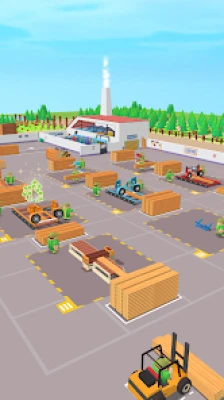
The game features stylized low-poly 3D graphics, automated production lines, expandable facilities, and management systems that give players plenty of reasons to keep improving their businesses.
As the operation develops, players can explore more advanced production facilities, complete orders, collect BizPoints, and work toward establishing a much larger lumber empire.
Main Game Features
Lumber Mill Management
Take control of a timber factory and oversee the production process. Manage workers, improve machinery, and organize the different stages of production to keep the business operating efficiently.
Forest Expansion and Tree Management
Build a reliable timber supply by developing forests and hiring tree planters. Expand available land and improve the efficiency of lumberjacks to maintain a steady flow of raw materials.
Worker Recruitment and Development
Hire different employees to handle essential factory responsibilities. Lumberjacks collect trees, while other workers help operate machinery and manage production. Improving their abilities can make the entire business more productive.
Factory Machinery Upgrades
Purchase and improve equipment responsible for processing timber. Better machinery helps increase production speed and supports the development of more advanced manufacturing operations.
Transportation Management
Maintain delivery vehicles such as log trucks and forklifts. These vehicles move resources between storage areas and production machines, making transportation an important part of the factory's overall efficiency.
Idle Income System
The business can generate earnings while you are away. Returning to the game allows you to collect accumulated rewards and reinvest them in your operation, although certain orders and construction activities may require active participation.
Customer Orders and BizPoints
Complete production orders to earn valuable rewards and BizPoints. These resources help fund improvements and support progression toward new factories.
Factory Expansion and New Sawmills
Develop your existing operation and eventually unlock more advanced sawmill facilities. Moving to another sawmill introduces a new stage of progression and fresh opportunities to grow.
Workshop and Wooden House Construction
Expand beyond traditional timber production by taking on specialized building contracts. Constructing wooden houses provides additional progression opportunities and reputation rewards.
Lumber Village Development
Use completed houses to develop a village and create another source of long-term income. This adds a community-building element to the traditional factory management experience.
Limited-Time Events
Participate in special events featuring different factory themes and challenges. Earn milestone rewards, collect useful resources, and compete for better leaderboard positions.
Complete Gameplay Guide
Starting Your First Lumber Business
Your journey begins with a small sawmill and a limited production capacity. At this stage, the most important objective is to establish a dependable production cycle.
Start by familiarizing yourself with the factory layout, available machines, employee positions, and resource storage areas. Learn how logs move from the forest into the factory and how finished products are prepared for customers.
Focus on the basic upgrades that increase production and help your business generate money more consistently. Avoid spending all your available resources on improvements that do not immediately support your production needs.
As your income grows, gradually expand the workforce and invest in equipment that makes the sawmill more efficient.
Managing Forests and Harvesting Trees
Forests are the foundation of your lumber business. Without a consistent supply of trees, your factory cannot maintain its production activities.
Tree planters help regenerate forests, ensuring that your operation has access to additional timber over time. Lumberjacks are responsible for cutting trees and collecting logs.
For better results, invest in both sides of forest management. Increasing harvesting efficiency without improving tree regeneration can create problems with your long-term timber supply.
Purchase additional land when it becomes available and improve your forestry workforce as your production requirements increase.
A balanced forestry system helps prevent shortages and supports the continued expansion of your factory.
Improving Production Lines
The production line is where raw timber becomes valuable merchandise. Logs move through different machines, each performing a specific task to prepare the wood for customers.
As you progress, you can unlock equipment that performs additional operations, including cutting, sanding, and painting.
Every machine contributes to the overall production process, but upgrading everything equally is not always the most efficient strategy.
Pay attention to machines that slow down the entire operation. If one processing station cannot handle the amount of timber arriving from previous stages, the factory may experience a production bottleneck.
Prioritize improvements that address these weaknesses before investing heavily in machines that are already performing efficiently.
Hiring and Upgrading Managers
Managers are among the most important investments in Idle Lumber Empire.
Their primary purpose is to automate production stations and improve factory performance. Without effective management, players may need to spend more time manually operating different parts of their businesses.
Recruit managers whenever you have a suitable opportunity. Upgrade their levels and pay attention to the production stations they control.
A well-developed management team makes it easier to maintain consistent factory operations, especially when you are away from the game.
When deciding which managers to improve, prioritize the stations that have the greatest influence on your production speed and income.
Maintaining Trucks and Forklifts
Transportation is an important part of running a successful sawmill.
Log trucks transport harvested timber from the forest to the storage yard, while forklifts move stored materials toward the processing machines.
If transportation cannot keep up with production requirements, your machines may remain idle despite having enough workers.
Upgrade your vehicles as the factory expands. Better transportation capacity helps maintain a steady supply of materials and reduces unnecessary interruptions.
Remember that an efficient factory depends on more than powerful machines. Forestry, storage, and transportation must work together.
Completing Customer Orders
Customer orders provide an important way to generate income and collect BizPoints.
Visit the order board regularly to review available contracts. Each order requires specific products and quantities, so make sure your factory can produce the necessary materials before committing your resources.
Try to complete orders efficiently rather than allowing unfinished contracts to accumulate.
Prioritize contracts that fit your current production capacity. As your machines become stronger and your inventory improves, you can handle more demanding requests.
BizPoints are particularly valuable because they contribute to business progression and help unlock additional development opportunities.
Unlocking New Sawmills
Moving to a new sawmill is one of the major milestones in the game.
Once you have developed your current factory sufficiently, you can purchase another sawmill through the game's prestige progression system.
This is an important decision because the transition resets your physical factory production lines. However, it also provides a permanent income multiplier and unique rewards.
Do not rush into this upgrade without understanding its consequences.
Before purchasing a new sawmill, consider the following:
Make sure you have progressed as far as reasonably possible in your current factory.
Collect available rewards and resources.
Review your current production upgrades.
Understand that your previous physical production setup will reset.
Consider the long-term value of the permanent income multiplier.
The prestige system is designed to help you advance faster during subsequent stages of the game.
Building Houses in the Workshop
The Workshop introduces another business activity beyond ordinary lumber manufacturing.
Instead of simply producing timber, players can complete specialized building contracts that require different wooden materials.
These projects allow you to construct houses and earn Reputation Points.
Treat Workshop projects as an additional progression opportunity. Keep your production facilities strong enough to provide the required materials without unnecessarily disrupting your regular business operations.
Completing more projects helps develop this part of your empire and opens the door to further rewards.
Developing the Lumber Village
The Lumber Village expands the game with a community-building feature.
Completed Workshop houses can be placed in your personal village, where house owners and structural blueprints contribute to long-term development.
Hire House Owners and improve your blueprints to increase the village's earning potential.
This feature adds another layer of management to the game because you are no longer concentrating exclusively on factory production.
For steady progression, develop your village alongside your main sawmill rather than ignoring it until much later.
Participating in Weekly Events
Weekly events offer additional challenges and opportunities to collect valuable rewards.
These events can introduce special factories with different themes, including Medieval, Wild West, and Green Island settings.
Players work through event objectives, complete production milestones, and compete against other participants.
You do not necessarily need to reach the highest leaderboard position to benefit from these activities. Milestone rewards can provide useful resources for your main factory.
Participate regularly and concentrate on achievable objectives. Collecting several milestone rewards can be more worthwhile than spending everything trying to compete with the highest-ranked players.
Advanced Strategy Guide: How to Build a Successful Lumber Empire
Prioritize Automation Before Expensive Upgrades
One of the smartest long-term strategies is to automate your production facilities as early as possible.
Managers reduce the need for constant manual interaction and help your factory continue generating income while you are away.
Rather than spending every available coin on machinery, reserve part of your budget for manager recruitment and upgrades.
Automation becomes increasingly important as your factory develops more complicated production lines.
Identify Production Bottlenecks
A factory is only as efficient as its weakest important production stage.
For example, your lumberjacks might collect logs quickly, but an underpowered processing machine could prevent the factory from converting those logs into finished products.
Similarly, insufficient transportation capacity can leave valuable machinery waiting for materials.
Check your production lines regularly and identify where resources are accumulating or machines are sitting idle.
Improve the weakest part of the system first. This approach generally produces better results than upgrading every machine without considering the overall workflow.
Balance Forestry and Manufacturing
Never focus exclusively on harvesting or processing.
A strong lumber business requires a balance between tree regeneration, timber collection, storage, transportation, and manufacturing.
If your forests cannot provide enough logs, your machinery will eventually run short of materials.
If your manufacturing capacity is too limited, harvested timber may accumulate without generating sufficient revenue.
Improve forestry and production together to maintain a healthy business cycle.
Spend BizPoints Carefully
BizPoints are valuable progression resources, so use them with a clear objective.
Prioritize upgrades that help you increase productivity, improve important factory operations, and unlock useful progression opportunities.
Avoid making purchases simply because they are available.
Before investing, consider whether an upgrade will improve your current bottleneck, strengthen your income generation, or help you reach the next major milestone.
Use Idle Rewards Efficiently
Idle income allows you to benefit from your business even when you are not actively playing.
Make sure your important production stations are automated before leaving the game.
When you return, collect available earnings and review the factory's condition.
A useful routine is to collect your idle rewards, purchase important upgrades, complete available orders, and then allow the improved factory to generate more income.
Keep in mind that not every activity progresses while offline. Certain orders, construction projects, and other objectives may require active gameplay.
Make Smart Prestige Decisions
Prestige is a central part of long-term progression.
A new sawmill offers a permanent income advantage, but it also resets your current physical factory setup.
The best time to advance is when you have extracted substantial value from your existing operation and the benefits of the next sawmill outweigh the progress you would leave behind.
Think of prestige as a long-term investment rather than an ordinary factory upgrade.
Take Advantage of Event Rewards
Events are worth including in your regular playing routine.
Even if you cannot compete for the highest positions, completing accessible milestones can provide valuable resources and rewards.
Focus on event objectives that match your available time and production capabilities.
Avoid exhausting your resources too early. A steady approach often produces better overall progress than attempting to complete everything immediately.
Develop the Workshop and Village Alongside Your Factory
The Workshop and Lumber Village provide additional ways to expand your business.
Do not treat these features as unrelated distractions. They contribute to the broader progression system and provide opportunities to develop additional income sources.
Complete suitable building contracts, collect Reputation Points, and improve village structures when your resources allow.
A diversified approach helps you progress beyond ordinary lumber production.
Best Tips and Tricks for Beginners
Learn the factory layout first. Understanding how logs move through the production line makes it easier to identify problems and choose useful upgrades.
Hire managers early. Automation saves time and makes your factory easier to operate.
Improve weak machines. Concentrate on production stations that slow down the entire operation.
Keep forests productive. Tree planters and lumberjacks should develop together to maintain a consistent supply of timber.
Upgrade transportation. Trucks and forklifts are essential for moving materials efficiently.
Complete customer orders. Contracts provide income and BizPoints that support business development.
Collect idle earnings regularly. Reinvest accumulated money in improvements that increase production.
Participate in weekly events. Milestone rewards can help strengthen your main factory.
Do not rush prestige. Understand the reset mechanics and prepare before purchasing a new sawmill.
Invest in the village. Workshop projects and village improvements provide additional long-term progression.
Common Mistakes to Avoid
Spending Money Without a Clear Upgrade Plan
Buying every available upgrade can quickly consume your resources. Focus on improvements that directly increase production, reduce bottlenecks, or support your next objective.
Ignoring Managers
Relying too heavily on manual operations makes factory management less convenient. Managers are essential for developing an automated production system.
Neglecting Vehicle Upgrades
Even powerful machinery cannot operate efficiently without a steady supply of materials. Remember to maintain trucks and forklifts.
Expanding Without Enough Timber
Increasing factory capacity without improving forestry can create shortages. Make sure your forests can support your manufacturing requirements.
Advancing to a New Sawmill Too Early
The prestige system resets physical factory production lines. Moving forward without preparation can make the transition unnecessarily difficult.
Ignoring Special Events
Skipping every event means missing opportunities to collect additional rewards. Even casual participation can benefit your main business.
Spending Valuable Resources Impulsively
Save important resources for upgrades that contribute to meaningful progression. A little planning can prevent unnecessary delays later.
Is Idle Lumber Empire Worth Playing?
Idle Lumber Empire: Tycoon Inc is a good choice for players who enjoy idle games, business simulations, factory management, and incremental progression.
Its main attraction is the combination of forestry, manufacturing, transportation, employee management, and business expansion. Instead of managing only one production activity, players gradually develop an interconnected operation where every department contributes to the company's success.
The automation system makes it suitable for shorter play sessions, while factory upgrades, prestige progression, customer orders, Workshop projects, and weekly events provide longer-term goals.
The game also offers a relaxing visual presentation through its stylized low-poly graphics and animated production facilities.
However, players should be prepared for repetitive upgrade cycles and the possibility of slower progression without optional advertisements or in-app purchases. Some activities also require active participation rather than progressing entirely offline.
Overall, it is particularly appealing to fans of idle tycoon games who enjoy watching a small business develop into a much larger industrial operation.
Final Verdict
Idle Lumber Empire: Tycoon Inc combines resource management, automated manufacturing, forestry, and business development in an accessible simulation experience. Starting with a modest sawmill, players gradually build a sophisticated lumber company by hiring employees, improving machinery, maintaining transportation, and expanding their forests.
The addition of customer contracts, BizPoints, prestige upgrades, wooden house construction, village development, and weekly events gives the game several interconnected progression systems.
Success comes from making thoughtful investments, maintaining balanced production lines, and knowing when to expand. Whether you enjoy optimizing factory operations or gradually building a profitable business, Idle Lumber Empire offers an engaging journey into the world of lumber management and tycoon simulation.
Rate the Game
User Reviews















Popular Games



















 Android
 iOS
 Windows
 Xbox