
Latest Version
November 21, 2026
Azur Interactive Games Limited
Simulation
iOS
0
Report a Problem
More About :game
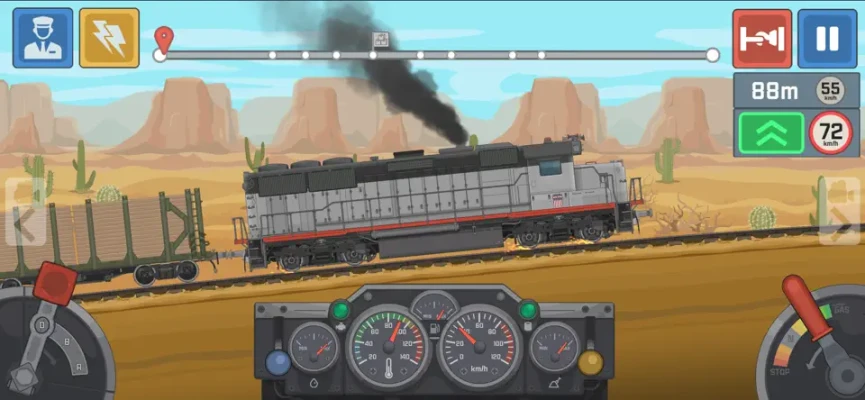
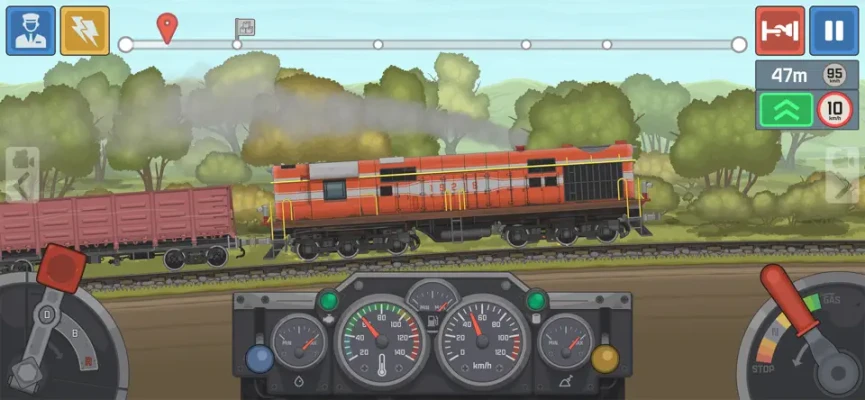
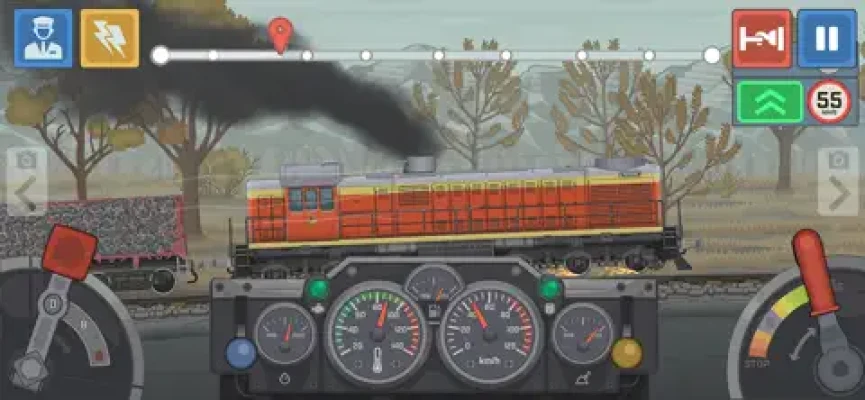
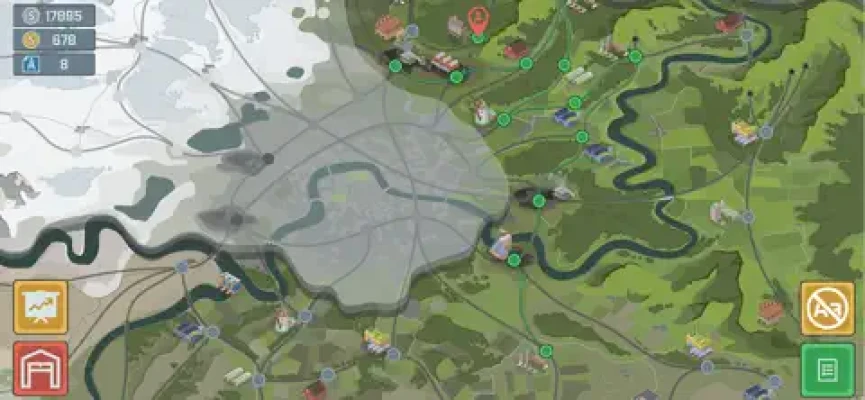
Set across varied environments, including deserts, forests, cities, mountains, and swamps, the game combines train operation with resource management and progression. Players must choose suitable locomotives, manage cargo weight, improve their railway equipment, and complete transportation tasks to help struggling regional economies recover.
What Is Train Simulator: Railroad Game?
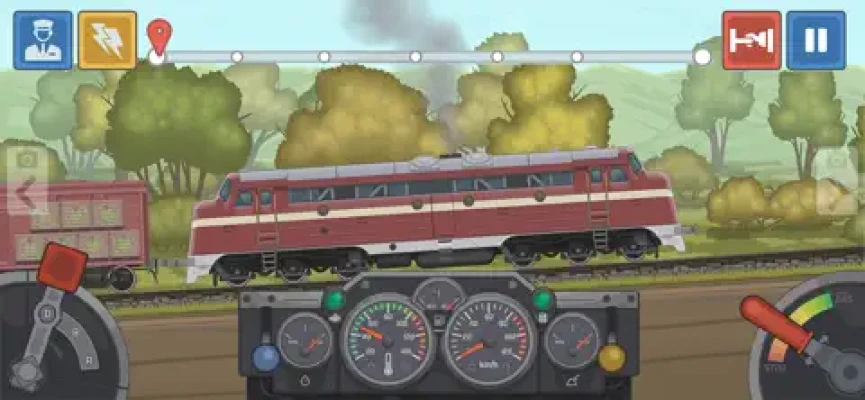
Train Simulator: Railroad Game is a railway management and train-driving simulation developed by Azur Interactive Games Limited. Rather than focusing only on driving from one destination to another, it gives players responsibility for transporting goods, maintaining an effective fleet, and supporting the development of different regions.
The central objective is to build a more capable railway operation. At the beginning, players have access to a modest diesel locomotive with limited hauling capabilities. Completing contracts generates income that can be invested in spare parts, equipment, and improved trains.
As the railway network develops, transportation assignments become more challenging. Some deliveries require heavier cargo capacity, better locomotive performance, or a more carefully prepared train composition. Choosing the right equipment for each contract is therefore an important part of the experience.
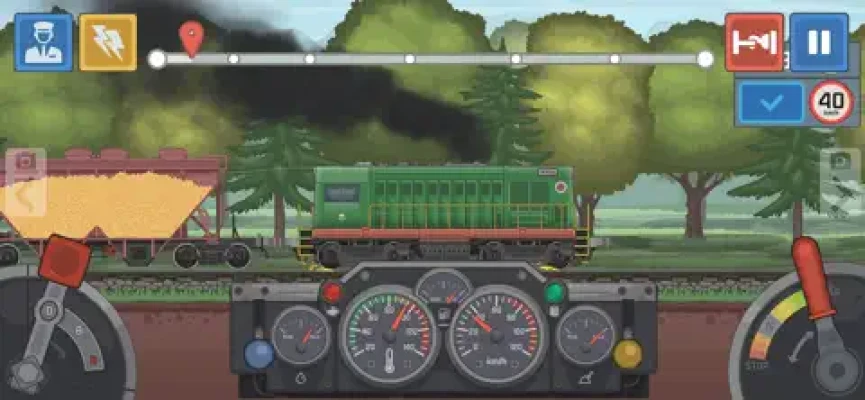
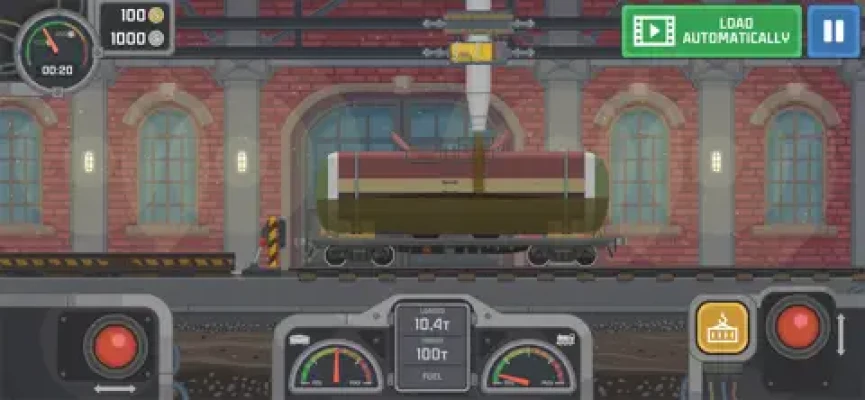
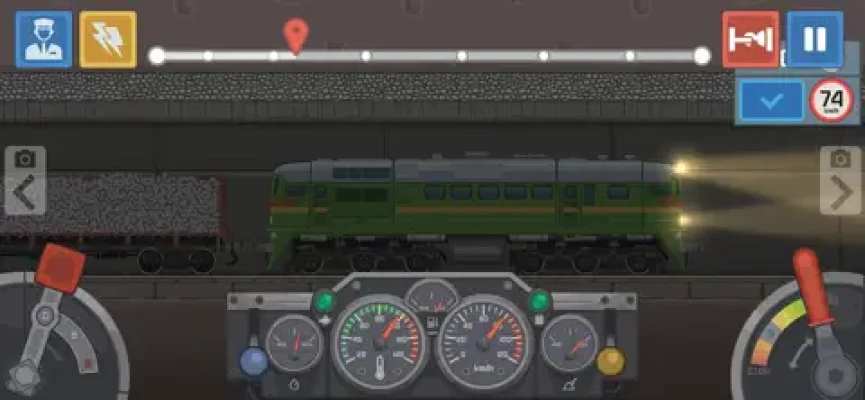
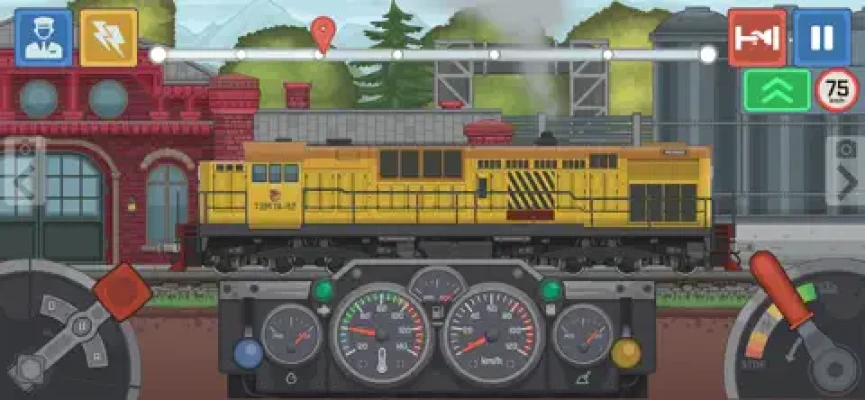
The game uses a two-dimensional presentation, making railway operations easy to follow while keeping attention on the trains, cargo, stations, and surrounding environments.
Main Features of Train Simulator: Railroad Game
Train Driving and Railway Management
The game combines train operation with strategic decisions about equipment and transportation. Players need to select appropriate locomotives, prepare their trains, accept delivery assignments, and complete contracts successfully.
A Variety of Locomotives
Players begin with a basic diesel engine and gradually work toward a larger collection of railway vehicles. The available fleet includes locomotives inspired by real railway designs, with different capabilities and performance characteristics.
Unlocking stronger engines opens the door to more demanding transportation work.
Cargo Transportation Contracts
Freight delivery is at the heart of the gameplay. Assignments can involve agricultural products, construction materials, and goods intended for different industrial sectors.
Each contract provides an opportunity to earn money and develop the railway business.
Train Upgrades and Customization
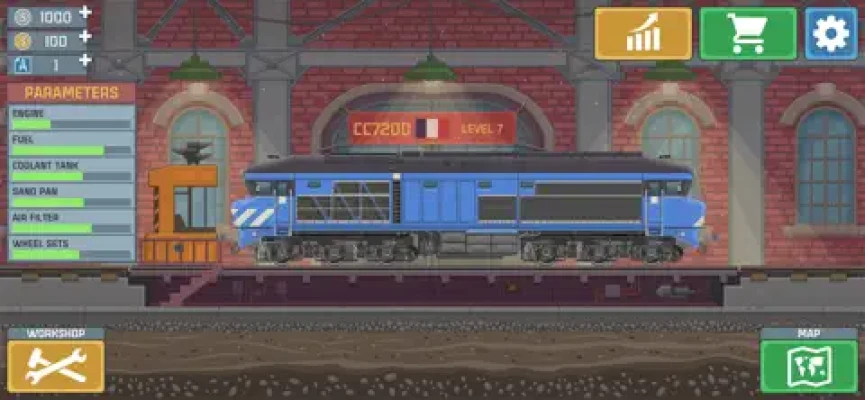
Players can improve their trains by purchasing spare parts and equipment. Upgrades help prepare locomotives for more difficult jobs and improve their ability to handle demanding cargo assignments.
Modifying train compositions is another important part of progression.
Different Environments
The railway network passes through a range of landscapes, including:
Deserts and dry regions
Busy urban environments
Forests and natural landscapes
Mountainous areas
Swamps and difficult terrain
These different settings give the railway network a varied appearance as players progress.
Dynamic Weather and Sound Effects
The game includes changing weather conditions and railway sound effects that add atmosphere to transportation missions. These details help make the journey feel more engaging.
Economic Development
The railway system is connected to the economic condition of the regions it serves. Completing contracts and improving relationships between stations helps support industrial activity and regional development.
Understanding the Gameplay
The gameplay revolves around accepting contracts, preparing trains, transporting cargo, and investing the rewards in better railway equipment.
Accepting Transportation Contracts
Contracts provide the main source of work. Each assignment identifies a transportation requirement and gives players a reason to operate their trains.
Before accepting a job, consider whether your current locomotive can handle the required cargo. A contract may offer an attractive reward, but an unsuitable train can make the assignment unnecessarily difficult.
Preparing the Train
After choosing a contract, players need to prepare an appropriate train composition. The locomotive and its equipment should match the weight and requirements of the delivery.
A small engine may be sufficient for lighter assignments, while heavier freight requires a more capable locomotive.
Loading and Delivering Cargo
Once the train is ready, the cargo can be loaded and transported to the selected destination. Successful deliveries contribute to your progress and provide resources for future improvements.
Completing suitable contracts consistently is one of the most reliable ways to build a stronger railway operation.
Earning Money and Upgrading Equipment
The income earned from transportation work can be invested in locomotives, spare parts, and other equipment. These improvements gradually expand the range of contracts you can complete.
The most effective approach is to spend money on upgrades that solve your current limitations rather than purchasing equipment without a clear purpose.
Complete Strategy Guide for Train Simulator: Railroad Game
Getting Started as a New Railway Operator
The opening stages are mainly about understanding how contracts, locomotives, and upgrades work together.
Take time to learn the tutorial and become familiar with the main menus. Pay attention to how the game presents delivery requirements and train capabilities.
Your first locomotive will not be suitable for every assignment. This is normal. Focus on manageable jobs and use the rewards to improve your equipment.
Avoid rushing into the most demanding contracts simply because their rewards appear attractive. Early progress is easier when you build a reliable financial foundation.
Choose Contracts Your Locomotive Can Handle
One of the most important decisions is selecting the right transportation job.
Always compare the cargo requirement with your locomotive's capabilities before committing to an assignment. If the required load is too heavy, your train may struggle during transportation.
A good contract should offer a reasonable reward without putting your current equipment under excessive pressure.
As your fleet improves, you can gradually accept heavier and more profitable assignments.
Understand Cargo Weight
Cargo weight has a major influence on how effectively a train can perform.
A locomotive that handles a light delivery comfortably may struggle with a much heavier load. This is particularly important during the early stages, when available engines have limited capabilities.
Make checking the weight requirement part of your preparation routine. It can prevent wasted time and help you avoid unnecessary difficulties.
Upgrade Your Locomotive Carefully
Upgrades are essential for long-term progress, but spending resources without a plan can slow your development.
Start by identifying the biggest weakness in your current locomotive. If it struggles with heavy freight, prioritize improvements that help it handle more demanding transportation work.
If your train already performs well on the contracts you regularly complete, consider saving resources for a stronger locomotive instead.
The goal is to make each purchase contribute to a meaningful improvement in your railway operation.
Build a Balanced Train Composition
A powerful locomotive is useful, but the overall train setup also matters.
Choose a composition that matches the requirements of the contract. Do not assume that using the largest available train is always the best option.
A suitable setup should provide enough hauling capability without creating unnecessary expenses or making the assignment more complicated than it needs to be.
As you unlock more equipment, experiment with different combinations to discover which arrangements work best for your available locomotives.
Save Money for Important Purchases
It can be tempting to spend every reward immediately, especially when several upgrades are available.
However, keeping some money available gives you greater flexibility. You may need additional equipment or a stronger locomotive to access more profitable transportation work.
Try to distinguish between essential upgrades and purchases that can wait.
A sensible spending plan helps you progress without repeatedly running out of resources.
Focus on Consistent Earnings
Reliable income is more useful than occasionally attempting a difficult contract that your train cannot handle.
Choose assignments that fit your current fleet and complete them consistently. Use the resulting income to improve your locomotive and gradually increase your transportation capacity.
This approach creates a steady progression cycle: complete suitable deliveries, earn money, upgrade equipment, and unlock more demanding work.
Learn When to Use a Stronger Locomotive
As your collection grows, different locomotives become useful for different transportation requirements.
Do not judge an engine only by its appearance or purchase cost. Consider its practical value for the jobs you want to complete.
A stronger locomotive can make heavy deliveries easier and reduce the limitations of your earlier equipment. Before investing in one, consider whether it will help you access contracts that provide worthwhile rewards.
Develop Your Railway Network Gradually
The broader objective is not simply to collect locomotives. The game also encourages players to improve railway connections and support the economic development of different regions.
Progress through the available assignments and pay attention to opportunities that strengthen your transportation operation.
A well-developed railway business should have enough equipment to handle different types of freight rather than relying on one locomotive for every situation.
Make Smart Use of Available Resources
Spare parts, equipment, money, and other resources all contribute to your progress.
Before making a purchase, consider what problem it will solve. A useful upgrade should improve your ability to complete contracts, handle cargo, or expand your available transportation options.
Avoid spending resources on improvements that provide little practical benefit at your current stage.
Advanced Tips for Experienced Players
Match Every Train to Its Assignment
Experienced players should avoid using the same setup for every contract. Different deliveries can place different demands on the railway fleet.
Review each assignment and select a locomotive and composition that suit its requirements. This reduces unnecessary difficulty and makes better use of your available equipment.
Think About Long-Term Progression
Do not focus exclusively on the reward from your next contract. Consider how each completed assignment contributes to your future plans.
For example, an easier job may be worth completing if it helps you afford an upgrade that unlocks a much wider range of transportation opportunities.
Avoid Overinvesting in Temporary Solutions
Some upgrades may help your current locomotive perform better, but they may not be the best long-term investment.
If your main engine is approaching its practical limits, saving toward a more capable locomotive may offer better value than continuously improving an older one.
Keep Your Fleet Flexible
A diverse collection of locomotives gives you more options when selecting contracts.
Rather than concentrating all your resources on one type of train, work toward building a fleet that can support different transportation requirements.
This flexibility becomes increasingly valuable as you encounter more demanding assignments.
Use the Tutorial as a Reference
If you are unsure about a mechanic or menu option, review the instructions provided by the game. Understanding the available systems can help prevent mistakes and make future decisions easier.
Common Mistakes to Avoid
Accepting contracts that are too difficult
A high-reward assignment is not automatically a good choice. Check the cargo requirements and make sure your locomotive is capable of handling the job.
Ignoring cargo weight
Failing to consider the load can result in poor train performance. Always review the transportation requirements before preparing your locomotive.
Spending all your money immediately
Using every reward on minor improvements can leave you without enough resources for more important purchases. Keep some money available for future needs.
Upgrading without a clear objective
Every upgrade should contribute to a specific improvement. Decide whether you need better hauling capability, a more suitable train, or equipment for a particular type of contract.
Relying on one locomotive for everything
Different assignments may require different levels of performance. Expanding your fleet gives you more flexibility and reduces dependence on a single engine.
Ignoring the economic side of the game
Train Simulator: Railroad Game is more than a driving experience. Contracts, income, equipment purchases, and regional development all contribute to long-term progression.
Is Train Simulator: Railroad Game Suitable for Beginners?
Yes. The game introduces its railway systems through a tutorial and starts players with a basic locomotive, allowing them to learn the main mechanics gradually.
New players can begin with manageable transportation assignments before moving toward heavier cargo and more powerful engines.
The two-dimensional presentation also makes it easier to follow the railway environment without dealing with complicated three-dimensional camera controls.
However, players should understand that progression involves more than completing deliveries. Choosing appropriate contracts and managing resources are important parts of the experience.
What Makes Train Simulator: Railroad Game Interesting?
The main attraction is the combination of train operation and business development.
Players are not simply driving a locomotive along a railway. They are building a transportation operation, improving their equipment, and helping different regions become more productive.
The progression system provides a clear reason to keep completing contracts. Every successful delivery can contribute toward a better locomotive or an upgrade that makes more challenging work possible.
The variety of environments, cargo types, and railway equipment also helps maintain interest over longer play sessions.
Graphics, Sound, and Overall Presentation
Train Simulator: Railroad Game uses a 2D visual style that keeps the focus on the railway environment and transportation activities.
The presentation is designed around the locomotives, stations, cargo, and surrounding landscapes. Rather than relying on highly detailed three-dimensional visuals, the game uses a straightforward layout that makes its main systems easy to understand.
Railway sound effects and changing weather conditions add atmosphere to the experience.
Its visual approach is particularly suitable for players who enjoy management-focused simulation games and prefer a clear view of the action.
Is Train Simulator: Railroad Game Free to Play?
The game is listed as a free download on the Apple App Store and includes optional in-app purchases. It also contains advertising.
Players can begin building their railway operation without purchasing the game upfront. Optional purchases are available for additional items and equipment, including locomotives and starter packages.
Spending money is not the only way to make progress. Completing contracts and investing earned resources carefully are central parts of the intended gameplay experience.
Who Should Play Train Simulator: Railroad Game?
This game is a good choice for players who enjoy:
Train-driving and railway simulation games
Managing locomotives and transportation equipment
Delivering cargo between railway stations
Upgrading vehicles and building a stronger fleet
Completing contracts with different requirements
Resource management and gradual progression
Exploring railway environments in a 2D game
It may be less appealing to players who want a purely realistic first-person train-driving simulator with extensive manual controls. Its main focus is a combination of simplified train operation, freight transportation, and management.
Final Verdict
Train Simulator: Railroad Game offers an enjoyable combination of railway simulation, cargo transportation, and equipment progression. Its main strength is the way it connects everyday delivery assignments with the larger goal of developing a successful railway operation.
Starting with a modest diesel locomotive, players gradually earn money, improve their equipment, unlock stronger trains, and take on more demanding contracts. The different environments and transportation requirements add variety, while the upgrade system gives players clear long-term objectives.
For anyone who enjoys train games with an emphasis on freight delivery and strategic equipment management, Train Simulator: Railroad Game is worth exploring. The best way to succeed is to choose suitable contracts, pay attention to cargo weight, upgrade intelligently, and build a flexible locomotive fleet over time.
Rate the Game
User Reviews









Popular Games



















 Android
 iOS
 Windows
 Xbox