
Latest Version
September 23, 2026
Awem Games Limited
Puzzle
0
com.jumkaash.impossibleisland.andr
Report a Problem
More About :game
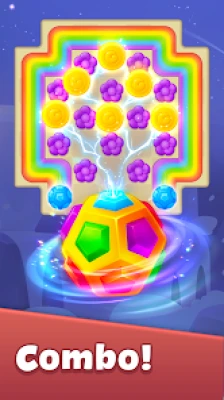
The current Google Play listing says the game contains more than 4,000 levels, while its gameplay includes several different ways to create special pieces and clear the board.
The Story of Cradle of Maya
The story begins on the mysterious island of Rockvista Key.
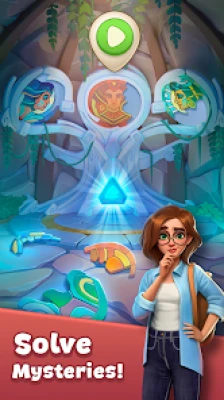
Lacey Goodwin, a young architect, travels into an environment filled with ancient structures, mysterious locations and secrets connected to Maya civilization.
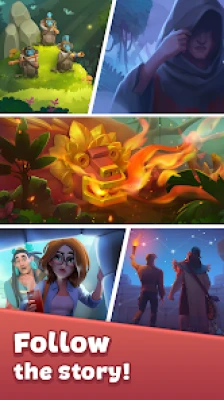
Her journey becomes much more personal when she searches for her long-lost mother. At the same time, she must confront the Mor-Kharras, a dark cult threatening the island and the sacred Tree of Life.
This gives the match-3 levels a purpose beyond simply earning points. Puzzle progress helps Lacey explore the island, restore locations and uncover more of the narrative.
Main Features
4,000+ Match-3 Levels
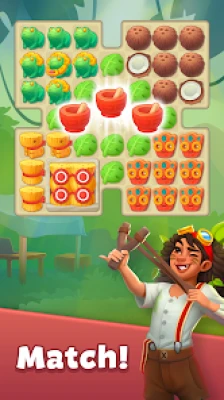
The core experience revolves around completing match-3 puzzle levels.
The current listing advertises 4,000+ levels, giving players a large amount of content to work through.
The important thing is not simply matching three identical pieces. As levels become more complicated, creating special pieces and planning combinations becomes increasingly valuable.
Maya-Themed Exploration
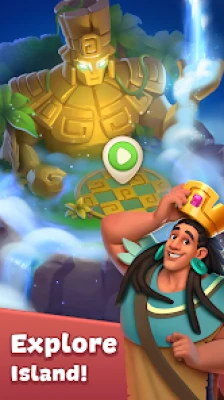
Rockvista Key provides the setting for the adventure.
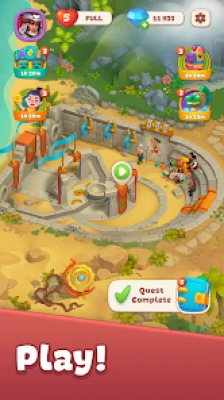
Instead of presenting an endless series of disconnected puzzle boards, Cradle of Maya connects puzzle progression with an explorable Maya-inspired environment containing:
- Ancient temples
- Mysterious caves
- Gardens
- Ruined structures
- Island locations
- Story locations
- Restoration projects
The Google Play description specifically highlights the progression from the wreckage of a mysterious airplane to ancient temples and disappearing caves.
Island Restoration
Restoration is an important part of the game's progression.
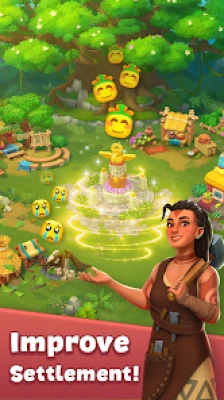
As you advance, puzzle rewards can help rebuild and restore parts of the island.
This creates a useful gameplay loop:
Solve puzzles → earn resources → restore locations → unlock more of the adventure → return to puzzles.
Match-3 Combinations Guide
Learning the special combinations is one of the most important parts of Cradle of Maya.
Rocket
Match four pieces to create a Rocket.
Rockets are particularly useful when you need to clear a line or reach a difficult area of the board.
Before activating one, look at the direction in which it will travel and consider whether another move could position it more effectively.
Bomb
Match five or six pieces in an L or T formation to create a Bomb.
Bombs are excellent for clearing groups of pieces and can become particularly powerful when positioned near obstacles.
Don't automatically activate a Bomb as soon as you create it.
If another special piece can be created nearby, waiting may produce a much larger combination.
Boomerang
Matching four identical pieces in a square formation creates a Boomerang.
This is useful when an important target is not directly aligned with your current position.
Think of the Boomerang as a precision tool rather than simply another way to remove pieces.
Full Cradle of Maya Strategy Guide
1. Study the Board Before Your First Move
Don't immediately make the first three-piece match you see.
Take a few seconds to inspect the entire board.
Look for:
- Four-piece matches
- L-shaped combinations
- T-shaped combinations
- Square formations
- Obstacles
- Important targets
- Potential chain reactions
- Areas that need to be opened
A few seconds of planning can save several moves later.
2. Prioritize Special Pieces
A basic three-piece match is useful, but special pieces usually offer significantly more board control.
Whenever possible, ask:
Can I create a Rocket instead of making a normal match?
If the answer is yes, consider creating the Rocket first.
The same applies to Bombs and Boomerangs.
3. Work Toward the Most Restricted Area
Some boards can contain sections that are difficult to reach.
Instead of clearing random pieces around the easiest part of the board, concentrate on opening the restricted area.
Once the board opens up, you'll generally have more opportunities to create larger combinations.
4. Make Matches Near the Bottom
Matching pieces near the bottom of the board can cause pieces above them to fall.
Those falling pieces may create automatic combinations.
Before making the move, look at the pieces that are likely to drop into the empty spaces.
You may be able to create a chain reaction without spending additional moves.
5. Don't Waste a Special Piece
Suppose you create a Bomb.
You could activate it immediately, but ask yourself whether keeping it for one more move could produce a better result.
A special piece next to another useful combination can sometimes be far more valuable than an isolated activation.
Patience is one of the strongest match-3 strategies.
6. Use the Level Objective as Your Priority
Your goal isn't always to clear as many pieces as possible.
If a level requires you to remove a particular obstacle or collect a certain type of piece, focus on that objective.
A huge combination that doesn't help the level objective may be less useful than a smaller move that directly advances your goal.
7. Open the Board Early
A crowded board limits your options.
Whenever possible, remove obstacles that prevent pieces from moving or falling.
Once more of the board becomes accessible, you'll have better opportunities for:
- Four-piece matches
- Bombs
- Boomerangs
- Chain reactions
- Multiple special-piece setups
8. Look for Cascades
After every move, pay attention to what happens next.
A single match can cause:
Pieces fall → another match forms → more pieces fall → another match appears.
This is one of the most efficient ways to clear a difficult board.
Before moving a piece, consider where the empty spaces will appear and what pieces might fall into them.
Advanced Match-3 Tips
Create Specials Near the Center
A special piece positioned near the middle of the board can often affect more pieces than one trapped in a corner.
Don't Always Chase the Biggest Match
A large combination isn't automatically the correct move.
If a smaller match clears the exact obstacle blocking your objective, it can be the better choice.
Keep the Board Open
Try to avoid moves that leave important areas permanently blocked.
Plan Around Falling Pieces
The pieces that enter the board after a match are part of your strategy.
Look at their positions and colors before deciding your next move.
Save Helpful Moves
If you're one move away from creating a Bomb or Rocket, don't destroy that opportunity with an unnecessary match.
How to Approach Difficult Levels
When a level starts becoming challenging, use this routine:
Step 1: Read the objective.
Step 2: Identify the hardest area of the board.
Step 3: Search for a special-piece opportunity.
Step 4: Clear the most restrictive obstacle.
Step 5: Create space for pieces to fall.
Step 6: Look for a chain reaction.
Step 7: Save useful special pieces until they can solve a major part of the board.
Step 8: Continue making moves that directly support the objective.
This prevents the common mistake of making random matches simply because they are available.
Island Exploration and Restoration
The restoration system gives Cradle of Maya a second layer beyond its puzzle mechanics.
As you progress through the adventure, you'll encounter different locations and structures across Rockvista Key.
The game describes areas including mysterious caves, ancient temples and gardens, with restoration and rebuilding tied into the larger adventure.
This makes progression feel more connected:
Puzzle solving → resources → restoration → exploration → story progression.
Characters and Story
Lacey Goodwin
Lacey is the main character and a young architect whose journey takes her into the mysteries of Rockvista Key.
Her architectural background also fits naturally with the game's restoration mechanics.
Lacey's Mother
One of the central personal mysteries involves Lacey's mother, who disappeared 20 years earlier.
Finding answers about her disappearance provides an additional motivation for exploring the island.
Mor-Kharras
The Mor-Kharras cult is one of the major threats in the story.
Its presence gives the adventure a conflict beyond exploration and restoration.
The Tree of Life
The sacred Tree of Life is another important part of the game's story and the conflict surrounding the island.
Events and New Content
Cradle of Maya continues to receive events and additional content.
The current listing shows an event called "Enchanted jungles" and another activity involving new flower levels.
The game's update history also shows continued development in 2026, with the Google Play listing showing an update on August 25, 2026.
This is worth mentioning on a game page because the experience can change as new events, levels and features are added.
Honest Gameplay Experience
Cradle of Maya is designed for players who enjoy a mixture of match-3 puzzles, exploration, story progression and restoration rather than a puzzle game focused only on individual boards.
Its biggest attraction is the combination of a large level count with an adventure structure. The current listing advertises more than 4,000 levels and connects those puzzles with an evolving story and Maya-themed locations.
The Google Play listing currently shows a 4.4-star rating from about 9,340 reviews and 500K+ downloads.
The game is free to play but contains advertising and optional in-app purchases, so players should expect a monetized mobile-game structure rather than a completely premium experience.
Pros and Cons
Pros
- 4,000+ match-3 levels
- Strong adventure storyline
- Maya-inspired setting
- Island exploration
- City and location restoration
- Multiple special-piece combinations
- Large number of puzzle challenges
- Story-focused progression
- Regular events and new content
- 3D visuals and soundtrack
- Suitable for casual puzzle sessions
Cons
- The large amount of content can feel repetitive for players who prefer short puzzle games
- Progression includes advertising and optional purchases
- Players looking for a pure match-3 experience may find the story and restoration systems distracting
- Later puzzles require more deliberate planning rather than quick matching
Game Information
| Feature | Details |
|---|---|
| Game | Cradle of Maya: Match 3 game |
| Developer | Awem Games Limited |
| Genre | Match-3 / Puzzle / Adventure |
| Platform | Android |
| Main Character | Lacey Goodwin |
| Setting | Rockvista Key |
| Levels | 4,000+ |
| Special Pieces | Rockets, Bombs, Boomerangs |
| Story | Yes |
| Exploration | Yes |
| Restoration | Yes |
| Events | Yes |
| Ads | Yes |
| In-App Purchases | Yes |
| Content Rating | PEGI 3 |
| Downloads | 500K+ |
| Current Google Play Rating | 4.4 |
| Latest listed update | August 25, 2026 |
These details reflect the current Google Play information available for the package you supplied.
Beginner Tips for Cradle of Maya
- Check the entire board before moving.
- Look for four-piece combinations first.
- Use L and T formations to create Bombs.
- Watch for square formations that create Boomerangs.
- Clear restrictive areas early.
- Make bottom-board matches when they can trigger cascades.
- Don't activate every special piece immediately.
- Keep special pieces in useful positions.
- Always prioritize the level objective.
- Use your puzzle rewards to advance restoration and story progression.
Frequently Asked Questions
What is Cradle of Maya: Match 3 game?
Cradle of Maya is a match-3 puzzle adventure set on the mysterious Rockvista Key. It combines puzzle levels with exploration, restoration and a story involving ancient Maya civilization.
How many levels are in Cradle of Maya?
The current game listing advertises more than 4,000 match-3 levels.
Who is the main character?
The main character is Lacey Goodwin, a young architect whose adventure takes her into the mysteries of Rockvista Key.
What is Rockvista Key?
Rockvista Key is the mysterious island where much of the Cradle of Maya adventure takes place.
Who are the Mor-Kharras?
The Mor-Kharras are a dark cult that threatens the island and the sacred Tree of Life.
How do you create a Rocket?
Match four pieces to create a Rocket.
How do you create a Bomb?
Create a five- or six-piece match in an L or T formation to produce a Bomb.
How do you create a Boomerang?
Match four pieces of the same type in a square formation to create a Boomerang.
Is Cradle of Maya free?
The game is free to play and currently contains advertisements and optional in-app purchases.
Rate the Game
User Reviews






Popular Games















 Android
 iOS
iOS Windows
 Xbox
Xbox