


Latest Version
September 23, 2026
Awem Games Limited
Puzzle
0
com.awem.cradleofempires.andr
Report a Problem
More About :game
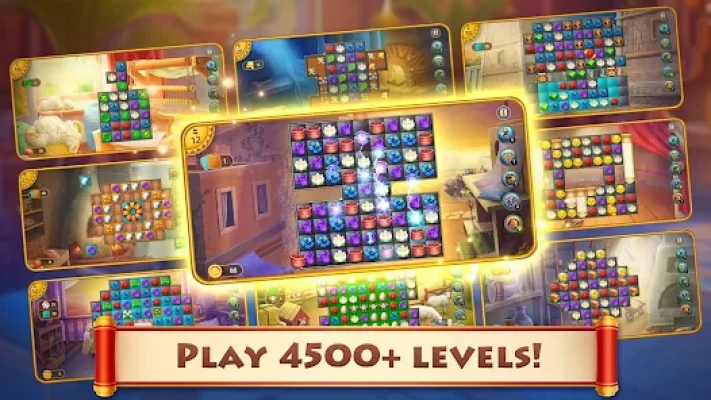
The game currently features more than 4,500 levels and six different gameplay modes, giving the puzzle system considerably more variety than a straightforward three-in-a-row game.
It is available on Android and is listed as a puzzle, match-3, casual, builder and single-player game, with offline play also indicated on Google Play.
The Story of Cradle of Empires
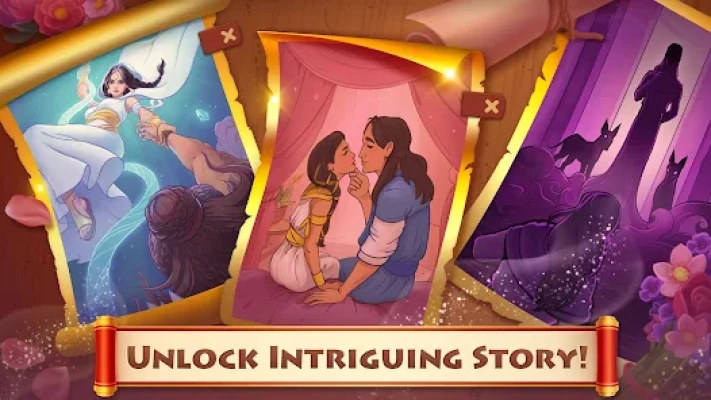
The story revolves around the ruined Egyptian civilization and the curse associated with Amrun, a powerful demon, and High Priest Menes.
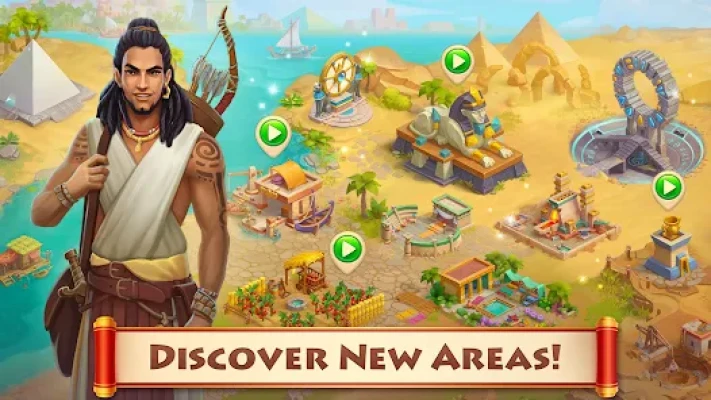
Nimiru serves as an important guide during the adventure. Your objective is not simply to clear puzzle boards; the resources and rewards earned from those boards help restore the city and reveal more of the story.
The game also introduces a mystery involving Nimiru's missing mother, giving the rebuilding process a narrative purpose rather than making the city-building system feel completely separate from the puzzles.
Main Gameplay Features
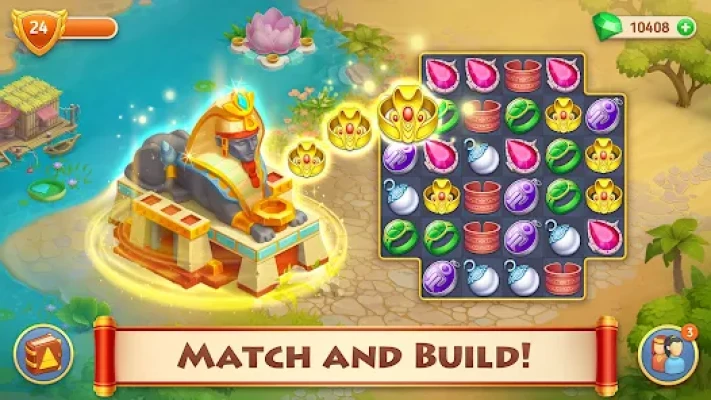
Match-3 Puzzle Levels
The central gameplay mechanic is simple: swap adjacent pieces to create groups of matching colors.
However, later objectives require more planning than simply making the first available match. You need to think about:
- The level objective
- Remaining moves or resources
- Blocked areas
- Special pieces
- Board position
- Potential combinations
- The order in which obstacles are removed
The game has thousands of levels, so learning how to create useful combinations becomes increasingly important.
City Building
The resources earned from puzzle stages contribute to rebuilding the ancient civilization.
Instead of treating each puzzle as an isolated challenge, the game connects puzzle progress with city development. Buildings, restoration and story progression give you reasons to continue completing levels.
Quests
Quests guide your progress through the adventure. They can also help direct your attention toward particular buildings, collections, resources or story objectives.
Collections
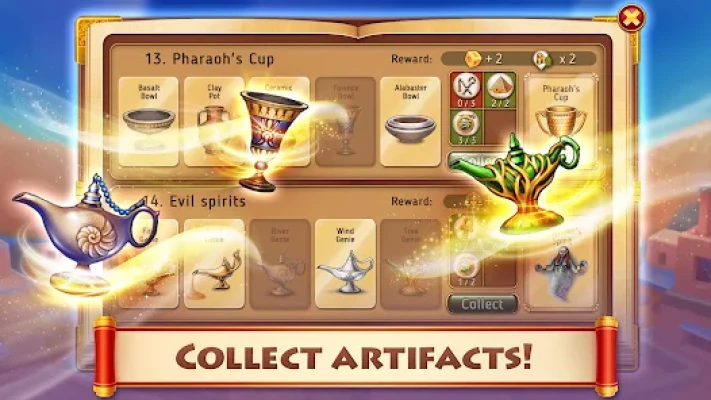
Cradle of Empires includes collections involving hidden objects, artifacts and gems. Completing collections can provide rewards that help your overall progress.
Events
The game regularly features special events. The current listing mentions events such as Treasures of the Ancients, Fairy Tale: The Three Wishes, Jeweler's Dream, Dance of Fireflies, Genie's Chest, Portal of Worlds and Holiday Recipes.
Guilds
Players can join or create guilds and participate in activities with other players. Guild participation adds a social element to what is otherwise primarily a puzzle and city-building experience.
Cradle of Empires Match-3 Booster Guide
One of the most important skills is learning when to create and use special pieces.
The current Google Play description identifies several special combinations.
Fiery Ring Bomb
Create a match of five pieces in an angle-shaped arrangement to produce the Fiery Ring bomb.
Use it when you need to clear a concentrated area or create a chain reaction.
Lightning Bomb
A five-piece vertical match creates a Lightning Bomb that affects a horizontal line.
This is particularly useful when an objective requires clearing an entire row.
Reverse Lightning Bomb
A horizontal five-piece match produces the corresponding vertical-clearing effect.
Try to create these near the middle of a crowded board rather than immediately activating them in an isolated corner.
Superlightning Bomb
Larger combinations can produce a more powerful clearing effect that works across rows and columns.
When possible, avoid triggering powerful pieces immediately. Sometimes keeping a special piece for another move allows you to combine it with another bonus for a much larger effect.
Starry Ball Bomb
A seven-piece combination creates the Starry Ball Bomb.
This can be especially valuable when you need to remove a particular color or create a large chain reaction.
Full Strategy Guide
1. Read the Objective Before Making Your First Move
Don't automatically make the first obvious match.
First determine what the level actually wants you to accomplish.
For example, a stage may require you to:
- Collect particular pieces
- Clear obstacles
- Remove specific tiles
- Reach a target score
- Gather resources
- Complete another board-specific objective
Your best move depends on the objective.
The most visually impressive move is not always the most useful move.
2. Look for Special Matches First
Before making ordinary three-piece matches, scan the board for opportunities to create larger combinations.
A five-piece match can provide much more value than repeatedly making simple matches.
A good routine is:
Scan → identify special opportunity → check objective → make the move.
This small habit can make difficult boards considerably easier.
3. Work From the Bottom When Possible
Matching pieces toward the lower portion of the board can cause pieces above them to fall.
That creates opportunities for automatic combinations.
This is particularly useful when the board contains several layers of pieces or obstacles.
Instead of thinking only about the match you're making, think about what pieces will fall afterward.
4. Create Chain Reactions
A successful chain reaction can accomplish several objectives with one move.
Before moving a piece, look at:
- The pieces immediately above it
- Potential matches after the pieces fall
- Special pieces nearby
- Obstacles that could be affected
- Colors required by the current objective
Sometimes a normal three-piece match is worthwhile if it causes a larger secondary reaction.
5. Don't Waste Powerful Boosters
A special piece should have a purpose.
If you have a powerful bomb sitting beside an obstacle, don't necessarily activate it immediately.
Consider whether you can create another special piece beside it first.
Combining special effects can clear substantially more of the board than using each one independently.
6. Prioritize Obstacles
When a level contains blocked or restricted areas, opening the board is often more valuable than collecting ordinary pieces.
A larger open board gives you:
- More possible matches
- More room for special pieces
- Better chain reactions
- More control over the next moves
Therefore, removing a strategically important obstacle can be more useful than making several ordinary matches elsewhere.
7. Think About the Next Two Moves
Experienced match-3 players don't only ask:
"What can I match now?"
They also ask:
"What will this move create?"
If moving one piece creates an obvious match on the next turn, that can be more valuable than an immediate three-piece combination.
8. Use Events Strategically
Cradle of Empires contains numerous limited-time events and additional activities.
Don't treat every event as something you have to complete immediately.
Instead:
- Check the event objectives.
- Identify rewards that help your current progression.
- Prioritize activities that fit naturally with the levels you're already playing.
- Avoid spending resources simply because an event is active.
- Save useful boosters for difficult objectives.
The goal is to make events complement your progression rather than interrupt it.
How to Progress Faster
Focus on the Current Objective
Don't waste resources trying to do everything simultaneously.
Complete the immediate quest or restoration requirement, then move to the next objective.
Build Your Collection
Collections can provide useful rewards, so don't completely ignore hidden objects and collectible items.
Save Valuable Resources
If a resource or booster isn't required immediately, consider saving it.
This is especially useful before difficult puzzle stages or event objectives.
Don't Rush Every Level
Match-3 games reward planning. Taking a few seconds to inspect the entire board can prevent wasted moves.
Use the City as Your Progress Guide
When you are unsure what to do next, check your available quests and city-building objectives. The rebuilding system is designed to connect puzzle progression with the wider adventure.
Best Strategy for Difficult Levels
When a level becomes difficult, use this sequence:
Step 1: Identify the main objective.
Step 2: Locate the most restrictive obstacle.
Step 3: Look for five-piece or larger combinations.
Step 4: Open the most useful part of the board.
Step 5: Create special pieces near one another.
Step 6: Look for chain reactions before making ordinary matches.
Step 7: Save useful bonuses until they can solve an important part of the board.
Step 8: If the board becomes unfavorable, stop making random moves and reassess the available combinations.
This approach is much more reliable than simply matching whatever is easiest to see.
Honest Gameplay Experience
Cradle of Empires is designed around a combination of relaxed match-3 gameplay, city restoration and long-term progression. Its large number of levels and additional systems make it more substantial than a basic puzzle game.
The game also has a substantial player base: Google Play currently shows a 4.6-star rating and more than 259,000 reviews, alongside 5M+ downloads.
Player feedback is not uniformly positive, however. Recent reviews include complaints about monetization, event pop-ups and energy balance, while other players praise the amount of content and things to unlock.
That makes Cradle of Empires particularly suitable for players who enjoy a long-running match-3 game with progression systems, rather than someone looking for a short puzzle experience with no additional mechanics.
Pros and Cons
Pros
- Match-3 gameplay combined with city building
- Thousands of puzzle levels
- Six gameplay modes
- Ancient Egypt-inspired setting
- Story-driven quests
- Collections and hidden objects
- Numerous special events
- Boosters and special puzzle pieces
- City restoration and progression
- Guild system
- Single-player gameplay
- Offline availability listed on Google Play
Cons
- The large number of systems can feel busy
- Progression includes ads and in-app purchases
- Energy/resource management can affect how quickly you progress
- Some players may find the pace slower than other match-3 games
- Frequent events may not appeal to players who prefer a simpler puzzle experience
Game Information
| Feature | Details |
|---|---|
| Game | Cradle of Empires: 3 in a Row |
| Developer | Awem Games Limited |
| Genre | Match-3, Puzzle, Casual, Builder |
| Platform | Android |
| Mode | Single-player |
| Levels | 4,500+ |
| Gameplay Modes | 6 |
| Setting | Alternative ancient Egypt |
| Main Character | Nimiru |
| Core Gameplay | Match-3 puzzles + city restoration |
| Events | Yes |
| Collections | Yes |
| Guilds | Yes |
| Ads | Yes |
| In-App Purchases | Yes |
| Age Rating | Everyone |
| Offline | Listed on Google Play |
| Latest listed update | August 5, 2026 |
The current Google Play listing confirms these core details and identifies Android as a supported platform.
Cradle of Empires Tips for Beginners
Tip 1: Never make a move before checking the whole board.
Tip 2: Prioritize the level objective over simply creating matches.
Tip 3: Look for five-piece combinations before settling for a basic match.
Tip 4: Try to make matches near the bottom when falling pieces can create additional combinations.
Tip 5: Keep special pieces close together when possible.
Tip 6: Clear restrictive obstacles early if they prevent the board from opening.
Tip 7: Don't spend every booster on an easy level.
Tip 8: Use quests to determine where your city-building resources should go.
Tip 9: Participate in events when their rewards support your current progression.
Tip 10: Save valuable resources for stages where they can make a meaningful difference.
Frequently Asked Questions
What is Cradle of Empires?
Cradle of Empires: 3 in a Row is a match-3 puzzle adventure that combines jewel-matching gameplay with city building, quests, collections and an ancient-Egypt-inspired story.
How many levels does Cradle of Empires have?
The Google Play description currently lists more than 4,500 levels across six different modes.
Is Cradle of Empires a city-building game?
Yes. Match-3 rewards are connected to rebuilding the ancient city, making city restoration an important part of the overall progression.
Who is Nimiru?
Nimiru is a major character and guide who helps the player restore the ruined civilization and investigate the mysteries surrounding the story.
Does Cradle of Empires have events?
Yes. The game regularly features special events and activities, with the current listing mentioning several named events and new quests.
Can you join a guild?
Yes. Players can join existing guilds or create their own and participate in activities with other players.
Is Cradle of Empires free?
The game is free to install but contains advertisements and optional in-app purchases.
Is Cradle of Empires available offline?
Google Play currently lists Offline among the game's features.
Rate the Game
User Reviews










Popular Games


















 Android
 iOS
iOS Windows
 Xbox
Xbox