

Latest Version
December 30, 2024
Rebel Twins
Casual
Android
0
com.rebeltwins.castlemastertd
Report a Problem
More About :game
What makes the game different from a conventional tower defense title is the importance of building the castle itself. Your preparation before an attack can have a major effect on how effectively your defenses perform once the battle begins.
The Google Play listing describes the game around three core ideas: fortify, strategize, and conquer. It also emphasizes building powerful structures, planning strategic defenses, and
surviving relentless enemy attacks.
What Is Castle Master TD?
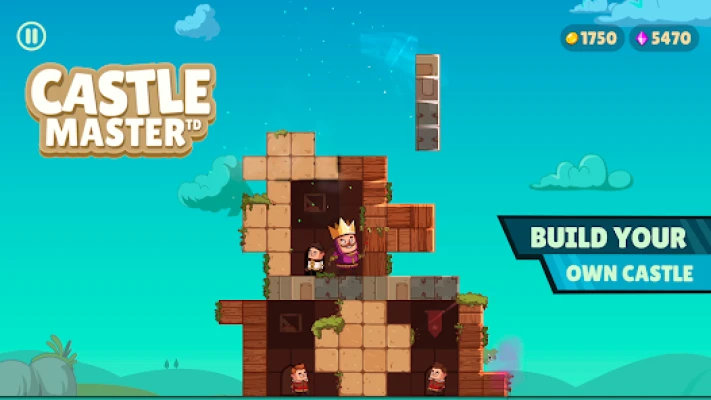
Castle Master TD puts you in control of your own castle and asks you to prepare it for incoming enemies.
Instead of simply placing towers along a predefined path, the game incorporates a construction system in which your castle layout, available structures, troops, and resources all influence your defensive strategy.
The result is a mixture of:
- Tower defense
- Castle building
- Resource management
- Strategic positioning
- Block-based construction
- Troop management
- Defensive planning
- Kingdom progression
The game is listed as a casual strategy/tower-defense experience and is rated Teen on Google Play because of violence and blood. It contains ads and in-app purchases.
Castle Master TD Gameplay
The basic gameplay cycle revolves around building first and defending second.
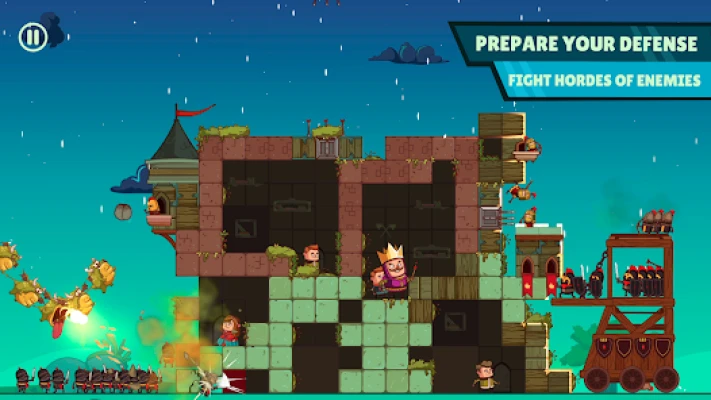
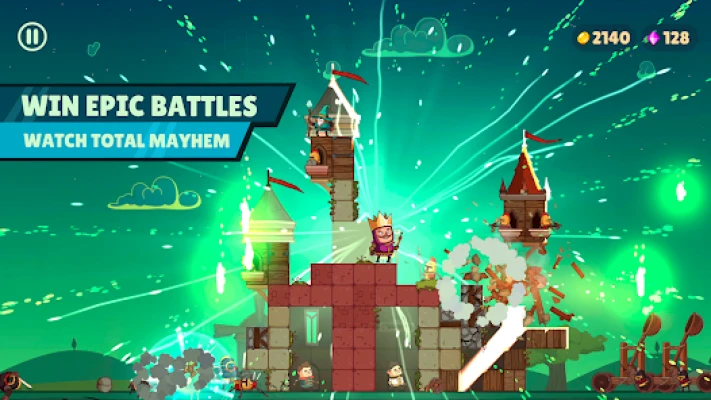
You begin by developing your castle and arranging the available structures. Once the battle begins, enemies attack and your defensive setup has to withstand the pressure.
A simplified gameplay loop looks like this:
- Collect or manage available resources.
- Construct castle sections.
- Place defensive structures.
- Prepare available troops and weapons.
- Examine the battlefield.
- Start the enemy encounter.
- Monitor your defenses.
- Deal with enemy pressure.
- Upgrade or improve your castle.
- Prepare for the next challenge.
The important strategic lesson is that the battle does not begin when enemies appear.
Your battle preparation begins during construction.
Castle Building Strategy
Castle construction is one of the most important parts of Castle Master TD.
A strong castle is not necessarily the largest castle.
It is a castle where the available structures work together.
When building, think about:
- Defensive coverage
- Structural protection
- Available space
- Weapon positioning
- Troop placement
- Resource requirements
- Enemy approach routes
- Future upgrades
A poorly organized castle can make your strongest defenses less useful.
How to Build a Strong Castle
1. Build With Defense in Mind
Don't treat construction as decoration.
Every block or structure should contribute to the overall defensive plan.
Ask:
What does this structure protect?
If you cannot identify its defensive purpose, consider whether the available resources would be better spent elsewhere.
2. Protect Important Structures
Place valuable or strategically important structures where they are harder for enemies to reach.
Your outer defenses should absorb pressure while your more important structures continue operating.
Think of your castle as layers:
Outer layer → defensive layer → protected core
This gives you more time to respond when enemies break through the first line.
3. Avoid Weak Sections
A castle may look strong overall but still have one vulnerable section.
Before starting a battle, examine the entire perimeter.
Look for:
- Open spaces
- Thin defensive sections
- Poorly covered areas
- Isolated defenses
- Structures that can be overwhelmed easily
A single weak point can become the enemy's preferred route.
Defensive Placement
One of the most important lessons from player feedback is that defense positioning can be difficult to understand because the game does not always make ranges and attack arcs obvious.
That means players should pay particular attention to how defensive structures actually perform rather than assuming that simply placing more defenses will solve the problem.
Use Overlapping Defense
Whenever possible, arrange defenses so that important areas can be covered by more than one defensive structure.
This creates overlapping protection.
If one defense becomes ineffective against a particular enemy, another may still be able to attack it.
Resource Management
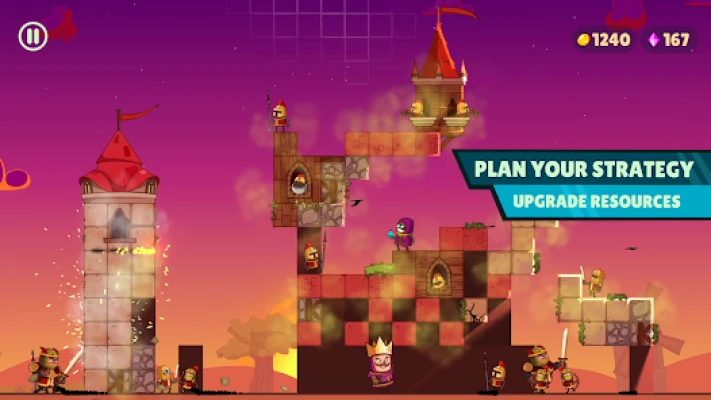
Resources are critical because construction, troops, and defensive improvements compete for your available spending capacity.
Avoid spending everything immediately.
Instead, maintain a reserve whenever possible.
A simple priority system is:
Essential defense → critical construction → combat capability → upgrades → optional improvements
This prevents you from reaching an important battle without enough resources to respond.
Why Saving Resources Matters
Some player reviews report situations where expensive blocks or required construction could leave them short of the resources needed to progress.
Because of this, don't assume that every available resource should be spent as soon as it becomes available.
Before purchasing or producing something expensive, ask:
- Do I need it immediately?
- Does it improve my defensive weakness?
- Will I still have enough resources afterward?
- Is the next battle likely to require additional construction?
Resource planning can be just as important as tower placement.
Troop Strategy
Castle Master TD also incorporates troops into the defensive system.
Don't think of troops simply as extra damage.
They can help compensate for weaknesses in your defensive layout.
For example, if an area of your castle has weaker static defenses, mobile units may provide additional protection.
Before battle, consider:
- Which area needs reinforcement?
- Which enemy route looks most dangerous?
- Which defensive section is most likely to collapse?
- Where will your troops provide the greatest practical benefit?
Weapon and Defense Upgrades
When you unlock new defensive structures or weapons, don't automatically replace your existing setup.
First determine what the new option actually adds.
Consider:
- Damage
- Coverage
- Positioning
- Cost
- Durability
- Synergy with existing defenses
- Enemy type it is intended to counter
The Google Play listing does not provide detailed numerical statistics for every defensive option, so exact damage or range values should not be invented for a guide.
Instead, test each new option during gameplay and observe how it changes your defensive setup.
The Best Upgrade Mindset
A good upgrade should solve a problem.
For example:
Weak outer defense → strengthen the perimeter
Enemies reaching the core → improve inner protection
Insufficient damage → add offensive capability
Resource shortage → improve the economy before committing to expensive construction
Avoid upgrading something simply because the upgrade button is available.
Castle Master TD Battle Strategy
Before the Battle
Always perform a quick inspection.
Check:
- Castle structure
- Defensive coverage
- Troop availability
- Weapon positions
- Vulnerable sections
- Resource reserves
If something looks weak, fix it before committing to the battle.
During the Battle
Watch where enemies are creating the most pressure.
Don't focus only on the center of the screen.
A defensive section that appears safe early in the battle may become vulnerable later.
Monitor:
- Enemy concentration
- Damaged structures
- Weak defensive zones
- Troop effectiveness
- Remaining defensive resources
How to Survive Difficult Battles
When a battle becomes overwhelming, don't automatically add defenses everywhere.
Find the actual source of the problem.
Ask:
Are enemies reaching the castle too quickly?
Improve the outer defensive layer.
Are they destroying one particular section?
Reinforce that section.
Are your defenses surviving but dealing insufficient damage?
Improve offensive capability.
Are you running out of resources?
Reduce unnecessary spending before the battle.
Are troops disappearing too quickly?
Reconsider where and when they are being used.
This problem-solving approach is more efficient than blindly increasing every statistic.
Block Placement Strategy
Castle Master TD has a construction system that gives the game a puzzle-like element.
Players have described it as combining aspects of block-building and tower defense, with construction taking place before enemy attacks.
This means you should think about blocks in terms of function, not just appearance.
A block can:
- Protect another structure
- Create a defensive layer
- Change how enemies approach
- Provide space for defensive equipment
- Strengthen a vulnerable section
Before placing a block, consider what it accomplishes.
Avoid Overbuilding
More structures do not automatically mean a better defense.
Every additional construction decision can consume resources and alter your available space.
Instead of building everywhere, concentrate your resources around the areas that matter most.
A compact, coordinated defense can be more useful than a scattered collection of structures.
Advanced Strategy: Build in Layers
One useful way to think about your castle is through three defensive zones.
Layer 1: Outer Defense
Its job is to slow and weaken incoming enemies.
Layer 2: Combat Zone
This is where your main defensive structures and troops should have opportunities to attack.
Layer 3: Core Protection
The innermost section protects the most important parts of your castle.
This layered approach makes it easier to identify where a defensive weakness exists.
Advanced Strategy: Create Defensive Synergy
Try to make different defensive elements complement each other.
For example:
Structure A slows or absorbs pressure → Structure B attacks → troops reinforce the threatened area
The exact effectiveness depends on the individual mechanics and available structures, but the principle remains useful:
Build combinations, not isolated defenses.
Advanced Strategy: Prepare for the Next Battle
Don't spend every reward immediately after winning.
Look ahead.
If you know that your current castle has a serious weakness, reserve enough resources to address it.
A victory should improve your position for the next battle, not simply solve the current one.
How to Handle a Difficult Level
If you repeatedly fail a level, don't simply rebuild the same castle.
Instead:
Attempt 1
Identify where the defense fails.
Attempt 2
Change the weakest section.
Attempt 3
Adjust resource allocation.
Attempt 4
Change defensive positioning.
Attempt 5
Test whether the new layout survives longer.
This turns repeated failure into useful information.
Common Mistakes
Spending Too Much Too Early
Using all resources immediately can leave you unable to respond to later problems.
Building Without a Plan
Random construction often produces a castle that looks impressive but has poor defensive coverage.
Ignoring Weak Points
One vulnerable section can undermine the entire defense.
Using Troops Without a Purpose
Troops should reinforce a strategy rather than simply being deployed because they are available.
Upgrading Everything Equally
Focus resources on the weaknesses that actually cause your defeats.
Copying the Same Layout After Failure
If the same weakness defeats you repeatedly, change the underlying strategy.
Tips for Managing Limited Resources
When resources are tight, use this order:
First
Protect the most important section of the castle.
Second
Improve the defense against the most immediate threat.
Third
Maintain enough resources for emergency construction or combat needs.
Fourth
Invest in longer-term upgrades.
This helps prevent the common problem of having a powerful castle on paper but no resources available when the battle demands them.
How to Improve Faster
The fastest way to improve at Castle Master TD is to learn from your castle's failures.
After losing, ask:
Where did the first serious breach occur?
Then ask:
Why was that section vulnerable?
Finally:
What single change would address that weakness?
Making one meaningful improvement at a time makes it easier to understand which decisions actually helped.
Player Feedback and Current Google Play Information
At the time checked, Google Play lists Castle Master TD at approximately 4.2 stars with about 1.01K reviews and 100K+ downloads. The current listing shows the latest update as August 26, 2026, with the update described as including security and stability improvements.
Player reviews have highlighted the game's unusual combination of construction and tower defense. Other reviews have raised concerns about limited guidance for newly unlocked weapons or defenses, resource availability, and occasional performance problems. These comments represent individual player experiences rather than universal behavior.
Pros and Cons
Pros
- Combines castle construction and tower defense
- Strategic building system
- Defensive planning matters
- Multiple structures and combat elements
- Resource management adds another strategic layer
- Castle layout affects your defensive approach
- Suitable for players who enjoy tactical experimentation
- Developed by Rebel Twins, known for games such as Dragon Hills and Cookies Must Die
Cons
- Some mechanics are not explained in great detail
- New defensive structures may require experimentation
- Resource shortages can slow progression
- Some player reviews report lag or crashes during block dragging
- Ads and in-app purchases are present
Who Should Play Castle Master TD?
Castle Master TD is worth exploring if you enjoy games that combine:
- Tower defense
- Castle building
- Strategy
- Resource management
- Tactical planning
- Block-based construction
- Kingdom defense
- Defensive base building
- Casual strategy games
It is particularly interesting for players who like having control over the preparation phase rather than simply placing towers on a predetermined map.
Castle Master TD Game Information
Game: Castle Master TD
Developer: Rebel Twins
Genre: Tower Defense / Strategy / Casual
Platform: Android
Google Play Downloads: 100K+
Current Store Rating: 4.2 stars
Reviews: About 1.01K
Content Rating: Teen
Contains: Ads and in-app purchases
Latest Google Play Update: August 26, 2026
Core Gameplay: Castle building, defensive planning, resource management and battles
Player Mode: Single-player strategy experience
Frequently Asked Questions
What is Castle Master TD?
Castle Master TD is a tower defense strategy game from Rebel Twins where players build and defend their own castle against enemy attacks.
How do you play Castle Master TD?
You build castle structures, organize defenses, manage resources, prepare your forces, and then defend the castle against enemy attacks.
What makes Castle Master TD different from other tower defense games?
The game combines tower defense with castle construction. The layout and preparation of your castle are important parts of the strategy rather than simply placing defenses along a fixed path.
Is Castle Master TD free?
Castle Master TD is available on Google Play and contains advertisements and in-app purchases.
What age rating does Castle Master TD have?
Google Play currently lists the game with a Teen content rating.
Who developed Castle Master TD?
Castle Master TD was developed by Rebel Twins.
How can I build a better castle?
Focus on defensive layers, protect important structures, cover vulnerable areas, avoid unnecessary construction, and keep enough resources available to respond to threats.
Why do I keep losing the same level?
Look at where the first major breach occurs. If enemies repeatedly break through the same section, redesign that part of the castle instead of simply increasing unrelated upgrades.
Should I spend all my resources?
Not necessarily. Keeping a resource reserve can be useful when expensive construction or defensive requirements appear later.
What should I upgrade first?
Prioritize upgrades that directly address the weakness causing your losses. If enemies are reaching your castle too easily, improve the defensive structure of the vulnerable area rather than upgrading unrelated systems.
Final Strategy Guide Summary
Castle Master TD rewards players who treat castle construction as part of the battle rather than a separate activity.
The strongest approach is to:
Build intelligently → protect weak points → conserve resources → create layered defenses → monitor enemy pressure → adapt after every battle.
Don't judge a castle by how impressive it looks.
Judge it by how well its structures work together when the enemy attack begins.
The most useful habit is to analyze every defeat. Find the first point where your defense failed, identify why it happened, and redesign that section before the next attempt.
That approach turns Castle Master TD from a simple tower defense game into a more deliberate castle-building and strategic defense puzzle.
Rate the Game
User Reviews















Popular Games



















 Android
 iOS
 Windows
 Xbox