



Latest Version
October 21, 2025
Arnold Rauers
Card
iOS
0
Report a Problem
More About :game
Introduction to Card Thief
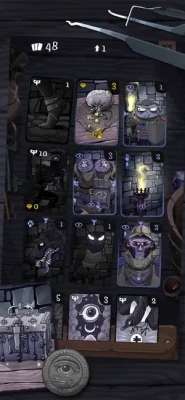
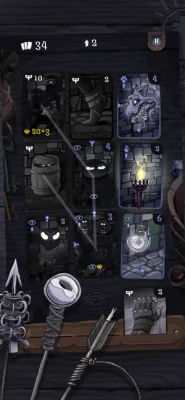
Card Thief transforms the traditional idea of a stealth game into a card-based puzzle where every decision matters. You play as a thief exploring guarded locations, moving between cards that represent enemies, treasures, obstacles, and other elements of a dangerous heist.
The central challenge is balancing your desire for valuable loot against the danger of being detected. Moving carelessly can increase your exposure, while taking a slower and more deliberate route can help you collect treasure and reach the exit safely.
Unlike action games that depend on reflexes, Card Thief asks you to think several moves ahead. You must study the available cards, understand the threats around you, and decide which risks are worth taking. A successful run is not simply about stealing as much as possible. It is about knowing when to approach a target, when to use a special ability, and when to leave before the situation becomes too dangerous.
Developed by Arnold Rauers, the game builds on the appeal of compact card-based strategy games while introducing the tension of sneaking through guarded environments. Its short sessions make it suitable for quick breaks, but its interconnected mechanics provide plenty of room for improvement.
Card Thief Game Information
Game Title: Card Thief
Developer: Arnold Rauers
Genre: Solitaire, Stealth, Strategy, Card Game, Puzzle
Platforms: iPhone and iPad, with versions also available on Android
Game Mode: Single-player
Gameplay Style: Turn-based, card-driven stealth and tactical planning
Main Objective: Steal valuable treasures, avoid detection, manage your risk, and escape successfully.
Available Heists: Four distinct heists featuring different enemies, traps, and obstacles.
Equipment System: Twelve unlockable and upgradable equipment cards.
Playable Thieves: Ten thieves with individual gameplay rules.
Additional Modes: Daily Heist challenges, leaderboards, and additional hideout activities.
Offline Play: Supported for the core gameplay.
Price: Free to download on the US App Store, with an in-app purchase to unlock the full game.
Age Rating: 13+ on the US App Store.
How to Play Card Thief
Card Thief is built around a simple idea: every move should help you get closer to your objective without exposing you to unnecessary danger. The game presents a collection of cards representing the elements of a heist, and you must make tactical decisions about which cards to approach and how to deal with them.
Your main objective is to gather treasure and reach the escape point. However, guards, torches, and other obstacles can make your route dangerous. Each action can influence your remaining options, so it is important to consider what might happen after your current move.
Understand the Card-Based Gameplay
The cards represent the important elements of the environment. Some provide opportunities to collect loot, while others create obstacles or require you to manage detection risks.
Before selecting a card, inspect the surrounding options and consider how the move fits into your overall plan. A treasure card might look attractive, but collecting it at the wrong moment could leave you exposed to a guard or force you into an inconvenient route.
The best approach is to treat the board as a small tactical puzzle. Think about the order of your actions instead of evaluating every card in isolation.
Learn How Stealth Works
Stealth is the heart of Card Thief. Your ability to move safely depends on understanding threats and controlling the risks associated with your route.
Guards are not simply obstacles to pass. Their presence affects how you plan your movements and how much danger you are willing to accept. Torches can also compromise your ability to remain unnoticed, making their placement important when deciding which route to take.
Whenever possible, reduce threats before collecting difficult treasure. A safer route often produces a better result than a greedy approach that leaves you with too few options.
Collect Treasure and Escape
Treasure is one of the main reasons to take risks during a heist. Valuable loot improves your results and can contribute to longer-term progression.
However, collecting every available treasure is not always the smartest decision. Some items require more effort or create additional danger. If pursuing a particular reward threatens your escape, it may be better to leave it behind.
Develop a habit of evaluating treasure based on three factors: its value, the danger involved in collecting it, and the route you must take afterward.
Make Every Move Count
Card Thief rewards careful planning rather than random experimentation. Before committing to a move, ask yourself whether it improves your position or merely provides a short-term benefit.
A good move might remove a threat, open a safer route, collect valuable loot, or preserve an important equipment ability. A poor move might leave you surrounded by dangerous cards with no easy way out.
As you become more familiar with the game, you will start recognizing patterns and identifying safer sequences of actions.
Complete Card Thief Strategy Guide
Study the Board Before Taking Your First Action
One of the most useful habits for beginners is to pause before making the first move. Look at the available cards, identify the guards, locate potential treasure, and consider how the escape route might develop.
You do not need to predict every event in advance. Instead, create a flexible plan that prioritizes safety while leaving room to adapt when new options appear.
Look for dangerous cards that could restrict your movement. If a guard is positioned near an important treasure, consider whether you can deal with the threat first. If the route to the exit appears difficult, avoid wasting resources on optional rewards too early.
This initial assessment helps prevent unnecessary mistakes and gives you a clearer sense of which objectives should take priority.
Manage Your Danger Level Carefully
Risk management is one of the most important skills in Card Thief. Aggressive moves may help you collect more treasure, but they can also make the rest of the heist harder.
Avoid taking several risky actions in succession unless you have a clear plan for handling the consequences. A single difficult encounter may be manageable, while multiple threats combined can quickly leave you without good choices.
Pay attention to the relationship between your current position, your available resources, and the threats still on the board. The goal is to maintain enough flexibility to respond when your original plan no longer works.
A reliable strategy is to take calculated risks rather than automatically choosing the most valuable card.
Deal With Guards Efficiently
Guards are among the most important threats to understand. They can make certain routes dangerous and force you to spend additional resources to complete a heist.
Whenever you encounter a guard, examine its threat level and consider the available ways to get past it. Depending on the situation, it may be better to avoid the guard, use a suitable equipment ability, or change your route.
Do not assume that every guard must be handled in the same way. Different situations call for different responses, and a solution that works in one heist might be inefficient in another.
Try to avoid spending valuable abilities on threats you can bypass safely. Saving a useful tool for a more dangerous encounter can make the difference between a successful escape and a failed run.
Use Torches to Your Advantage
Torches are important because light can interfere with your ability to remain hidden. Extinguishing them can create useful opportunities for stealth and make certain movements safer.
However, the value of extinguishing a torch depends on your immediate objective. Before using an action to deal with one, consider whether the resulting advantage will help you reach treasure, avoid a guard, or improve your escape route.
Do not focus on torches simply because they are available targets. Instead, think about how light affects the specific route you want to take.
A well-timed stealth action can create more value than collecting an extra piece of treasure without preparing the path ahead.
Pickpocket When the Opportunity Is Worth It
Pickpocketing provides another way to benefit from nearby guards. It can support a more rewarding heist when the opportunity is safe and fits your plan.
The important part is timing. Avoid treating every guard as an automatic source of extra loot. Consider the surrounding threats and determine whether the reward justifies the danger.
If pickpocketing creates an opportunity to gain value without compromising your escape, it can be an excellent choice. If it leaves you in a vulnerable position, taking a safer route may be wiser.
Plan Your Escape Before You Need It
A common mistake is to concentrate so heavily on stealing treasure that the escape becomes an afterthought.
Try to keep the exit in mind throughout the entire heist. As you collect loot and deal with obstacles, regularly evaluate how your decisions affect the route back to safety.
An escape plan does not have to be fixed from the beginning. It should evolve as you discover opportunities and encounter new threats.
If the board becomes dangerous, reconsider your priorities. Securing a reasonable result and escaping is generally better than pursuing one more reward with no reliable way out.
Balance Treasure Hunting With Survival
The temptation to collect every available reward is understandable, especially when a run appears to be going well. However, more treasure does not automatically mean a better strategy.
Compare the potential reward with the resources and danger involved. If collecting a particular item requires several risky moves, ask whether the additional value is worth the cost.
Experienced players learn to distinguish between profitable opportunities and unnecessary greed. They pursue high-value rewards when the situation supports them and abandon optional targets when the risk becomes excessive.
This approach leads to more consistent results over time.
Best Equipment Strategies in Card Thief
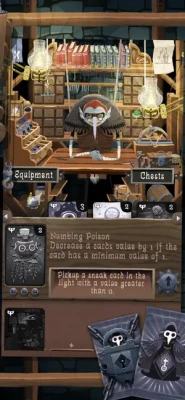
Equipment adds another layer of tactical depth. The game features twelve unlockable and upgradable equipment cards, each designed to provide a different ability or strategic advantage.
Your equipment selection should reflect the challenges you expect to face. Rather than choosing tools solely because they appear powerful, consider how each one supports your preferred approach.
Choose Equipment That Solves Problems
A useful equipment card should address a problem you regularly encounter. If you struggle with dangerous guards, prioritize tools that help you control or bypass threats. If you often find yourself trapped by difficult routes, consider equipment that improves your movement options.
Think of your equipment slots as a limited set of tactical solutions. Every slot should contribute something useful to the overall plan.
Experiment With Different Equipment Combinations
There is no single combination that is ideal for every situation. Different heists contain different enemies and obstacles, so a flexible setup can be more effective than relying on the same equipment for every run.
Experiment with combinations that support each other. A tool that helps you avoid detection may work particularly well alongside one that improves your ability to navigate the board.
When a run fails, consider whether the equipment contributed to the problem. You may discover that a different combination makes a difficult encounter much easier to manage.
Upgrade Equipment Progressively
Upgrading equipment can improve your options and help you tackle increasingly demanding challenges. Pay attention to the requirements associated with each upgrade and work toward the ones that offer meaningful benefits for your playstyle.
You do not always need to complete a successful heist to make progress toward an equipment upgrade. Some unlock requirements can be satisfied during a run even if you ultimately get caught, so check your progress after challenging attempts.
Treat equipment progression as a long-term investment. Each improvement should help you become more capable, not simply add another item to your collection.
Best Tips for Beginners
Start With Survival, Not Maximum Treasure
When you are learning Card Thief, focus on understanding the rules and completing heists safely. Chasing every treasure card makes it harder to learn how threats interact with your movements.
Once you become more comfortable with the game, you can gradually take bigger risks and pursue higher scores.
Read the Abilities of Every Card
Do not rely entirely on the appearance of a card. Learn what its mechanics mean and how it interacts with other elements on the board.
Understanding card behavior prevents avoidable mistakes and helps you recognize opportunities that might otherwise be overlooked.
Keep Your Options Open
A flexible position is often more valuable than an immediate reward. Whenever possible, choose actions that preserve several reasonable options for your next move.
Avoid committing to a route that leaves you dependent on one specific outcome unless you understand the risk.
Use Equipment Before a Situation Becomes Critical
Special abilities are most useful when they prevent a dangerous situation from developing or help you overcome a difficult obstacle.
Do not wait until every alternative has disappeared before considering your equipment. At the same time, avoid wasting a powerful ability on a minor threat that can be handled safely through ordinary movement.
Learn From Failed Heists
Failure is part of the learning process. Instead of repeating the same approach, identify the decision that caused the most trouble.
Perhaps you collected treasure too early, ignored a dangerous guard, used an equipment ability unnecessarily, or left yourself with a poor escape route.
Changing one habit at a time makes it easier to understand which strategies work.
Practice Consistently
Because individual runs are short, Card Thief is well suited to repeated practice. A few focused attempts can teach you more than a long session spent making moves without considering their consequences.
Pay attention to patterns, test different equipment combinations, and gradually develop a more reliable approach.
Advanced Strategies for Experienced Players
Think Several Moves Ahead
Once you understand the basic mechanics, start evaluating sequences of moves rather than individual actions.
Consider what the board might look like after you collect a treasure, remove a threat, or use a special ability. The strongest move is often the one that creates a favorable next turn rather than the one that offers the greatest immediate reward.
This habit helps you avoid dead ends and makes difficult heists more manageable.
Calculate the Real Cost of a Reward
The value of a treasure card is not determined by its reward alone. You must also consider the danger, movement requirements, and equipment resources needed to collect it.
A reward that appears attractive may be inefficient if reaching it consumes too many resources. Another reward may be more valuable in practice because it can be collected safely along your intended route.
Learn to evaluate opportunities by their overall impact on the run.
Preserve Emergency Options
It is tempting to use every available ability as soon as it offers an advantage. However, keeping a useful option available can provide insurance against an unexpected threat.
Before spending an equipment ability, consider whether a more dangerous encounter might occur later. If you can solve the current problem without using that ability, saving it may be the better choice.
The key is not to hoard every resource indefinitely. It is to spend resources when their immediate benefit outweighs their future value.
Adapt to Each Heist
Card Thief features four distinct heists with different enemies, traps, and obstacles. A strategy that performs well in one location may be less effective in another.
Pay attention to the specific challenges of each heist. Adjust your equipment, route planning, and risk tolerance accordingly.
Adaptability is especially important when you begin experimenting with different thieves and equipment combinations.
Improve Your Scores Through Better Decisions
Higher scores come from understanding which opportunities are worth pursuing and which are likely to compromise the run.
Focus on consistent execution first. As you become more comfortable with the mechanics, identify opportunities to collect additional treasure without increasing danger too much.
Small improvements in route planning and resource management can produce better results than repeatedly attempting risky moves.
The Four Heists in Card Thief
Card Thief offers four distinct heists, each with its own collection of threats and obstacles. They provide variety by changing the conditions under which you must plan your movements.
Rather than expecting one universal strategy to work everywhere, approach each heist as a separate tactical challenge.
Learning the Early Heists
Use the earlier challenges to develop a solid understanding of movement, stealth, treasure collection, and escape planning. Pay attention to how enemies and environmental elements influence your options.
Once the basic mechanics become familiar, begin experimenting with more ambitious routes and equipment combinations.
Preparing for More Difficult Encounters
As you encounter different obstacles, think about which tools and movement patterns are most effective against them.
Do not assume that a familiar strategy will always remain safe. A new combination of cards may require you to change your priorities or use equipment more carefully.
Building Consistency Across All Heists
A dependable player can adapt without abandoning the fundamental principles of good strategy.
Study the board, control unnecessary risk, collect worthwhile treasure, and keep an escape route in mind. These habits remain useful even when the enemies and obstacles change.
Thieves and Character Selection
Card Thief includes ten unlockable thieves, each with a unique gameplay rule. These characters add variety by changing how you approach a run.
A different thief can encourage a different style of play, so it is worth experimenting rather than sticking to one character indefinitely.
When selecting a thief, read the character's special rule carefully. Consider how it affects your usual strategy and whether you need to change your approach to equipment, treasure collection, or movement.
Some rules may reward a more cautious approach, while others may encourage you to pursue different opportunities. The most useful character is the one whose abilities you understand and can apply consistently.
As you become more experienced, try completing similar challenges with different thieves. Comparing the results can help you discover new strategies and identify which character rules suit your playstyle.
Daily Heist and Challenge Strategies
The Daily Heist mode adds a competitive element to Card Thief through a shared challenge and global leaderboards. It is a useful way to test your decision-making against a recurring challenge rather than focusing exclusively on ordinary progression.
Understand the Challenge Before Committing
Start by examining the available cards and identifying the biggest risks. A daily challenge may reward a different approach from your usual strategy, so avoid relying on habits without checking the situation.
Consider the route, the treasure opportunities, and the tools available to you before making major decisions.
Prioritize Consistency
When competing for a high score, a reliable strategy is often more effective than an unnecessarily risky one.
Focus on collecting worthwhile rewards while maintaining control of the situation. If you notice that a particular approach repeatedly leads to failure, adjust it rather than continuing to make the same moves.
Learn From Repeated Attempts
Daily challenges provide an opportunity to refine your tactical judgment. Review the choices that worked well and identify moments when you could have reduced risk or collected more treasure safely.
Use what you learn to improve your future runs, even when the challenge changes.
Common Mistakes to Avoid in Card Thief
Taking Every Treasure Card
Not every reward is worth the risk. Chasing every item can leave you exposed to guards and make your escape much harder.
Evaluate each opportunity before committing to it.
Ignoring Nearby Threats
A route that looks safe at first can become dangerous if you overlook an enemy or environmental obstacle.
Always consider the surrounding cards before choosing your next move.
Spending Equipment Too Early
Using an ability for a minor convenience may leave you without a useful response to a more serious threat.
Think about whether ordinary movement can solve the problem before spending a valuable resource.
Forgetting About the Exit
A successful heist requires more than collecting treasure. You must also maintain a workable path toward escape.
Keep your exit strategy in mind from the beginning and revise it when necessary.
Repeating the Same Failed Strategy
If an approach repeatedly leads to trouble, continuing to use it is unlikely to improve your results.
Experiment with different routes, equipment choices, and priorities until you find a more dependable solution.
Playing Without a Clear Objective
Random movement makes it harder to understand why a run succeeds or fails.
Before each move, identify its purpose. Whether you are removing a threat, collecting loot, or improving your route, having a reason for your decision will make your play more consistent.
How to Unlock More Equipment and Progress Faster
Progression in Card Thief involves unlocking equipment, improving existing tools, discovering new thieves, and exploring additional challenges.
The best way to make steady progress is to combine normal gameplay with specific goals.
Focus on Equipment Unlock Requirements
Check the requirements for the equipment upgrades you want. Some upgrades may require you to perform particular actions during a heist rather than simply finish with a high score.
When possible, choose runs that let you work toward these goals naturally.
Collect Stolen Goods
Stolen goods contribute to the game's progression and hideout activities. Keep an eye on opportunities to collect them while playing regular heists.
Instead of focusing exclusively on your immediate score, consider how each run contributes to your broader objectives.
Explore the Hideout
The hideout provides additional activities and progression opportunities. Spend time learning what is available and how your collected resources can be used.
These activities add variety to the core heists and give you additional reasons to improve your performance.
Avoid Rushing Progression
Unlocking everything immediately is not necessary to become a capable player. Learning the core mechanics first will help you make better use of new equipment and character options as they become available.
A steady approach allows you to understand each improvement rather than relying on new abilities to solve every problem.
Is Card Thief Worth Playing?
Card Thief is an appealing choice for players who enjoy tactical puzzles, solitaire mechanics, and stealth games that reward thoughtful decisions.
Its greatest strength is the way it combines simple controls with meaningful choices. The rules are approachable, but mastering the relationship between guards, treasure, equipment, and escape routes takes practice.
The short sessions make it convenient for mobile gaming, while the different heists, unlockable thieves, equipment upgrades, and daily challenges provide reasons to keep returning.
Players who prefer fast action, extensive storytelling, or large exploration environments may find its compact card-based format less appealing. However, those who enjoy planning, risk management, and replayable strategy will find plenty to appreciate.
Frequently Asked Questions About Card Thief
What is Card Thief?
Card Thief is a solitaire-style stealth strategy game in which you play as a thief trying to steal treasure, avoid guards, and escape dangerous locations. It combines card-based decisions with tactical planning.
Is Card Thief free to play?
The iOS version is free to download and offers an in-app purchase to unlock the full game. The exact purchase details may vary by store and region.
Can you play Card Thief offline?
Yes. The game supports offline play for its core gameplay, making it suitable for travel or situations without an internet connection.
How many heists are available in Card Thief?
The game features four distinct heists, each with different enemies, traps, and obstacles.
How many equipment cards are there?
Card Thief includes twelve unlockable and upgradable equipment cards with unique abilities that help you customize your strategy.
Can you play as different thieves?
Yes. The game offers ten thieves with individual gameplay rules, allowing you to experiment with different approaches to each heist.
What is the best strategy for beginners?
Start by learning how movement, stealth, and threats interact. Prioritize safe routes, collect treasure when the risk is reasonable, and keep the escape route in mind throughout the run.
How do you avoid getting caught?
Study the surrounding cards, understand guard behavior, make use of appropriate equipment, and avoid taking unnecessary risks. Planning several moves ahead can help you prevent dangerous situations.
Is collecting all the treasure necessary?
No. Collecting more treasure can improve your results, but optional rewards are not always worth the danger. Prioritize a successful escape when pursuing additional loot becomes too risky.
What is the Daily Heist mode?
Daily Heist provides a recurring challenge with global leaderboards. It gives players another way to test their strategy and compare their results.
How can you improve your score?
Learn the card mechanics, choose efficient routes, use equipment wisely, and collect valuable treasure without creating unnecessary danger. Consistency is more useful than repeatedly taking extreme risks.
Is Card Thief suitable for short gaming sessions?
Yes. Its individual runs are designed to be brief, making it a good option for quick sessions while still offering meaningful strategic depth.
Final Thoughts on Card Thief
Card Thief proves that a small card-based game can deliver the tension of a much larger stealth adventure. Every heist asks you to weigh reward against danger, understand your surroundings, and make decisions that keep your escape possible.
The most effective approach is to remain patient, learn the behavior of different cards, use equipment with a clear purpose, and avoid letting greed undermine a promising run. As your understanding improves, you will become better at recognizing safe opportunities, handling difficult guards, and adapting to different heists.
Whether you are a newcomer learning the basics or an experienced player chasing higher scores, Card Thief offers a rewarding combination of stealth, puzzle-solving, and strategic decision-making. Its compact gameplay makes it easy to pick up, while its tactical depth gives you plenty of reasons to return for another heist.
Rate the Game
User Reviews







Popular Games



















 Android
 iOS
 Windows
 Xbox