


Latest Version
October 21, 2025
Arnold Rauers
Card
iOS
0
Report a Problem
More About :game
What Is Card Crawl Adventure?
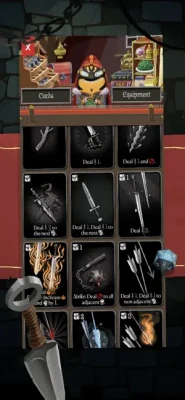
Card Crawl Adventure turns a deck of cards into a dangerous journey through a fantasy world. Instead of relying on traditional turn-based combat alone, players draw paths across cards to trigger attacks, cast magical spells, overcome obstacles, and collect rewards.
The central challenge is learning how different cards interact. A seemingly ordinary encounter can become dangerous when enemies, treasures, abilities, and limited resources appear together. Successful players look beyond the immediate move and consider how each decision will affect the next few turns.
The game builds on ideas from solitaire and path-based puzzle games, while adding roguelike progression and deckbuilding. This creates a balance between careful planning and adapting to unpredictable situations.
Card Crawl Adventure Gameplay Features
Solitaire-Inspired Card Combat
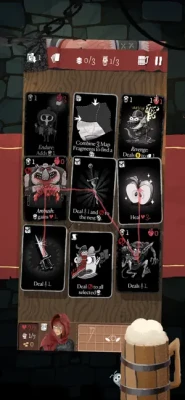
Card Crawl Adventure uses a distinctive card-selection system in which the path drawn across cards determines how actions resolve. Understanding the available paths and the relationships between cards is essential for making effective attacks and using abilities efficiently.
Rather than selecting the first available action, players should examine the board, compare possible combinations, and choose the sequence that offers the greatest overall benefit.
Roguelike Adventures
Each adventure is randomly generated, so the cards, encounters, and opportunities you face can change from one run to another. A strategy that works well in one session may need to be adjusted in the next.
This replayability encourages experimentation and rewards players who can adapt their tactics instead of relying on a single fixed approach.
Collectible and Upgradeable Cards
Players can collect and improve cards as they progress. New cards expand the available tactical options, while upgrades can make familiar abilities more useful.
The key is to choose additions that support a coherent strategy. A powerful card is not always the best choice if it rarely works with the rest of your deck.
Character-Specific Abilities
Different characters bring their own cards, effects, and play styles. This variety changes how encounters should be approached and encourages players to develop more than one strategy.
Learning the strengths and limitations of each character is an important part of long-term progression.
Equipment and Items
Equipment provides additional ways to improve your performance during an adventure. Some items can complement a particular play style or make certain encounters easier to manage.
The best equipment choice depends on your character, the cards available, and the threats you expect to face. Pay attention to item descriptions and look for effects that work together.
Treasure Hunting and Tavern Exploration
Taverns are more than stages to clear. They offer opportunities to fight monsters, discover treasure, and strengthen your approach before moving forward.
Balancing combat against rewards is important. Spending resources carelessly to defeat every available enemy can leave you poorly prepared for a more dangerous encounter.
Weekly Tavern Crawl
The Weekly Tavern Crawl provides a recurring challenge built around a shared adventure. It adds another reason to revisit the game, test your decision-making, and compare your results with other players.
Short Sessions With Strategic Depth
Individual decisions are easy to understand once you learn the basic rules, but combining cards effectively takes practice. The game works well for short play sessions while offering enough variety to keep experienced players engaged.
How to Play Card Crawl Adventure
Learn the Card Board
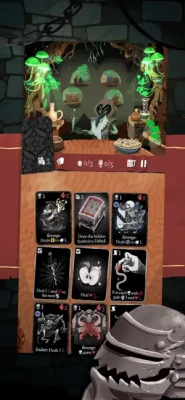
Start by examining the cards currently available. Identify enemies, useful effects, treasure opportunities, and any cards that could cause trouble if left unattended.
Do not rush into an attack simply because it is available. First, consider which cards can be combined, what each action will cost, and how the board might change after the move.
Understand Path-Based Actions
Drawing a path across cards is central to the game's combat and spell system. The selected path determines which cards interact and how the resulting action works.
Practice recognizing valid paths and checking their effects before committing. When several options are available, compare their damage, resource costs, and secondary effects rather than focusing only on the immediate result.
Manage Health and Other Resources
Survival depends on more than defeating enemies quickly. Your health, character-specific resources, equipment effects, and available abilities all influence how safely you can progress.
Avoid taking unnecessary damage from weak enemies when a better route is available. If you have a healing opportunity, consider whether using it now is more valuable than saving it for a later encounter.
Build a Useful Collection of Cards
As you obtain new cards, consider how they fit into your current strategy. Cards that support your strongest abilities are often more useful than powerful but disconnected additions.
Keep your character's play style in mind, and use opportunities to improve your collection when they offer a meaningful advantage.
Adapt to Each Encounter
Not every monster should be handled in the same way. Some situations favor direct attacks, while others reward defensive play, status effects, or carefully arranged combinations.
Read enemy and card descriptions, look for dangerous interactions, and change your priorities whenever the board presents a new problem.
Complete Card Crawl Adventure Strategy Guide
Beginner Tips for New Players
Take Time to Read Every Card
One of the most valuable habits in Card Crawl Adventure is understanding what each card actually does. Damage values are only part of the picture. Special effects, conditions, targeting rules, and interactions with other cards can make a major difference.
Before using an unfamiliar card, read its description and consider how it might affect the rest of the board. This is especially important when playing a character with unique mechanics.
Think Several Moves Ahead
A move that looks excellent immediately may create a difficult situation afterward. Defeating one monster might leave another dangerous enemy exposed, while spending a valuable ability could prevent you from responding to the next threat.
Try to evaluate the current move alongside its likely consequences. You do not need to predict an entire adventure, but anticipating the next encounter can prevent avoidable mistakes.
Avoid Taking Unnecessary Damage
Health is a limited resource, and small losses can accumulate over a long adventure. When possible, choose attack paths and abilities that reduce incoming damage without wasting your strongest resources.
If you can remove a dangerous enemy before it acts, that may be more valuable than dealing greater total damage to several weaker enemies.
Learn From Failed Runs
Because adventures are randomly generated, losing does not always mean your strategy was poor. Sometimes the available cards and encounters create an unusually difficult situation.
However, every run can reveal something useful. Identify the move that caused the biggest problem, consider whether another path was available, and apply that lesson to the next attempt.
Experiment With Different Approaches
Do not assume your first successful strategy will remain effective throughout the game. Try different card combinations, equipment choices, and character abilities to discover which approaches suit your play style.
Experimentation is particularly useful when you encounter a new type of monster or unlock a character with unfamiliar mechanics.
Advanced Combat Strategies
Prioritize the Most Dangerous Enemy
The enemy with the highest health is not necessarily the most dangerous opponent. A weaker monster with a disruptive ability can sometimes create more trouble than a stronger enemy with straightforward attacks.
Evaluate enemies according to the threat they pose, their abilities, and the consequences of allowing them to remain active.
A useful general priority is to handle enemies that can disrupt your plans first, remove threats that are likely to cause substantial damage next, and deal with less dangerous opponents when it is safe to do so.
Always adjust this order to the actual encounter rather than following it blindly.
Maximize Damage Efficiency
Effective combat is about more than dealing the largest possible amount of damage in one move. The best action is often the one that removes a meaningful threat while preserving resources for later.
Before committing to an attack, compare the available options. Consider whether you can defeat a monster outright, use a special effect to improve the result, or save an ability that will be more valuable in a future encounter.
Avoid spending powerful cards on targets that could be handled efficiently with a simpler option.
Combine Cards for Greater Value
Card combinations are one of the game's most important strategic elements. A card that appears average by itself may become much more useful when paired with a compatible ability, item, or status effect.
When building your strategy, look for combinations that reinforce one another. Damage bonuses, defensive effects, status applications, and resource recovery can be especially valuable when their conditions are easy to satisfy.
Do not force a combination simply because you have the necessary cards. Make sure the setup cost is justified by the result.
Use Status Effects Intelligently
Status effects can change how an encounter develops, especially when they weaken enemies, create opportunities for follow-up attacks, or support a character's special abilities.
Learn the conditions that activate your status-related cards. If an ability requires an enemy to have a particular effect, avoid using it before that condition is met unless the immediate benefit is worth the cost.
Similarly, check whether a status effect deals damage, reduces health, changes incoming damage, or influences another card's behavior. These distinctions can affect which target you should choose.
Protect Your Strongest Resources
Rare or powerful abilities can make difficult encounters manageable, but using them too early may leave you with fewer options later.
Look for opportunities to win ordinary fights with efficient combinations and reserve your strongest tools for situations where they have a clear purpose. This does not mean hoarding every powerful card; an unused ability provides no benefit if it allows your character to be defeated.
The goal is to spend resources when they meaningfully improve your chance of success.
Deckbuilding Guide
Build Around a Clear Strategy
A successful deck does not need to contain only the strongest cards. It needs cards that work well together.
Choose a general direction based on your character and available upgrades. You might favor direct damage, defensive stability, status effects, spell combinations, or another approach supported by your collection.
Once you have a workable foundation, prioritize additions that strengthen it. A collection of individually powerful cards can still perform poorly if their effects do not complement one another.
Choose Upgrades Carefully
Upgrades should solve a problem or improve a strategy that is already working. If your deck struggles to defeat dangerous enemies, an upgrade that improves reliable damage may be more useful than a situational effect.
If survival is the main issue, consider defensive tools or abilities that reduce the amount of damage you take.
Compare the actual benefit of each available improvement rather than choosing an upgrade solely because it sounds powerful.
Avoid Unnecessary Complexity
Adding more options can be useful, but every new card should have a reason to be included. Cards that depend on rare conditions may not contribute consistently enough to justify their place in your strategy.
When choosing between upgrades or new cards, favor reliable effects that fit your plan. Situational cards can still be excellent when they address a specific weakness, but they should not distract you from the main strategy.
Adapt Your Deck to Your Character
Different characters use different cards and effects, so there is no single deckbuilding approach that works equally well for everyone.
Study the abilities available to your character and identify which effects are easiest to activate. Then select cards and equipment that make those abilities more reliable.
If a character requires setup before dealing strong damage, for example, focus on making that setup easier to achieve rather than building around an unrelated strategy.
Character Strategy Guide
Card Crawl Adventure features multiple characters with distinct abilities and play styles. Their individual mechanics mean that learning how to use a character effectively is often more important than choosing cards based on their apparent strength alone.
Starting Character
Use the starting character to learn the fundamentals of combat, card paths, equipment, and resource management. Focus on understanding the basic interactions before attempting complicated combinations.
A balanced approach is a good starting point. Practice dealing with dangerous enemies efficiently while maintaining enough health to handle later encounters.
Once the basic rules feel comfortable, experiment with more advanced combinations and begin identifying the character's strongest advantages.
Pyromancer
The Pyromancer benefits from understanding how its abilities and setup conditions work together. Rather than treating every encounter as a straightforward damage race, look for opportunities to prepare an effective sequence.
Read the conditions attached to damage and status-related effects carefully. A powerful ability may be less useful when its requirements are not satisfied, so plan your moves around the cards actually available.
The key is to make your setup consistent and avoid spending resources on combinations that are unlikely to deliver their full value.
Frost Warden
The Frost Warden should be approached with attention to defensive interactions and the timing of special abilities. Look for ways to reduce the danger of an encounter while creating opportunities for effective follow-up actions.
Read the exact effects of your frost-related cards and equipment, since the value of a defensive move depends on the enemy and situation.
A patient approach can help you manage difficult fights without taking unnecessary risks.
Mechanica
Mechanica rewards careful attention to its unique card interactions and equipment synergies. Before choosing upgrades, determine which abilities you use most often and identify the effects that support them.
Try to develop a consistent plan rather than relying on a single powerful combination that may not appear at the right time.
As you gain experience, evaluate new cards according to how reliably they contribute to that plan.
Blood Cultist
With the Blood Cultist, pay close attention to the costs and benefits of abilities that affect health or other resources. An effect that offers a strong offensive advantage can become dangerous if you use it without considering your current condition.
Balance aggression with survival. Make sure the immediate reward justifies the risk, and avoid entering a demanding encounter without enough resources to respond to unexpected threats.
Necromancer
The Necromancer requires careful reading of its special effects and the conditions that make its cards effective. Look for interactions that allow its abilities to support one another instead of treating every card as an isolated action.
When choosing upgrades, consider whether they make your core strategy more dependable or simply add another situational option.
Berserker
The Berserker introduces a distinctive play style that rewards understanding its character-specific cards and equipment. Learn how its effects interact with enemies and other cards before committing to an aggressive strategy.
Aggression can be useful when it produces a decisive advantage, but reckless attacks may leave you vulnerable. Choose moves that capitalize on the Berserker's strengths while keeping the risks manageable.
Character advice above is intended as strategic guidance, not a complete list of exact card effects. Always use the in-game descriptions to verify individual abilities and interactions.
Equipment and Item Guide
Select Equipment That Supports Your Plan
Equipment can improve a strategy, compensate for a weakness, or create new opportunities. The most effective choice depends on what your character needs at that point in the adventure.
If you already deal enough damage, a defensive or utility effect may contribute more to your success than another offensive bonus. If you struggle to finish dangerous encounters, an item that improves your main attack strategy may be the better option.
Understand Item Interactions
Some item effects can interact with particular attacks, status effects, or card types. Read the descriptions carefully and look for conditions that may limit their usefulness.
Do not assume that an item affects every form of damage or every card in the same way. Small differences in how effects are worded can determine whether a combination works as expected.
Avoid Choosing Items in Isolation
Evaluate equipment alongside your character's abilities and the cards you commonly use. A modest bonus that activates consistently may outperform a stronger effect that rarely meets its conditions.
Whenever you receive an equipment choice, consider how often it is likely to help and whether it solves a real problem in your current build.
Tavern Progression and Treasure Strategies
Prepare Before Entering a Difficult Encounter
Before advancing, review your current condition, available cards, equipment, and remaining resources. Consider whether you can improve your position before committing to a difficult fight.
A small improvement made early can prevent a much larger problem later.
Balance Treasure Against Risk
Treasure can provide valuable rewards, but pursuing every opportunity is not always the safest choice. Evaluate the cost of obtaining a reward and consider whether the required actions expose you to excessive damage or resource loss.
Prioritize treasure when the benefit meaningfully improves your run. When the situation is dangerous, surviving with enough resources to continue may be more valuable than collecting one additional reward.
Handle Treasure Puzzles Carefully
Certain treasure cards require particular paths or interactions. Examine the available directions and requirements before selecting cards or spending resources.
Avoid committing to an action until you understand whether the intended path is valid. A brief pause to check the board can prevent unnecessary costs and missed opportunities.
Prepare for Later Stages
As an adventure progresses, encounters can become more demanding. Do not judge your deck only by how easily it handles early enemies.
Think about whether your current setup can deal with tougher opponents, sustain your character through difficult fights, and recover from unfavorable card draws.
A well-rounded strategy should have a reliable way to deal damage, manage threats, and survive when the board does not cooperate.
Boss Battle Strategy
Boss encounters test your ability to combine everything you have learned. Their special mechanics may make ordinary attack patterns ineffective, so understanding the opponent is essential.
Study the Boss Before Attacking
Read the boss's abilities and consider how they influence the encounter. Determine whether the greatest threat comes from direct damage, a special effect, or another mechanic that changes the board.
Use that information to decide which cards should be prioritized and which resources should be preserved.
Focus on Safe, Effective Actions
Do not spend every available resource simply because a boss has a large amount of health. Choose actions that improve your position while limiting the damage you receive.
If a boss can be weakened or controlled by a particular effect, consider whether applying that effect first will make subsequent attacks more effective.
Adjust Your Strategy to the Boss
A defensive approach may work well against one opponent but perform poorly against another. Some encounters reward fast elimination, while others require patience and careful resource management.
Observe the boss's mechanics and adapt your decisions to the actual situation rather than relying on a universal attack sequence.
Preserve Recovery Opportunities
Entering a boss fight in poor condition makes an already difficult encounter harder. Whenever possible, take advantage of available opportunities to recover, improve equipment, or strengthen your deck before facing a major threat.
Do not assume that an early victory guarantees success later in the adventure.
Common Mistakes to Avoid
Attacking Without a Plan
Using the first available attack can lead to wasted resources or unnecessary damage. Check the board and compare the available paths before acting.
Ignoring Card Descriptions
Small details about costs, targeting, and conditions can change the outcome of a move. Read unfamiliar effects and verify how they interact with your current cards.
Spending Powerful Abilities Too Early
Using a major ability on an easy enemy can leave you without an effective answer to a more dangerous encounter. Save it when appropriate, but do not let valuable resources go unused when they could prevent defeat.
Building Around Unreliable Combinations
A strategy that requires several specific cards may be difficult to execute consistently. Make sure your build has useful alternatives when the required combination does not appear.
Taking Too Many Risks for Rewards
Treasure and optional opportunities are attractive, but they are not worth every possible cost. Compare the expected benefit against the risk to your health and overall progress.
Using the Same Strategy With Every Character
Characters have different strengths and mechanics. A strategy that works for one may be inefficient for another. Adapt your card choices and priorities to the character you are playing.
Repeating Mistakes After Losing
A failed run is an opportunity to identify what went wrong. Review your decisions, consider alternative actions, and adjust your approach rather than repeating the same pattern without reflection.
Weekly Tavern Crawl Tips
The Weekly Tavern Crawl provides a different way to test your skills through a recurring shared challenge.
Focus on Consistency
When attempting to achieve a strong result, prioritize decisions that keep your run stable. A risky move may offer an immediate advantage, but unnecessary damage can undermine the rest of your performance.
Learn From Every Attempt
Pay attention to which encounters caused difficulty and which combinations proved most useful. Applying those lessons can help you make better decisions in subsequent challenges.
Compare Decisions, Not Just Results
A successful run can still contain inefficient moves, while an unsuccessful run may include several excellent decisions. Think about why a particular approach worked and whether it can be repeated under different conditions.
Practice Before Chasing High Scores
Use regular adventures to learn the card system and improve your tactical judgment. Familiarity with common interactions makes it easier to respond effectively when the weekly challenge presents an unfamiliar situation.
Advanced Tips for Experienced Players
Evaluate the Value of Each Move
A useful move should accomplish something meaningful. It might eliminate a dangerous enemy, protect your character, improve your future options, or secure a reward without excessive risk.
Compare these benefits rather than measuring every move by damage alone.
Make Every Card Serve a Purpose
As your collection grows, evaluate whether each card contributes to your overall plan. Cards that solve specific problems can be valuable, but too many disconnected effects may make your strategy less consistent.
Plan Around Uncertainty
Random generation means you cannot always control which cards or encounters appear. Instead of depending on one perfect sequence, build a strategy that remains useful across several possible situations.
Reliable options and flexible decision-making are often more valuable than a combination that works only under ideal conditions.
Recognize When to Change Tactics
If your current strategy repeatedly struggles against a particular encounter, consider whether your priorities need to change. You may need to preserve more health, use equipment differently, or focus on an enemy you previously ignored.
The ability to adapt is one of the most important skills in a roguelike card game.
Master the Rules Before Chasing Complexity
Advanced combinations can be rewarding, but they are easier to use when you understand the underlying mechanics. Learn how targeting, status effects, costs, and card paths work before attempting complicated sequences.
A strong grasp of the basics helps you recognize opportunities that less experienced players may overlook.
Is Card Crawl Adventure Worth Playing?
Card Crawl Adventure is a strong option for players who enjoy card-based puzzles, roguelike progression, and tactical decision-making. Its combination of solitaire-inspired mechanics, character-specific abilities, equipment choices, and randomly generated adventures creates plenty of opportunities to experiment.
The game is especially appealing to players who prefer thoughtful planning over reflex-based action. Its short sessions make it suitable for casual play, while its card interactions and different character strategies provide depth for those who want to improve.
New players may need a little time to understand the path-based combat system and the interactions between different cards. However, learning these mechanics is part of the appeal, and each run offers another chance to discover a more effective approach.
Players who dislike randomness or prefer highly predictable encounters may find some runs challenging. Those who enjoy adapting to changing situations are more likely to appreciate the game's design.
Card Crawl Adventure Game Information
General details based on the game's App Store listing.
Feature | Details |
|---|---|
Game title | Card Crawl Adventure |
Developer | Arnold Rauers |
Genre | Card game, solitaire, roguelike, strategy |
Gameplay | Single-player |
Platform | iPhone and iPad |
Operating system | iOS 13.0 or later; iPadOS support |
Game modes | Adventures and Weekly Tavern Crawl |
Main mechanics | Card paths, tactical combat, deckbuilding, equipment |
Progression | Collecting and improving cards, character abilities, items |
Pricing | Free to download with in-app purchases |
Languages | English, German, Japanese, Russian, Simplified Chinese, and Spanish |
Age rating | 13+ on the US App Store |
Replayability | Randomly generated adventures and character variety |
Availability, purchase options, and compatibility details may change with future updates.
Frequently Asked Questions
What is Card Crawl Adventure?
Card Crawl Adventure is a single-player roguelike card game that combines solitaire-inspired mechanics with tactical combat, deckbuilding, and fantasy exploration. Players travel between taverns, fight monsters, collect treasure, and improve their cards and equipment.
How do you win in Card Crawl Adventure?
Winning requires efficient card selection, careful resource management, and an understanding of enemy abilities. Focus on dangerous threats, choose effective card combinations, and preserve enough health and useful abilities for difficult encounters.
Is Card Crawl Adventure free to play?
The game is free to download from the App Store, with optional in-app purchases. Additional characters, content, and the Weekly Tavern Crawl are among the purchase options listed by the developer.
Is Card Crawl Adventure a deckbuilding game?
Yes. It combines roguelike deckbuilding with a distinctive path-based card system. Players collect and improve cards, choose equipment, and develop strategies around different characters and encounters.
Does Card Crawl Adventure have different characters?
Yes. The game features several characters with unique cards and effects, including the Pyromancer, Frost Warden, Mechanica, Blood Cultist, Necromancer, and Berserker. Each character encourages a different approach to combat and deckbuilding.
Does Card Crawl Adventure have replay value?
Yes. Randomly generated adventures, different character abilities, card combinations, equipment choices, and the recurring Weekly Tavern Crawl provide reasons to keep playing.
What is the best strategy for beginners?
Beginners should focus on learning card descriptions, understanding valid paths, avoiding unnecessary damage, and choosing reliable combinations. It is also helpful to experiment with different characters once the basic mechanics become familiar.
How can you defeat difficult bosses?
Study the boss's abilities, identify its most dangerous effects, and choose actions that limit incoming damage while making efficient progress. Avoid wasting powerful abilities on minor threats when they may be more valuable later.
Which cards should you upgrade first?
Prioritize upgrades that improve your most reliable abilities or address a weakness in your current strategy. The best choice depends on your character, available cards, and the challenges you are struggling to overcome.
Is Card Crawl Adventure suitable for short play sessions?
Yes. Its card-based encounters and compact adventure structure make it suitable for short sessions. Players can enjoy individual encounters while gradually learning the deeper mechanics.
Can you play Card Crawl Adventure on an iPhone or iPad?
Yes. The game is available for compatible iPhone and iPad devices. Check the current App Store listing for the latest operating system requirements.
Final Thoughts
Card Crawl Adventure offers a distinctive blend of card puzzles, tactical battles, and roguelike progression. Its greatest strength lies in the decisions players make: choosing the right path, managing resources, finding useful card combinations, and adapting to encounters that never unfold in exactly the same way.
For beginners, the best approach is to learn the core mechanics and build consistency before experimenting with complex strategies. More experienced players can focus on refining character-specific builds, making better use of equipment, and improving their decisions during difficult encounters.
Whether you enjoy solitaire-style puzzles, strategic card battles, or replayable fantasy adventures, Card Crawl Adventure provides a rewarding challenge for players willing to think carefully about every move.
Rate the Game
User Reviews






Popular Games



















 Android
 iOS
 Windows
 Xbox