
Latest Version
December 08, 2024
mobirix
Puzzle
Android
0
com.mobirix.bbp2
Report a Problem
More About :game
Bricks Breaker Dash: Complete Game Guide
Introduction to Bricks Breaker Dash
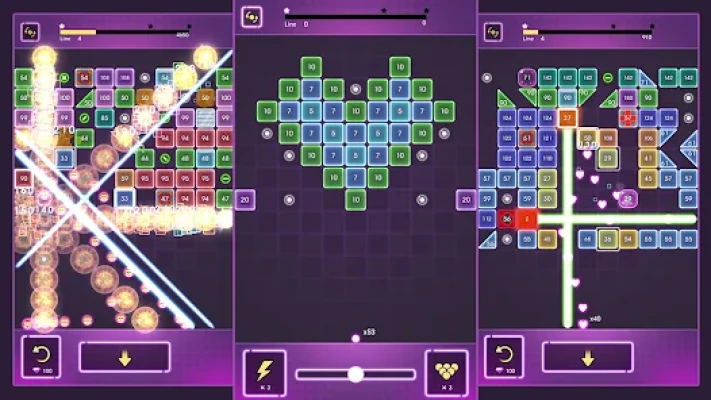
Bricks Breaker Dash brings the familiar fun of brick-breaking games to mobile devices with straightforward controls and a focus on precision. Instead of controlling a traditional paddle, players aim their shots with a finger and send balls flying across the board. Each collision damages the bricks, and the objective is to remove them before they reach the bottom line.
Although the basic idea is easy to understand, clearing stages efficiently takes planning. A shot aimed directly at a brick may cause some damage, but a carefully chosen angle can send balls bouncing between several targets. These repeated collisions can make a big difference, especially when the board contains many durable bricks.
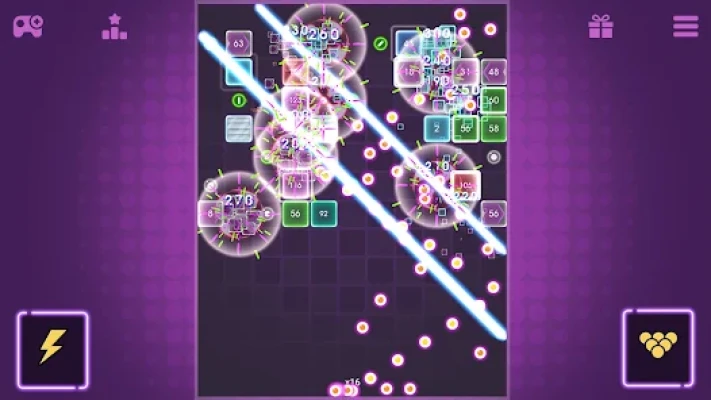
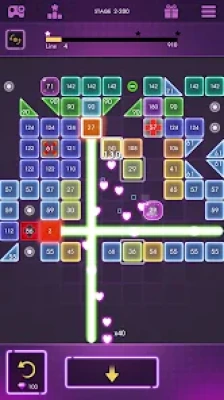
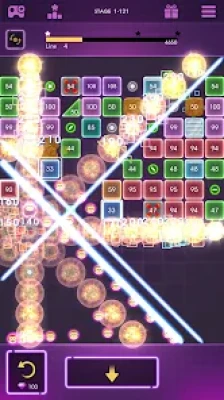
The game also features special elements such as laser beams, missiles, and other objects that help create more varied challenges. Learning how to use the available tools alongside normal shots can improve your performance and help you progress through difficult stages.
Main Features of Bricks Breaker Dash
Simple and Responsive Controls
The game uses a straightforward aiming system. Players choose a direction with a finger, then launch balls toward the bricks. This makes it accessible to beginners while leaving plenty of room to develop more advanced aiming techniques.
Physics-Based Ball Movement
Ball movement and rebounds are central to the gameplay. Balls can bounce off surfaces and strike bricks from different directions, allowing a well-planned shot to hit several targets during one turn.
Numbered Bricks
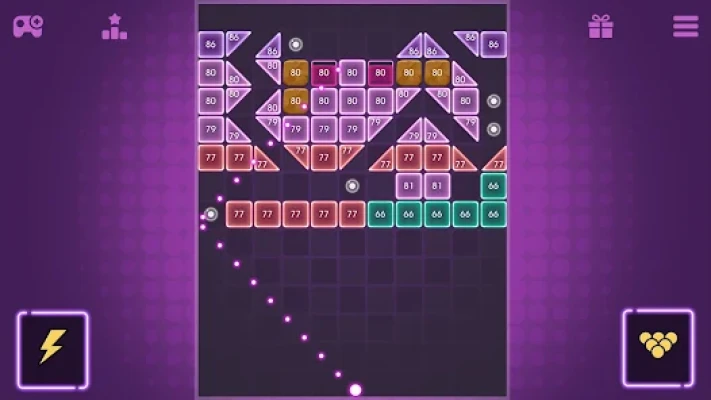
Bricks display numbers that indicate how much damage they can take before being destroyed. Stronger bricks require repeated hits, so players need to consider both their durability and their position on the board.
Special Weapons and Objects
Special elements, including lasers and missiles, add extra ways to damage or clear bricks. Using these tools effectively can make challenging layouts easier to manage.
Numerous Stages
The game offers a progression of stages that provide different brick arrangements and aiming challenges. As you advance, paying attention to the board layout becomes increasingly important.
Convenient Mobile Gameplay
The controls are designed for handheld play, making it suitable for short sessions during breaks or longer attempts at clearing difficult stages.
How to Play Bricks Breaker Dash
Understand the Objective
Your primary goal is to destroy the bricks before they reach the bottom line. Every shot should help reduce the number of bricks, weaken durable targets, or create a better position for your next turn.
Do not focus only on the nearest brick. Look across the entire board and identify where a ball could travel to hit multiple targets.
Aim Before Launching
Touch or drag in the direction you want the balls to travel, following the game's aiming controls. Take a moment to inspect the trajectory before releasing your shot.
Aiming directly at a brick can work, but an angled shot may be more effective if it allows the balls to rebound into a crowded area.
Damage the Bricks
When a ball hits a numbered brick, its value decreases. Continue hitting the brick until it is destroyed. If several bricks are close together, try to guide the balls through the gaps so they can strike multiple targets.
Watch the Bottom Line
The game ends when the bricks reach the bottom line. This means that leaving too many bricks untouched can become dangerous, particularly when strong bricks remain near the lower part of the board.
Prioritize threats that are close to the bottom rather than spending every turn on distant targets.
Use Special Elements Wisely
Some stages include special weapons or objects such as lasers and missiles. These can help deal with difficult brick arrangements. Look for opportunities to use them when ordinary shots would require too many hits or when several targets can benefit from the same effect.
Complete Strategy Guide for Bricks Breaker Dash
Study the Entire Board Before Shooting
One of the most useful habits is to examine the layout before committing to a shot. Identify the strongest bricks, the most crowded sections, and the open spaces that could create useful rebounds.
A brick near a group of other targets may be a better choice than an isolated brick, even if the isolated one is easier to hit. The goal is to maximize the value of each shot rather than simply destroy whichever brick is closest.
Consider these questions before launching:
Which bricks are closest to the bottom line?
Where can the balls rebound into several targets?
Are there gaps that allow the balls to reach the upper part of the board?
Which strong bricks could become a problem if left untouched?
Would a special weapon clear a more difficult section efficiently?
Making this quick assessment can prevent wasted shots and help you choose a more productive angle.
Master the Art of Angled Shots
Angled shots are one of the most important skills in Bricks Breaker Dash. A direct hit may send a ball back along a relatively simple path, while a carefully chosen angle can create repeated collisions.
Try to aim toward the edges of brick groups or into gaps between targets. Once the balls enter a crowded section, they may bounce between several bricks before returning.
Practice aiming for narrow openings rather than always targeting the center of a brick. Reaching the space behind a group of bricks can be especially useful because the balls may strike targets from less obvious directions.
Do not assume that the steepest or shallowest angle is always best. The right trajectory depends on the layout, the location of the bricks, and the amount of space available for rebounds.
Maximize Every Ball Collision
A strong shot is not necessarily the one that destroys a single brick immediately. A better shot may hit many bricks several times, gradually weakening the entire formation.
To improve your results, look for paths that keep the balls in contact with the targets for as long as possible. Openings near the edges or between groups can provide access to areas where the balls can bounce repeatedly.
Avoid sending every shot into a dense wall without considering where the balls will go afterward. If the trajectory offers few useful rebounds, try a different angle that provides a longer path through the board.
Prioritize Dangerous Bricks
Not all bricks deserve equal attention. A strong brick positioned near the bottom can be more urgent than a stronger one near the top.
When choosing your target, consider both durability and position. A brick with a high number may require several hits, so beginning to weaken it early can prevent it from becoming a serious problem later.
At the same time, do not ignore easier targets if removing them opens a useful path for your balls. Clearing a small group can create an opportunity to reach difficult bricks from behind.
A balanced approach works best: reduce immediate threats while creating openings that improve future shots.
Break Through Openings
Creating a gap in the brick formation can change the way later shots behave. When a ball gets past the front row, it may travel into areas where more bricks can be struck from behind.
Look for the weakest part of a formation and consider whether removing one or two bricks would create a useful opening. Once the path is available, aim through it rather than repeatedly hitting the remaining front-facing bricks.
This approach is particularly helpful when the board contains a mixture of weak and durable targets. Instead of dealing with every brick from the same direction, you can use the available space to reach several areas of the formation.
Deal With High-Value Bricks Efficiently
Bricks with larger numbers need more damage before they disappear. Repeatedly attacking one strong brick with a poor trajectory can waste valuable opportunities.
Whenever possible, aim for shots that hit a durable brick and continue into other targets. Even if the strong brick survives, the rest of the formation may become easier to clear.
Do not automatically focus on the highest-numbered brick. Check its location first. If it is far from the bottom and does not block an important route, other targets may be more urgent.
The best strategy combines steady damage with sensible threat management.
Use Lasers and Missiles at the Right Time
Special weapons can help overcome layouts that are difficult to clear with ordinary rebounds. Lasers and missiles introduce additional ways to damage bricks, making them useful when a stage contains troublesome targets or crowded formations.
Before relying on a special element, inspect the board and identify where its effect would be most valuable. Using it when only a few easy bricks remain may provide less benefit than saving the opportunity for a more difficult section.
Pay attention to the actual behavior of each special object as you encounter it. Different effects may suit different layouts, so learning their strengths will help you make better decisions during later stages.
Adapt Your Strategy to Each Stage
A strategy that works well on one board may be less effective on another. Some layouts reward precise shots through narrow gaps, while others offer more opportunities for repeated rebounds.
If your usual approach stops working, change your target or trajectory. Look for an alternate entry point, remove weaker bricks to open space, or use a special weapon if the stage provides one.
Treat each stage as a new aiming puzzle rather than repeating the same shot regardless of the layout.
Beginner Tips for Bricks Breaker Dash
Start With Easy Angles
New players should first learn how balls move and rebound. Begin with clear, straightforward shots, then gradually experiment with more difficult angles.
Understanding the basic physics makes it easier to predict where balls will travel and which targets they can reach.
Take Time to Aim
Fast shooting is not always efficient. A few seconds spent studying the board can help you find a trajectory that damages several bricks instead of only one.
Use the aiming guide provided by the game, when available, and consider the likely rebound path before launching.
Keep an Eye on Brick Positions
The distance between a brick and the bottom line matters as much as its durability. Check the lower part of the board regularly and deal with dangerous targets before they become difficult to manage.
Learn From Unsuccessful Shots
A shot that fails to clear many bricks can still teach you something about the trajectory. Notice where the balls traveled, where they rebounded, and which openings they missed.
Use that information to adjust your next attempt instead of repeating the same angle.
Experiment With Different Trajectories
Do not rely on one aiming style for every stage. Direct shots, shallow angles, and shots through gaps can all be useful in different situations.
Practicing different trajectories will help you recognize opportunities more quickly.
Advanced Tips for Better Results
Think Several Shots Ahead
Try to choose shots that improve your position for the next turn as well as damage the current targets. Removing a few bricks from a crowded area may create a valuable opening later.
Planning ahead helps you avoid clearing easy targets in a way that leaves dangerous bricks untouched.
Balance Immediate Damage With Board Control
It can be tempting to attack the strongest brick as soon as you see it. However, a different target may be more valuable if destroying it creates a route behind the formation.
Compare the immediate benefit of a shot with the opportunities it may create. Effective play is about controlling the board, not just reducing individual brick numbers.
Use Special Effects to Solve Specific Problems
Special weapons are most useful when they address a particular challenge. Identify whether the main difficulty is a strong target, a crowded section, or a lack of useful shooting angles.
Choose the available special effect based on the problem rather than using it automatically whenever possible.
Stay Flexible When the Board Changes
As bricks are destroyed, the available paths change. A trajectory that was useful earlier may no longer be the best choice after an opening appears.
Reassess the board before each shot. Successful players adapt their aim to the current formation instead of relying on an old plan.
Common Mistakes to Avoid
Shooting Without Planning
Launching immediately without checking the board can waste opportunities. Take a brief look at the target positions and choose an angle that offers useful rebounds.
Focusing Only on One Brick
Repeatedly attacking a single strong brick can leave other targets dangerously close to the bottom. Spread your damage when possible and prioritize threats based on their positions.
Ignoring Openings
Gaps between bricks can provide access to areas that are difficult to reach with direct shots. Watch for opportunities to send balls through these spaces.
Using the Same Angle Every Time
A single aiming style will not work equally well on every layout. Change your approach when the board becomes more crowded or the available paths change.
Overlooking Special Elements
Lasers, missiles, and other special objects can provide useful alternatives to normal shots. Learn how they work and use them when they can solve a difficult situation.
Forgetting the Bottom Line
A strong brick near the top may look intimidating, but a weaker brick near the bottom can pose a more immediate threat. Keep the overall board position in mind when choosing targets.
How to Improve Your Aim
Improving your aim comes from observation and practice rather than guesswork. Start by choosing a visible target, then consider what will happen after the first collision.
Pay attention to three factors: the launch direction, the surfaces the ball can hit, and the space available for rebounds. These details help you predict whether the shot will strike one brick or continue through several.
Practice aiming toward openings at different angles. Notice which trajectories allow balls to enter the upper or rear parts of a formation. Over time, you will become better at recognizing useful paths before launching.
It is also helpful to evaluate the result of every shot. If the balls return quickly without causing much damage, try a different angle next time. If they reach several targets, identify what made the path effective and look for similar opportunities in future stages.
Is Bricks Breaker Dash Suitable for Casual Players?
Bricks Breaker Dash is well suited to players who enjoy simple controls, short gameplay sessions, and puzzles that reward careful planning. The basic mechanics are easy to understand, so beginners can start playing without a long tutorial.
The challenge comes from making good decisions with each shot. Players who enjoy experimenting with angles, predicting rebounds, and gradually improving their performance can find plenty to enjoy.
Its brick-breaking format also makes it a natural choice for people who prefer a straightforward mobile game rather than a complex story-driven experience.
Frequently Asked Questions
What is Bricks Breaker Dash?
Bricks Breaker Dash is a casual puzzle game developed by MOBIRIX. Players aim and launch balls to damage and destroy numbered bricks before they reach the bottom of the screen.
How do you play Bricks Breaker Dash?
Aim with your finger and launch the balls toward the bricks. Choose useful angles, take advantage of rebounds, and clear the board before the bricks reach the bottom line.
How can I clear bricks faster?
Look for trajectories that allow balls to bounce between several targets. Aim through gaps when possible, and prioritize shots that damage multiple bricks rather than focusing only on one target.
What do the numbers on bricks mean?
The numbers indicate the damage a brick can take before it is destroyed. Bricks with larger numbers generally require more hits, so consider their durability when planning your shots.
What are lasers and missiles used for?
Lasers, missiles, and other special elements provide additional ways to damage bricks. They can be particularly useful when ordinary shots struggle to deal with a difficult layout.
What happens if bricks reach the bottom?
The game ends when the bricks reach the bottom line. You should therefore pay attention to lower-positioned targets and avoid spending too much time attacking less urgent bricks elsewhere.
Is Bricks Breaker Dash easy to learn?
Yes. Its aiming controls and brick-breaking objective are straightforward. Improving your performance takes practice, especially when learning to predict rebounds and choose efficient angles.
What is the best strategy for difficult stages?
Study the board, prioritize dangerous bricks, and look for openings that allow balls to reach several targets. Use special elements when they offer a clear advantage, and adjust your approach as the layout changes.
Final Thoughts
Bricks Breaker Dash combines easy-to-learn controls with a satisfying challenge built around angles, rebounds, and careful target selection. Although launching balls toward numbered bricks is simple, consistently clearing stages requires players to think about the entire board and make every shot count.
For the best results, focus on accurate aiming, create openings whenever possible, and deal with bricks near the bottom before they become an immediate threat. Learn how special weapons work and adapt your strategy to the layout of each stage.
With patience and practice, you can make better use of every shot, overcome tougher formations, and enjoy the simple but rewarding gameplay that makes Bricks Breaker Dash appealing to brick-breaking fans.
Rate the Game
User Reviews















Popular Games



















 Android
 iOS
 Windows
 Xbox