

Latest Version
October 25, 2024
SayGames Ltd
Puzzle
0
com.brave.merge
Report a Problem
More About :game
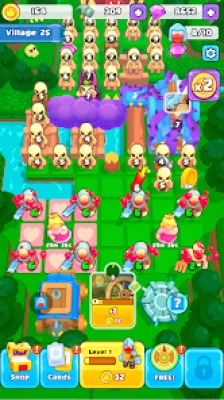
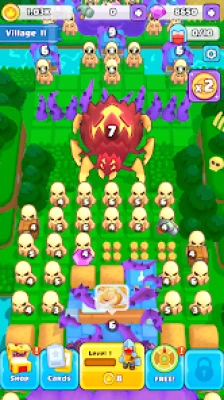
Brave Merge is a medieval fantasy strategy game developed by SayGames Ltd. The kingdom has been overrun by zombies and other monsters, and your mission is to reclaim the lost territory one village at a time. To succeed, you must recruit warriors, merge matching soldiers, improve your army, and rebuild the settlements that have been damaged by the undead invasion.
The game combines several connected systems. Warrior merging increases the strength of your troops, combat allows you to reclaim territory, and restored village buildings provide income that supports further expansion. These mechanics create a progression loop in which every successful battle helps strengthen your economy and every economic improvement makes it easier to prepare for the next fight.
Your adventure begins with relatively simple soldiers equipped with basic weapons. As you merge units and progress, your warriors become stronger and gain access to more advanced equipment, including axes, armor, and swords. The game also features towers where warriors can attack enemies from a distance, adding another tactical element to your defenses.
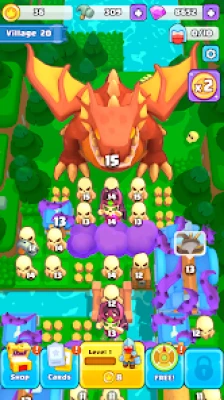
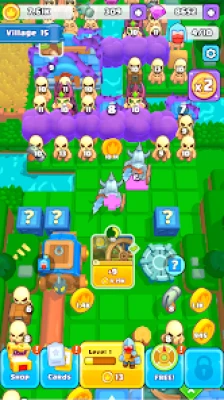
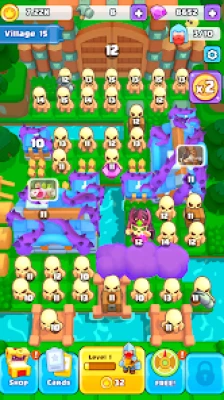
Each village presents new challenges, including groups of undead enemies and powerful boss monsters. Defeating these threats requires an army that is strong enough to survive combat and deal damage efficiently.
Beyond fighting, Brave Merge rewards players who manage their resources carefully. Taverns, forges, sawmills, temples, and other restored buildings can generate income. Collecting these earnings and improving your production systems helps you recruit more warriors and continue reclaiming the kingdom.
Brave Merge Gameplay Overview
Warrior Recruitment and Merging
Recruiting soldiers is the foundation of your army. Newly hired warriors can be combined with matching units of the same level to create stronger troops.
Merging allows you to improve combat effectiveness without relying entirely on recruiting large numbers of basic soldiers. Stronger warriors have access to better equipment and can handle tougher enemies more effectively.
Zombie Combat and Territory Expansion
Combat is the main way to reclaim villages and unlock new opportunities. Your warriors fight waves of undead enemies, and defeating them allows you to restore buildings and move toward the next stage.
Each area may introduce stronger opponents, so continuously improving your army is essential.
Village Restoration
Every village you liberate can become an important source of income. Restoring buildings allows them to resume their economic functions and contribute coins to your growing resources.
This creates a direct connection between combat and development: winning battles unlocks new income opportunities, and that income supports your next military investment.
Passive Income and Automation
Buildings generate income that can be reinvested in recruitment and upgrades. You can also unlock automation for money collection, making resource management more convenient.
Automating income collection is particularly useful when you want to focus more attention on combat, merging, and strategic progression.
Tower Defense and Ranged Attacks
Towers introduce ranged combat into the game. Warriors stationed in these structures can attack zombies from a distance, adding another way to defend your kingdom.
Unlocking and developing towers can help diversify your defenses as enemy groups become more difficult to defeat.
Boss Battles
Each village features a powerful monster boss that must be defeated before you can continue your conquest. These encounters are more demanding than ordinary zombie battles and reward proper preparation.
Build a strong roster of upgraded warriors before challenging a boss, and make sure your economic progress can support further recruitment if your first attempt is unsuccessful.
Main Features of Brave Merge
Merge-to-Upgrade Army System
Combine warriors of the same level to create stronger soldiers. This simple mechanic forms the foundation of army development and encourages careful management of your available units.
Medieval Fantasy Combat
Fight undead enemies and monstrous bosses while reclaiming villages across a colorful fantasy kingdom.
Multiple Warrior Equipment Levels
Progress from basic clubs to more powerful weapons and protective armor as your troops become stronger.
Village Building and Restoration
Liberate taverns, forges, sawmills, temples, and other structures to restore their functions and unlock additional income opportunities.
Passive Income Generation
Collect coins from restored buildings and invest them in recruitment, army development, and economic upgrades.
Automated Resource Collection
Improve your economy by unlocking automatic income collection where available. This allows you to spend more time developing your army.
Ranged Tower Defense
Use towers and ranged attacks to add variety to your defensive strategy and fight enemies from a distance.
Collectible Building Cards
Collect building cards and use them with hammers to upgrade structures, improve their effectiveness, and increase income.
Progressive Boss Challenges
Defeat powerful monster leaders to reclaim villages and advance through the game.
Understanding the Main Resources
Coins
Coins are a primary resource for hiring warriors and supporting your army's growth. They can come from battles and income generated by restored buildings.
Collect your available earnings regularly and avoid spending everything without considering your next recruitment or upgrade.
Warriors
Warriors are the backbone of your defense. Their levels, equipment, and overall strength determine how effectively they can fight undead enemies.
Maintain a steady supply of recruits so you can create stronger units through merging.
Hammers
Hammers are a secondary resource used with collectible building cards to upgrade structures. These upgrades help improve your village economy and increase the value of your restored buildings.
Because hammers contribute to long-term economic growth, spend them on upgrades that support your progression rather than using them without a plan.
Building Cards
Building cards are collectible items associated with the game's village upgrade system. When combined with hammers, they allow you to improve buildings and strengthen your income generation.
Pay attention to the upgrades available through your collected cards and prioritize structures that provide useful benefits.
Passive Income
Passive income is the money produced by restored village buildings. It supports recruitment and helps you expand your army without depending exclusively on battle rewards.
As you unlock more buildings, your economy becomes increasingly important to your ability to progress.
How to Start Playing Brave Merge
Learn the Merging System
Start by hiring warriors and identifying which units can be merged. Combine matching soldiers of the same level to create stronger troops.
Avoid recruiting without considering how your new units fit into your current army. An organized merging strategy helps you turn basic soldiers into a more effective fighting force.
Build Your First Strong Army
Focus on creating dependable higher-level warriors instead of spreading your resources too thinly across unnecessary recruits.
Use merging to improve your available troops and prepare for stronger enemies as you reclaim additional territory.
Defeat Zombies and Restore Buildings
Fight through the undead occupying each village. Once you reclaim an area, restore its buildings to unlock new sources of income.
This is one of the most important early-game priorities because a stronger economy makes subsequent battles easier to prepare for.
Collect Your Earnings
Check your restored buildings and collect the available coins regularly. Reinvest these earnings into warriors and improvements that support your immediate objectives.
If automatic collection becomes available, consider unlocking it to reduce the amount of manual resource management required.
Prepare for Your First Boss
Before challenging a village boss, make sure your army contains sufficiently strong warriors. Use your available coins to improve your troops and avoid entering a difficult encounter with an underdeveloped army.
Full Strategy Guide for Brave Merge
Best Beginner Strategy
The best beginner strategy is to balance army development with economic growth. New players often focus exclusively on merging warriors, but neglecting village buildings can slow progress when stronger enemies appear.
Begin by recruiting soldiers and combining matching units to improve their levels. At the same time, clear enemy groups and restore buildings whenever opportunities arise.
Once your village begins generating income, collect the earnings and reinvest them into additional warriors. This creates a sustainable cycle in which combat unlocks income and income supports stronger combat performance.
Do not rush into boss encounters before preparing your army. Regular enemies help you understand the game's combat progression, while stronger warriors and improved income give you more options when the next major challenge arrives.
How to Merge Warriors Efficiently
Merging is one of the most important mechanics in Brave Merge. Combining warriors of the same level produces stronger units, making it possible to improve your army through a combination of recruitment and organization.
Whenever you recruit new soldiers, check whether they can be combined with existing units. Avoid allowing matching warriors to occupy separate spaces for too long when merging them would improve your combat strength.
However, do not merge every unit automatically without considering your current situation. If your army needs several useful troops to handle an immediate battle, assess whether merging will leave you with an appropriate force.
A good general approach is to maintain an organized army, merge matching units when it supports your goals, and keep recruiting as your income allows.
How to Build a Powerful Army
A powerful army depends on steady recruitment, effective merging, and appropriate preparation for each battle.
Focus on improving your strongest available units and making sure your army can deal with the enemies you currently face. As you progress into new villages, reassess whether your existing warriors are still sufficient.
Avoid spending all your coins on recruitment if you also need resources for essential building upgrades. A stronger economy can support repeated recruitment over time, while a well-developed army helps you unlock additional income opportunities.
The most effective strategy is to keep both systems progressing together.
How to Defeat Zombie Hordes
Zombie hordes can become more difficult as you advance through the kingdom. The best way to handle them is to maintain a reliable army and avoid entering battles before your warriors are adequately developed.
Use your available resources to improve troop levels and unlock stronger equipment through progression. If a battle becomes difficult, consider whether your army needs more merging, additional recruits, or further economic development.
Do not ignore the importance of village restoration. Income from liberated buildings helps you sustain your army and prepare for future encounters.
How to Beat Boss Monsters
Boss battles are important progression checkpoints. Each village contains a powerful monster that must be defeated before you can continue your conquest.
Before challenging a boss, review your army and make sure you have invested enough in stronger warriors. A poorly prepared force may struggle to deal sufficient damage or survive the encounter.
If you cannot defeat a boss, return your attention to army development and resource generation. Merge additional units, collect coins, and improve the available equipment and structures.
Rather than repeatedly attempting a difficult fight without making improvements, use each failed attempt as a signal to strengthen the parts of your strategy that are holding you back.
How to Earn Coins Faster
Coins support almost every aspect of progression, including recruitment and army improvement. Increasing your income therefore makes the entire game easier to manage.
Start by restoring as many useful buildings as your progress allows. Taverns, forges, sawmills, and temples can contribute to the economy once liberated.
Collect the income they produce and reinvest it into upgrades that improve your ability to progress. If the game offers automatic collection, consider unlocking it when the convenience justifies the cost.
Avoid leaving available earnings uncollected for long periods when manual collection is required. Regularly checking your economy helps you maintain a steady flow of resources.
Best Building Upgrade Strategy
Building upgrades can improve your village economy and increase the income available for army development. However, the most useful upgrade depends on your current needs and the structures available.
Use collectible building cards and hammers to improve buildings that support your long-term progression. Prioritize upgrades that provide meaningful economic benefits and help you maintain a consistent recruitment budget.
Avoid spending every hammer immediately. If a more useful building upgrade becomes available later, keeping some resources in reserve can give you greater flexibility.
Check the available upgrade requirements before committing to a major improvement.
How to Use Building Cards and Hammers
Building cards and hammers work together to improve structures. Since these resources contribute to the economic side of the game, they should be treated as valuable investments.
Collect building cards whenever they become available through normal progression and reward opportunities. Use hammers to improve buildings that contribute to your income and overall development.
When choosing between upgrades, consider which structure is most important to your current economy. An improvement that increases useful income can support many future recruitment decisions.
Do not focus exclusively on upgrading one building if other available structures offer benefits that better match your current needs.
How to Use Towers Effectively
Towers introduce ranged attacks and provide another way for your warriors to fight zombies. Unlocking these structures adds variety to your defensive capabilities.
Pay attention to tower opportunities as you liberate new areas. Ranged attacks can complement your army's normal combat abilities and help you prepare for different enemy encounters.
Consider tower development alongside your regular troop upgrades. A balanced defense allows you to improve several parts of your combat strategy rather than relying on a single type of unit or structure.
How to Progress Through Villages Faster
Village progression depends on defeating enemies, restoring buildings, and preparing for the next boss.
Avoid spending too much time improving one part of your kingdom while neglecting the others. If your army is strong but your income is weak, future recruitment may become difficult. If your economy is excellent but your warriors are underpowered, combat can become a bottleneck.
Alternate between military development and economic improvements according to your current needs.
Before attempting a boss, make sure your army is ready. After reclaiming a village, take advantage of its restored buildings and income opportunities before moving forward.
How to Manage Resources Wisely
Resource management becomes increasingly important as recruitment costs rise.
Keep track of your available coins and the cost of creating stronger warriors. Avoid spending everything immediately if doing so prevents you from making useful building improvements.
Hammers and building cards should also be used with a clear purpose. Prioritize upgrades that improve your economy or support an important progression goal.
A balanced resource strategy helps you avoid situations where your army needs improvement but your finances cannot support it.
How to Make the Most of Passive Income
Passive income is one of the strongest tools for long-term progression. Restored buildings generate money that can be used to recruit and improve warriors.
Focus on unlocking productive buildings and improving their performance through available upgrades. As your income increases, you can maintain a more reliable supply of recruits.
Automation can make this process more convenient by collecting earnings without requiring constant manual interaction. If the option is available, evaluate its benefits against other upgrades you could purchase.
Remember that passive income supports combat rather than replacing it. You still need a capable army to defeat enemies and unlock additional villages.
How to Avoid Getting Stuck
If progress slows down, identify whether the problem comes from weak warriors, insufficient coins, or underdeveloped buildings.
For a weak army, prioritize merging and recruitment. For a slow economy, restore additional buildings and consider useful upgrades. For difficult bosses, strengthen your forces before attempting another fight.
Avoid repeatedly spending resources without addressing the actual problem. A focused improvement is often more effective than making several unrelated purchases.
Common Mistakes to Avoid
Ignoring warrior merging: Keeping matching units separate can slow your army's development. Merge soldiers when doing so supports your combat strategy.
Spending all your coins on recruits: Recruitment is important, but your village economy also needs investment to sustain future growth.
Neglecting restored buildings: Buildings provide valuable income that supports long-term progression. Restore them whenever possible.
Entering boss battles too early: Powerful monsters require adequate preparation. Improve your army before challenging a difficult boss.
Forgetting to collect earnings: If income collection requires manual interaction, check your buildings regularly to avoid missing opportunities.
Wasting hammers and building cards: These resources support building upgrades, so prioritize structures that offer useful long-term benefits.
Ignoring towers: Ranged attacks provide another defensive option. Take advantage of tower-related progression when it becomes available.
Recruiting without a merging plan: Consider how new soldiers fit into your existing army instead of hiring randomly.
Overlooking automation: Automatic income collection can reduce routine management and help you focus on combat.
Advanced Tips for Experienced Players
Balance Army Strength and Income
A powerful army helps you reclaim villages, while restored buildings finance further recruitment. Keep both systems developing together.
Merge With a Clear Purpose
Look for opportunities to combine matching warriors and improve your available units. Organize recruitment around the needs of your next battle.
Invest in Productive Buildings
Buildings that provide useful income can improve your long-term ability to recruit and upgrade warriors. Choose improvements that support your progression goals.
Prepare Before Every Boss
Treat boss encounters as major milestones. Strengthen your army, collect available earnings, and make useful upgrades before attempting the fight.
Use Automation Strategically
When automatic collection becomes available, consider how it fits into your overall development plan. Convenience can be valuable when manual collection would otherwise interrupt your focus on combat.
Save Resources for Important Upgrades
Keep some flexibility in your spending so you can respond to new opportunities. Avoid exhausting all your resources on upgrades that offer limited immediate value.
Reassess Your Strategy After Each Village
Every newly liberated village creates opportunities to improve your economy. Use these opportunities to strengthen your army before moving toward the next area.
Is Brave Merge Free to Play?
Brave Merge – Battle & Defense is available as a free-to-download mobile game with advertisements and optional in-app purchases.
Players can begin recruiting warriors, merging units, fighting zombies, and restoring villages without buying the game itself. Optional purchases may provide additional convenience or other in-game benefits, depending on the current offers.
Review the available in-game purchase information before spending money. Careful army management and economic planning remain important parts of the experience.
Is Brave Merge Worth Playing?
Brave Merge is a suitable choice for players who enjoy merge games, medieval fantasy battles, zombie defense, and incremental resource management.
Its combination of unit merging and village restoration creates a satisfying progression loop. Every battle offers an opportunity to reclaim territory, unlock buildings, and improve the economy that supports your army.
The game is especially appealing to players who like building stronger units while gradually expanding their resources. Boss encounters and ranged tower combat add variety to the otherwise accessible gameplay.
Players who prefer complex tactical controls or deep real-time strategy systems may find the mechanics relatively straightforward. However, fans of casual strategy games with clear progression goals should find plenty to enjoy.
Final Verdict
Brave Merge – Battle & Defense combines warrior merging, zombie combat, tower defense, and village management into a colorful medieval fantasy adventure. Its central challenge is learning how to develop a stronger army without neglecting the economy that makes continued progress possible.
For the best results, merge matching warriors efficiently, restore productive buildings, collect your income, use hammers and building cards carefully, and prepare your army before challenging bosses.
By balancing combat strength with passive income and smart upgrades, you can reclaim villages, overcome powerful monsters, and build a stronger kingdom in Brave Merge.
Rate the Game
User Reviews















Popular Games



















 Android
 iOS
 Windows
 Xbox