
Latest Version
October 25, 2024
Snapbreak
Puzzle
0
com.snapbreak.boxes
Report a Problem
More About :game
Boxes: Lost Fragments, developed by Big Loop Studios and published by Snapbreak, combines escape-room gameplay, hidden-object discovery, and mechanical puzzle solving into a polished 3D adventure.
The story begins when a skilled thief enters a lavish mansion to complete a job. Inside, the thief discovers a collection of unusual puzzle boxes that appear to serve a mysterious purpose. As the investigation continues, the assignment becomes increasingly unsettling, raising questions about the building, its owners, and the real reason for the boxes.
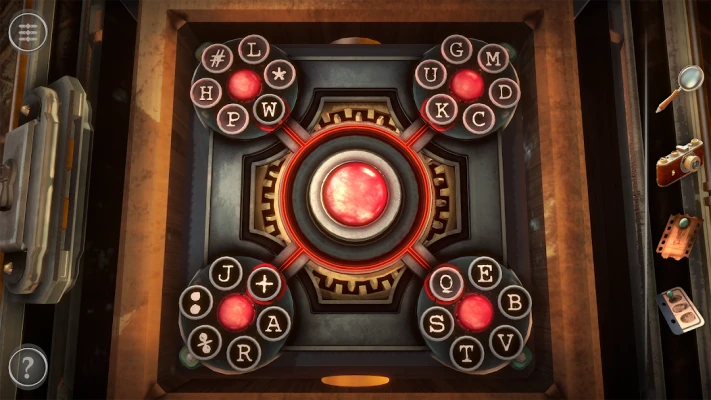
The gameplay focuses on inspecting objects from different angles, manipulating moving components, discovering hidden controls, and understanding how each mechanism works. Solving one puzzle often reveals another layer of the object, creating a satisfying cycle of observation and discovery.
Rather than relying on combat or fast reactions, the game rewards patience, experimentation, and logical thinking.
Story and Setting
The mansion initially appears to be an extraordinary location filled with valuable objects and intricate craftsmanship. However, the strange puzzle boxes scattered throughout the building suggest that something far more unusual is taking place.
As the thief progresses, the atmosphere changes. What begins as a carefully planned burglary gradually develops into a struggle to understand the situation and regain control.
The story unfolds through the environments, the objects you discover, and the increasingly unusual mechanisms you encounter. The mansion itself becomes part of the mystery, encouraging you to look beyond the immediate puzzle and consider why these devices exist.
The combination of elegant architecture, mechanical complexity, and an unsettling narrative gives Boxes: Lost Fragments a distinctive identity among mobile escape games.
Main Gameplay Features
1. Intricate 3D Puzzle Boxes
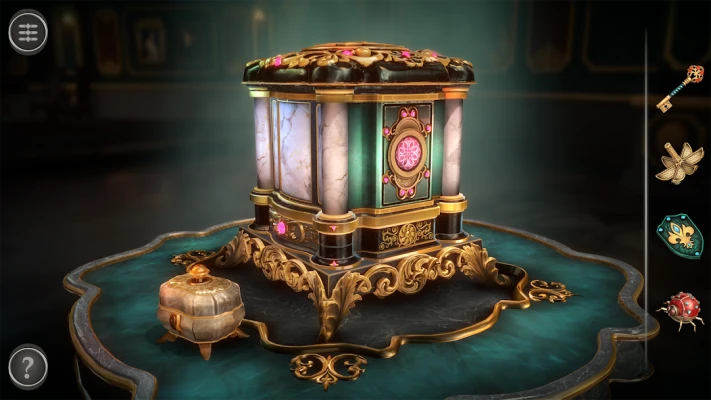
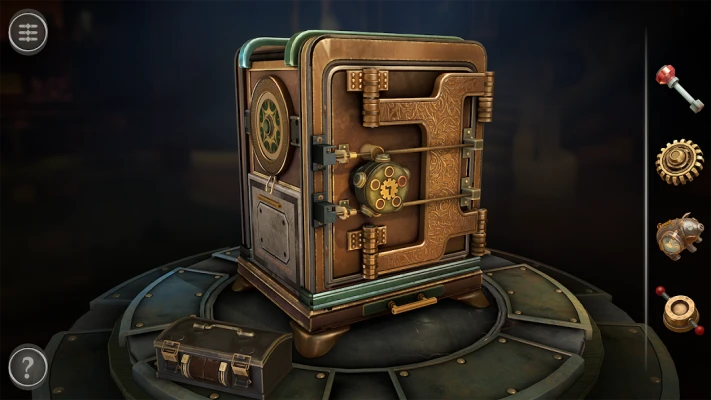
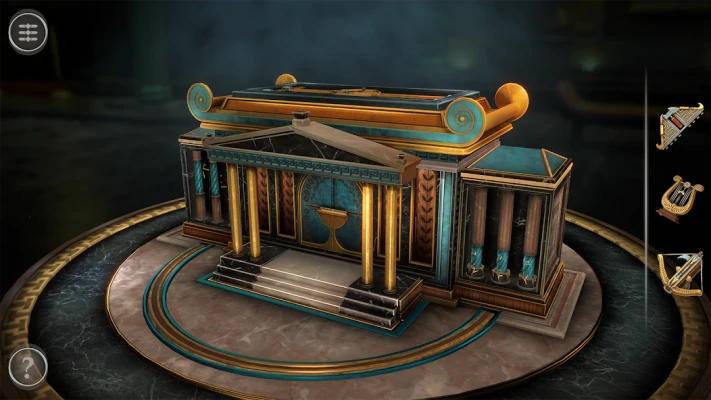
The central attraction is the collection of elaborate mechanical boxes. Each contains moving parts, concealed panels, sliding components, and hidden mechanisms that must be manipulated to reveal what lies inside.
2. Multiple Puzzle Styles
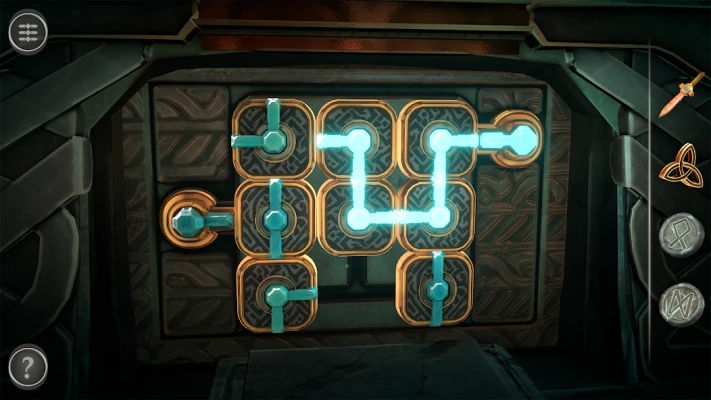
The game includes different puzzle themes, including Victorian, mechanical, classic, architectural, and ancient designs. Some challenges involve manipulating moving parts, while others require matching symbols, aligning components, or interpreting visual clues.
3. Hidden Objects and Secret Compartments
Many important objects are concealed inside the puzzle boxes themselves. A mechanism that appears to be complete may reveal another compartment, switch, or movable part when examined from a different angle.
4. A Mysterious Mansion
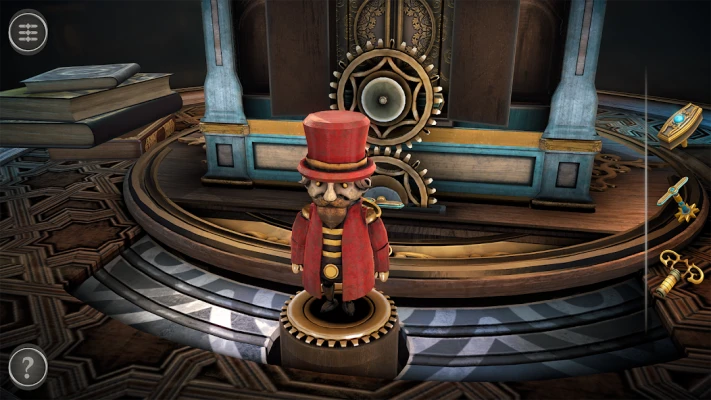
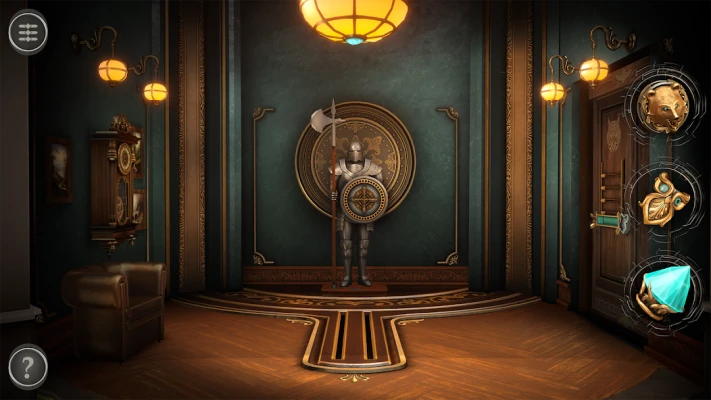
The mansion provides a connecting environment between the puzzle sequences. Its rooms and central mechanisms help tie individual challenges into a larger story about the thief's assignment and the strange circumstances surrounding the building.
5. Atmospheric Sound and Visual Detail
Detailed 3D models, polished animations, mechanical sound effects, and atmospheric music make each interaction feel tactile. The sound of a lock turning or a hidden panel sliding open provides satisfying feedback when a puzzle is solved.
6. Five Chapters and Twenty Puzzle Boxes
The main adventure contains five chapters, each featuring four principal puzzle boxes and a larger connecting mechanism. Completing the individual boxes provides fragments that help unlock the next stage of the mansion.
7. Single-Player and Offline Gameplay
Boxes: Lost Fragments is designed for single-player puzzle solving and supports offline play. You can progress through the adventure at your own pace without needing competitive multiplayer features.
How to Play Boxes: Lost Fragments
Examine the entire box. Rotate the camera to inspect its front, back, sides, and other visible surfaces.
Look for interactive components. Test buttons, handles, sliders, rotating rings, and unusual markings.
Open concealed panels. Moving one component may reveal another mechanism or a new compartment.
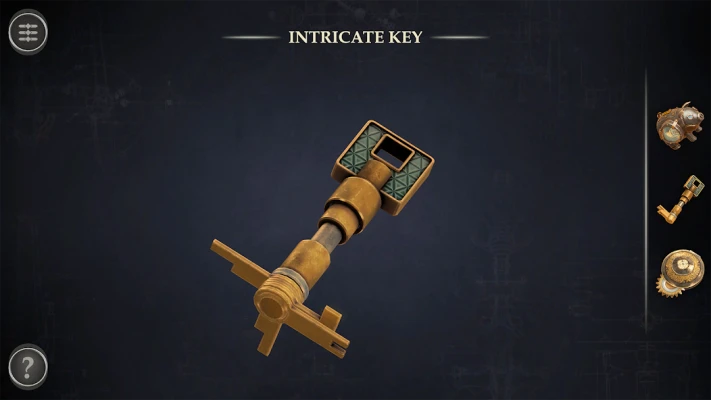
Collect objects. When an item becomes available, add it to your inventory and examine it closely.
Manipulate inventory objects. Rotate or unfold collected objects when possible to discover their intended function.
Use items on suitable mechanisms. Apply keys, handles, and other components where they logically belong.
Solve the internal puzzle. Continue manipulating the box until its hidden object or fragment is released.
Complete the chapter mechanism. Place the collected fragments into the appropriate structure to unlock the next section.
Complete Strategy Guide and Beginner Tips
Tip 1: Rotate Every Box Before Acting
One of the most common mistakes is concentrating only on the front of a puzzle box. Important sliders, buttons, and access panels may be located on its sides or back.
Before making complicated moves, rotate the object and study its entire structure. This gives you a better understanding of how the different components might connect.
Tip 2: Look for Mechanical Relationships
Do not treat every button or lever as an isolated puzzle. A slider might unlock a panel that exposes a second control, which then releases another part of the mechanism.
Think about the order in which components need to be activated. If something moves but does not open, consider whether another part of the box must be adjusted first.
Tip 3: Follow the Feedback From Each Interaction
Pay attention to clicks, changes in position, lighting, and newly exposed components. These reactions indicate whether an action has changed the mechanism.
If a control moves freely but appears to accomplish nothing, inspect the rest of the box for a corresponding change.
Tip 4: Examine Every Collected Item
Inventory objects may contain their own moving parts or hidden features. Rotate them and inspect both sides rather than assuming that their initial appearance tells you everything.
A folded object may need to be transformed before it can be used, while an apparently decorative component might be a key or tool.
Tip 5: Understand Sliding Mechanisms
When a puzzle contains several sliders, move them carefully and observe which panels they affect. Some controls may be blocked until rotating components are aligned correctly.
Instead of repeatedly moving a slider that will not budge, inspect the mechanism for an obstruction or an alignment requirement.
Tip 6: Align Rotating Rings and Discs
Circular mechanisms often require their openings, symbols, or connecting points to line up. Rotate one component at a time and watch how the available movement changes.
When several rings are involved, focus on aligning the relevant openings before attempting to move the next part.
Tip 7: Search for Concealed Buttons
Some of the game's most easily overlooked interactions are small switches or buttons hidden among decorative details. Examine unusual markings, recessed areas, and components that appear slightly different from the surrounding surface.
If a box seems finished but has not released its contents, look for another interaction before starting over.
Tip 8: Use the Inventory as Part of the Puzzle
A puzzle may require an item that you have already collected, but the item might need to be rotated, opened, or adjusted first.
When an object does not fit, inspect it again and consider whether it has another configuration. Avoid assuming that an apparently unsuitable item is useless.
Tip 9: Keep Track of Completed Mechanisms
If you are working through a particularly complicated box, mentally separate completed sections from unfinished ones. This helps prevent repeated work and makes it easier to identify which component remains unresolved.
Once a mechanism has clearly opened, move on to the newly revealed section instead of continuing to manipulate it unnecessarily.
Tip 10: Use Hints Strategically
If you become stuck, the game's hint assistance can help you understand the next step. Use it after examining all sides of the box and checking your inventory.
For a more rewarding experience, try to identify the missing connection yourself before requesting help. If a puzzle becomes frustrating, a hint can restore your momentum without requiring you to abandon the adventure.
Advanced Puzzle-Solving Strategies
Build a Mental Map of Each Box
Think of a puzzle box as a connected system with several stages:
Initial controls that reveal the first compartment.
Newly exposed mechanisms that unlock additional parts.
Inventory objects needed to operate specific components.
Final mechanisms that release the hidden object.
This approach makes complex boxes easier to understand because you can focus on one stage at a time.
Change Only One Variable at a Time
When adjusting several rotating parts or sliders, avoid making a long sequence of random movements. Move one component, observe the result, and then decide what to try next.
This method helps you understand the relationship between controls and reduces the chance of losing track of a useful configuration.
Treat New Compartments as Fresh Evidence
Whenever a panel opens, stop and examine the newly revealed section before interacting with everything at once. It may contain an item, a clue, or another small mechanism.
Understanding what has changed is often more useful than immediately trying to activate every available control.
Use Visual Patterns Rather Than Guesswork
Look for repeated shapes, matching symbols, grooves, and alignment points. These details often suggest how a mechanism is intended to operate.
If a puzzle involves matching or arranging components, compare the available pieces with the surrounding design before trying different combinations.
Connect the Boxes to the Chapter Progression
Completing a puzzle box is only part of the larger adventure. Keep track of the fragments you collect and where they belong in the mansion's central mechanism.
If you have solved the available boxes but cannot progress, revisit the connecting area and check whether all the required fragments have been placed.
Walkthrough Guide: All Five Chapters
The following overview explains the game's progression without revealing every individual puzzle solution.
Chapter 1: Initium
The first chapter introduces the main interaction mechanics, including sliding controls, rotating components, concealed compartments, and keys.
Take your time learning how the boxes respond to your actions. The skills developed here will help you understand more complicated mechanisms later.
Complete the four principal boxes, collect their fragments, and use them in the mansion's connecting mechanism to advance.
Chapter 2: Nexus
The second chapter builds on the basic mechanics and introduces more elaborate interactions between components.
Look for relationships between the different controls and pay attention to how opening one section can expose another. Inventory management becomes increasingly important as the mechanisms grow more involved.
Finish the four boxes and use the collected fragments to unlock the next chapter.
Chapter 3: Cognito
This chapter continues the progression toward more intricate mechanical and visual challenges. Carefully examine the newly introduced components and look for clues that indicate how they should be arranged.
If a puzzle seems unfamiliar, return to the basic principles established earlier: inspect every side, identify movable parts, and test one logical action at a time.
Complete the chapter's boxes and activate the connecting mechanism to continue.
Chapter 4: Fractus
The fourth chapter presents further challenges built around the game's combination of mechanical interactions and hidden-object puzzles.
Avoid rushing through complicated mechanisms. Some solutions become clear only after you uncover a secondary panel or obtain a useful object.
Finish all four principal boxes and collect the fragments needed for the next stage.
Chapter 5: Aurora
The final chapter brings the puzzle-box adventure toward its conclusion. Use the experience gained in previous chapters to approach the most complicated mechanisms methodically.
Check your inventory, inspect every newly exposed component, and pay attention to the relationship between individual puzzles and the larger mystery.
Completing the final challenges brings the adventure to its ending and reveals more about the circumstances surrounding the mansion.
Difficulty and Game Length
Boxes: Lost Fragments is accessible to newcomers but includes puzzles that may require patience and careful observation.
Genre: 3D puzzle and escape-room adventure.
Perspective: Rotatable 3D object inspection.
Structure: Five chapters with four main puzzle boxes per chapter.
Main challenge: Mechanical reasoning, hidden objects, and visual puzzles.
Combat: None as a central gameplay feature.
Game mode: Single-player.
Offline support: Yes.
Estimated playtime: Several hours for the complete adventure, depending on your puzzle-solving experience and use of hints.
The game works well for players who prefer thoughtful problem-solving to fast-paced action.
Graphics, Sound, and Atmosphere
One of the strongest aspects of Boxes: Lost Fragments is its attention to mechanical detail. The puzzle boxes have a crafted, almost tangible appearance, with moving components that encourage close inspection.
The mansion's elegant surroundings contrast with the increasingly unsettling mystery. As you progress, the game gradually shifts from the satisfaction of solving intricate devices toward questions about why these objects exist and what the thief has become involved in.
Sound design strengthens this experience. Mechanical clicks and opening panels provide useful feedback, while the music helps maintain a mysterious atmosphere.
The result is a visually polished puzzle adventure that makes the act of examining and manipulating objects feel rewarding.
Advantages and Disadvantages
Pros
Detailed 3D mechanical puzzle designs.
A wide variety of box themes and mechanisms.
Satisfying object manipulation and animations.
Hidden compartments encourage careful exploration.
Five connected chapters and a developing mystery.
Helpful hint assistance when puzzles become difficult.
Offline single-player gameplay.
No need for fast reflexes or combat skills.
Cons
Some interactions can be difficult to spot.
Repeatedly checking every surface may slow progress.
Certain puzzle patterns can become familiar over time.
Players seeking extensive character development may find the story secondary to the puzzles.
The free portion is limited compared with the full paid adventure.
Is Boxes: Lost Fragments Worth Playing?
Boxes: Lost Fragments is a strong choice for fans of escape-room games who enjoy detailed mechanisms, tactile interactions, and puzzles that gradually reveal their solutions.
Its biggest strength is the design of the puzzle boxes. Rather than simply asking players to select the correct answer, it lets them manipulate the objects, discover concealed controls, and watch the mechanisms respond.
The story provides a reason to keep progressing, although the puzzles and visual presentation are the main attractions. Players who prefer long narratives, open-world exploration, or action-heavy gameplay may find the experience too focused.
For puzzle fans, however, the combination of mechanical creativity, polished presentation, and steadily unfolding mystery makes it an appealing adventure.
Similar Games
The Room
A series of atmospheric puzzle adventures built around intricate objects, hidden compartments, and mechanisms that require close inspection.
Doors: Paradox
A relaxing puzzle game featuring miniature environments, hidden objects, and interconnected mechanisms.
The House of Da Vinci
A mechanical puzzle adventure that emphasizes invention-inspired devices, secret passages, and complex environmental interactions.
Myst
A classic mystery adventure that rewards exploration, observation, and the ability to connect clues across unfamiliar environments.
These games offer similar satisfaction for players who enjoy understanding how complicated objects work and discovering what lies beneath their surfaces.
Frequently Asked Questions
What is Boxes: Lost Fragments?
Boxes: Lost Fragments is a 3D escape-room puzzle game in which a thief enters a mysterious mansion and encounters elaborate mechanical boxes. Solving the puzzles reveals hidden objects and advances the story.
Who developed Boxes: Lost Fragments?
The game was developed by Big Loop Studios and published by Snapbreak.
Is Boxes: Lost Fragments free to play?
The game offers an introductory portion for free, with the full adventure available through an in-app purchase. Availability and pricing may vary by region and platform.
How many chapters are in Boxes: Lost Fragments?
The main adventure contains five chapters, each featuring four principal puzzle boxes and a larger connecting mechanism.
Is Boxes: Lost Fragments difficult?
Most puzzles can be approached through careful observation and logical experimentation, but some mechanisms require several steps or attention to small details. Hints are available when you need assistance.
Can you play Boxes: Lost Fragments offline?
Yes. The game is listed as supporting offline play, so you can enjoy the single-player puzzle adventure without a continuous internet connection.
Does Boxes: Lost Fragments have combat?
No. The core gameplay focuses on mechanical puzzles, object inspection, hidden compartments, and solving the mansion's mystery.
How do you solve difficult puzzle boxes?
Rotate the box to inspect every surface, identify movable components, test one action at a time, and examine newly revealed compartments. If a control does not work, look for an alignment requirement or a missing inventory item.
What should I do if a box will not open?
Check every side for hidden controls, make sure all visible mechanisms have been activated, and inspect any items you have collected. Some boxes require multiple stages before the final compartment becomes accessible.
Is Boxes: Lost Fragments suitable for beginners?
Yes. The early puzzles introduce the basic mechanics, making the game approachable for newcomers to escape-room adventures. More complicated puzzles gradually require closer observation and better reasoning.
What makes Boxes: Lost Fragments different from other puzzle games?
Its emphasis on detailed, rotatable 3D objects gives the puzzles a physical quality. Players manipulate intricate mechanisms directly instead of solving every challenge through menus or abstract screens.
Final Verdict
Boxes: Lost Fragments turns mechanical curiosity into a satisfying puzzle adventure. Its carefully designed boxes, concealed compartments, and increasingly strange story create a strong reason to keep investigating.
The best approach is to examine every surface, observe how each component behaves, and treat every newly opened panel as a clue. If you enjoy escape-room challenges and intricate objects that reward patience, this game offers a memorable experience.
Rate the Game
User Reviews










Popular Games



















 Android
 iOS
 Windows
 Xbox