
Latest Version
October 28, 2026
DogByte Games
Action
0
com.dogbytegames.zombiesafari
Report a Problem
More About :game
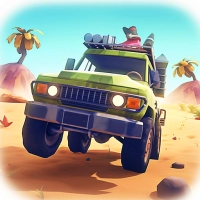
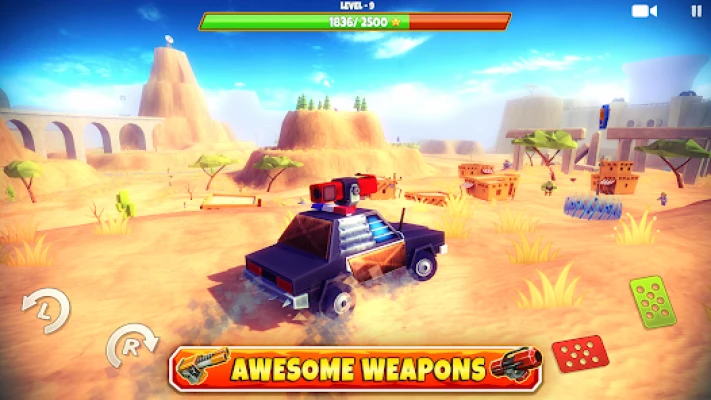
The game gives players the freedom to explore at their own pace. You can complete challenges, discover secret locations, collect treasure chests, climb mountains, unlock new vehicles, and use different weapons to fight zombies. With multiple regions, unique vehicles, and a special low-gravity Moon map, Zombie Offroad Safari offers a varied experience for players who enjoy driving games, zombie action, and open-world adventures.
What Is Zombie Offroad Safari?
Zombie Offroad Safari is a sandbox-style driving game that combines off-road vehicle simulation with action-packed zombie encounters. Instead of following a strictly linear campaign, players can explore the environment freely, discover activities, and choose which challenges to tackle.
The world is designed around exploration and experimentation. Mountains, rough terrain, hidden locations, and zombie-infested areas encourage players to test their driving skills and discover new routes. Vehicles are more than just transportation because they can help players cross difficult landscapes, reach elevated areas, and survive encounters with the undead.
Progress comes from exploring the maps, completing challenges, collecting rewards, and unlocking additional equipment. As players advance, they can access more vehicles and weapons, making it easier to tackle difficult areas and more demanding objectives.
Main Features of Zombie Offroad Safari
Open-World Off-Road Exploration
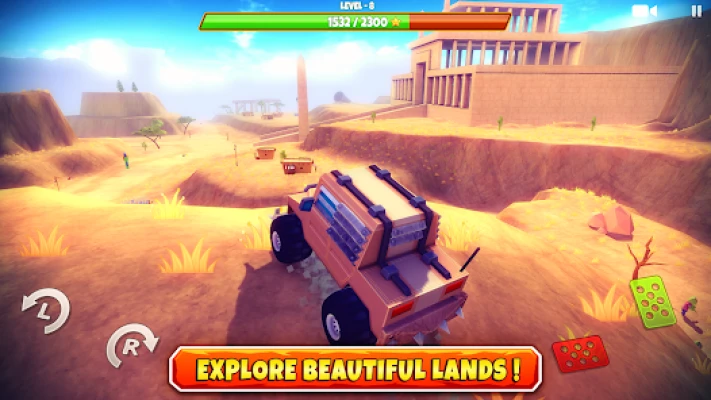
The game features six sandbox regions containing different landscapes, obstacles, secrets, and activities. Players can drive freely instead of being restricted to a single road or predetermined route.
Exploration is an important part of the experience. Some rewards are located away from obvious paths, while other objectives require players to climb hills, cross rough terrain, or investigate unusual landmarks.
A Variety of Vehicles
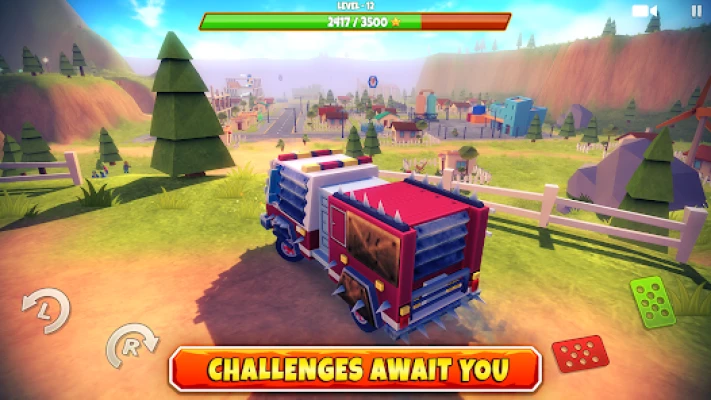
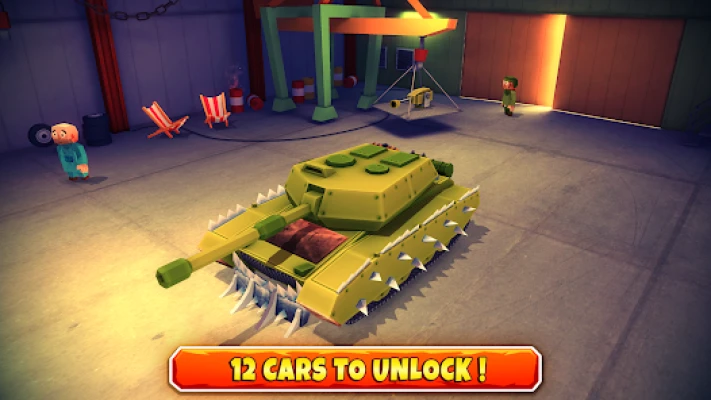
Zombie Offroad Safari includes 12 unlockable vehicles, each offering its own characteristics and abilities. The available selection includes 4x4 off-roaders, monster trucks, police cars, fire trucks, and an armored personnel carrier.
Choosing the right vehicle can make a significant difference. Some vehicles are better suited to climbing, while others are useful for crossing obstacles or handling dangerous areas.
Weapons and Zombie Combat
Players can unlock weapons such as machine guns, shotguns, rocket launchers, and electric weapons. These tools help deal with the different zombie types found throughout the world.
Combat can take place while exploring on foot or using the game's vehicle-based action mechanics. Choosing suitable equipment and controlling your position are important when confronting groups of enemies.
Hidden Treasure Chests
Treasure chests are scattered throughout the maps and provide rewards that support progression. Finding them requires curiosity, careful observation, and a willingness to explore places beyond the main routes.
Some chests are easy to reach, while others require climbing, navigating narrow paths, or discovering less obvious locations.
Challenges and Special Objectives
The game includes several types of challenges, including checkpoint hunts, path-finding activities, and boss fights. These objectives test different skills, from accurate driving to route planning and combat.
Completing challenges provides an alternative to simply exploring the environment and helps players make progress toward additional rewards.
Explorer Flags and Mountain Climbing
Explorer flags are placed on high points throughout the world. Reaching them often requires patience and good vehicle control.
Finding these flags encourages players to explore mountain routes, test vehicle climbing abilities, and search for elevated locations that might otherwise be overlooked.
Special Moon Map
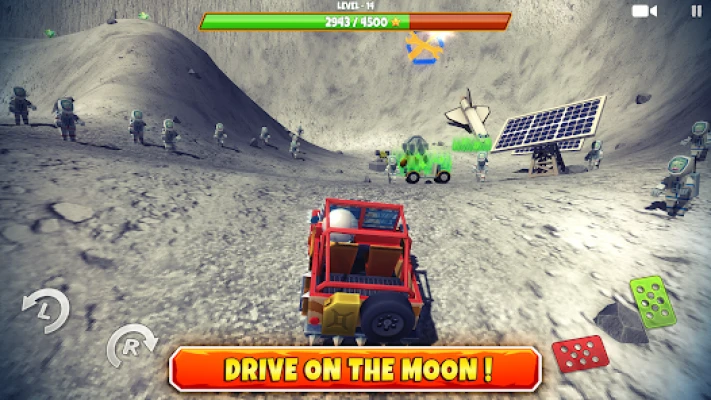
The Moon map introduces low-gravity driving, creating a different experience from the regular environments. Vehicles respond differently when gravity is reduced, making jumps, landings, and acceleration less predictable.
Players who learn to control their vehicles in this environment can enjoy a different kind of off-road challenge.
On-Foot Exploration
The game also allows players to leave their vehicles and explore on foot. This feature opens access to certain locations and hidden loot that cannot always be reached while driving.
Walking introduces additional danger because zombies can threaten players outside their vehicles. Knowing when to leave the car and when to return to it is an important part of successful exploration.
Gameplay Mechanics Explained
Driving and Vehicle Control
Driving is the foundation of Zombie Offroad Safari. Players must control acceleration, steering, and braking while responding to the terrain.
Smooth driving is often more effective than constant high-speed acceleration. Sharp turns, steep slopes, and uneven surfaces can cause vehicles to lose control or become stuck.
Learning how a vehicle responds to different surfaces helps players navigate more efficiently and avoid unnecessary setbacks.
Vehicle Upgrades
Upgrades improve vehicle performance and help players deal with more difficult terrain. Durability and speed are especially important because they affect how efficiently a vehicle can travel and how well it handles demanding situations.
Rather than spending resources on every available option immediately, focus on upgrades that support your current objectives.
Weapon Selection
Different weapons suit different encounters. A weapon that works well against nearby enemies might be less convenient when dealing with threats from a distance.
Understanding weapon behavior helps players conserve ammunition or other limited resources where applicable and avoid wasting time during combat.
Exploration and Progression
The game rewards players who combine exploration with objective completion. Driving around randomly can be entertaining, but exploring with a clear goal often produces better results.
A productive session might involve finding nearby treasure, completing a challenge, collecting an explorer flag, and then moving to another part of the map.
Power-Ups
Power-ups provide temporary advantages that can make particular sections easier. Their value depends on the situation, so using them at the right time is more effective than activating them without considering the objective.
Complete Strategy Guide for Zombie Offroad Safari
Getting Started as a Beginner
When starting the game, spend some time learning the controls before attempting the most difficult challenges. Practice turning, braking, accelerating, and approaching slopes at different speeds.
Avoid treating every open area as a race. The goal is not always to reach a destination as quickly as possible. Sometimes, a slower approach helps you discover treasure, avoid obstacles, or find a better route.
Begin by exploring accessible parts of the first available region. Look for nearby treasure chests and straightforward challenges to become familiar with the gameplay systems.
Use the early stages to develop a basic understanding of vehicle handling, enemy behavior, and map navigation. These skills will become increasingly valuable as you explore more demanding areas.
How to Choose the Best Vehicle
There is no single vehicle that is ideal for every situation. The best choice depends on the terrain, the objective, and your preferred driving style.
For general exploration, choose a vehicle that feels predictable and can handle uneven ground. A capable off-roader is useful when you need to move between different locations without constantly struggling against the terrain.
For steep hills and rocky routes, prioritize climbing ability and stability. A vehicle that can maintain traction is usually more useful than one that is extremely fast but difficult to control.
For obstacles that require extra clearance or a more powerful approach, a monster truck may be a useful option. Larger vehicles can help with certain terrain challenges, although their handling may differ from smaller vehicles.
For combat-oriented activities, consider the vehicle's practical performance and how comfortably you can engage enemies. A vehicle that lets you approach, attack, and retreat reliably may be more useful than one chosen purely for speed.
Experiment with the vehicles you unlock. Testing them on familiar routes is a good way to understand their strengths before taking them into difficult areas.
How to Upgrade Vehicles Efficiently
Vehicle upgrades can make exploration more comfortable and help you complete objectives that were previously difficult.
Start by improving durability and general driving performance. A vehicle that survives difficult terrain and remains controllable can save considerable time during long exploration sessions.
Next, consider speed when your goals involve checkpoint challenges or covering large distances. Greater speed can improve travel efficiency, but it is most useful when you can still control the vehicle safely.
Avoid upgrading several vehicles without a clear reason. Concentrating your resources on a dependable main vehicle can be more practical than spreading them across vehicles you rarely use.
As you unlock additional vehicles, compare their capabilities before deciding which ones deserve further investment. Keep specialized vehicles available for the situations in which they perform best.
How to Find Hidden Treasure Chests
Treasure hunting is one of the most rewarding activities in Zombie Offroad Safari. Many chests are placed away from the most obvious routes, encouraging players to investigate the environment carefully.
Start by scanning the landscape for unusual structures, isolated platforms, narrow passages, and elevated areas. A visible path may lead to a reward, but some locations require you to approach from another direction.
When exploring a mountain, examine its sides rather than driving directly toward the summit. Look for ledges, ramps, and alternate routes that might provide a safer way upward.
If a chest appears unreachable, do not immediately assume you need a faster vehicle. The solution may involve a different approach, a more suitable vehicle, or an on-foot route.
Search buildings and enclosed locations when exploring on foot. Some places are easier to investigate after leaving your vehicle, but check the surrounding area for zombies before doing so.
Develop a systematic search pattern. Explore one section thoroughly before moving to the next, and remember the locations you have already checked. This reduces unnecessary backtracking.
How to Reach Explorer Flags
Explorer flags often require careful climbing and precise vehicle control. Rushing toward a flag can cause you to slide off a slope or miss a narrow path.
Approach steep hills at a controlled speed. Build enough momentum to climb, but avoid accelerating so aggressively that the vehicle becomes difficult to steer.
Look for natural ramps, flatter sections, and paths that gradually gain elevation. A longer route can be more reliable than attempting a direct climb up a nearly vertical surface.
If your vehicle repeatedly fails to reach the same location, reconsider your approach. Try a different route or use a vehicle better suited to the terrain.
Near the summit, reduce your speed and make small steering adjustments. Narrow ledges are easier to navigate when you avoid sudden movements.
Reaching an explorer flag is not only about power. Patience, route selection, and understanding vehicle behavior are equally important.
How to Complete Checkpoint Challenges
Checkpoint challenges reward players for navigating a course and reaching designated points efficiently.
Before accelerating, take a moment to understand the route. Identify major turns, obstacles, and sections where you may need to slow down.
Maintain speed on broad, relatively safe stretches, but reduce acceleration before sharp turns. Entering a corner too quickly can force you off the route and cost more time than controlled driving.
Avoid unnecessary detours unless they help you avoid a major obstacle. The most efficient route is usually the one that balances direct travel with reliable vehicle control.
If you fail a challenge, remember where the difficulty occurred. Repeating the same approach without changing anything is unlikely to improve your result.
Practice the difficult section, adjust your speed, and learn where to accelerate. With experience, checkpoint challenges become easier to manage.
How to Approach Path-Finding Challenges
Path-finding activities require you to identify a workable route through the environment.
Look beyond the most direct line between your starting point and destination. Mountains, rocks, gaps, and other obstacles can make a seemingly short route inefficient.
Study the terrain and search for slopes that can be climbed safely. Use wider paths when possible, especially if your vehicle struggles with tight turns.
If you encounter a dead end, reverse carefully and choose another route rather than repeatedly attempting the same obstacle.
These challenges are a good opportunity to learn how different vehicles behave on uneven surfaces. Pay attention to which slopes are manageable and which obstacles require another approach.
How to Defeat Bosses
Boss fights demand a different approach from ordinary exploration. Instead of concentrating only on movement, pay attention to enemy behavior and opportunities to attack.
Choose an appropriate weapon before entering the encounter. A weapon with suitable range or damage can make it easier to deal with a dangerous target.
Keep moving when necessary, but avoid driving so recklessly that you lose control of your position. A predictable route can leave you vulnerable, while uncontrolled movement can make aiming difficult.
Watch for moments when the boss is easier to attack. Use these opportunities to deal damage instead of firing without a clear plan.
If the encounter becomes difficult, review your equipment and vehicle choice. A more suitable setup or additional upgrades may help more than simply repeating the fight.
How to Use Weapons Effectively
Machine guns are useful for sustained attacks when you need to keep pressure on enemies. Learn how to aim while moving and avoid wasting time firing when targets are out of reach.
Shotguns are generally better suited to closer encounters, where their attack pattern can be more effective. Avoid relying on close-range attacks when several dangerous enemies surround you.
Rocket launchers can provide powerful attacks, making them worth considering for demanding combat situations. Be mindful of your position and avoid firing carelessly in situations where your own movement could create problems.
Electric weapons offer another combat option and can be useful when their attack behavior suits the encounter.
The best weapon is the one that fits your immediate objective. Before entering a difficult area, consider whether you need sustained attacks, close-range power, or a different combat approach.
How to Survive Zombie Encounters on Foot
Leaving your vehicle can help you reach hidden loot and explore locations that cannot be accessed by driving. However, walking exposes you to enemies in a different way.
Before exiting, stop somewhere with enough room to move and inspect the nearby area. Avoid leaving your vehicle in the middle of a dense group of zombies if you can choose a safer position.
Explore buildings and narrow passages carefully. Watch for enemies that may approach while your attention is focused on searching for loot.
Use your available defensive actions when zombies get too close. The game includes a kick for self-defense, but it is safer to avoid unnecessary close contact whenever possible.
Return to your vehicle when the area becomes too dangerous or when you have finished collecting nearby rewards. Your vehicle can provide a faster way to escape and continue exploring.
How to Explore Dangerous Regions
Some regions contain more demanding terrain and more dangerous enemies than others. These locations are easier to explore when you have suitable equipment and a clear objective.
Before entering a difficult region, upgrade your main vehicle and choose weapons that fit the expected encounters.
Avoid exploring the entire area without a plan. Start with accessible routes, identify useful landmarks, and gradually move toward more difficult objectives.
If the terrain threatens to trap or damage your vehicle, stop and look for another path. Repeatedly forcing your way through a dangerous obstacle can waste time and make the return journey harder.
Take advantage of the freedom offered by the open world. If a particular challenge proves too difficult, explore another area and return when you have improved your equipment.
How to Explore the Deadland Area
Deadland is a particularly dangerous area associated with the Canyon region. Lava can destroy vehicles quickly, and stronger zombies make the area more demanding.
Prepare before entering. Improve your vehicle, become comfortable with its handling, and make sure you understand the route you intend to follow.
Treat lava as a serious environmental hazard rather than an obstacle to cross casually. Maintain control near dangerous edges and avoid unnecessary jumps that could send your vehicle into hazardous terrain.
Explore carefully and prioritize reachable rewards. If you are struggling to navigate the area, leave and improve your equipment before trying again.
How to Master the Moon Map
The Moon map introduces low gravity, changing the way vehicles behave during jumps and landings.
Do not expect your vehicle to respond exactly as it does on ordinary terrain. Momentum carries you differently, and airborne movement can last longer than expected.
Use moderate acceleration when approaching jumps until you understand how your vehicle behaves. Avoid making abrupt steering corrections while airborne unless you have learned how the controls respond.
Plan your landing by considering the ground ahead. A jump is only useful if you can land safely and continue moving toward your objective.
Experiment with different vehicles on familiar sections of the map. Learning their behavior in low gravity can make exploration more enjoyable and reduce frustrating crashes.
How to Use Power-Ups Strategically
Power-ups are most valuable when they solve a specific problem or help you complete a demanding objective.
Use a relevant boost when crossing a difficult section, completing a timed challenge, or dealing with a situation that requires additional performance.
Avoid wasting an advantage during an easy stretch when ordinary driving is sufficient. Save useful effects for moments when they can make a noticeable difference.
Combine power-ups with good route planning. A boost cannot compensate for choosing an unnecessarily dangerous path or approaching a narrow turn without reducing speed.
How to Make Progress Without Wasting Resources
A balanced approach to progression is more effective than focusing on only one activity.
Collect accessible treasure, complete challenges that match your current abilities, and improve a dependable vehicle. These activities support one another and make it easier to explore more demanding areas.
Do not spend resources simply because an upgrade is available. Consider whether it will help with your next goal.
If you are trying to reach a difficult mountain, prioritize climbing and control. If you are preparing for a long journey, general performance and durability may be more useful.
Regularly review which activities remain unfinished. Returning to nearby objectives can be more efficient than traveling across the entire map for a single reward.
Advanced Tips and Tricks
Learn the Terrain Before Driving Fast
Speed is useful, but it is not always the best solution. Spend time learning difficult routes before attempting them at full speed.
Recognizing slopes, sharp turns, narrow ledges, and dangerous drops helps you anticipate problems instead of reacting too late.
Use Momentum Carefully
Momentum can help a vehicle climb hills and cross rough ground, but too much speed can also cause you to lose control.
Approach each obstacle according to its shape. Build speed when a climb requires it, then reduce acceleration when steering precision becomes more important.
Explore Beyond the Main Routes
Visible roads are convenient, but hidden rewards may be placed away from them. Inspect unusual formations, elevated platforms, isolated buildings, and areas that seem difficult to reach.
Explore with a suitable vehicle and avoid attempting every obstacle directly. Sometimes a different route reveals an easier way to reach the same destination.
Keep Track of Unfinished Objectives
Remembering where you found a challenge or which locations remain unexplored helps reduce unnecessary travel.
Complete nearby activities together whenever practical. This approach makes exploration more organized and helps you collect several rewards during a single trip.
Switch Vehicles When Necessary
Do not insist on using the same vehicle for every objective. If a particular vehicle struggles with a climb or handles poorly in a tight area, try another option.
Different vehicle characteristics can make a difficult challenge more manageable. Learning when to switch is an important part of mastering the game.
Combine Exploration With Combat
When traveling through zombie-infested regions, pay attention to your surroundings and avoid unnecessary fights that distract you from your objective.
Use your weapons when enemies threaten your progress or when combat is part of a challenge. Otherwise, maintaining a safe route may be more efficient than stopping to engage every zombie.
Common Mistakes to Avoid
Driving Too Fast on Difficult Terrain
Excessive speed makes it harder to react to sudden obstacles, sharp turns, and narrow paths. Reduce your speed when approaching unfamiliar terrain and accelerate only when you have enough room to maintain control.
Ignoring Vehicle Upgrades
Trying to complete difficult objectives with an unsuitable vehicle can make progress unnecessarily frustrating. Improve your main vehicle before tackling demanding terrain or dangerous encounters.
Exploring Without a Clear Goal
Wandering around can be enjoyable, but it may lead to repeated travel and missed opportunities. Set a simple objective for each exploration session, such as collecting nearby treasure or completing a particular challenge.
Leaving the Vehicle in Dangerous Areas
On-foot exploration is useful, but leaving your vehicle near a large group of zombies can make it harder to escape. Check the surroundings before exiting and return to the vehicle when the area becomes unsafe.
Repeating Failed Routes Without Adjustments
If a route repeatedly causes problems, change your approach. Try a different angle, reduce your speed, build momentum more carefully, or select a vehicle that handles the terrain better.
Spending Resources Without Prioritizing
Upgrading every available vehicle can slow your progress. Concentrate on equipment that directly supports your next goals and expand your collection as you earn more resources.
Recommended Progression Plan
Early Game: Learn and Explore
Focus on mastering the driving controls, discovering nearby treasure chests, and completing straightforward challenges. Use this stage to identify a dependable vehicle and understand how it responds to rough terrain.
Avoid difficult regions until you feel comfortable navigating basic slopes and obstacles.
Mid Game: Upgrade and Expand
As you unlock more vehicles and weapons, experiment with different combinations. Improve your main vehicle and begin tackling more demanding challenges.
Explore new regions methodically, collect explorer flags, and look for hidden locations that offer useful rewards.
Advanced Game: Complete Difficult Objectives
Once you have suitable equipment and stronger driving skills, focus on more demanding challenges, dangerous areas, and difficult treasure locations.
Experiment with specialized vehicles, improve your approach to boss fights, and learn the best routes for difficult climbs.
Completion Phase: Search for Remaining Rewards
Return to areas where you have unfinished objectives. Look for missed treasure chests, unexplored locations, and explorer flags you have not yet collected.
Use your experience to identify alternative routes and reach places that seemed impossible during your first visit.
Is Zombie Offroad Safari Worth Playing?
Zombie Offroad Safari is a strong choice for players who enjoy open-world driving, off-road exploration, vehicle upgrades, and zombie combat. Its combination of free exploration and optional challenges gives players the freedom to choose between relaxed driving and more demanding objectives.
The variety of vehicles and weapons helps keep gameplay interesting, while hidden treasure, mountain climbs, and the low-gravity Moon map encourage experimentation.
Players who prefer a strictly story-driven experience may find the sandbox structure less focused than a traditional campaign. However, those who enjoy discovering secrets, improving their vehicles, and setting their own goals can find plenty to explore.
The game is listed as free to download on Google Play and includes advertisements and optional in-app purchases. Its store listing also identifies single-player gameplay and a Teen content rating.
Frequently Asked Questions
What is Zombie Offroad Safari?
Zombie Offroad Safari is an open-world off-road driving and action game developed by DogByte Games. Players explore zombie-infested regions, drive different vehicles, use weapons, complete challenges, and search for hidden rewards.
How many maps are available in Zombie Offroad Safari?
The game advertises six sandbox regions to explore, including a Moon map with low-gravity driving mechanics.
How many vehicles can players unlock?
The game features 12 unlockable vehicles, including off-roaders, monster trucks, police cars, fire trucks, and an armored personnel carrier.
Can you use weapons in Zombie Offroad Safari?
Yes. The game includes weapons such as machine guns, shotguns, rocket launchers, and electric weapons for fighting zombies.
Can you leave your vehicle?
Yes. On-foot exploration allows players to search certain buildings and locations for loot. However, leaving the vehicle can expose you to nearby zombies.
How do you find hidden treasure chests?
Explore beyond obvious roads, inspect unusual landmarks, investigate buildings, and search elevated locations. Some chests require careful driving or an approach on foot.
What are explorer flags?
Explorer flags are collectibles positioned on high points around the world. Reaching them often requires careful route planning and capable vehicle handling.
How can you improve your vehicle?
The game supports vehicle upgrades that improve performance, including durability and speed. Focus on the improvements that best match the terrain and challenges you intend to tackle.
Is Zombie Offroad Safari free to play?
The Google Play listing identifies the game as free to download, with advertisements and optional in-app purchases.
Can you play Zombie Offroad Safari offline?
The game has been listed as supporting offline play by third-party app catalogs. Availability can depend on the specific feature, version, or circumstances, so check the installed game if you need to play without an internet connection.
What is the best strategy for beginners?
Learn the driving controls, explore accessible areas, collect nearby treasure, complete easier challenges, and upgrade a reliable vehicle before attempting difficult climbs or dangerous regions.
Final Thoughts
Zombie Offroad Safari combines open-world exploration, off-road driving, zombie combat, and treasure hunting in a flexible sandbox experience. Its appeal comes from the freedom to choose your own objectives, discover hidden locations, experiment with different vehicles, and improve your equipment as you progress.
The most effective strategy is to balance exploration with preparation. Learn the terrain, choose vehicles that suit each challenge, upgrade carefully, and avoid rushing into dangerous areas without a plan. With patience and practice, players can explore more of the world, complete demanding challenges, and uncover the rewards hidden throughout the post-apocalyptic landscape.
Rate the Game
User Reviews














Popular Games



















 Android
 iOS
 Windows
 Xbox