




Latest Version
October 26, 2026
Rollic Games
Action
iOS
0
Report a Problem
More About :game
Endless Puncher Game Overview
Endless Puncher combines arcade-style combat with RPG-inspired upgrades and equipment collection. Its central objective is straightforward: defeat incoming enemies, survive as long as possible, earn rewards, and improve your fighter for future battles.
Combat revolves around punching enemies while choosing abilities that increase damage, improve survival, or help clear large groups. As you progress, you gain access to equipment, talent upgrades, pets, collectibles, and other systems that expand your combat options.
The game also includes a range of equipment rarities, upgrade mechanics, and progression features that help players strengthen their characters over time. Recent versions have introduced a hero system, additional equipment tiers, equipment gems, and improvements to item management.
Endless Puncher is suitable for players who enjoy action games with incremental progression. Although the combat is easy to understand, making smart upgrade decisions becomes increasingly important as enemies grow stronger and later stages demand more effective builds.
Main Features of Endless Puncher
Wave-based fighting
Fight groups of enemies using punches and selected abilities. Each run challenges you to deal enough damage while staying alive against incoming attacks.
Combat abilities
Choose from different attacks and special skills that improve your ability to handle enemy waves. Options shown in the game include Fire Punch, Missile Punches, and Punch Meteor.
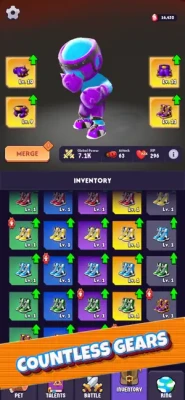
Equipment collection and merging
Collect equipment, compare its attributes, and merge compatible items to improve your loadout. The equipment system has been expanded with higher rarity tiers and additional upgrade options.
Hero system
The hero system allows you to collect special heroes that fight alongside you or help you in combat. Each hero has unique skills and abilities that can be improved to increase their effectiveness.
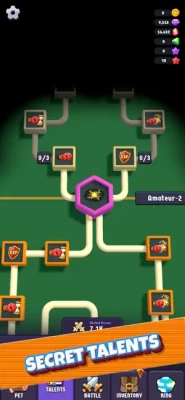
Talent tree
Invest in permanent character improvements to develop your preferred fighting style. The expanding talent tree provides long-term progression opportunities.
Pets and collectibles
Pets contribute additional benefits, while collectibles offer another way to develop your account. Improving these systems can support your progress through more challenging stages.
Equipment gems
Equipment above Rare rarity can have gem slots. Equipping suitable gems and merging them into higher rarities provides another way to strengthen your build.
Multiple biomes and dungeons
Explore different environments and take on additional challenges. Dungeons provide alternative activities and rewards that can help you develop your character.
How to Play Endless Puncher
Start Your First Run
Begin by entering a stage and fighting the incoming enemies. Learn how your punches work, observe how quickly enemies approach, and pay attention to your health as the fight develops.
During a run, you may receive opportunities to select abilities or improve your stats. These choices influence how effectively your fighter handles later waves.
Your initial objective should be to survive longer, defeat enemies efficiently, and collect enough rewards to improve your character between attempts.
Choose Useful Combat Abilities
As you level up during a run, evaluate the available skills instead of selecting abilities randomly.
An ability that damages several enemies may be more useful when surrounded by a crowd. A strong single-target attack may be better suited to dealing with a durable opponent.
Try to build around complementary abilities. A combination of reliable damage and effective crowd control can be more useful than several skills that serve nearly identical purposes.
Collect Your Rewards
After completing or ending a run, review the rewards you have earned. Use available currency to improve your character, acquire equipment, and strengthen your progression systems.
Pay attention to the different currencies because they may serve different purposes. Spending a resource on one upgrade could delay another improvement that would be more valuable.
Upgrade Before Trying Again
If a stage becomes difficult, return to your available upgrade menus before immediately starting another attempt.
Check your punch damage, defense, talents, equipment, pets, and heroes. Improving even one weak area may make the next run noticeably easier.
The key is to turn each attempt into progress rather than repeatedly entering a challenging stage with the same underpowered setup.
Best Combat Strategy for Endless Puncher
Balance Damage and Defense
High punch damage helps you eliminate enemies quickly, but defense determines how effectively you withstand incoming attacks.
A damage-focused build can perform well when enemies die quickly. However, if opponents survive long enough to surround you, defensive investment becomes increasingly valuable.
A balanced approach is a good starting point. Increase damage when enemies take too long to defeat, and improve defense when your fighter loses health too quickly.
Use Area Damage Against Groups
Crowded encounters can become dangerous when several enemies attack simultaneously. Abilities that affect multiple targets help reduce the number of opponents on screen.
Fire Punch and Punch Meteor are examples of attack types to consider when they are available in your skill selection. Evaluate their actual effects and damage in your current version of the game.
Do not judge a skill only by its visual effects. Consider how often it activates, how many enemies it hits, and how much it contributes to clearing waves.
Improve Single-Target Damage
Some enemies require substantially more effort to defeat than ordinary opponents. In these encounters, skills and upgrades that increase consistent punch damage can be especially useful.
Pay attention to how quickly you defeat tougher enemies. If ordinary waves are easy but durable targets slow your progress, focus more heavily on damage improvements rather than adding unnecessary crowd-control abilities.
Take Advantage of Rerolls
The game has introduced a reroll option for stat and skill selections. When this option is available, use it strategically if the presented choices do not support your build.
Rerolling can help you avoid investing in upgrades that provide little immediate value. However, consider the cost and available alternatives before using it.
If your current options already improve your primary damage or survival strategy, taking a useful upgrade may be better than rerolling in search of something marginally stronger.
Best Upgrade Priorities
Upgrade choices become more important as their costs increase. The following priorities provide a practical starting point for new and intermediate players.
Punch damage
Increase your damage when enemies take too many hits to defeat. Faster kills can reduce the time enemies have to attack you.
Defense
Improve your ability to survive when incoming attacks overwhelm your current build. Defense becomes particularly important during crowded encounters.
Critical stats
Critical chance and critical damage can strengthen offensive builds. Compare their benefits with direct damage upgrades before investing.
Equipment and gems
Improve your loadout using stronger items, appropriate equipment gems, and available merging options. These upgrades can support both offensive and defensive builds.
Talents, pets, and heroes
Develop these supporting systems to gain additional benefits. Prioritize improvements that complement your main build rather than spreading resources too thinly.
This is a flexible priority order, not a strict rule. If a particular upgrade is unusually inexpensive or provides a major improvement, it may be worth taking earlier.
Equipment Guide: Rarity, Merging, and Upgrades
Equipment is one of the most important parts of long-term progression in Endless Puncher.
Understand Equipment Rarity
The game includes multiple equipment tiers, with Mythic and Imperial added in a recent major update.
Higher rarity can provide a path toward stronger equipment, but the actual value of an item depends on its attributes, upgrade level, and how it fits your build.
Compare your available items before replacing a well-developed piece of equipment. Consider the overall change in your stats rather than looking at rarity alone.
Merge Equipment Carefully
Punch Merge and equipment merging are important progression mechanics. Merging compatible items can help improve your available gear or punch-related bonuses, depending on the system involved.
Use the merge interface to confirm which items will be consumed and what the result will be. When Quick Merge is available, it can simplify routine inventory management.
Do not assume that every merge is beneficial without checking its result. Keep track of valuable items and make sure you understand the system before committing resources.
Take Advantage of Retained Upgrade Levels
A major equipment update allows equipment slots to retain their upgrade levels, so new items can inherit existing investment within those slots.
This reduces the need to treat every equipment replacement as a completely new investment. When you obtain a stronger item, review how its slot upgrade level carries over and adjust your upgrade plans accordingly.
Downgrade Items When Necessary
The updated equipment system allows items to be downgraded to refund their gem costs. This provides greater flexibility when you need to reconsider an earlier investment.
Before downgrading, check the amount refunded and whether the resulting resources can improve a more useful item. Avoid making changes without understanding their effect on your current build.
Dismantle Epic Equipment
Epic items can be dismantled in exchange for Forge Essence under the updated system.
Before dismantling an item, confirm that it is no longer needed for your current setup or another progression goal. Converting unwanted equipment into a useful resource can help you improve your account more efficiently.
Best Equipment Gems Strategy
The equipment gem system provides additional customization for items above Rare rarity.
Equip Gems That Match Your Build
Choose gems according to the attributes they provide. Offensive gems are worth considering when your damage is too low, while defensive bonuses may be more valuable when survival is your main problem.
Look at the overall effect of your equipped gems rather than evaluating each one in isolation.
Merge Gems for Higher Rarity
The game allows equipment gems to be merged into higher rarities for larger bonuses.
Before merging, consider whether the resulting gem will improve an important piece of equipment and whether you need the existing gems elsewhere. Concentrating your resources into useful improvements can be more effective than upgrading randomly.
Review Gem Slots After Equipment Changes
Whenever you replace equipment, inspect its gem slots and confirm that your desired bonuses remain active.
Because the available equipment and upgrade mechanics can change with updates, use the current in-game interface to verify how gems are assigned and retained.
Hero System Guide
The hero system adds another layer of character development by allowing you to collect special heroes that can fight alongside you or contribute to combat in other ways.
Collect Available Heroes
Check the hero collection regularly and review the abilities of newly acquired heroes. Different skill sets may complement different combat builds.
Do not assume that the rarest hero is always the best option for every encounter. Compare the abilities and benefits available to your account.
Upgrade Hero Abilities
Heroes have skills and abilities that can be improved. Prioritize upgrades that provide a useful contribution to your main fighting strategy.
For example, if your build focuses on defeating groups of enemies, a hero whose abilities help with multiple targets may be especially useful. If you struggle against durable opponents, consider heroes whose effects complement sustained damage.
The best choice depends on the available hero roster and the effects shown in your current game version.
Combine Heroes With Equipment
Hero progression should complement your equipment rather than replace it. Strong gear, useful gems, and appropriate combat abilities remain important.
If your fighter is underperforming, review the entire build before spending heavily on hero upgrades alone.
Talent Tree Guide
The talent tree provides long-term character improvements. It is an important system for players who want to strengthen their fighter beyond individual runs.
Focus on Relevant Talents
Look for talents that directly improve your current needs. Damage-related upgrades can help you defeat enemies more quickly, while defensive options can increase your ability to survive.
Review the available bonuses and their costs before investing. Some talents may offer small improvements that are less valuable than other available upgrades.
Plan for Long-Term Growth
The talent tree has been expanded to support continued progression. This creates opportunities to keep improving your fighter, but it also makes resource management important.
Avoid spending everything on one branch simply because it is familiar. Compare the available improvements and focus on those that deliver the most useful results for your stage.
Reconsider Your Build When Progress Slows
If your character struggles despite having many upgraded talents, the problem may be elsewhere. Equipment, gems, pets, heroes, and combat selections can all influence performance.
A strong talent tree cannot always compensate for weak equipment or an ineffective combat setup.
Pet System Guide
Pets contribute additional progression benefits and can be improved as your account develops.
Upgrade Your Most Useful Pets
Inspect your available pets and the bonuses they provide. Prioritize pets that support your damage or survival needs.
If a pet's bonus does not contribute meaningfully to your current build, consider whether another available pet would provide better value.
Include Pet Upgrades in Your Resource Plan
Pet upgrades compete with other progression systems for resources. Compare the expected benefit with the cost of improving equipment or talents.
A balanced strategy is usually more reliable than investing heavily in pets while neglecting your main combat stats.
Recheck Pets After Major Updates
Pet systems and their upgrade values may change between game versions. Review the current descriptions and stats rather than relying on an older build recommendation.
Dungeons and Additional Activities
Dungeons provide alternative ways to progress and earn resources. They are useful when you want to work on your account beyond ordinary combat stages.
Complete Available Dungeon Challenges
Check the available dungeon activities and their rewards. Choose the ones that provide materials relevant to your current goals.
If your equipment needs improvement, prioritize activities that support equipment progression. If your main weakness is related to another system, look for rewards that help address that need.
Use Quick Win When Appropriate
The game has included Quick Win functionality in its dungeon progression. When available, this feature can reduce the time needed to complete eligible activities.
Check the displayed rewards and requirements before using it. Quick Win is most useful when you understand what you will receive and do not need to complete the encounter manually.
Review Events and the Champions Ladder
Events and the Champions Ladder provide additional goals beyond the main progression path. Check their requirements and reward schedules when they are available.
Participating in activities that match your current strength can provide useful rewards without forcing you to spend excessive resources on challenges that are too difficult.
How to Progress Through Difficult Stages
Later stages can expose weaknesses in your build. If enemies become difficult to defeat, follow a structured approach instead of repeatedly attempting the same fight.
Identify the Main Problem
Start by determining whether you are losing because your fighter takes too much damage or because enemies survive for too long.
If you die quickly, improve defense and consider abilities that help you manage groups. If you survive comfortably but cannot defeat enemies efficiently, prioritize damage and better offensive combinations.
Improve One Area at a Time
Make a meaningful upgrade and then test your performance. This helps you understand which changes actually improve your results.
Changing equipment, talents, pets, and skills simultaneously can make it harder to identify which upgrade was responsible for the improvement.
Adjust Your Ability Choices
If your current skills are poorly suited to the encounter, choose alternatives when available. Area damage can help against crowds, while consistent single-target damage can be more useful against durable enemies.
Use rerolls when the available options do not fit your needs and the cost is justified.
Revisit Equipment and Gems
A stage that once seemed easy may become difficult when enemy health or damage increases. Reassess your equipment and gem setup instead of assuming that older upgrades will remain sufficient.
Look for opportunities to improve the stats that matter most for your current encounter.
Avoid Excessively Long Attempts
If a run is making little progress, consider whether your build is capable of completing it efficiently. Endless Puncher has received balance changes across updates, so difficulty can differ between versions.
If progress stalls, consider ending the attempt when appropriate, improving your character, and returning with a stronger build.
Common Mistakes to Avoid
Ignoring defense
High damage is useful, but a fighter that cannot survive incoming attacks will struggle against crowded waves. Balance offense with enough defense to remain effective.
Selecting skills without a plan
Random skill selection can leave you with abilities that do not work well together. Choose skills that support your main combat strategy.
Merging valuable items without checking
Merging can consume existing items. Review the result and the items involved before confirming the action.
Spending all your currency on one upgrade
Expensive upgrades can delay other improvements. Compare costs and benefits before investing heavily in a single system.
Neglecting heroes and pets
These systems can provide useful bonuses beyond equipment and talents. Review them periodically and improve the options that complement your build.
Ignoring equipment gems
Gem slots offer another way to strengthen your character. Check your available gems and make sure useful bonuses are being applied.
Continuing with an ineffective build
If enemies are taking too long to defeat or your fighter is losing health too quickly, change your strategy. Repeated attempts without meaningful upgrades are unlikely to solve a build problem.
Assuming every update works the same way
Balance adjustments can change enemy difficulty, equipment effectiveness, and progression systems. Review the current game version and in-game descriptions when older strategies no longer produce the same results.
Frequently Asked Questions About Endless Puncher
What is Endless Puncher?
Endless Puncher is a mobile action game developed by Rollic Games. Players fight waves of enemies using punches and abilities while collecting equipment and upgrading their characters.
Is Endless Puncher free to play?
Endless Puncher is available as a free download with advertisements and optional in-app purchases. Some purchases offer additional resources or convenience features, but players can begin playing without buying them.
How do you get stronger in Endless Puncher?
Improve punch damage, defense, talents, equipment, and other available progression systems. Collect stronger items, equip useful gems, and upgrade pets and heroes when those improvements support your build.
What are the best skills in Endless Puncher?
The best skills depend on the encounter and your available choices. Area attacks can help against groups, while consistent single-target damage can be useful against tougher opponents. Compare the effects shown in your current version.
How does equipment merging work?
Equipment merging allows compatible items to be combined through the game's merge system. Check the selected items and expected result before confirming a merge.
What is Forge Essence used for?
Forge Essence is a resource introduced alongside the updated equipment system. It can be obtained by dismantling Epic equipment and is used within the game's relevant progression mechanics.
How does the hero system work?
The hero system lets players collect special heroes that contribute to combat. Each hero has unique skills and abilities that can be improved to increase its effectiveness.
What are equipment gems?
Equipment gems provide additional bonuses when equipped in eligible gear slots. Items above Rare rarity can have gem slots, and gems can be merged into higher rarities for stronger bonuses.
How can you survive longer?
Improve defense, choose useful abilities, and upgrade equipment that supports survival. If enemies surround you quickly, consider abilities that help clear groups before incoming damage becomes overwhelming.
What should you upgrade first?
Start with the system that addresses your biggest weakness. Improve damage if enemies take too long to defeat, defense if you lose health too quickly, and equipment or supporting systems when they provide better value than your current options.
Does Endless Puncher receive updates?
Yes. The game has received updates introducing heroes, additional equipment tiers, equipment gems, more biomes, and other progression improvements. Check the current version for the latest available features.
Final Thoughts on Endless Puncher
Endless Puncher combines straightforward punching combat with a surprisingly broad collection of progression systems. Its mix of abilities, equipment, heroes, pets, talents, and gems gives players several ways to develop a stronger fighter.
The most effective strategy is to focus on meaningful improvements rather than upgrading everything indiscriminately. Build a balanced character, choose abilities that complement each other, manage equipment carefully, and use additional progression systems to address specific weaknesses.
With a thoughtful approach to combat and resource management, you can make steady progress, defeat tougher enemy waves, explore new biomes, and get more out of every run in Endless Puncher.
Rate the Game
User Reviews










Popular Games



















 Android
 iOS
 Windows
 Xbox