



Latest Version
October 22, 2026
Lion Studios
Action
Android
0
com.nak.gamepack
Report a Problem
More About :game
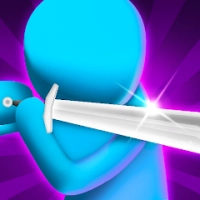
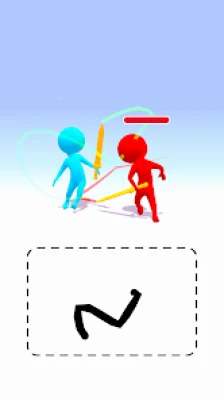
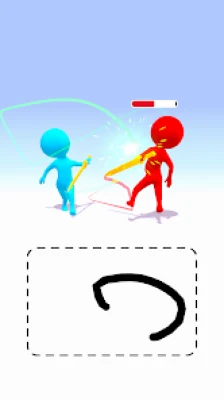
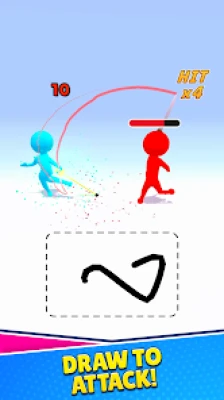
Draw Duel is a casual action game developed by Lion Studios. It offers a distinctive take on sword fighting by allowing players to control a weapon through finger movements on the screen. Instead of relying on traditional virtual buttons, the game lets you draw movements that the sword attempts to follow.
This control system makes each duel feel different from a conventional fighting game. Players must decide when to attack, how to position their weapon, and when to defend against an incoming strike. Quick movements can help you land a hit, but uncontrolled swinging can also leave you vulnerable.
The game focuses on one-on-one combat, with opponents challenging you to improve your reactions and learn how to use the sword effectively. Blocking, parrying, dodging, and attacking all play a role in winning a fight.
Draw Duel also includes unlockable sword styles and weapon upgrades that add variety to the experience. As you continue playing, you can work toward new appearances and test your skills against additional opponents.
The main appeal of Draw Duel is its unusual drawing-based combat system. Success depends on understanding how your finger movements translate into weapon movement and using that knowledge to outplay your opponent.
Draw Duel Gameplay Overview
The core gameplay revolves around controlling a sword through gestures. You draw a movement on the screen, and the weapon follows the motion, allowing you to perform attacks and defensive maneuvers.
Each opponent presents a combat challenge. You must find opportunities to strike while avoiding the enemy's weapon. Simply moving the sword as quickly as possible is not always the best approach, because poor positioning can leave your character exposed.
A successful duel requires a balance between offense and defense. You need to attack when an opening appears, but you should also be ready to block or move away when the opponent threatens you.
The physics-based movement adds an element of unpredictability. Your sword's path, the direction of a strike, and the timing of your gesture can all influence the result. Learning how to make controlled movements is therefore more useful than relying on random swipes.
As you progress, you can unlock different sword styles and work toward becoming a more capable duelist. Each fight offers another opportunity to improve your control, recognize enemy behavior, and refine your strategy.
Main Features of Draw Duel
Drawing-Based Sword Controls
Draw Duel allows you to control your weapon through finger movements rather than relying entirely on conventional attack buttons. This gives the combat a hands-on feel and makes gesture accuracy an important part of the gameplay.
Physics-Based Combat
The sword responds to your movements, creating a combat system in which direction, speed, and positioning matter. Players must learn how to guide the weapon effectively to land hits and avoid incoming attacks.
Attacking and Defending
Successful dueling involves more than attacking. Blocking, parrying, and dodging help you avoid damage and create opportunities to counterattack.
Unlockable Sword Styles
The game features different sword appearances and styles to discover. These unlocks add variety and give players additional goals beyond simply completing fights.
Increasing Combat Challenges
As you progress through the duels, opponents can become more difficult to defeat. Improving your movement and learning to react to enemy attacks can help you handle tougher encounters.
Simple Controls With Room for Practice
The basic control idea is easy to understand, but mastering the sword takes practice. New players can begin with simple movements and gradually learn more controlled attacks and defensive techniques.
Casual Action Gameplay
Draw Duel is designed for short action sessions. You can focus on a single duel, experiment with different gestures, and gradually improve without needing to learn a large set of complicated commands.
Offline Play
The game listing identifies Draw Duel as supporting offline play. However, advertisements, optional rewards, or certain features may behave differently depending on the version installed and whether an internet connection is available.
How to Play Draw Duel
Learn the Sword Controls
Begin by experimenting with simple finger movements. Observe how the sword responds when you draw short lines in different directions. Understanding this relationship is the foundation of effective combat.
Watch Your Opponent
Before committing to an attack, observe how the enemy moves and positions their weapon. Look for moments when the opponent is vulnerable or occupied with another movement.
Attack With Purpose
Draw a controlled movement toward the opponent rather than swiping randomly. Focus on directing the sword into a useful position and avoid making unnecessary gestures that leave you exposed.
Block Incoming Attacks
When the opponent attacks, move your sword into a defensive position if the situation allows. Blocking can help you avoid a direct hit and may create an opportunity to respond.
Dodge When Necessary
Not every attack should be met with a direct block. Sometimes, moving away from the incoming weapon is the better option. Learn to recognize when you need to create distance rather than continue attacking.
Counterattack After an Opening
Once an opponent's attack has passed or their weapon is no longer positioned to threaten you, look for an opportunity to strike. A well-timed counterattack can be more effective than continuously swinging.
Complete Duels and Unlock Content
Continue challenging opponents and use the available progression system to discover additional sword styles. New unlocks provide goals to work toward as you become more familiar with the controls.
Complete Draw Duel Strategy Guide
Master Controlled Sword Movements
The most important skill in Draw Duel is learning to control the weapon consistently. Long, fast gestures may look powerful, but they can be difficult to direct accurately.
Start with short movements and observe how the sword reacts. Practice changing direction without making excessive gestures. Once you understand the basic response, gradually experiment with faster or wider movements.
The objective is to make your gestures intentional. Every movement should help you attack, defend, or reposition the weapon.
Do Not Attack Constantly
One of the easiest mistakes is to keep swinging without considering the opponent's position. Continuous attacks can make it difficult to control your weapon and may leave you open to a counterstrike.
Instead, alternate between observation and action. Watch what the opponent does, identify an opening, and then attack with a clear purpose.
If your strike misses, avoid immediately making several random follow-up gestures. Regain control of the sword and reassess the situation before trying again.
Use Defense to Create Opportunities
Blocking and parrying are not merely ways to survive. They can also help you create a better position for your next attack.
When the opponent moves toward you, concentrate on stopping or avoiding the incoming strike. After the immediate threat passes, look for a moment when their weapon is less likely to interrupt your counterattack.
This approach is especially useful against opponents who attack aggressively. Rather than matching every strike with another strike, let the enemy commit to a movement and respond when an opportunity appears.
Learn to Recognize Openings
A good attack often depends on timing rather than raw speed. Watch the opponent's weapon and look for moments when it moves away from a threatening position.
An opening may appear after an enemy swing, during a change in direction, or when the opponent is temporarily unable to respond effectively. Use these moments to direct your sword toward the target.
Avoid assuming that every pause is a safe opportunity. Keep your own weapon under control and be prepared to defend if the opponent reacts.
Balance Speed and Precision
Fast movements can help you respond quickly, but precision remains essential. A gesture that is too wide or poorly directed may fail to land a useful hit.
Begin with controlled attacks and increase your speed as you become more comfortable. The best approach is the one that lets you move quickly without losing control of the sword.
If your gestures frequently miss, slow down and focus on direction. Once your accuracy improves, experiment with quicker combinations.
Keep Your Sword in a Useful Position
Weapon positioning can influence how quickly you can respond to the opponent. After attacking, pay attention to where your sword ends up rather than immediately starting another swing.
A controlled position makes it easier to defend against the next attack or prepare a counterstrike. Random movements can leave the weapon far from where you need it.
Practice finishing gestures in a way that allows you to regain control quickly.
Adapt to Different Opponents
Not every opponent should be approached in exactly the same way. Some encounters may reward patience and defense, while others may require more decisive attacks.
If an aggressive strategy repeatedly fails, try observing the enemy for longer and looking for safer openings. If you are too passive, experiment with more direct attacks when the opponent's weapon is out of position.
The key is to adjust your approach according to what happens during the duel rather than repeating an unsuccessful tactic.
Learn From Defeats
Losing a duel can reveal problems with your timing, positioning, or gesture control. Think about what happened immediately before the defeat.
Did you attack while the opponent was ready to respond? Did your sword move too far away from a defensive position? Were your gestures too fast to control accurately?
Identifying one mistake at a time makes it easier to improve. Change your approach during the next attempt instead of repeating the same movements and hoping for a different result.
Unlock New Sword Styles Gradually
Draw Duel offers different sword styles that provide additional goals for progression. Work through the available content and review the requirements for each unlock.
If a reward requires completing more duels or watching an optional advertisement, decide whether the reward is worth pursuing. Focus on improving your combat skills rather than assuming that a different appearance will automatically make you a better player.
Stay Patient During Difficult Duels
Tough opponents can make aggressive play tempting, especially after several failed attempts. However, rushing often leads to additional mistakes.
Slow down, observe the enemy's movement, and concentrate on one improvement at a time. You might focus on blocking more effectively in one attempt and improving attack timing in the next.
Consistent practice is more useful than changing every aspect of your strategy at once.
Beginner Tips for Draw Duel
Practice short gestures first. Small movements help you understand how the sword responds to your finger.
Watch the enemy before attacking. Understanding the opponent's movement can help you identify safer opportunities.
Avoid random swinging. Make every gesture serve a clear purpose.
Defend when necessary. Blocking and dodging can prevent damage and create chances to counterattack.
Attack after an opening appears. Timing can be more valuable than attacking constantly.
Keep control after each strike. Observe the sword's position before starting another movement.
Adjust your strategy when you struggle. If an approach repeatedly fails, try changing your timing or defensive habits.
Practice accuracy before speed. Fast gestures are useful only when you can direct them effectively.
Explore available sword styles. Unlocks add variety and give you goals to pursue.
Take breaks after repeated losses. Returning with a fresh perspective can make it easier to recognize mistakes.
Advanced Combat Tips
Use Short, Deliberate Attacks
Once you understand the controls, focus on making movements that are easy to direct. Short attacks can help you maintain control and recover more quickly than large, uncontrolled gestures.
The ideal gesture depends on the situation, but unnecessary movement generally makes it harder to predict where the weapon will go.
Combine Defense With Counterattacks
Instead of treating blocking and attacking as unrelated actions, use them as parts of a single strategy. Defend against the opponent's movement, regain control, and then strike when a useful opening appears.
This rhythm helps you avoid wasting movements and gives each action a clear purpose.
Avoid Repeating Failed Gestures
If a particular attack repeatedly misses, do not keep using it without making an adjustment. Change the angle, direction, timing, or size of your movement and observe the result.
Small adjustments can teach you more about the game's physics than repeatedly performing the same unsuccessful swipe.
Maintain Awareness of the Entire Duel
Focus on the opponent's weapon, your sword's position, and the timing of each exchange. Paying attention to all three helps you make better decisions about when to attack and when to defend.
Although the controls are simple, effective play requires you to think about the result of each gesture.
Treat Every Fight as Practice
Each duel can help you improve a specific skill. Use easier encounters to experiment with movement and defensive positioning, then apply what you learn to more challenging opponents.
Rather than focusing only on winning, pay attention to whether your control and decision-making are improving.
How to Win More Duels in Draw Duel
Winning consistently begins with understanding the opponent's behavior. Spend the opening moments observing how the enemy moves and when they attempt to strike.
When an attack comes, focus on defense instead of immediately responding with your own swing. A successful block or dodge can give you time to reposition the sword.
Once the opponent's movement creates an opening, make a controlled attack. Avoid following a missed strike with a series of uncontrolled gestures. Return to a useful position and prepare for the next exchange.
If the opponent is difficult to defeat, change one part of your strategy at a time. Improve your defense first, then work on attack timing and gesture accuracy. This structured approach makes it easier to identify what works.
There is no single movement that guarantees victory in every duel. Consistent control, careful observation, and the ability to adapt are the most reliable foundations for success.
Understanding the Physics-Based Controls
Draw Duel uses a movement system in which your finger gestures influence the sword's direction and motion. This means the way you draw a line matters, but the resulting movement may also depend on the weapon's current position and momentum.
A simple gesture can produce a useful strike when the sword is already in a good position. The same gesture may be less effective if the weapon is moving in another direction or needs to recover from a previous movement.
To learn the physics, experiment with one type of movement at a time. Try short upward, downward, and sideways gestures, then observe how the sword responds. Avoid testing too many different movements in a single duel because it becomes harder to understand which action caused the result.
As you gain experience, focus on controlling the weapon's direction rather than relying only on speed. Understanding the relationship between your gesture and the sword's movement is one of the most useful skills in the game.
Sword Styles and Progression
Unlockable sword styles provide an additional reason to continue playing Draw Duel. As you complete encounters, review the available progression options and learn what is required to obtain new appearances.
Different sword designs can make the experience feel more personalized. However, the main factor in winning duels remains your ability to control the weapon and respond to opponents.
If you are working toward a particular unlock, break the goal into manageable steps. Complete available challenges, improve your performance, and check the game's reward options when appropriate.
Some rewards or weapon options may involve advertisements or in-app purchases. Read the details carefully before choosing an optional offer, and avoid assuming that every unlock is available through the same method.
Common Mistakes to Avoid
Swinging Without a Plan
Repeatedly drawing random movements can make the sword difficult to control. Observe the opponent and decide what you want each gesture to accomplish.
Ignoring Defense
Focusing only on attacks can leave you vulnerable. Learn to block, parry, or dodge when the opponent threatens you.
Using Gestures That Are Too Large
Large movements may be harder to direct accurately. Start with smaller gestures and increase their size only when you understand how the sword responds.
Attacking at the Wrong Time
An attack can fail when the opponent is already prepared to respond. Look for an opening rather than treating every moment as an opportunity to strike.
Losing Track of Weapon Position
After an attack, check where your sword ends up. Knowing its position helps you decide whether to defend, reposition, or prepare another strike.
Repeating the Same Failed Strategy
If an approach does not work, identify the problem and change your next attempt. Repeating the same gestures without adjustment makes improvement more difficult.
Assuming Unlocks Guarantee Victory
New sword styles add variety, but they do not replace good combat decisions. Focus on learning the controls and improving your timing.
Is Draw Duel Easy to Play?
Draw Duel is easy to understand because its main control concept is simple: move your finger, and the sword follows. New players can begin experimenting with basic gestures almost immediately.
However, becoming effective takes practice. Directing a weapon during combat requires accuracy, timing, and awareness of the opponent's movement. The difference between a useful strike and an ineffective swing often comes down to how well you control the gesture.
The game therefore suits players who enjoy simple controls with room to improve through experimentation.
Is Draw Duel an Offline Game?
Draw Duel is listed as supporting offline play. This makes it suitable for casual sessions when an internet connection is unavailable.
However, online-dependent features, advertisements, and optional rewards may behave differently without a connection. Check the installed version's behavior if you want to use a particular feature while offline.
Does Draw Duel Have Different Weapons?
The game features multiple sword styles and unlockable weapon appearances. These options provide variety and allow players to work toward additional rewards as they progress.
The exact availability of each style may depend on the game's current version and the requirements associated with the unlock.
Ads and In-App Purchases
Draw Duel includes advertisements and offers in-app purchases. Depending on the version and current game flow, advertisements may appear between encounters or be associated with optional rewards.
If an item or weapon is offered through a purchase or advertisement, review the terms before choosing that option. Do not assume that a particular reward is free or that an optional purchase removes every advertisement unless the offer explicitly states so.
You can focus on learning the combat system and progressing through the available duels while deciding which optional features, if any, are worth using.
Draw Duel Frequently Asked Questions
What Is Draw Duel?
Draw Duel is a casual action game in which players control a sword using finger gestures. The goal is to defeat opponents through well-timed attacks, defensive movements, and accurate weapon control.
Who Developed Draw Duel?
Draw Duel is developed and published by Lion Studios.
How Do You Control the Sword?
You draw movements on the screen with your finger, and the sword follows the gesture. Learning how different movements affect the weapon is essential for effective combat.
What Is the Main Goal of Draw Duel?
The main goal is to defeat opponents in sword-fighting encounters and progress through the available challenges. You can also work toward unlocking additional sword styles.
How Do You Win More Fights?
Observe your opponent, defend against incoming attacks, and strike when an opening appears. Controlled gestures and good timing are more reliable than random swinging.
Can You Block Attacks in Draw Duel?
Yes. Blocking and parrying are part of the combat system. Defensive movements help you avoid incoming strikes and may create opportunities to counterattack.
Does Draw Duel Have Different Sword Styles?
Yes. The game includes different sword styles that players can unlock as they progress.
Is Draw Duel Suitable for Beginners?
Yes. The basic controls are easy to understand, but mastering them takes practice. Beginners should focus on accurate gestures and defensive timing before attempting complicated movements.
Can You Play Draw Duel Offline?
The game listing identifies it as supporting offline play. Some advertisements or optional features may still require an internet connection.
Does Draw Duel Contain Ads?
Yes. Draw Duel includes advertisements and in-app purchases. The availability of optional rewards may depend on the current version.
Why Do My Attacks Keep Missing?
Your gestures may be too wide, poorly directed, or mistimed. Try shorter movements, observe the sword's position, and wait for a more suitable opening.
What Is the Best Beginner Strategy?
Start with simple gestures, learn how the sword responds, watch your opponent, and use defense before counterattacking. Improve one skill at a time instead of relying on constant swinging.
Final Thoughts on Draw Duel
Draw Duel offers a distinctive sword-fighting experience built around drawing gestures and physics-based weapon movement. Its simple controls make it approachable, while the need for accurate strikes, effective defense, and careful timing provides room to improve.
The best way to progress is to master basic sword control, watch your opponent, and choose your attacks deliberately. Blocking, dodging, and counterattacking are just as important as landing a strike, especially when facing more difficult opponents.
With unlockable sword styles and casual action gameplay, Draw Duel can appeal to players who enjoy unusual control systems and short combat challenges. Practice, patience, and purposeful movements are the foundations of better dueling.
Rate the Game
User Reviews











Popular Games



















 Android
 iOS
 Windows
 Xbox