





Latest Version
October 26, 2026
Rollic Games
Action
iOS
0
Report a Problem
More About :game
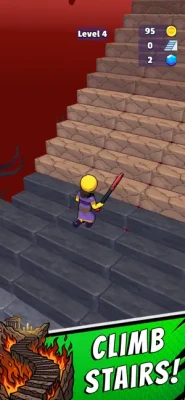
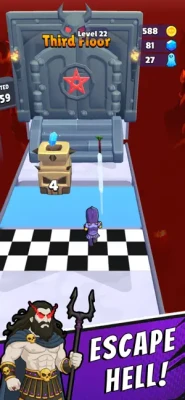
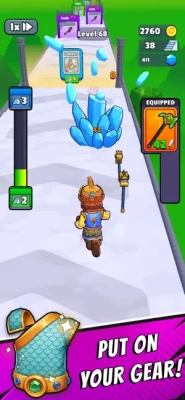
Hell Escape: Firebound combines fast-paced running action with resource management and character progression. Developed by Rollic Games, the game sends players on a dangerous journey through the underworld, where every movement can determine whether they reach the next platform or fall behind.
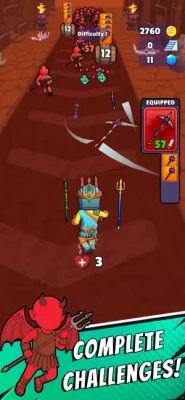
The central challenge is to collect stair pieces while navigating hazardous paths. These pieces allow you to build ladders and overcome vertical obstacles, but collecting them is only part of the challenge. You must also avoid lava, spinning blades, collapsing bridges, cursed gates, and pursuing demons.
Divine abilities add another strategic layer. Skills such as Dash, Shield, Smite, and Time Slow provide different ways to escape danger, overcome barriers, and improve your chances of reaching the summit. Choosing the right upgrades and learning when to activate each ability can make difficult runs much more manageable.
The game also rewards long-term progression. Upgrades can increase stair capacity, reduce skill cooldowns, and improve power effectiveness, helping you tackle increasingly demanding sections of the underworld.
Core Gameplay Mechanics in Hell Escape: Firebound
Stair Collection and Ladder Building
Collecting stair pieces is one of the most important parts of Hell Escape: Firebound. These pieces allow you to construct ladders and climb across vertical sections that would otherwise block your progress.
Every piece matters because your supply determines how much climbing you can do before you need to collect more. Moving quickly without gathering enough materials can leave you unable to overcome an upcoming obstacle.
Try to balance resource collection with forward movement. Follow paths that provide useful stair pieces, but avoid unnecessary detours that expose you to dangerous hazards or pursuing enemies.
As you become more familiar with the levels, you will start recognizing when to prioritize gathering materials and when to move directly toward the next climbing section.
Swipe Controls and Movement
Hell Escape: Firebound uses swipe controls to navigate its dangerous environments. Learning to move accurately is essential because hazards often require quick reactions and careful positioning.
Avoid making large, unnecessary movements when a small adjustment will keep you safe. Precise swipes can help you collect stair pieces, move around obstacles, and position your character for the next section.
Pay attention to the route ahead rather than focusing exclusively on what is immediately in front of you. Looking ahead helps you prepare for hazards and avoid reacting too late.
Practice makes a difference. As you learn the timing and responsiveness of the controls, you can make more deliberate decisions without losing valuable time.
Divine Skills and Power-Ups
Divine skills provide powerful tools for overcoming the underworld's challenges. Each ability serves a different purpose, and understanding these differences is essential for building an effective strategy.
Dash helps you move quickly through dangerous sections. Shield offers protection when hazards are difficult to avoid. Smite provides offensive power against threats, while Time Slow gives you additional time to react to fast-moving dangers.
The best ability depends on the situation. A movement skill may be ideal for escaping a pursuing threat, while protection can be more useful when crossing an area filled with hazards.
Instead of activating abilities as soon as they become available, consider what lies ahead and save them for situations where they can provide meaningful value.
Complete Hell Escape: Firebound Strategy Guide
Best Beginner Strategy
New players should begin by learning the relationship between stair collection, movement, and survival. These three elements form the foundation of successful runs.
Collect stair pieces whenever doing so is reasonably safe, and avoid spending them carelessly when a major climbing section is approaching. Running out of materials at the wrong moment can prevent you from progressing efficiently.
Learn to recognize common hazards and understand how your divine abilities can help you respond. If a section requires precise timing, slow down your decision-making rather than swiping randomly.
Do not worry about reaching the summit on every attempt. Early runs are opportunities to learn the controls, identify dangerous areas, and discover which upgrades make the biggest difference.
Once you understand the basics, start focusing on permanent improvements that help you climb farther and survive longer.
How to Collect Stair Pieces Efficiently
Stair pieces are essential for building ladders, so collecting them efficiently should be a major priority.
Look ahead and identify groups of pieces along your route. When a collection opportunity is safe, move toward it without making unnecessary detours. A steady supply of materials reduces the risk of reaching a climbing section without enough resources.
However, do not chase every available piece regardless of the danger. A small collection may not be worth the risk of entering a hazardous area or losing too much distance to a pursuing enemy.
Think of stair pieces as a resource that must be managed throughout the run. Collect enough to maintain forward progress, then adjust your route based on the obstacles ahead.
How to Build Ladders More Effectively
Building ladders allows you to overcome vertical gaps and continue climbing toward the summit. Efficient ladder construction depends on having enough stair pieces and recognizing when to use them.
Before entering a climbing section, consider whether your current supply is sufficient. If the route ahead appears demanding, prioritize collecting more pieces before committing to the climb.
Avoid wasting materials on unnecessary movement when a more direct route is available. At the same time, do not rush through a ladder section without accounting for the hazards that may appear immediately afterward.
The goal is to maintain a reliable balance between gathering materials and using them to advance. This approach helps reduce interruptions and makes your runs more consistent.
How to Escape Pursuing Demons
Demons create constant pressure by forcing you to maintain momentum. Spending too much time collecting materials or hesitating around obstacles can give pursuing enemies an opportunity to catch up.
Keep moving whenever the path allows it, and avoid unnecessary detours. If you see a safe opportunity to advance, take it instead of spending too long searching for additional resources.
Dash can be especially helpful when you need to create distance quickly. However, activating it without considering the route ahead may send you into another hazard.
When a pursuing demon catches you repeatedly, review your overall strategy. You may need better movement, more efficient stair collection, or permanent upgrades that help you progress farther during each attempt.
How to Handle Lava Waves
Lava waves are dangerous environmental hazards that demand good timing and positioning. Moving into a hazardous section without considering the incoming danger can quickly end a promising run.
Observe the movement of the hazard and look for a safe opportunity to proceed. Avoid rushing into a narrow area if you do not have a clear path through it.
Time Slow can provide additional reaction time when available, while Dash may help you move through a dangerous section more quickly. Choose the ability that best matches the situation rather than relying on one skill for every obstacle.
If a particular lava section repeatedly causes problems, focus on learning its timing. Familiarity with the hazard can help you make more confident decisions on subsequent attempts.
How to Avoid Spinning Blades
Spinning blades require careful movement and precise timing. Their movement can make an otherwise straightforward route dangerous, especially when you are also trying to collect stair pieces.
Watch the opening between blade movements and move through when the path is sufficiently clear. Avoid making sudden directional changes that place your character directly in danger.
Do not allow resource collection to distract you from nearby hazards. Missing a few stair pieces is preferable to losing an entire run because you moved into a blade at the wrong moment.
As you gain experience, you will become better at identifying safe openings and planning your movement around recurring obstacles.
How to Cross Collapsing Bridges
Collapsing bridges add urgency by making hesitation dangerous. When crossing these sections, focus on maintaining forward movement and avoiding unnecessary stops.
Gather materials before entering the bridge whenever possible. Having a suitable supply ready can help you continue climbing without needing to search for additional pieces in an unstable area.
Use Dash when it provides a meaningful advantage, but make sure you understand the route ahead. Speed is only useful when it helps you avoid danger rather than pushing you into an obstacle.
If you repeatedly fail at a bridge, consider whether the problem comes from poor timing, insufficient materials, or delayed movement. Adjusting the specific weakness is more effective than rushing through the same section without a plan.
How to Break Through Cursed Gates
Cursed gates can block your progress and require you to respond with the appropriate combination of movement and divine powers.
Approach these obstacles with enough resources and a clear understanding of your available abilities. Offensive powers such as Smite may be useful when dealing with barriers or threats, while defensive and movement skills can help you survive the surrounding danger.
Pay attention to the game's instructions and the behavior of each gate. Not every obstacle necessarily responds to the same tactic, so learn what works before committing valuable abilities.
Upgrading your powers can also make difficult sections more manageable. If a gate consistently prevents you from advancing, review your available improvements before attempting it again.
Best Divine Skills and How to Use Them
Dash: The Best Skill for Quick Movement
Dash is valuable when you need to cover ground quickly or escape a dangerous situation. It can help you move through challenging sections, gain distance from pursuing enemies, and reach a safer position.
Use Dash when you have a clear destination and understand what lies ahead. Activating it blindly may cause you to miss important resources or collide with another hazard.
For players who frequently lose runs because they cannot maintain enough distance from pursuing demons, improving Dash-related performance may be especially useful.
Shield: Protection Against Dangerous Hazards
Shield provides defensive support when avoiding danger through movement alone is difficult. It can be useful when crossing sections where hazards leave little room for error.
Try to use protection before entering a particularly risky area rather than waiting until your situation has already deteriorated.
Shield is most effective when it supports a broader plan. Combine it with careful positioning and efficient movement so that protection helps you advance instead of simply delaying an inevitable mistake.
Smite: Offensive Power for Tough Obstacles
Smite adds offensive capability to your available divine skills. It can be useful when you need additional power to deal with threats or overcome difficult encounters.
Consider saving it for situations where offensive strength provides a meaningful advantage. Using a powerful ability without a clear purpose may leave it unavailable when a more demanding encounter appears.
As you progress, review the available improvements for Smite and determine whether additional power would help you overcome the obstacles currently limiting your runs.
Time Slow: Better Control Over Timing
Time Slow helps you react to dangerous situations by reducing the pace of events during its effect. It can be especially useful when hazards move quickly or when several decisions must be made in a short period.
Use it when additional reaction time can help you identify a safe route, avoid an obstacle, or move through a difficult section with greater precision.
Time Slow is not a replacement for good positioning. You still need to choose a suitable path and avoid unnecessary risks, but the extra time can make demanding moments easier to manage.
How to Combine Divine Skills
The strongest approach is to choose abilities that complement one another. A movement-focused setup may help you escape demons and advance quickly, while a more defensive combination can provide greater consistency in dangerous sections.
Consider the challenges you encounter most often before committing to a particular build. If you regularly fail because of hazards, prioritize abilities that improve your ability to navigate them. If you lose distance to pursuing enemies, focus on mobility and efficient resource collection.
Experiment with different combinations as your options expand. Your preferred setup may change as you encounter new environments, stronger enemies, and more demanding trials.
Upgrades and Long-Term Progression
Increase Stair Capacity
Stair capacity affects how many stair pieces you can carry or use within the game's resource system. Increasing this capacity can help you prepare for longer climbs and reduce the limitations imposed by a small supply.
Prioritize this upgrade if you regularly find yourself unable to carry enough materials for demanding sections. More capacity can give you additional flexibility when choosing routes and building ladders.
However, capacity is only useful when you collect materials efficiently. Combine the upgrade with good route planning so that your larger supply contributes directly to better progress.
Reduce Skill Cooldowns
Cooldown improvements allow you to use divine abilities more frequently. This can be valuable when a run contains several difficult sections that require careful timing or emergency movement.
If you repeatedly reach hazards while your most useful ability is unavailable, cooldown reduction may be a worthwhile investment.
Consider which skills you rely on most and prioritize improvements that support your preferred playstyle. Reducing cooldowns for an ability you rarely use may provide less value than improving the skill that consistently helps you survive.
Improve Power Intensity
Power intensity upgrades increase the effectiveness of divine abilities. Stronger skills can help you deal with demanding encounters and make certain sections easier to overcome.
Before investing, determine whether a stronger ability would address your current problem. If your difficulty comes from poor timing, additional power may not solve it. If your ability is already being used effectively but lacks sufficient impact, an intensity upgrade may be more appropriate.
Combining stronger powers with sensible cooldown management can create a more dependable setup for later stages.
How to Prioritize Permanent Upgrades
Permanent upgrades are particularly valuable because their benefits can support future attempts. Choosing the right improvements can help you climb farther without needing to repeat the same early challenges as often.
Start with the upgrade that addresses your biggest limitation. Increase capacity if you frequently lack stair pieces, improve cooldowns if your abilities are unavailable when needed, or strengthen power intensity if your skills are not effective enough.
Avoid spreading resources across every upgrade without considering its practical value. A focused approach allows you to measure the benefits of each investment and make better decisions over time.
Boss Battles and Trial Floors
Understanding Boss Encounters
Boss encounters introduce tougher opponents that require more careful planning than ordinary obstacle sections. Each guardian may have its own mechanics and attack patterns, so observation is essential.
Pay attention to how the boss behaves and identify opportunities to move safely or use your available powers. Avoid activating abilities without considering the next stage of the encounter.
If you repeatedly fail against a guardian, look for patterns in what goes wrong. You may need to improve your timing, adjust your ability setup, or invest in stronger permanent upgrades before trying again.
How to Prepare for Trial Floors
Trial floors test your ability to combine resource management, movement, and skill usage under more demanding conditions.
Before attempting a difficult trial, make sure your available upgrades support the challenges you expect to face. Review stair capacity, divine skills, and cooldowns to determine whether your current setup is suitable.
During the trial, remain focused on the immediate obstacle while planning for what follows. Spending all your attention on a single challenge can leave you unprepared for the next one.
A consistent approach is usually more reliable than taking unnecessary risks for small gains. Learn from failed attempts and refine your strategy until the encounter becomes manageable.
How to Beat Difficult Guardians
Strong guardians may punish poorly timed movements and inefficient ability use. Take time to understand their patterns rather than rushing directly into the encounter.
Use offensive skills when they can contribute meaningfully, and keep defensive or movement abilities available for situations where survival becomes difficult.
If your current power level is insufficient, strengthen your character before attempting the fight again. Better upgrades can provide the additional margin needed to handle demanding mechanics.
Remember that success depends on both preparation and execution. Strong upgrades help, but they work best when combined with good timing and sensible movement.
Resource Management and Efficient Progression
How to Make Each Run Count
Every run offers an opportunity to gather stair pieces, practice obstacle timing, and work toward further progression. Even an unsuccessful attempt can provide useful experience if you understand what caused it to fail.
Set a clear goal before starting. You might focus on collecting more materials, learning a dangerous section, or testing a particular divine skill.
This approach makes your progress easier to evaluate. Instead of measuring success only by whether you reach the summit, you can identify specific improvements that help you move closer to that objective.
When to Invest in Upgrades
Upgrade when you have identified a clear reason to improve your character. Spending resources immediately on every available option can leave you without enough currency for a more important improvement later.
If you struggle with climbing, capacity may be a useful priority. If hazards cause most of your failures, skill cooldowns or power intensity may offer greater benefits, depending on your available abilities.
Review your results after a few runs and adjust your spending plan as necessary. A flexible approach helps you respond to new challenges without wasting resources.
How to Approach Repeated Failures
Repeated failures often indicate that one part of your strategy needs improvement. Instead of making random changes, identify the obstacle or mechanic that consistently ends your runs.
Examine whether you are running out of stair pieces, making poor movement decisions, mistiming abilities, or allowing pursuing enemies to catch up.
Then change the most relevant element of your approach. Focused adjustments make it easier to understand what works and help you improve more efficiently than simply repeating the same attempt.
Is It Better to Rush or Explore?
Neither approach is ideal in every situation. Rushing can help you maintain distance from pursuing demons, but moving too quickly may cause you to miss useful resources or collide with hazards.
Exploring every possible path can provide additional stair pieces, but excessive detours may expose you to unnecessary danger.
The best strategy is to balance both. Collect resources along safe routes, avoid unnecessary delays, and prioritize forward movement when a pursuing threat or dangerous obstacle makes hesitation costly.
Advanced Tips and Tricks for Hell Escape: Firebound
Look Ahead Before Changing Direction
Anticipating upcoming hazards helps you avoid sudden movements that create additional danger. Watch the path ahead and plan your next move before entering a narrow or hazardous section.
This is particularly important when stair pieces, demons, and environmental traps appear close together. A little preparation can prevent you from making a costly mistake.
Save Abilities for High-Risk Moments
Powerful abilities become more valuable when used at the right time. Avoid activating them simply because they are available.
Consider whether the current section genuinely requires extra speed, protection, offensive power, or additional reaction time. Saving an ability for a difficult obstacle may provide more value than using it during an easy stretch.
Avoid Collecting Resources at Any Cost
Stair pieces are important, but they should not become a distraction from survival. Avoid dangerous detours when the likely reward is small compared with the risk.
Learn which routes provide a useful balance between collection and forward progress. Over time, this will help you maintain a more reliable supply without unnecessarily endangering your run.
Adapt to Each New Environment
Different underworld areas can introduce new hazards and challenges. Do not assume that a route or ability combination that worked previously will always remain effective.
Observe the environment and identify which threats require the most attention. Adjust your movement and skill choices to match the situation.
Focus on Consistency Before Speed
Fast movement can be helpful, but consistent execution is more important when you are learning difficult sections.
Practice accurate swipes, efficient resource collection, and well-timed ability usage. Once you can navigate a section reliably, work on completing it more quickly without increasing unnecessary risk.
Use Failed Runs as Practice
A failed attempt can teach you how an obstacle behaves, how much time you have to react, or where your resource management breaks down.
Identify one lesson from each failure and apply it to the next run. This turns repeated attempts into a structured learning process rather than a cycle of frustration.
Common Mistakes to Avoid
Running Out of Stair Pieces
Using too many pieces before a major climbing section can leave you unable to progress. Maintain a suitable supply and collect additional materials whenever a safe opportunity appears.
Ignoring Environmental Hazards
Focusing exclusively on resource collection can make you overlook lava, spinning blades, and collapsing bridges. Keep your attention on the route ahead and prioritize survival when danger becomes immediate.
Activating Abilities Too Early
Using Dash, Shield, Smite, or Time Slow without a clear purpose can leave you without a useful ability when a difficult encounter begins. Match each skill to the situation.
Making Sudden, Unnecessary Swipes
Uncontrolled movement can lead to missed resources or collisions with hazards. Use deliberate movements and learn how the controls respond to different situations.
Ignoring Permanent Upgrades
Repeatedly attempting difficult sections without improving your character can make progress unnecessarily frustrating. Invest in capacity, cooldowns, or power intensity when they address your main weakness.
Rushing Every Section
Moving as quickly as possible is not always the most efficient strategy. Balance speed with safe resource collection and careful positioning.
Repeating the Same Mistakes
If the same obstacle ends your run repeatedly, change your approach. Review your timing, resource supply, and skill choices before making another attempt.
Is Hell Escape: Firebound Free to Play?
Hell Escape: Firebound is free to download on the Apple App Store and includes optional in-app purchases. Players can begin climbing through the underworld without purchasing a paid package.
The game also features ongoing progression, upgrades, and unlockable powers. Optional purchases may provide additional offers or conveniences, but you can focus on learning the mechanics and improving your character through regular play.
For a free-to-play approach, prioritize permanent upgrades that address your weaknesses, collect stair pieces efficiently, and make careful use of your divine skills. Avoid spending resources without a clear goal, and use failed attempts to identify where your strategy needs improvement.
Frequently Asked Questions About Hell Escape: Firebound
What type of game is Hell Escape: Firebound?
Hell Escape: Firebound is a mobile action running game that combines stair-building mechanics, obstacle avoidance, divine abilities, and long-term character progression.
How do you play Hell Escape: Firebound?
Swipe to navigate dangerous paths, collect stair pieces, build ladders, and avoid hazards while climbing toward the summit. Use divine abilities and permanent upgrades to overcome increasingly difficult challenges.
What is the main objective?
Your goal is to climb through the underworld, overcome obstacles, escape pursuing demons, and reach the summit. Each attempt gives you another opportunity to improve your strategy and progress farther.
How do stair pieces work?
Stair pieces are collected during runs and used to build ladders that help you overcome vertical sections. Managing your supply is important because running out of pieces can prevent you from advancing.
Which divine skill is the best?
There is no single best skill for every situation. Dash supports quick movement, Shield provides protection, Smite offers offensive power, and Time Slow helps you react to dangerous situations. The right choice depends on your current challenge.
How can I climb higher?
Improve your stair capacity, use abilities strategically, collect resources efficiently, and learn the timing of environmental hazards. Permanent upgrades can also help you overcome sections that repeatedly stop your progress.
How do you defeat bosses?
Observe each guardian's mechanics, avoid unnecessary risks, and use your divine skills when they provide meaningful advantages. If your character lacks sufficient power, improve your upgrades before attempting the encounter again.
What should I upgrade first?
Choose upgrades according to your biggest weakness. Capacity can help when you lack stair pieces, cooldown reduction can make abilities available more often, and power intensity can strengthen their effects.
Can I play without spending money?
Yes. The game is free to download, and you can work on your progression through regular gameplay. Careful resource management and sensible upgrades can help you make progress without optional purchases.
Is Hell Escape: Firebound suitable for casual players?
Its swipe controls and straightforward objective make it accessible to casual players. However, hazards, pursuing demons, boss encounters, and upgrade decisions provide additional challenges for players who enjoy improving their performance over time.
Final Thoughts on Hell Escape: Firebound
Hell Escape: Firebound offers a distinctive mix of running action, resource management, and progression. Collecting stair pieces and building ladders may seem straightforward at first, but dangerous obstacles, pursuing demons, and powerful guardians make each climb a test of timing and decision-making.
The best way to improve is to balance resource collection with forward movement, use divine skills when they matter most, and invest in permanent upgrades that address your weaknesses. Learning the behavior of hazards and adapting to each new environment will help you approach difficult sections with greater confidence.
With careful planning, consistent movement, and a balanced upgrade strategy, every run can bring you closer to conquering the underworld and reaching the summit.
Rate the Game
User Reviews














Popular Games



















 Android
 iOS
 Windows
 Xbox