

Latest Version
October 14, 2024
Codigames
Simulation
0
com.codigames.university.empire.idle.tycoon
Report a Problem
More About :game
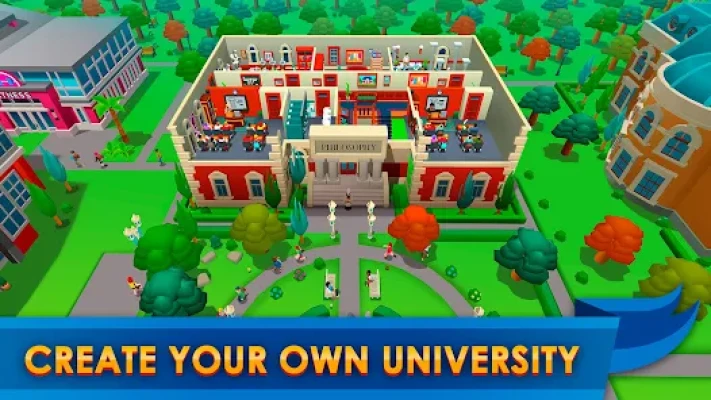
University Empire Tycoon puts you in the role of a university manager responsible for building a successful campus. Your goal is to expand educational facilities, improve academic performance, attract students, and increase your institution's prestige.
The game begins with a small campus. As you earn money and complete objectives, you can build new classrooms, open faculties, improve administrative facilities, and introduce sports and leisure areas. Each decision affects the way your university operates.
Students need more than classrooms. They also benefit from suitable educational materials, scholarships, extracurricular activities, sports facilities, and a comfortable campus environment. Meanwhile, professors and support employees must be hired and managed carefully to keep the university functioning efficiently.
The game also features online competitions where universities compete for rankings. Improving your campus and academic performance can help you work toward a stronger position.
Success depends on balancing academic quality, student satisfaction, operating expenses, and expansion. A large campus may look impressive, but it needs qualified teachers, reliable facilities, and enough money to sustain its growth.
Main Features of University Empire Tycoon
1. Build and Expand Your University Campus
Start with a small educational institution and gradually develop a larger university. Construct new buildings, add classrooms, improve facilities, and expand your campus as your finances allow.
2. Open Different Academic Faculties
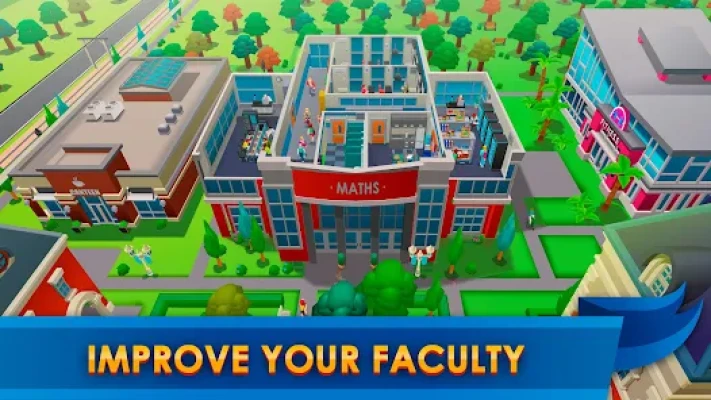
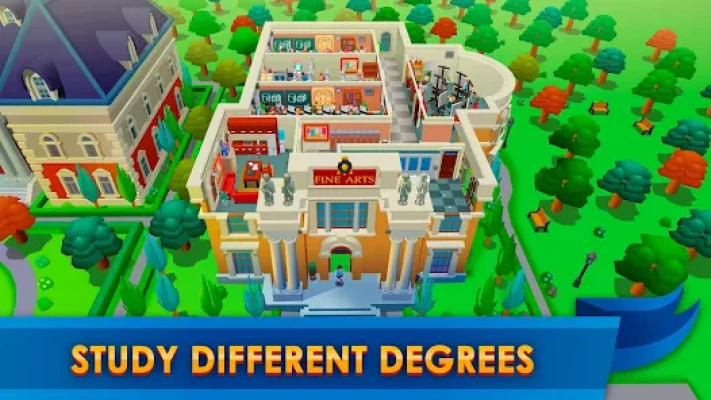
The university offers a range of academic fields, including Mathematics, Law, Medicine, Philosophy, Literature, Physics, Chemistry, and Engineering.
Each faculty contributes to your institution's development and gives you additional management goals.
3. Hire Skilled Professors
Professors play a central role in academic performance. Recruiting suitable teachers and improving their effectiveness helps you develop your university's educational reputation.
4. Improve Classrooms and Learning Materials
Classroom equipment and educational materials influence the quality of the learning environment. Upgrading facilities helps you build a more capable institution.
5. Meet Student Needs
Students expect suitable educational facilities, comfortable surroundings, and opportunities beyond regular lessons. Scholarships, extracurricular activities, student clubs, and leisure areas contribute to campus development.
6. Build Sports and Leisure Facilities
Sports grounds, basketball facilities, student clubs, and leisure areas add variety to campus life. These facilities help you create a more complete university rather than a collection of classrooms alone.
7. Manage University Employees
Your staff includes professors, maintenance workers, builders, janitors, and office employees. Each group supports a different part of the operation, so staffing decisions must reflect the university's actual needs.
8. Improve Administration
Administrative facilities support the management side of the university. Improving this area helps you develop a more organized institution as the campus becomes larger.
9. Earn Idle Income
The university generates money through its business systems, including student tuition. You can reinvest earnings into construction, staff, facilities, and academic improvements.
10. Compete Against Other Universities
Online competitions give you another goal beyond expanding your campus. Improving academic performance and developing your institution can help you work toward higher rankings.
11. Enjoy Colorful Low-Poly Graphics
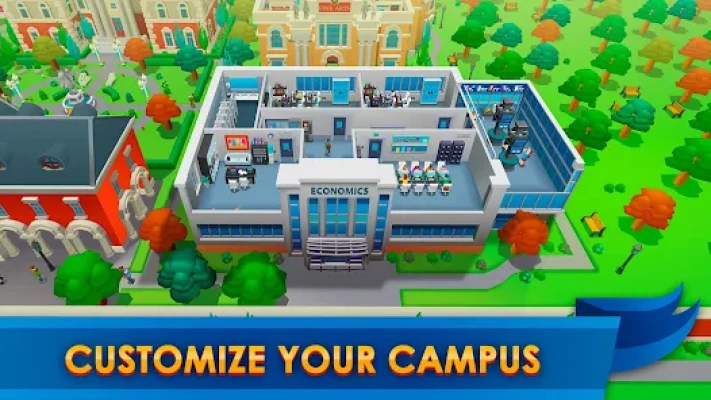
The game features stylized 3D graphics, animated students, and a campus that visibly changes as new facilities are added. The presentation makes university management accessible to casual players.
How to Play University Empire Tycoon
Step 1: Understand Your Starting Campus
Explore the available buildings, classrooms, staff, and upgrade options. Identify which facilities are essential for your current students and which improvements will help you progress.
Step 2: Improve Academic Performance
Recruit suitable professors and upgrade the classrooms they use. Check the academic information available in the game to understand which subjects or knowledge areas need attention.
Step 3: Keep Students Satisfied
Students need functioning educational facilities and a suitable campus environment. Develop classrooms, administration, sports areas, and extracurricular options as your budget allows.
Step 4: Hire Support Employees
Builders, janitors, maintenance workers, and office staff help keep the university operating. Make sure the campus has enough support workers to manage its current size.
Step 5: Collect and Reinvest Income
Use your earnings to strengthen the university. Choose upgrades that support academic development, improve student services, or unlock new facilities.
Step 6: Open New Faculties
As your finances improve, expand into additional academic fields. Make sure your university has the necessary teachers and facilities before investing heavily in new departments.
Step 7: Participate in Competitions
Check the available online competitions and their requirements. Improve your academic performance, facilities, and management to strengthen your university's position.
Complete Strategy Guide: How to Build a Successful University
1. Prioritize Academic Performance
A university is not successful simply because it has many buildings. Its academic departments need capable professors, appropriate classrooms, and the facilities required to support their subjects.
When deciding what to upgrade, consider which academic areas are underperforming and what the game identifies as their current needs.
Strategy: Strengthen existing academic departments before opening too many new faculties. A smaller university with well-developed departments can be a better foundation for growth than a large but poorly managed campus.
2. Hire Professors According to Their Subjects
Professors are among the most important employees in University Empire Tycoon. Different academic fields require suitable teaching staff, and the quality of your professors affects your development strategy.
Review the available professor information and academic symbols before hiring. Avoid choosing teachers without considering the subjects they support.
Strategy: Match professors to the relevant knowledge areas and improve the departments where better teaching performance will have the greatest impact.
3. Understand Academic Fields and Symbols
The game uses knowledge areas and academic symbols to represent different subjects. Understanding these systems is important when recruiting professors and improving academic performance.
If you are unsure why a department is not performing as expected, check its academic information rather than repeatedly upgrading unrelated facilities.
Strategy: Learn which professors and improvements correspond to each subject. This makes hiring more deliberate and helps you avoid wasting money on mismatched upgrades.
4. Upgrade Classrooms Before Expanding Everywhere
Classrooms are central to the university's educational purpose. Improving them can support academic development and help your campus provide a better learning environment.
It may be tempting to build sports grounds or leisure areas early because they visibly change the campus. However, neglecting educational facilities can leave your university unbalanced.
Strategy: Establish a strong academic foundation first. Then expand student services and recreational facilities as your income becomes more reliable.
5. Balance Tuition Income and Operating Expenses
Your university needs enough income to cover construction, staff, maintenance, and other costs. Rapid expansion can put pressure on your finances, especially when several facilities require investment at once.
Before making an expensive purchase, consider whether your current operation can support the added costs.
Strategy: Reinvest profits carefully. Prioritize improvements that strengthen your income or meet an important progression requirement, and avoid spending your entire balance on optional facilities.
6. Manage the Money Limit
University Empire Tycoon has a money-storage limit that can interfere with saving for expensive upgrades. If your balance stops increasing as expected, check whether the game's money limit is affecting your progress.
The official support guidance specifically addresses players who cannot earn beyond a certain amount. This makes storage capacity an important issue to monitor during development.
Strategy: Check the available vault or money-limit upgrades when your savings appear capped. Plan ahead for expensive buildings instead of waiting indefinitely for funds that cannot accumulate beyond the limit.
7. Use Builders Efficiently
Construction is an important part of campus expansion, but building capacity can affect how quickly you progress. If only one construction task can be handled at a time, choosing the right project becomes particularly important.
Avoid starting low-priority construction when an essential academic building is needed for your next objective.
Strategy: Plan construction in order of importance. Build facilities that unlock new opportunities or solve current problems before spending time and money on optional projects.
8. Recruit Enough Support Staff
Professors are essential, but a university also needs janitors, maintenance workers, office employees, and builders. These employees support the campus and help keep its operations running.
If your institution grows faster than its support services, you may encounter operational problems or delays.
Strategy: Review staffing whenever you expand. Make sure the university has the support employees required for its current facilities rather than concentrating exclusively on academic staff.
9. Improve Administration
Administrative facilities form part of the university's management system. As the campus expands, administration becomes another area to consider when planning upgrades.
Do not assume that every problem can be solved by adding more professors or classrooms. Sometimes a supporting department needs attention.
Strategy: Inspect the available administration upgrades and prioritize those that support your current objectives or improve the overall operation of the campus.
10. Meet Student Needs Beyond the Classroom
Student satisfaction is connected to more than academic teaching. The game encourages you to provide sports facilities, leisure areas, student clubs, educational resources, scholarships, and extracurricular activities.
These additions can make the campus more complete, but they also compete with essential academic spending.
Strategy: Build student services gradually. Focus first on the facilities needed for current objectives, then add leisure and extracurricular options as your finances permit.
11. Develop Sports and Leisure Facilities Strategically
Sports grounds, basketball facilities, and student clubs add variety to campus life. They can also form part of your university's wider development and reputation.
However, recreational facilities should not automatically take priority over essential teaching needs.
Strategy: Balance campus life with academic investment. Improve sports and leisure areas when they support student needs or contribute to your current progression goals.
12. Invest in Scholarships and Educational Resources
Scholarships and learning materials are part of the game's student-development systems. These options can help you improve the educational environment and support the growth of your institution.
Before spending, review the available information to understand the benefits and requirements of each option.
Strategy: Treat scholarships and educational materials as targeted investments. Choose improvements that complement your academic strategy rather than purchasing every available option immediately.
13. Participate in Online Competitions
Online competitions allow you to compare your university with others and work toward rankings. They add a competitive objective beyond simply expanding the campus.
A well-developed university has a stronger foundation for competition, but the best preparation depends on the requirements of the event.
Strategy: Check competition objectives and focus on the academic areas and facilities that matter for the current challenge. Avoid making expensive upgrades without understanding how they contribute to your goals.
14. Understand Prestige and Reputation
Prestige is an important part of building a respected institution. The university's development, academic performance, and facilities contribute to its overall progress.
If your reputation is not improving as quickly as expected, review the relevant in-game information to determine which requirements remain incomplete.
Strategy: Treat prestige as a long-term objective. Improve the quality of your university in a balanced way rather than relying on one building or one expensive purchase to transform your standing.
15. Avoid Expanding Too Quickly
Opening many faculties at once can create pressure on your budget and workforce. Each new department may require suitable professors, classroom equipment, and support services.
A large campus can become difficult to manage if the university cannot afford to maintain it properly.
Strategy: Expand in stages. Make sure your current faculties operate effectively before adding more academic programs.
16. Make Idle Income Work for You
Idle earnings provide a steady source of money, but their value depends on how effectively you reinvest them.
When you return to the game, collect available income and check the most important needs of your university. You may need to improve a professor, upgrade a classroom, expand a department, or save for a new building.
Strategy: Give every play session a purpose. Use your earnings to address a specific bottleneck or work toward a clear expansion goal.
17. Handle Student Dropouts and Falling Enrollment
A university needs students to remain active and contribute tuition income. If student numbers decline or students begin dropping out, simply constructing more buildings may not solve the problem.
Check the available student information and review whether your campus meets its educational and service requirements.
Strategy: Investigate student needs before expanding further. Review academic performance, teaching staff, and campus facilities to identify what may be affecting enrollment.
18. Troubleshoot Slow Progress
If your university seems unable to progress, work through the main systems instead of spending randomly.
Check whether your money balance has reached its limit.
Review professor quality and subject assignments.
Inspect classrooms and academic facilities.
Check whether required support staff are available.
Review construction and research queues.
Look at student needs and enrollment.
Check the requirements for the next faculty or competition.
Review current objectives before making major purchases.
Strategy: Identify the real bottleneck, make one useful improvement, and then assess the result. This approach helps conserve money and keeps expansion manageable.
Best Beginner Tips
Start by improving the academic facilities you already have.
Hire professors who match the subjects they teach.
Learn how academic symbols and knowledge areas work.
Keep enough support staff to maintain the campus.
Plan construction around your most important objectives.
Monitor your money limit when saving for expensive buildings.
Balance classroom upgrades with student services.
Add sports facilities and student clubs as your budget allows.
Use scholarships and educational resources thoughtfully.
Participate in online competitions when your university is prepared.
Check student needs if enrollment begins to decline.
Expand gradually rather than opening every faculty at once.
Common Mistakes to Avoid
Building Too Many Facilities Too Early
A large campus requires more money, staff, and maintenance. Build according to your financial capacity instead of expanding everywhere at once.
Hiring Professors Without Checking Their Subjects
Academic fields matter. Review professor attributes and knowledge areas before making hiring decisions.
Ignoring Student Needs
Classrooms alone do not make a complete university. Pay attention to student services, sports, leisure areas, and educational resources.
Neglecting Support Staff
Janitors, maintenance workers, builders, and office employees help the campus operate. Understaffing these areas can affect overall efficiency.
Spending All Your Money Immediately
Unplanned purchases can delay important construction or faculty upgrades. Keep your next major objective in mind before spending.
Forgetting the Money Limit
If your savings stop growing, check whether the money-storage limit is responsible. Plan around the cap rather than waiting for unlimited accumulation.
Starting Low-Priority Construction
Construction time and resources are valuable. Prioritize facilities that support academic progress or unlock important new opportunities.
Ignoring Competitions
Online competitions offer additional goals and opportunities to improve your university's standing. Check the available events and prepare your campus accordingly.
Is University Empire Tycoon an Idle Game?
Yes. University Empire Tycoon combines idle income with active campus management. Your university generates money through its business systems, but you still need to make decisions about hiring professors, constructing buildings, improving classrooms, meeting student needs, and expanding academic programs.
Its idle mechanics support gradual development, while online competitions and campus expansion give you longer-term objectives.
Is University Empire Tycoon Free to Play?
University Empire Tycoon is free to play and includes advertisements and in-app purchases. Optional purchases can provide additional convenience, but you can begin developing your campus through its regular progression systems.
Construction and upgrades may take time, and the money limit can affect how quickly you save for major projects. Careful budgeting and a clear development plan are useful if you prefer not to spend money.
Graphics and Gameplay Experience
University Empire Tycoon uses colorful, stylized low-poly 3D graphics to create a miniature university environment. The campus changes as you construct new buildings, open faculties, and improve sports and leisure facilities.
The visual presentation makes the management experience approachable, while the academic systems add more depth than a simple building game. You must balance teaching quality, staff management, student needs, and financial decisions.
One potential drawback is the pace of construction and progression. Waiting for buildings or research to finish can interrupt active play, especially when construction capacity is limited. Players who enjoy planning and gradual development may appreciate this structure, while those who prefer constant action may find it slow.
Pros and Cons
Pros
A university management theme with several academic disciplines.
Multiple faculties, including Law, Medicine, Engineering, and Science.
Professor hiring and academic-performance systems.
Campus construction and classroom upgrades.
Student clubs, sports grounds, and leisure facilities.
Staff management across academic and support departments.
Idle income supports gradual expansion.
Online competitions add a competitive objective.
Colorful low-poly 3D graphics.
Cons
Construction and upgrades can require patience.
Money limits can complicate saving for expensive projects.
Managing several departments becomes more demanding as the campus grows.
Hiring and facility costs require careful budgeting.
Some activities may feel repetitive over long sessions.
Players who prefer direct action may find the gameplay too management-focused.
Game Information
Game title: University Empire Tycoon – Idle
Developer: Codigames
Genre: University simulation, idle management, tycoon
Gameplay modes: Single-player management with online competitions
Visual style: Stylized low-poly 3D
Main activities: Campus construction, faculty expansion, professor recruitment, classroom upgrades, student services, staff management, and academic competitions
Platforms: Android and Windows through Google Play's supported PC option
Monetization: Free to play, with advertisements and in-app purchases
Main objective: Build a prestigious and profitable university by improving academic quality, meeting student needs, and expanding the campus.
Frequently Asked Questions
How do you make more money in University Empire Tycoon?
Develop your university carefully, improve academic facilities, hire suitable professors, and manage operating costs. Participate in available competitions when your campus is prepared, and reinvest earnings into improvements that support growth.
How do you unlock new faculties?
Progress through the available objectives and meet the requirements for each new academic department. You may need to construct facilities, improve existing departments, or invest in the necessary resources.
Which professors should I hire?
Choose professors whose knowledge areas match the subjects taught by your university. Review their attributes and the needs of each faculty before hiring.
What are knowledge areas and academic symbols?
They represent academic subjects and related systems used in the university. Understanding them helps you choose suitable professors and improve the performance of different faculties.
How do you improve student satisfaction?
Provide suitable classrooms, qualified teachers, educational materials, and student services. Sports facilities, extracurricular activities, and leisure areas also contribute to campus development.
Why is my university not earning more money?
Check whether your money balance has reached its storage limit. Also review student numbers, faculty performance, staff costs, and whether your current facilities are operating effectively.
Why are students dropping out?
Check the student information and review whether your university is meeting its academic and campus-service needs. Inspect professor assignments, educational facilities, and other requirements before spending on additional buildings.
How do online competitions work?
Online competitions let you compare your university with others and work toward rankings. Review each event's requirements and improve the relevant parts of your campus before participating.
Can I play University Empire Tycoon without paying?
Yes. The game is free to play, although optional purchases and advertisements are available. Regular income and careful spending allow you to develop your university over time.
Is University Empire Tycoon suitable for casual players?
Yes. Its simple management controls and gradual progression suit casual players who enjoy construction and simulation games. However, the construction timers and financial planning require patience.
Is University Empire Tycoon worth playing?
It is worth considering if you enjoy building simulations, staff management, and incremental progression. The combination of academic faculties, student needs, and online competitions gives the game a distinctive university theme. Players who dislike waiting for construction or managing multiple departments may find the later stages less engaging.
Final Verdict
University Empire Tycoon – Idle is a campus-building simulation that combines academic management with business strategy. Its main appeal lies in expanding a small college into a larger institution, hiring professors, improving student facilities, and developing a stronger academic reputation.
The most effective approach is to grow at a sustainable pace. Strengthen your existing faculties, match professors to their subjects, maintain enough support staff, and manage construction costs carefully. Pay attention to student needs and the money limit before committing to expensive expansion. If you enjoy idle tycoon games with a university theme, this game offers plenty of long-term management goals.
Rate the Game
User Reviews















Popular Games



















 Android
 iOS
 Windows
 Xbox