



Latest Version
September 26, 2026
Neptune Corp.
Role Playing
Android
0
com.neptune.tkdefense
Report a Problem
More About :game
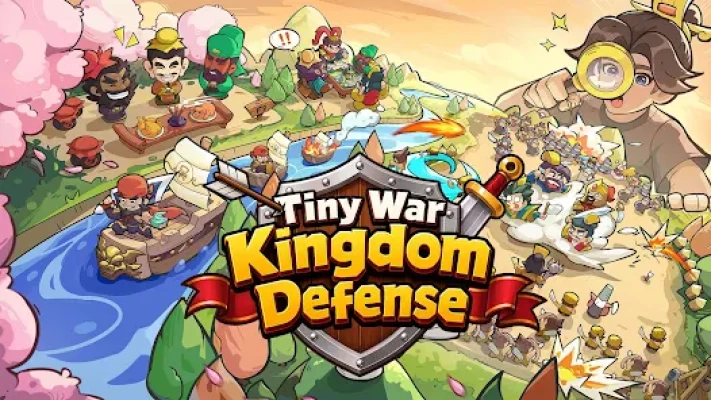
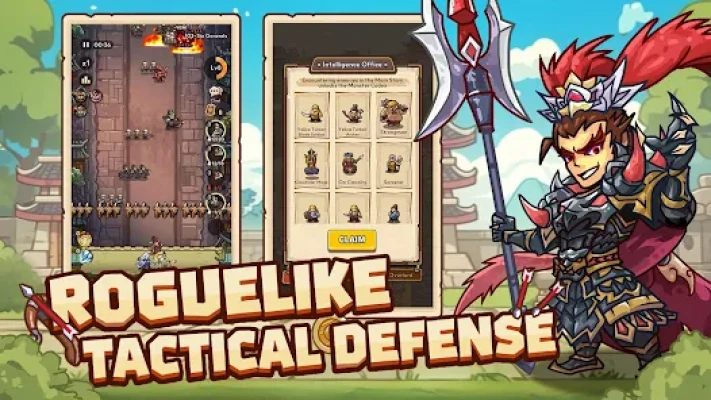
Each run is designed to be completed in roughly five minutes, but the decisions made during those few minutes can dramatically change how your army performs. During battle, you choose from three random cards, upgrade existing units or add new ones, and gradually create a unique army composition for that run.
The game also features melee units, ranged attackers, cavalry, magic users and summons, allowing players to experiment with different defensive formations. Legendary figures such as Guan Yu and Lu Bu can join the army, while Strategists provide support from the backline.
Beyond the main battles, Tiny War: Kingdom Defense includes offline resource collection, co-op gameplay and alliance wars.
What Is Tiny War: Kingdom Defense?
Tiny War: Kingdom Defense is a roguelike tactical defense game where players build an army during short battle runs and attempt to survive successive enemy waves.
Instead of using exactly the same army in every battle, the game gives players random card choices during a run. Each decision can strengthen an existing unit or introduce another type of soldier, creating different builds from one attempt to the next.
The main gameplay loop is:
Start a run → choose cards → build your army → survive waves → upgrade units → defeat enemies → collect rewards → strengthen your kingdom.
Tiny War: Kingdom Defense Gameplay
The game's most important mechanic is the combination of card selection and unit composition.
During a battle, players are presented with three random cards. These choices can be used to upgrade a unit already being developed or add another unit to the army.
This creates a roguelike progression system in which two runs can develop very differently.
One run might emphasize melee soldiers and defensive strength, while another could develop ranged attacks, magic and area damage.
The key is to build around the cards you actually receive rather than expecting every run to follow the same plan.
How to Play Tiny War: Kingdom Defense
A typical battle can be approached in five stages:
1. Establish Your Frontline
Start by creating a dependable defensive foundation.
Melee units can provide the frontline needed to prevent enemies from reaching more vulnerable units.
2. Add Damage From Behind
Once your frontline is stable, consider ranged or magic units that can attack from safer positions.
3. Watch the Card Choices
Every card selection can influence the direction of your build.
Consider whether upgrading an existing unit will provide more value than adding something new.
4. Adapt to the Enemy Waves
Do not assume the same army composition will work equally well in every situation.
If enemies are overwhelming the frontline, improve your defensive structure. If they are surviving too long, increase damage or add appropriate area attacks.
5. Strengthen the Build Before the Final Waves
As the run progresses, try to make your army more specialized rather than simply collecting random units.
A focused composition is usually easier to manage than an army with many unrelated strengths.
Tiny War Card Strategy
The random-card system is the heart of Tiny War: Kingdom Defense.
You receive three random cards during battle and must decide how to use them.
Upgrade or Expand?
One of the most important decisions is whether to improve a unit you already have or introduce another unit type.
Upgrade an existing unit when:
- It is already performing well.
- Your formation has a clear role for it.
- Improving it strengthens your main strategy.
- The current unit is central to your build.
Add a new unit when:
- Your army lacks an important role.
- You need another type of damage.
- Your frontline needs additional support.
- A new unit complements your current composition.
Avoid adding units simply because they are available.
Tiny War Unit Types
The game includes several broad unit categories:
- Melee
- Ranged
- Cavalry
- Magic
- Summons
These different unit types can be combined to create different defensive compositions.
Melee Units
Melee units are useful for establishing a frontline.
They can absorb pressure and keep enemies away from vulnerable ranged or support units.
Ranged Units
Ranged attackers can contribute damage while positioned behind frontline troops.
They become particularly valuable when your frontline can keep enemies occupied.
Cavalry
Cavalry provides another offensive option and can complement a mixed army.
Consider cavalry as part of your overall composition rather than building an entire strategy around one unit type unless the available cards support it.
Magic Units
Magic can provide specialized damage and crowd-control options.
The Google Play listing specifically gives ice mages as an example of units that can freeze enemies.
Summons
Summoned units add another layer to army composition and can help create unusual builds during roguelike runs.
Best Beginner Army Strategy
For a new player, a balanced composition is a sensible starting point.
Try to maintain:
Frontline → Damage → Support
A simple example is:
Melee + Ranged + Magic
The melee units provide frontline protection, ranged units contribute consistent damage, and magic can provide additional effects such as freezing.
This is not a fixed required combination. The game's random-card system means your available choices will change from run to run.
How to Build a Stronger Army
The strongest build is not necessarily the army containing the largest number of different units.
Instead, look for synergy.
For example:
Melee frontline + ranged damage + magic control
can create a clear structure:
- Melee units hold enemies.
- Ranged units attack from behind.
- Magic units provide additional effects.
Another approach might emphasize area damage with abilities such as lightning and fire, which the Google Play description specifically highlights.
The important point is to identify what your current cards are encouraging you to build and then reinforce that direction.
Tiny War: Kingdom Defense Beginner Tips
1. Build a Frontline Early
Do not allow your entire army to consist of fragile damage dealers.
A dependable frontline gives your other units time to work.
2. Avoid Random Upgrades
Think about the role of every upgrade.
A stronger unit is useful, but a stronger unit that fits your composition is even more valuable.
3. Look for Synergy
Combine units that complement each other.
The game specifically encourages mixing different unit types to create a composition suited to your playstyle.
4. Do Not Chase Every Card
Not every card needs to become part of your build.
Sometimes improving an existing unit is better than adding another type.
5. Use Area Damage Against Groups
When enemy waves contain many targets, area-of-effect abilities can become particularly useful.
The game's description highlights lightning and fire as examples of AoE-oriented strategies.
6. Use Control Effects
Damage is not the only way to stop a wave.
The listing specifically mentions ice mages freezing enemies, showing how control effects can support a defensive formation.
7. Adapt Each Run
The random-card system means you should not expect to recreate exactly the same army every time.
Treat each run as a new tactical puzzle.
Tiny War Warlords and Strategists
Tiny War: Kingdom Defense is set in the world of Romance of the Three Kingdoms, with famous warriors including Guan Yu and Lu Bu.
The game divides these legendary characters into important battlefield roles.
Warlords
Warlords fight directly on the battlefield and can influence the course of the battle through their combat presence.
Strategists
Strategists operate from the backline and provide buffs that improve the army.
This creates an additional layer of team building beyond ordinary units.
When developing your army, consider both direct combat strength and the benefits provided by supporting characters.
Guan Yu and Lu Bu
Guan Yu and Lu Bu are specifically mentioned in the game's Google Play description as iconic warriors that players can collect and level up.
Rather than treating legendary heroes as replacements for the rest of the army, think of them as important components within a larger composition.
Your regular units still determine how the battlefield functions around them.
Tiny War Offline Rewards
Tiny War: Kingdom Defense includes an offline reward system.
Resources continue accumulating while you are away, and the amount collected increases as you clear more stages.
A useful routine is:
Log in → collect offline resources → upgrade your army → attempt new stages → repeat.
The system makes stage progression important even when you are not actively playing.
How to Use Offline Rewards Efficiently
Do not allow accumulated resources to sit unused for too long.
After collecting offline resources, consider whether they can improve:
- Your main units
- Legendary warriors
- Supporting Strategists
- Equipment or other progression systems available in your current version
Then return to the battlefield and use the improved army to push further.
Because the game states that cleared stages influence offline resource collection, progressing through new stages can also improve the value of future offline rewards.
Tiny War Co-op Guide
Tiny War: Kingdom Defense supports cooperative play for difficult stages.
The Google Play listing explains that players can invite friends and tackle challenging stages together.
Co-op Tips
- Coordinate your army composition.
- Avoid building identical roles if your partner already covers them.
- Communicate about frontline and damage responsibilities.
- Combine complementary unit types.
- Use difficult stages as opportunities to test coordinated strategies.
A balanced team can be more useful than two players independently building identical armies.
Alliance Wars
The game also includes alliances with daily missions, training and competitive alliance wars.
Joining an alliance adds a social progression layer to the game.
Alliance Tips
Participate regularly in alliance activities rather than joining only for occasional rewards.
Complete available missions, contribute to training and communicate with other members when preparing for alliance battles.
Five-Minute Battles
One of the game's defining features is its short-session design.
The Google Play listing promotes five-minute runs, making Tiny War suitable for players who want tactical gameplay without committing to long battles.
This also changes how you should approach each decision.
You have limited time to develop an effective army, so avoid spending too long trying to create a perfect theoretical build.
Work with the cards you receive and make practical decisions quickly.
Advanced Tiny War Strategy
Build Around Your Best Early Unit
If the first useful cards point toward a particular unit type, consider developing that direction rather than constantly changing your strategy.
Create a Clear Role for Every Unit
Ask:
What does this unit contribute?
If you cannot identify its role, another upgrade may provide more value.
Balance Defense and Damage
Too much defense can leave you unable to clear waves efficiently.
Too much damage can cause your army to collapse if enemies reach your vulnerable units.
Combine Control and Damage
Freezing enemies while dealing damage is one example of how control and offense can complement one another.
Use AoE When the Battlefield Gets Crowded
Lightning and fire are specifically presented as examples of area-damage strategies.
Let the Run Determine the Build
The game is intentionally roguelike.
Do not force the same strategy into every run.
Common Tiny War Mistakes
Building Only One Unit Type
A specialized strategy can work, but it can also leave you vulnerable when the situation changes.
Ignoring the Frontline
Ranged and magic units cannot contribute effectively if enemies reach them too quickly.
Taking Every New Unit
More units do not automatically mean a stronger army.
Ignoring Support Heroes
Strategists can provide valuable backline buffs, so they should be considered when developing your overall lineup.
Forgetting Offline Rewards
Resources accumulate while you are away, so regularly collecting them keeps your progression moving.
Playing Every Run the Same Way
The random-card system is specifically designed to produce different builds.
Adapt to what the game gives you.
Tiny War: Kingdom Defense Features
Roguelike Card Combat
Choose from three random cards during battles and develop a unique build for each run.
Tactical Unit Defense
Combine melee, ranged, cavalry, magic and summons to create different army compositions.
Three Kingdoms Heroes
Collect and level up famous warriors such as Guan Yu and Lu Bu.
Warlords and Strategists
Use frontline warriors and backline support characters to create more complete formations.
Offline Rewards
Continue collecting resources while away from the game.
Co-op Gameplay
Invite friends to tackle difficult stages together.
Alliance Wars
Join an alliance and participate in missions, training and competitive battles.
Short Runs
The game is designed around approximately five-minute battle sessions.
Tiny War: Kingdom Defense Pros and Cons
Pros
- Short tactical battles
- Roguelike card system
- Different army compositions
- Multiple unit types
- Three Kingdoms heroes
- Warlord and Strategist roles
- Offline resource collection
- Co-op gameplay
- Alliance activities
- Suitable for short gaming sessions
Cons
- Random card choices mean some runs may develop differently from your preferred strategy.
- Players who prefer traditional fixed tower-defense layouts may find the roguelike army-building approach different.
- The game contains advertisements and in-app purchases.
Is Tiny War: Kingdom Defense Worth Playing?
Tiny War: Kingdom Defense combines several systems into a compact format: roguelike card selection, tactical army building, legendary Three Kingdoms characters, offline progression and multiplayer features.
Its biggest gameplay focus is adaptation. Rather than following one permanent build, players make decisions during each short run and develop an army around the cards they receive.
For players who enjoy strategy RPGs, roguelike games, tactical defense, card-based progression and Romance of the Three Kingdoms themes, the game's combination of systems provides several different ways to play.
Tiny War: Kingdom Defense FAQ
What is Tiny War: Kingdom Defense?
Tiny War: Kingdom Defense is a roguelike tactical defense RPG developed by Neptune Corp. It combines random card choices, unit deployment, hero progression and wave-based battles.
How long is a Tiny War battle?
The game is designed around runs of approximately five minutes.
What unit types are available?
The game features melee, ranged, cavalry, magic and summon units.
Does Tiny War have Three Kingdoms characters?
Yes. The game is set in the world of Romance of the Three Kingdoms and includes legendary figures such as Guan Yu and Lu Bu.
Does Tiny War have offline rewards?
Yes. Resources accumulate while players are offline, with rewards increasing based on stage progression.
Does Tiny War have co-op?
Yes. Players can invite friends to tackle difficult stages together.
Does Tiny War have alliance wars?
Yes. Alliances include daily missions, training and competitive alliance wars.
How does the card system work?
During a run, players choose one of three random cards. The selected card can upgrade an existing unit or introduce another unit, creating a different build for each run.
Is Tiny War: Kingdom Defense free?
The Google Play listing shows the game with advertisements and in-app purchases.
Tiny War: Kingdom Defense Quick Tips
- Build a reliable frontline early.
- Protect ranged and magic units behind tougher troops.
- Upgrade units that already fit your strategy.
- Do not select every new unit just because it is available.
- Use three-card choices to specialize your army.
- Combine control effects with damage.
- Use AoE against large enemy groups.
- Consider both Warlords and Strategists when building your army.
- Collect offline resources regularly.
- Push new stages to improve future offline rewards.
- Coordinate unit roles in co-op.
- Participate in alliance missions and activities.
- Adapt your strategy to the cards available in each run.
- Use the short five-minute format to experiment with different builds.
Final Thoughts
Tiny War: Kingdom Defense turns tactical defense into a short roguelike experience where every run can develop differently.
The three-card selection system encourages experimentation, while melee, ranged, cavalry, magic and summon units give players several ways to construct an army. Warlords and Strategists add another layer of team building through direct combat and backline support.
The best approach for new players is to establish a dependable frontline, build supporting damage behind it, choose upgrades that reinforce your composition and adapt whenever the available cards point toward a different strategy.
With offline rewards, co-op and alliance wars extending beyond the main battles, Tiny War: Kingdom Defense combines short tactical sessions with longer-term kingdom and character progression.
Rate the Game
User Reviews













Popular Games



















 Android
 iOS
iOS Windows
 Xbox
Xbox