




Latest Version
September 14, 2026
NEOWIZ
Role Playing
iOS
0
Report a Problem
More About :game
Brave Nine is a collectible turn-based strategy RPG from NEOWIZ.
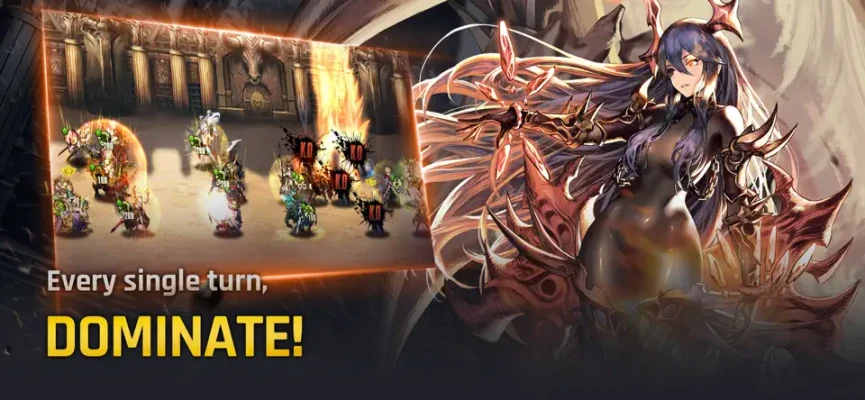
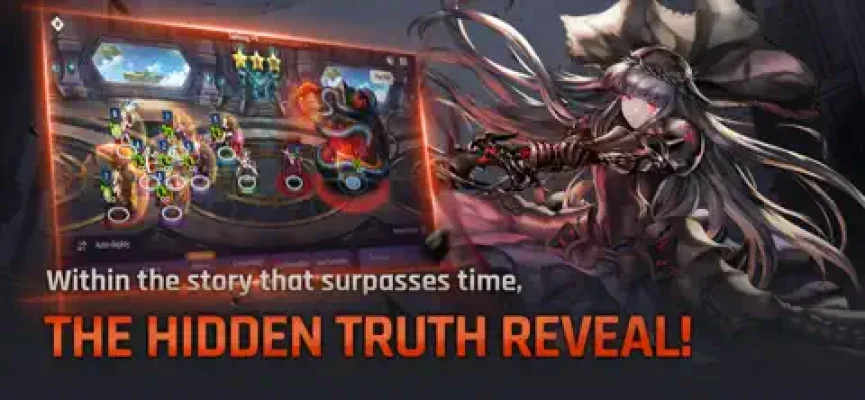
Its defining feature is formation-based combat. You don't simply select your strongest nine characters and expect them to win. Your formation, attack order, targeting priorities, skill effects, and the interaction between individual mercenaries can completely change the outcome of a battle.
The current App Store listing describes more than 300 mercenaries, numerous skill combinations, formation arrangements, and attack-order strategies. It also supports repeated battles that can continue even after the game is closed.
The result is a game where team building matters just as much as character strength.
How Brave Nine Combat Works
A typical battle revolves around a team of mercenaries positioned on a grid.
Each mercenary has specific characteristics and skills. Your job is to decide:
- Which mercenaries to bring
- Where each unit should stand
- Who should attack first
- Which enemy should be targeted
- How buffs and debuffs interact
- Which units should protect others
- How your formation will behave after an important unit falls
The combat system is largely about preparation rather than rapid tapping.
A formation that looks powerful on paper can fail if its attack order causes the wrong unit to receive a buff, an area attack to miss important targets, or a damage dealer to attack an undesirable target.
That is why formation design is the heart of Brave Nine.
The Four Main Mercenary Roles
Understanding your mercenaries by role is one of the first steps toward building a reliable team.
Warriors
Warriors are generally offensive units designed to deal damage.
They can be useful for eliminating vulnerable enemies and putting pressure on the opponent before the enemy formation becomes established.
Don't automatically put every Warrior at the front. Their exact skills and targeting behavior should determine their position.
Defenders
Defenders are built around survivability and protection.
Their purpose is often to absorb pressure, protect vulnerable allies, or disrupt the opponent's damage plan.
A strong Defender can buy your other units the time they need to execute their abilities.
Mages
Mages can provide powerful attacks, often with significant area coverage.
However, some Mage abilities require preparation or charging before they activate. That makes positioning and protection particularly important.
A Mage that survives long enough to use its ability can completely change a battle.
Supporters
Supporters improve the effectiveness of the rest of your formation through buffs, healing, protection, or other utility effects.
They are especially sensitive to attack order.
A Supporter can be extremely powerful in one formation and surprisingly ineffective in another simply because its intended ally acts at the wrong time.
Main Features
300+ Mercenaries
Brave Nine offers a large collection of mercenaries with different skills and strategic purposes.
Formation-Based Combat
Position your team on the battlefield and create formations designed around specific strategies.
Attack Order
The order in which mercenaries act can be just as important as their individual statistics.
Campaign
The story campaign provides a large amount of PvE content and follows the mercenary group's journey through the game's fantasy world.
Arena
Compete against other players and test your formations in PvP.
World Arena
Battle players from around the world using your carefully developed teams.
Guild Content
Join a guild, cooperate with other players, and participate in guild-focused activities.
World Bosses
Build specialized teams for powerful boss encounters.
Co-op Content
Work with other Captains in cooperative challenges and earn valuable rewards.
Auto-Deploy and Repeat Battles
Brave Nine includes automated progression features that make resource farming less demanding.
Companions
Companions are connected to individual mercenaries. Each mercenary has a specific Companion, and Companion progression can increase that mercenary's skill level.
Full Strategy Guide for Brave Nine
1. Stop Thinking Only About Power Rating
One of the biggest beginner mistakes is assuming the highest-stat mercenaries automatically form the best team.
Brave Nine doesn't work that way.
A slightly weaker mercenary can be more valuable if its skill perfectly supports your formation.
Before replacing a character, ask:
What role does this unit perform?
Then ask:
Does my formation actually need that role?
A balanced team can outperform a collection of individually powerful units.
2. Build Around a Win Condition
Every serious formation should have a reason it is expected to win.
For example:
Burst Formation
Destroy important enemies before they can establish their strategy.
Defensive Formation
Survive the opponent's opening attacks and win through durability.
Control Formation
Use debuffs, disruption, targeting manipulation, or other effects to interfere with the enemy.
Area Damage Formation
Use attacks that affect multiple enemies and punish clustered formations.
Protection Formation
Keep one or two important damage dealers alive while the rest of the team supports them.
Once you know your win condition, selecting mercenaries becomes much easier.
3. Formation Is a Weapon
The battlefield grid should never be treated as decoration.
Your placement determines:
- Who gets attacked
- Which enemies are within skill range
- Which allies receive support effects
- How area attacks connect
- How tanks protect other units
- Which targets your damage dealers can reach
If you repeatedly lose to the same opponent, don't immediately upgrade everyone.
First try changing the formation.
Sometimes moving one mercenary by a single position can completely change the battle.
4. Plan the Attack Order
Attack order is one of the most important strategic systems in Brave Nine.
A Supporter acting before the wrong ally can waste a valuable buff.
A damage dealer acting too early may attack a poor target.
A control unit acting too late may allow an enemy to activate its ability first.
Before starting a difficult battle, consider:
Who needs to act first?
Then:
Who benefits from that action?
Then:
What should happen immediately afterward?
This creates a chain rather than a collection of independent attacks.
5. Protect Your First Important Action
Your opening turns can determine the entire battle.
If your strategy depends on a particular mercenary using an ability, make sure your formation gives that unit a reasonable chance to perform its job.
For example, if your main damage dealer requires a Supporter buff, don't accidentally arrange the order so that the damage dealer acts before receiving the buff.
Likewise, if a Mage needs time to activate a powerful attack, protect it rather than exposing it unnecessarily.
6. Don't Put Every Strong Unit in the Same Area
A formation can become vulnerable if too many important characters are exposed to one area attack.
Think about how the enemy's abilities interact with your formation.
If one enemy attack can hit your entire damage core, spreading your important units may be more effective.
On the other hand, some strategies deliberately group units so that buffs or protective abilities affect several allies.
The correct answer depends on your formation.
7. Study Enemy Targeting
When a battle goes badly, watch who gets attacked and why.
Instead of simply saying:
"My team isn't strong enough."
Ask:
- Which unit was attacked first?
- Was that intentional?
- Did a Taunt or targeting effect influence it?
- Did my damage dealer attack the wrong target?
- Did my Supporter buff the wrong ally?
- Did an important unit die before activating its skill?
Brave Nine rewards players who analyze the sequence of events.
8. Use Defenders as Part of the Strategy
A Defender isn't valuable simply because it has high HP.
Its real value comes from what happens while the opponent is dealing with it.
A good Defender can give your:
- Mage time to charge
- Supporter time to buff
- Damage dealer time to attack
- Control unit time to disrupt the enemy
Think of defensive units as time generators.
9. Don't Ignore Supporters
New players often focus heavily on damage.
That can be a mistake.
A well-built Supporter can improve the entire formation.
But support skills must be coordinated with your attack order.
Before using a Supporter, determine:
- Who should receive the effect?
- When does that character act?
- Will the recipient still be alive?
- Does the buff actually improve the next action?
This is especially important because support targeting can interact with the sequence of your formation.
10. Build Around Synergy, Not Popularity
A famous mercenary isn't automatically the best choice for every team.
A better question is:
Which mercenary makes my existing team stronger?
Look for combinations such as:
- Buff + damage dealer
- Defender + fragile Mage
- Debuff + burst attacker
- Control + area damage
- Protection + single-target carry
- Speed or turn manipulation + high-impact opener
The strongest teams usually feel like interconnected systems.
11. Upgrade a Core Team First
Avoid spreading all of your resources across dozens of mercenaries.
Early on, choose a dependable core group and invest in them.
A practical approach is:
- Main damage dealer
- Secondary damage dealer
- Defender
- Supporter
- Utility/control unit
- Additional specialist units
Once that foundation is strong, expand into specialized teams.
12. Don't Build Only One Team
Eventually, different game modes require different answers.
Your best campaign formation may not be your best Arena formation.
A World Boss can demand completely different damage patterns.
Guild content can require another setup.
Therefore, maintain several formation concepts rather than trying to create one team that does everything.
13. Use PvE to Test Ideas
PvE is a useful place to experiment.
If you're considering:
- A new formation
- A different attack order
- A new Supporter
- A different tank
- A new damage combination
Test it in a lower-risk environment before taking it into serious PvP.
This lets you see how the formation actually behaves.
14. Campaign Strategy
The campaign is more than a source of story content.
It is also a useful progression environment.
Use campaign stages to:
- Test formations
- Farm resources
- Identify weaknesses
- Improve your core mercenaries
- Experiment with attack order
- Learn enemy patterns
If you repeatedly fail a stage, don't immediately assume that more levels are required.
Try changing the formation first.
15. Use Repeat Battles Intelligently
The game's repeat and automated battle features make farming considerably easier.
Use automation for stages where your formation already has a high success rate.
Don't automate difficult content before confirming that the team is reliable.
A failed automated run wastes more than just time if it consumes valuable attempts or resources.
16. Runes and Equipment
As your mercenaries become stronger, progression moves beyond basic levels.
Rune and equipment choices should reinforce each character's role.
For example:
Damage dealer: prioritize offensive statistics that improve its intended damage pattern.
Defender: prioritize survivability and defensive consistency.
Supporter: improve the statistics that allow its support role to function reliably.
Specialist: build around whatever mechanic makes that unit valuable.
Don't automatically equip the highest numerical item.
Ask whether it improves the mercenary's actual job.
Brave Nine's later systems include Runes, Soul Gear, Insignia of Creed, Costumes, and other customization layers.
17. Understand Companions
Companions are directly associated with specific mercenaries.
A mercenary cannot simply borrow another character's Companion. Companion progression can increase the skill level of the associated mercenary, and max-ranked Companions can also unlock an appearance change.
This makes Companion progression particularly useful when you already know which mercenaries you intend to use long-term.
Don't invest blindly in every available Companion.
Prioritize the mercenaries that are actually part of your core teams.
18. Arena Strategy
PvP is where formation knowledge becomes especially important.
Before changing your team, study the opponent.
Look for:
- Front-line defenders
- Exposed damage dealers
- Clusters vulnerable to area attacks
- Obvious support targets
- Likely opening attacks
- Unusual formation patterns
Then build a counter rather than simply using your normal PvE team.
19. Learn From Defeats
A defeat contains useful information.
After losing, ask:
Did I lose immediately?
Your opening formation or speed/order may be the problem.
Did my damage dealer die early?
You may need better protection or repositioning.
Did I survive but deal insufficient damage?
Your damage composition may need adjustment.
Did my abilities hit the wrong targets?
Your formation or attack order may be wrong.
Did the opponent counter my entire strategy?
Build a second formation rather than repeatedly using the same one.
This mindset turns Arena losses into free tactical information.
20. Guild and Cooperative Content
Guild content provides another reason to develop specialized formations.
Don't assume that your Arena team will automatically be effective in every guild activity.
Study the objective and build accordingly.
Cooperative modes can also reward coordination and specialized damage setups rather than simply using your strongest general-purpose team.
21. World Boss Strategy
Boss battles require a different mindset from ordinary PvE.
Instead of asking:
"How quickly can I kill this enemy?"
consider:
"How much damage can my formation consistently produce?"
Look for:
- Boss weaknesses
- Damage windows
- Buff timing
- Debuff timing
- Survival requirements
- Repeatable attack patterns
A stable formation that performs consistently can be more useful than a high-risk burst team.
22. Advanced Formation Method
When designing a new team, use this five-step process:
Step 1 — Choose the Win Condition
Decide how the formation will win.
Step 2 — Choose the Carry
Select the mercenary responsible for your primary damage or objective.
Step 3 — Add Protection
Choose units that keep the carry alive.
Step 4 — Set the Attack Order
Arrange the sequence so buffs, debuffs, control effects, and damage connect correctly.
Step 5 — Test and Adjust
Play several battles and identify exactly where the strategy breaks.
This is much more effective than randomly changing characters after every loss.
Beginner Tips
- Learn formation mechanics before chasing rare mercenaries.
- Keep a reliable core team.
- Experiment with attack order.
- Don't ignore Supporters.
- Use Defenders to protect your important units.
- Don't waste upgrade materials on every character.
- Keep separate formations for different game modes.
- Test new strategies in PvE.
- Study why you lost rather than simply increasing levels.
- Check daily rewards and available events.
- Use repeat battles for reliable farming.
- Upgrade Companions for mercenaries you actually use.
- Don't assume the strongest-looking formation is the best one.
Common Mistakes
Using the Same Formation Everywhere
Different enemies require different solutions.
Ignoring Attack Order
This can completely undermine otherwise strong mercenaries.
Chasing Individual Power
A team with excellent synergy can outperform a collection of individually powerful units.
Overinvesting in Too Many Characters
Spread-out resources create many mediocre units instead of a strong core.
Ignoring Positioning
The wrong square can cause an important skill to miss its intended targets.
Forgetting About PvP Counterplay
A formation that dominates one opponent can be vulnerable to another.
Treating Auto-Battle as a Substitute for Strategy
Automation is useful after your formation works. It isn't a replacement for building that formation.
Difficulty
Overall Difficulty: Moderate to High
Brave Nine is easy to start but increasingly demanding to master.
The basic concept is simple:
Build a team → arrange it → choose the order → battle.
The complexity appears when you start considering:
- Skill interactions
- Target priorities
- Formation geometry
- Buff timing
- Debuffs
- Defensive positioning
- PvP counters
- Specialized builds
- Runes
- Companions
- Multiple game modes
This is a game where understanding why something works is more important than simply having a large roster.
Honest Review
Brave Nine's biggest strength is its combat system.
Many collectible RPGs ask players to assemble powerful characters and then largely watch the result. Brave Nine gives much more importance to formation design and sequencing.
That makes victories particularly satisfying because you can often identify exactly which tactical decision changed the outcome.
The game also offers a huge amount of collection and progression content, including more than 300 mercenaries, PvP, campaign stages, guild content, bosses, companions, and additional upgrade systems.
The downside is complexity. New players can easily become overwhelmed by the number of mercenaries, skills, upgrades, formations, and progression systems.
The App Store currently shows a 4.7/5 rating from about 4.3K ratings, although some reviews have also reported concerns about latency and performance at various points in the game's history.
Overall, Brave Nine is a strong choice for players who enjoy anime RPGs, collectible heroes, turn-based strategy, PvP, and deep team-building systems.
Pros
- Deep formation-based combat
- More than 300 mercenaries
- Strong emphasis on tactical planning
- Large amount of PvE content
- Multiple PvP modes
- Guild and cooperative activities
- Extensive character progression
- Companions add another strategic layer
- Auto and repeat battle options
- Distinctive anime-inspired artwork
- Plenty of room for experimentation
Cons
- Can be overwhelming for beginners
- Large roster makes team-building complicated
- Advanced systems take time to understand
- PvP can become highly competitive
- Progression requires careful resource management
- Performance or latency concerns have appeared in some player feedback
Is Brave Nine Worth Playing?
Yes, if you enjoy strategy more than direct control.
Brave Nine is especially worth trying if you like games where the fun comes from building a team, testing formations, discovering synergies, and figuring out why a battle succeeded or failed.
It is less suitable if you prefer action RPGs where you directly control your character during combat.
For fans of turn-based RPGs, tactical formations, collectible heroes, anime-style characters, and PvP strategy, Brave Nine offers a substantial amount of content.
Game Information
Game: Brave Nine – Strategy RPG
Developer: NEOWIZ
Genre: Role-Playing / Turn-Based Strategy RPG
Platforms: iPhone, iPad
Age Rating: 13+
Business Model: Free with in-app purchases
Current App Store Rating: 4.7/5 from approximately 4.3K ratings
App Size: Approximately 3.3 GB
Mercenaries: 300+
Main Features: Formation battles, campaign, Arena, World Arena, guild content, bosses, companions, PvE and PvP
Latest listed App Store version: 2.61.20
Latest listed version date: December 11, 2024
Frequently Asked Questions
Is Brave Nine free to play?
Yes. The iOS App Store lists Brave Nine as a free game with optional paid items.
How many mercenaries are in Brave Nine?
The game advertises more than 300 mercenaries to collect and build.
Is Brave Nine turn-based?
Yes. Its combat is based on turn-based strategic battles where formation and attack order are major parts of the strategy.
Can you play Brave Nine without controlling attacks manually?
Yes. The game is built around preparing your formation, mercenaries, and attack sequence before battles rather than directly controlling every attack.
What makes Brave Nine different from other RPGs?
Its formation and attack-order system is the main difference. Positioning and sequencing can determine whether a skill hits the right target or whether your overall strategy succeeds.
Are there PvP battles?
Yes. Brave Nine includes Arena and World Arena content alongside other competitive activities.
Does Brave Nine have guilds?
Yes. Guild-focused content is part of the game's broader multiplayer system.
What are Companions?
Companions are characters associated with specific mercenaries. They can increase the associated mercenary's skill level as they are upgraded.
What should beginners focus on first?
Build a dependable core team, learn formation positioning, understand attack order, and avoid spreading your resources too thinly.
Is Brave Nine difficult?
It is easy to understand at a basic level but becomes strategically complex as you encounter more mercenaries, skills, formations, PvP strategies, and progression systems.
Final Strategy Checklist
Before entering an important battle, ask:
What is my win condition?
Who is my primary damage dealer?
Who protects that unit?
Which enemy should be attacked first?
Is my formation exposing important units?
Is my attack order correct?
Will my Supporter buff the intended ally?
Can my Mage survive long enough to use its skill?
Are my Defenders positioned effectively?
Does the enemy formation require a counter?
Are my Runes and equipment supporting each unit's role?
Are my Companions invested in the mercenaries I actually use?
Would a different formation solve the problem before I spend more resources?
The central lesson of Brave Nine is simple: don't ask only whether your mercenaries are strong. Ask whether they work together. The right formation, attack order, and skill synergy can turn an ordinary roster into a highly effective tactical team.
Rate the Game
User Reviews













Popular Games

















 Android
 iOS
iOS Windows
 Xbox
Xbox