



Latest Version
September 12, 2026
SQUARE ENIX
Role Playing
iOS
0
Report a Problem
More About :game
Instead of following exactly the same battle routine every time, each run asks you to adapt. Blessings change as you progress through a Rift, enemies arrive in groups, and your party needs to be adjusted around the strengths of your characters and equipment.
The result is a Dragon Quest experience that rewards both quick reactions and sensible long-term character building.
What Is DRAGON QUEST Smash/Grow?
DRAGON QUEST Smash/Grow is a roguelite action RPG built around short-to-medium combat runs. Players enter Rifts, fight waves of monsters, collect temporary improvements, strengthen their characters and eventually face dangerous enemies and bosses.
The central gameplay loop is simple:
Enter a Rift → defeat monsters → build your character → select Blessings → charge powerful attacks → defeat the boss → improve your party → take on harder content.
The game's official description highlights its fast combat, randomized Blessings, classic Vocations, story-driven Rifts and cooperative quests.
Key Features
Fast-Paced Dragon Quest Combat
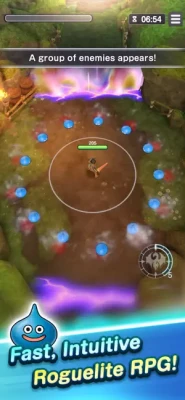
Combat is designed to keep you moving. Rather than simply selecting commands and waiting for turns, you actively deal with groups of enemies and look for opportunities to unleash powerful attacks.
The large groups of monsters make positioning and target selection important. A good run is not only about having high stats; knowing when to attack, when to reposition and when to save a powerful ability can make a major difference.
Blessings
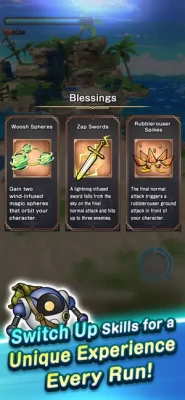
Blessings are one of the most important roguelite mechanics in DRAGON QUEST Smash/Grow.
They provide temporary advantages during a run, and the available choices change as you progress through each stage. This means you should not approach every Rift with exactly the same build.
A useful Blessing can completely change how effective a character feels during a particular run.
General rule: choose Blessings that strengthen what your party is already doing well rather than trying to build around every possible effect.
Vocations
Vocations provide another layer of character development.
Your party can be built around different classic Dragon Quest-style roles, while vocation tree nodes provide additional ways to improve their abilities.
When deciding how to develop a character, consider the role you actually need rather than automatically choosing the option with the biggest individual statistic.
A balanced team normally has a much easier time dealing with mixed enemy groups and difficult bosses.
Coup de Grâce Attacks
Coup de Grâce attacks are among the most satisfying tools in combat.
Rather than treating these powerful attacks as something to activate immediately, learn to build your gauge and use the attack when it provides the greatest value.
Against ordinary enemies, a powerful attack can clear a dangerous group. Against bosses, timing can be even more important.
Rifts
Rifts form the backbone of the game's adventure.
They combine exploration through combat stages with temporary Blessings and increasingly difficult encounters. Because your available bonuses can change between stages, every run can require a slightly different approach.
Story Adventure
The main story follows the effort to restore order to a world threatened by monsters appearing through mysterious Rifts. Roly, your mechanical ally, accompanies the adventure.
Story progression is useful not only for following the narrative but also for opening more of the game's systems and challenges.
Co-op Quests
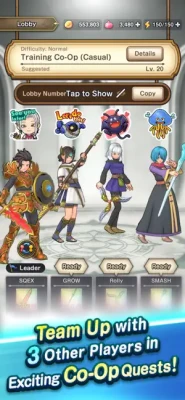
DRAGON QUEST Smash/Grow also includes cooperative quests where you can team up with other players. The official listing describes co-op groups of up to four players.
Co-op works best when players complement each other's strengths instead of bringing several characters that perform exactly the same role.
Gauntlette and Shrines
The game offers additional challenges beyond the main story.
The Gauntlette focuses on fighting through large numbers of monsters, while Shrines provide encounters against formidable bosses.
These modes are useful for players who want to test optimized parties and stronger builds.
DRAGON QUEST Smash/Grow Beginner Strategy Guide
1. Learn the Combat Before Chasing Perfect Builds
Your first priority should be understanding how combat works.
Pay attention to:
- Enemy attack patterns
- Enemy movement
- Your character's effective range
- When your powerful attacks become available
- How quickly enemies surround your party
- Which enemies should be eliminated first
A strong player can often survive situations that would overwhelm a less experienced character with better equipment.
2. Don't Waste Powerful Attacks
One of the easiest mistakes for new players is using a powerful ability simply because it is available.
Instead, ask:
Will this attack solve an immediate problem?
Use a major attack when:
- A large group is surrounding you
- Several dangerous enemies appear together
- A boss enters a vulnerable phase
- You need to recover control of the battlefield
- A powerful attack can finish an important target
Saving an attack for too long can also be a mistake. If the battlefield is becoming dangerous, use your resources rather than losing the run while waiting for a theoretically better opportunity.
3. Choose Blessings With a Plan
Because Blessings change during a run, you need to make decisions based on what you currently have.
For example, if your character is already performing strong direct damage, a Blessing that improves that strength may produce more value than an unrelated effect.
Think in terms of synergy, not individual numbers.
A smaller bonus that complements several existing abilities can be better than a larger bonus that does not fit your build.
4. Build Around Your Party
Do not judge characters independently.
Your goal is to create a party that works together.
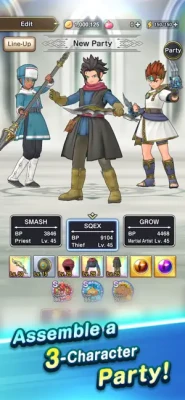
A useful party structure can include:
- A reliable damage dealer
- A character capable of handling groups or pressure
- A flexible character that complements the first two
The exact combination should change depending on your available equipment, Vocations and Blessings.
5. Upgrade the Characters You Actually Use
Resources are limited, especially early in a game with equipment-driven progression.
Avoid spreading every upgrade across every available character.
Instead:
- Pick your core party.
- Identify your most important equipment.
- Improve the characters you use most.
- Strengthen weaknesses only when they become a genuine problem.
- Expand your roster once your main team is comfortable.
This creates a much stronger progression curve than constantly switching between underdeveloped characters.
Best Build Strategy
There is no single permanent “best build” for every Rift because the roguelite Blessing system changes the available options.
Instead, think about three layers:
Core Build
Your equipment and character development provide the foundation.
Run Build
Blessings determine how your character develops during the current Rift.
Boss Build
Your final choices should allow the party to survive and deal consistent damage against the boss.
A build that destroys normal enemies but struggles against bosses is not necessarily a good build.
How to Choose Blessings
When several Blessings are available, consider them in this order:
1. Does it strengthen my main damage source?
If yes, it is immediately worth considering.
2. Does it solve my biggest weakness?
If your damage is already excellent but survival is poor, defensive utility may have greater value.
3. Does it work with my other bonuses?
Synergy is particularly important in a roguelite.
4. Will it remain useful later in the Rift?
A bonus that is powerful for one encounter but irrelevant afterward may not be the best long-term choice.
Boss Battle Strategy
Boss fights require a different mindset from ordinary encounters.
Study the Pattern
Do not rush immediately toward maximum damage.
Watch the boss long enough to understand:
- Its attack range
- Its movement
- Dangerous areas
- Recovery windows
- Summoned enemies
- When it becomes vulnerable
Keep Your Escape Route Open
One of the worst positions during a boss fight is being trapped against an obstacle or surrounded by smaller enemies.
Maintain enough space to move.
Save Burst Damage
Try to enter important boss phases with your strongest abilities available.
When a boss becomes vulnerable, this is often the best opportunity to combine your strongest attacks.
Deal With Adds When Necessary
If smaller enemies are creating a serious threat, eliminate them.
There is little benefit in focusing exclusively on a boss while ordinary enemies gradually remove your ability to move.
Rifts: How to Get Better Runs
Rifts reward adaptation.
At the beginning of a run, determine what your character already does well.
Then build around that strength.
For example:
Strong single-target damage → look for bonuses that improve sustained damage and boss performance.
Strong area damage → prioritize effects that help you clear large enemy groups efficiently.
Weak survivability → select defensive or utility improvements before chasing additional damage.
Balanced party → choose complementary bonuses rather than stacking the same effect repeatedly.
The important point is to make decisions based on the current run instead of following a rigid build guide.
Equipment and Character Progression
Equipment plays an important role in long-term progression. Community documentation also describes equipment, weapons, armor, accessories and additional character-growth systems as important parts of the game's progression.
When improving equipment, prioritize the gear that benefits your main party.
Do not automatically replace an item simply because another piece has a slightly higher number.
Look at the complete package:
- Base statistics
- Skills
- Bonuses
- Character compatibility
- Your current build
- Upgrade potential
A piece of equipment that fits your character's role can outperform a theoretically stronger item that does not match your playstyle.
Free-to-Play Progression Tips
DRAGON QUEST Smash/Grow includes in-app purchases and equipment-related progression, so resource management is important for players who want to progress without spending heavily.
Save Valuable Resources
Do not spend premium resources immediately just because you can.
Before committing resources, consider whether:
- You need the item now
- It improves your main party
- A current event offers better value
- You have enough resources for future opportunities
Focus on One Strong Team
A concentrated roster is usually more efficient than trying to make every character equally powerful.
Complete Available Content
Story missions, events and additional modes can provide useful progression opportunities.
Avoid Chasing Every Upgrade
Not every new item needs to become part of your permanent build.
Choose upgrades that actually improve your team.
Co-op Strategy
Co-op becomes much easier when players cover different functions.
Before entering a difficult cooperative quest, consider what your team is missing.
A strong cooperative group should ideally have:
- Consistent damage
- Crowd-control or group-clearing capability
- Enough survivability
- Players who understand when to use major attacks
Avoid having everyone chase the same enemies.
Good positioning and target selection can make a larger difference than simply bringing the highest-rated equipment.
Common Beginner Mistakes
Mistake 1: Ignoring Blessing Synergy
Choosing random bonuses can produce a weaker build.
Fix: Look for combinations that improve the same core strategy.
Mistake 2: Spending Resources Too Quickly
Premium resources can disappear surprisingly fast.
Fix: Decide what your main team actually needs first.
Mistake 3: Upgrading Too Many Characters
Trying to maintain an enormous roster early can slow progression.
Fix: Establish a primary party.
Mistake 4: Saving Every Powerful Attack
Holding a major attack forever is just as bad as wasting it.
Fix: Use it when it prevents a dangerous situation or creates a major damage opportunity.
Mistake 5: Ignoring Movement
Strong equipment cannot compensate for repeatedly standing in dangerous attacks.
Fix: Learn enemy patterns and keep room to maneuver.
Mistake 6: Treating Every Run the Same
The changing Blessing system is designed to encourage adaptation.
Fix: Build around what the current run gives you.
Advanced Strategy
Once you understand the basic combat system, start thinking about tempo.
Tempo means controlling how quickly the battlefield becomes dangerous.
Rather than simply asking, “How much damage can I deal?” ask:
How quickly can I remove the threats that can kill my party?
This changes target priority.
A weak enemy that is about to surround your character may be more important than a stronger enemy standing far away.
Likewise, eliminating a dangerous ranged opponent can sometimes be more valuable than attacking the boss for another few seconds.
How to Improve Your Runs
If you repeatedly fail the same content, don't immediately assume you need stronger equipment.
Review the run.
Ask:
- Did I take too much unnecessary damage?
- Did I choose Blessings that worked together?
- Did I upgrade the right character?
- Did I waste a Coup de Grâce attack?
- Was my party balanced?
- Did I target the correct enemies?
- Did I enter the boss fight with enough resources?
This process is often more useful than simply grinding without changing your strategy.
DRAGON QUEST Smash/Grow Pros and Cons
Pros
- Fast real-time Dragon Quest combat
- Roguelite runs provide variety
- Blessings encourage different builds
- Classic Vocations add character customization
- Strong Dragon Quest presentation
- Story progression and additional challenges
- Cooperative quests
- Boss-focused content through Shrines
- Large groups of monsters create exciting combat encounters
Cons
- Progression can become grind-heavy
- Equipment and character development require careful resource management
- Randomized systems mean some runs can feel less favorable than others
- Players who dislike gacha-style progression may find the equipment system frustrating
- Difficulty can increase sharply as progression continues
The App Store currently shows a 4.5/5 rating from around 1.2K ratings, although individual player experiences vary considerably. Some reviews praise the combat, variety and ongoing updates, while others criticize grinding and equipment progression.
Is DRAGON QUEST Smash/Grow Worth Playing?
If you enjoy Dragon Quest, roguelite RPGs and fast mobile combat, DRAGON QUEST Smash/Grow is an interesting combination.
Its biggest strength is the way the Blessing system changes each run. You are encouraged to experiment rather than simply repeating one fixed build.
The game is less appealing if you strongly dislike randomized equipment systems, grinding or free-to-play progression mechanics.
Overall, the combination of Dragon Quest characters and atmosphere + real-time combat + roguelite progression + party building gives Smash/Grow its own identity rather than simply copying the traditional Dragon Quest formula.
DRAGON QUEST Smash/Grow Tips at a Glance
Best beginner advice:
- Learn enemy attack patterns.
- Keep moving during difficult encounters.
- Build around Blessing synergy.
- Concentrate upgrades on your main party.
- Do not waste powerful attacks.
- Keep an escape route during boss fights.
- Prioritize dangerous enemies.
- Save premium resources when possible.
- Adapt your build to each Rift.
- Use co-op parties with complementary roles.
- Upgrade equipment that actually fits your characters.
- Treat every failed run as information for the next one.
DRAGON QUEST Smash/Grow FAQ
Is DRAGON QUEST Smash/Grow free?
Yes. The App Store lists DRAGON QUEST Smash/Grow as free with in-app purchases.
Is DRAGON QUEST Smash/Grow a roguelite?
Yes. SQUARE ENIX describes it as a roguelite RPG, with changing Blessings that encourage players to adapt during each run.
Can you play DRAGON QUEST Smash/Grow on iPhone?
Yes. The game is available for iPhone and iPad. The App Store currently states that iOS 15.0 or later is required and lists iPhone XS or newer among the compatible devices.
Does DRAGON QUEST Smash/Grow have co-op?
Yes. Co-op quests allow players to join forces and fight monsters together; the official game information describes parties of up to four players.
What are Blessings?
Blessings are temporary bonuses selected during Rift progression. Their availability changes between stages, making them a major part of the game's roguelite strategy.
What are Vocations?
Vocations provide different character roles and progression options. Vocation tree nodes can further improve a character's abilities.
What are Rifts?
Rifts are the game's dungeon-style stages where players fight monsters, build their characters during the run and progress toward tougher encounters.
What are Coup de Grâce attacks?
They are powerful signature attacks that can be used to deliver major bursts of damage during combat.
Does the game have boss battles?
Yes. Boss encounters are part of the game's Rift progression, while Shrines provide additional formidable boss challenges.
Does DRAGON QUEST Smash/Grow receive updates?
Yes. The App Store version history shows multiple updates and bug-fix releases, with version 1.4.0 listed on September 2, 2026.
Final Verdict
DRAGON QUEST Smash/Grow is best approached as a run-based action RPG rather than a traditional turn-based Dragon Quest game. Its strongest ideas are the fast combat, constantly changing Blessings and flexible party development.
For new players, the key is not to chase the biggest numbers immediately. Learn the combat, build around your strongest characters, select Blessings that complement each other and treat every Rift as a fresh tactical puzzle.
That approach makes the game's progression much more enjoyable and gives you a better chance of handling its increasingly difficult encounters.
Rate the Game
User Reviews













Popular Games


















 Android
 iOS
iOS Windows
 Xbox
Xbox