


Latest Version
November 28, 2026
Go Dreams
Casual
Android
0
com.top10.valleyBuilder
Report a Problem
More About :game
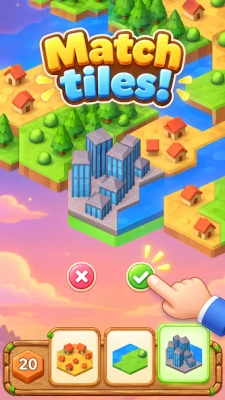
Tile Lands: Valley Builder is a casual building and puzzle game developed by Go Dreams. It invites players to create their own peaceful landscapes by placing hexagonal tiles and connecting matching edges to form a growing valley.
Instead of focusing on fast-paced action or complicated construction controls, the game offers a relaxed experience built around thoughtful tile placement. Every new tile becomes part of a larger landscape, allowing players to develop forests, rivers, and charming settlements while earning rewards.
The main challenge is deciding where each tile should go. Matching the edges of neighboring tiles helps create a connected environment, while completing quests and collecting resources supports the valley's development.
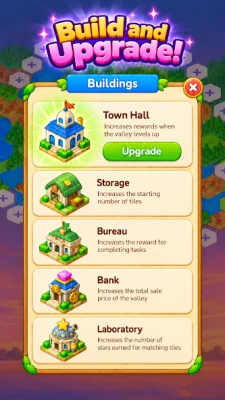
The game also introduces a progression system that extends beyond a single building session. Players can level up their valleys, collect diamonds, and eventually sell a completed valley to invest in permanent upgrades.
These upgrades improve future adventures and provide new possibilities for developing different landscapes. Every new valley becomes another opportunity to experiment with tile arrangements and create a unique world.
For players who enjoy relaxing puzzle games, creative building experiences, and gradual progression, Tile Lands: Valley Builder offers an enjoyable combination of strategy and landscape design.
Main Features of Tile Lands: Valley Builder
Build Beautiful Landscapes with Hexagonal Tiles
The central feature of the game is its hexagonal tile-placement system.
Players place tiles on the board and connect matching edges to create a continuous landscape. Each placement contributes to the development of the valley and helps transform an empty area into a more attractive environment.
The hexagonal design provides several possible connections around each tile, making placement decisions an important part of the puzzle.
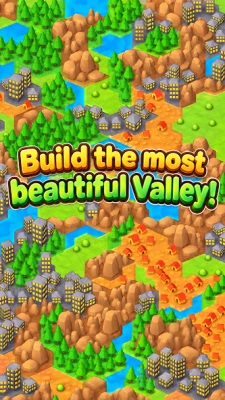
You can develop different natural features and combine landscape elements to create a valley that feels connected and visually appealing.
Connect Matching Tile Edges
Successful tile placement depends on matching the edges of neighboring pieces.
Before placing a tile, examine its surrounding sides and consider how it will connect with the existing landscape.
A carefully selected position can create better connections and help you develop the valley more efficiently.
This simple mechanic gives the game its puzzle element. You are not just placing random pieces; you are deciding how each new tile contributes to the larger environment.
Create Forests, Rivers, and Settlements
Tile Lands: Valley Builder allows players to develop several types of landscape features.
These include:
Forests that bring natural scenery to the valley.
Rivers that add water features and connect different areas.
Settlements that give the landscape a developed and welcoming appearance.
Combining these elements helps create a distinctive valley. You can experiment with different arrangements and gradually shape the environment according to your preferences.
Complete Quests and Earn Rewards
Quests provide additional objectives while you build.
Rather than concentrating only on placing tiles, you can work toward specific tasks that reward progress and encourage you to explore different building possibilities.
Completing quests also contributes to leveling up your valley, making them an important part of the overall progression system.
Collect Valuable Resources
Resources are essential for developing your valley and advancing through the game.
As you place tiles, complete objectives, and progress through the building experience, you can collect valuable resources that support further development.
Pay attention to the rewards available during each session and consider how they can help you reach your next objective.
Level Up Your Valley
The progression system allows your valley to grow beyond its initial state.
As you complete quests and collect resources, you can level up your environment and unlock additional opportunities.
This gives each building session a clear sense of progress. Your landscape gradually develops while you work toward the next milestone.
Sell Your Valley and Earn Diamonds
One of the distinctive mechanics is the ability to sell a completed valley.
When you are ready to move on from your current building project, selling the valley allows you to earn diamonds.
These diamonds can then be invested in permanent upgrades that improve your future adventures.
This creates a repeating progression cycle: build a valley, develop it, earn rewards, sell it, and use your diamonds to improve the next experience.
Permanent Upgrades
Diamonds provide access to permanent improvements that remain useful beyond a single valley.
These upgrades are important because they support long-term progression. Instead of starting every new adventure with exactly the same possibilities, you can gradually improve your building experience.
Choosing upgrades thoughtfully helps make future valleys more rewarding to develop.
Create a Unique Valley Every Time
Every new building adventure provides an opportunity to experiment with different tile arrangements.
You can develop landscapes with different combinations of forests, rivers, and settlements, making each valley feel like a separate creative project.
The freedom to try new layouts is a major part of the game's relaxing appeal.
Understanding the Gameplay
Tile Lands: Valley Builder follows a straightforward gameplay loop based on placing tiles, connecting landscapes, completing objectives, and improving your long-term progression.
You begin with a developing valley and gradually expand it by placing hexagonal pieces on the board.
Before placing each tile, examine its edges and compare them with the surrounding pieces. Matching connections helps create a more coherent landscape and contributes to your building progress.
As the valley grows, complete quests and collect valuable resources. These activities help you level up your environment and unlock further opportunities.
Eventually, you can sell your valley and receive diamonds. Rather than simply ending your progress, this action creates an opportunity to invest in permanent upgrades.
After purchasing improvements, start another building adventure with additional advantages.
The gameplay combines three important elements:
Puzzle solving: Choosing suitable positions for hexagonal tiles.
Creative building: Developing forests, rivers, and settlements.
Long-term progression: Completing quests, collecting diamonds, and purchasing permanent upgrades.
Understanding how these elements work together is the key to making steady progress.
Full Strategy Guide for Tile Lands: Valley Builder
Understand the Hexagonal Board
The first step toward becoming a better valley builder is learning how the hexagonal board works.
Unlike square tiles, hexagonal pieces can connect with several neighboring tiles around their edges. This creates more placement possibilities and makes each decision important.
Before placing a new piece, look at the surrounding landscape. Identify the edges that can connect and consider whether the tile will improve the overall layout.
Avoid placing pieces without checking their possible connections. Taking a moment to examine the board can help prevent unnecessary placement mistakes.
Prioritize Matching Edges
Matching edges are central to the puzzle system.
Whenever you receive a new tile, compare its sides with the nearby pieces. Look for positions where the landscape elements can connect naturally.
A good placement should contribute to the surrounding environment rather than creating an isolated section.
As your valley becomes larger, this becomes increasingly important because more neighboring tiles influence each new decision.
Plan Several Placements Ahead
One of the most useful strategies is to think beyond the tile you are currently placing.
Consider how the next few placements might develop the landscape. A position that looks suitable immediately may make later connections more difficult.
For example, when expanding a forest or river area, think about the directions in which you want the landscape to grow.
Planning ahead helps you avoid placing tiles in positions that restrict future building opportunities.
Develop a Balanced Landscape
Forests, rivers, and settlements all contribute to the appearance of your valley.
Rather than concentrating on one landscape type, experiment with different combinations.
A balanced arrangement can make the environment more visually interesting and provide flexibility when placing future pieces.
Try to create natural transitions between different landscape areas instead of separating every feature into completely isolated sections.
Complete Quests Regularly
Quests are an important part of progression.
Check the available objectives and consider how you can complete them while continuing to expand your valley.
Instead of placing tiles without a clear purpose, use quests to guide your decisions.
If an objective encourages a particular type of development, consider how you can work toward it without damaging the overall layout.
Completing quests consistently helps you earn rewards and level up your valley.
Collect Resources Efficiently
Resources contribute to your development, so pay attention to the opportunities available during each building session.
Try to combine your regular tile placements with activities that help you collect valuable resources.
Avoid overlooking rewards while concentrating exclusively on the visual appearance of your valley.
A good strategy balances creative building with steady progression.
Focus on Valley Development Before Selling
Selling your valley is an important part of the game's progression cycle.
However, you should think about your current development before deciding to move on.
Continue building, completing quests, and collecting resources while your valley still offers useful progression opportunities.
When you feel ready for a fresh adventure, selling the valley allows you to collect diamonds and invest in permanent improvements.
The best time to sell depends on your current progress and available opportunities.
Invest Diamonds in Permanent Upgrades
Permanent upgrades are valuable because their benefits extend into future adventures.
When you earn diamonds, consider which available improvements will provide the most useful long-term benefits.
Avoid spending all your diamonds without understanding what each upgrade contributes.
Think about your preferred building style and choose improvements that support the way you want to develop future valleys.
Use Each New Valley as a Fresh Experiment
After selling a valley and investing in upgrades, you can begin another building adventure.
Use this opportunity to try a different layout.
You might focus on developing larger forest areas, creating more connected river systems, or arranging settlements in a different pattern.
Experimenting with new layouts keeps the experience interesting and helps you become more comfortable with the tile-placement mechanics.
Avoid Rushing Your Decisions
Tile Lands: Valley Builder is designed around relaxed building rather than fast reactions.
There is little reason to place every tile immediately without considering its position.
Take your time to inspect the board, identify possible matches, and choose the placement that best supports your current objectives.
Thoughtful decisions can lead to a more organized valley and smoother progression.
Beginner Tips for New Players
If you are just starting Tile Lands: Valley Builder, these tips can help you understand the game and develop your first valley:
Learn how the hexagonal tile system connects neighboring pieces.
Examine tile edges before deciding where to place them.
Think about future placements instead of focusing only on the current tile.
Build connected forests, rivers, and settlements.
Complete quests to earn rewards and level up your valley.
Collect valuable resources as you expand the landscape.
Avoid making random placements that limit future options.
Consider your progress before deciding to sell your valley.
Save diamonds for permanent upgrades that support future adventures.
Experiment with different layouts each time you start a new valley.
Advanced Strategies for Better Valley Building
Think in Terms of Landscape Connections
As your valley expands, the number of possible tile connections increases.
Try to identify areas where future pieces could fit naturally. A well-planned section of the board can provide several useful placement opportunities.
Instead of focusing only on individual tiles, think about how groups of pieces work together.
This approach helps you create more connected landscapes and maintain flexibility.
Balance Creativity with Progression
A beautiful valley is satisfying, but quests and resources are also important.
Try to combine both objectives. Develop attractive landscape arrangements while making placements that contribute to your available tasks.
This helps you enjoy the creative side of the game without neglecting progression.
Make Permanent Upgrades Part of Your Long-Term Plan
Selling valleys and earning diamonds creates a progression system that continues across multiple building adventures.
Think about permanent upgrades as investments rather than ordinary rewards.
Prioritize improvements that will make future sessions more productive or provide advantages that match your preferred style of play.
Avoid Repeating the Same Layout
Building a new valley is an opportunity to explore different possibilities.
Try changing how you arrange forests, rivers, and settlements instead of copying your previous design.
Experimentation makes each new adventure more interesting and helps you understand how different tile combinations affect the overall landscape.
Use Quests as Building Inspiration
Quests can provide a useful direction when you are unsure how to continue developing your valley.
Use them as inspiration for your next placements.
By combining objectives with your own creative ideas, you can make steady progress while keeping the building experience enjoyable.
Common Mistakes to Avoid
Placing tiles without checking their edges: This can lead to poor connections and less organized landscapes.
Ignoring future placements: A tile may fit immediately but create problems for later development.
Focusing on only one landscape feature: Experimenting with forests, rivers, and settlements can create more interesting valleys.
Forgetting quests: Quests provide objectives and rewards that support progression.
Ignoring resource collection: Valuable resources help you continue developing your valley.
Selling too early without considering progress: Think about your current objectives before moving on to another valley.
Spending diamonds without a plan: Permanent upgrades are part of long-term progression, so consider their value before investing.
Repeating the same layout every time: Different arrangements help keep each new building adventure fresh.
Frequently Asked Questions
What is Tile Lands: Valley Builder?
Tile Lands: Valley Builder is a casual tile-placement puzzle and world-building game where players create landscapes using hexagonal tiles.
Who developed Tile Lands: Valley Builder?
The game is published on Google Play by Go Dreams.
How does the tile-placement system work?
Players place hexagonal tiles on the board and connect matching edges to develop a continuous landscape.
What can players build?
Players can create forests, rivers, and charming settlements by arranging landscape tiles.
Does the game include quests?
Yes. Players can complete quests to earn rewards, collect resources, and level up their valleys.
What are diamonds used for?
Diamonds are earned when players sell their valleys. They can be invested in permanent upgrades that improve future building adventures.
Can players sell their completed valley?
Yes. Selling a valley is part of the progression system and allows players to earn diamonds for permanent improvements.
Do upgrades carry over to future adventures?
Yes. The game describes permanent upgrades that help improve subsequent valley-building sessions.
Is every valley the same?
No. Players can create a unique valley every time they play by experimenting with different hexagonal tile arrangements.
Is Tile Lands: Valley Builder suitable for casual players?
Yes. Its relaxed tile-placement mechanics, creative building activities, and gradual progression make it suitable for players who enjoy casual puzzles and world-building games.
Final Thoughts
Tile Lands: Valley Builder offers a relaxing combination of hexagonal tile puzzles, creative landscape design, and long-term progression. Its central mechanic is simple to understand: place tiles, connect matching edges, and gradually transform a developing area into a beautiful valley.
The addition of forests, rivers, settlements, quests, and resource collection gives players several ways to approach each building adventure. Meanwhile, the ability to sell completed valleys and invest diamonds in permanent upgrades creates a progression system that extends beyond a single playthrough.
Whether you enjoy carefully arranging puzzle pieces, creating attractive landscapes, or working toward permanent improvements, Tile Lands: Valley Builder provides a peaceful building experience with plenty of room for experimentation.
Rate the Game
User Reviews














Popular Games



















 Android
 iOS
 Windows
 Xbox