



Latest Version
November 28, 2026
WebVentures B.V.
Casual
0
com.martinmagni.longcat
Report a Problem
More About :game
Specific Titles and Game Information
Full Game Title: Longcat: Cat Puzzle
Game Genre: Casual Puzzle, Brain Game, Logic Puzzle, and Cat Game
Developer / Publisher: WebVentures B.V.
Platform: Android and Windows
Game Mode: Single-player puzzle experience
Gameplay Style: Swipe-based movement and spatial problem-solving
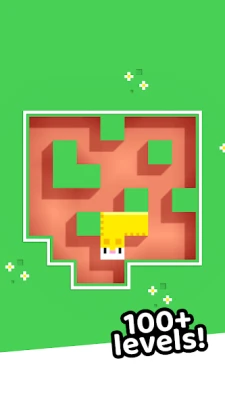
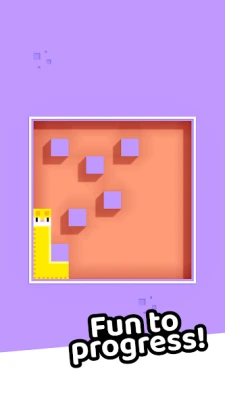
Main Objective: Guide a long cat into the correct position so it fits inside the available box spaces and completes each puzzle.
Game Availability: Free to download, with advertisements and in-app purchases.
Offline Support: Yes, the game is fully playable offline.
Target Audience: Casual players, puzzle enthusiasts, cat lovers, and anyone who enjoys relaxing brain challenges.
Content Rating: Everyone.
What Is Longcat: Cat Puzzle?
Longcat: Cat Puzzle is a creative logic game built around a simple but entertaining idea: helping a very long cat squeeze into surprisingly small spaces.
Cats love sitting inside boxes, but this particular cat takes the idea to another level. Players must guide its movement by swiping across the puzzle board and finding the correct positions to complete each stage.
Although the controls are straightforward, solving the puzzles requires careful thinking. The cat needs to follow suitable paths, occupy the available spaces, and avoid situations that prevent it from reaching the correct position.
Every new stage provides another opportunity to test your problem-solving abilities. Early puzzles introduce the basic mechanics, while more advanced challenges require players to plan several movements ahead.
The appeal of Longcat comes from its combination of cute presentation, simple interactions, and increasingly demanding puzzles. It is easy to start playing, but completing difficult stages can require patience and logical thinking.
Main Gameplay Features
Creative Cat Puzzles
The central attraction is the unusually long cat that must fit into different box arrangements. Each puzzle challenges players to discover the correct movement sequence.
Simple Swipe Controls
Players control the cat by swiping in the desired direction. The controls are easy to understand, making the game accessible to newcomers.
Increasingly Difficult Levels
The puzzles gradually introduce more challenging arrangements and mechanics. Players must improve their planning skills as they advance.
Hard and Superhard Challenges
More demanding multi-stage puzzles provide additional difficulty for players who want to test their logical thinking.
Helpful Navigation Hints
The Navigate hint feature can help players identify a useful first move when they are uncertain how to approach a puzzle.
Undo Feature
The Undo function allows players to rewind a swipe, making it easier to correct mistakes and experiment with alternative solutions.
Coin-Collecting Boards
Some puzzle boards introduce coin-collecting objectives, adding another consideration to the usual challenge of positioning the cat correctly.
Finder Improvements
The updated Finder feature provides additional assistance when working through the puzzle experience.
Progress and Rewards
Win streak rewards, temporary hearts, and other progression features add extra incentives for continuing through the levels.
Offline Gameplay
Longcat can be played without an internet connection, making it convenient for quick puzzle sessions anywhere.
Lightweight Performance
The game is designed to offer a small installation size and efficient performance, making it accessible on a wide range of supported devices.
These features are reflected in the game's published description and update information.
Complete Longcat: Cat Puzzle Strategy Guide
Understanding the Basic Gameplay
Before attempting difficult puzzles, learn how the cat moves.
The main interaction involves swiping in a direction to guide the cat across the board. Your objective is to position it correctly inside the available box spaces.
The most important thing to understand is that every movement affects the remaining possibilities.
A swipe that looks useful at first might prevent the cat from reaching another part of the puzzle. Therefore, successful gameplay depends on thinking about the entire board rather than focusing only on the next movement.
Start by observing the arrangement and identifying where the cat needs to go.
Beginner Strategy: Study the Puzzle First
New players should avoid immediately swiping in random directions.
Take a moment to examine the available spaces and understand the general layout.
Look for:
The starting position of the cat.
The available paths across the board.
Empty spaces that need to be filled.
Corners and narrow sections.
Areas that could become difficult to reach later.
Once you understand the arrangement, consider which movement will help you make progress without blocking future opportunities.
This simple habit can make even complicated puzzles easier to understand.
How to Plan Your Movements
Planning is the most important skill in Longcat.
Instead of thinking about one swipe at a time, try to predict what the board will look like after several movements.
Consider whether the cat will still be able to reach the remaining spaces after completing a particular move.
If a movement closes off an important route, it might not be the correct choice.
A good strategy is to identify the most restricted areas first. Narrow passages and awkward corners can be more difficult to complete than open spaces.
Plan around these areas before concentrating on easier sections.
How to Avoid Getting Stuck
Getting trapped is one of the most common problems in movement-based puzzles.
A player may successfully fill several spaces but discover that the remaining section is no longer accessible.
To avoid this situation, consider the consequences of every swipe.
Do not enter a narrow section without understanding how you will continue afterward.
Be particularly careful around corners, enclosed spaces, and areas with limited movement options.
If you notice that your current approach is creating problems, use the Undo feature when available and try another direction.
How to Solve Narrow and Difficult Sections
Narrow sections require more attention because they offer fewer movement possibilities.
Start by identifying how the cat can enter the section and how the remaining spaces can be completed.
Avoid using an important passage too early if it is needed to reach another part of the board.
When possible, complete restricted areas while you still have enough freedom to move around the rest of the puzzle.
The best solution is usually the one that keeps your remaining options open for as long as possible.
How to Handle Corners
Corners can be particularly challenging because they limit the directions in which the cat can move.
Before entering a corner, examine the surrounding spaces.
Ask yourself whether the cat can continue moving afterward and whether another section of the board will remain accessible.
If a corner is part of a larger route, consider completing it at the correct stage of your movement sequence rather than entering it immediately.
Good corner management prevents unnecessary dead ends.
How to Complete Multi-Stage Puzzles
Hard and Superhard challenges introduce more demanding puzzle sequences.
These stages require greater concentration because a successful movement in one section may influence the possibilities available later.
Break the puzzle into smaller objectives.
First, identify the most difficult areas. Then consider how the cat can reach each section without blocking another route.
Avoid rushing through the stages. Take time to understand the relationship between different parts of the puzzle.
If you make a mistake, review the movement that caused the problem instead of restarting without understanding what went wrong.
How to Use the Navigate Hint
The Navigate feature is useful when you are unsure how to begin.
Rather than making several random movements, use the available guidance to identify a promising first move.
However, do not rely entirely on hints.
Try to understand why the suggested movement works. This will help you recognize similar patterns in future puzzles.
Over time, you should become more confident about identifying useful starting positions independently.
How to Use Undo Effectively
Undo is one of the most useful tools for experimenting with different solutions.
If a swipe creates an unexpected problem, rewind it and reconsider your approach.
Use this feature to learn how different movements affect the board.
It is especially valuable when:
You accidentally block a useful route.
You enter a difficult section too early.
You discover that an empty space is inaccessible.
You want to test an alternative movement sequence.
Instead of viewing Undo as a way to escape mistakes, treat it as a learning tool.
How to Collect Coins
Some boards introduce coin-collecting objectives alongside the main puzzle.
When these objectives appear, you need to consider both the cat's final positioning and the available collectibles.
Before making your first move, examine where the coins are located.
Think about whether collecting them requires a particular route or movement order.
Do not focus exclusively on the shortest apparent path. A slightly different approach may be necessary to satisfy the additional objective while still completing the puzzle.
How to Maintain Win Streaks
Win streak rewards encourage players to complete consecutive puzzles successfully.
To maintain a streak, prioritize accuracy over speed.
Avoid making unnecessary moves, especially when a puzzle contains unfamiliar mechanics.
If a stage looks difficult, take extra time to examine it before committing to a movement sequence.
Consistency is more valuable than rushing through several levels and repeatedly making avoidable mistakes.
Advanced Strategy: Think Backward From the Goal
One of the most effective techniques for solving complicated puzzles is backward planning.
Start by examining the desired final arrangement.
Consider which spaces must be occupied near the end and which routes need to remain available to reach them.
Then work backward to determine how the cat should approach those areas.
This method can reveal movement sequences that are difficult to notice when looking only at the starting position.
It is particularly useful in puzzles with narrow passages and multiple connected sections.
Advanced Strategy: Prioritize Restricted Spaces
Not all spaces on a puzzle board are equally difficult to complete.
Open areas generally provide more movement possibilities, while narrow sections and corners can be much more restrictive.
Prioritize understanding these restricted spaces.
Determine how the cat can enter them, what movements are possible inside them, and how it can continue afterward.
Once you understand the difficult sections, organizing the rest of the solution becomes much easier.
Advanced Strategy: Recognize Repeating Puzzle Patterns
As you progress, you may notice that different stages use similar arrangements.
Some puzzles may feature narrow corridors, while others rely on corners, enclosed spaces, or multiple connected sections.
Learning to recognize these patterns helps you solve new levels faster.
When you encounter a familiar arrangement, remember what worked previously and consider whether the same approach can be adapted.
Do not assume every puzzle has an identical solution, but use your experience to identify useful possibilities.
Best Tips and Tricks for Longcat: Cat Puzzle
Study the entire board before making your first move.
Plan several swipes ahead instead of moving randomly.
Pay special attention to narrow passages and corners.
Avoid blocking routes that may be needed later.
Prioritize difficult sections before completing easy areas.
Use backward planning to understand the required final arrangement.
Use Navigate hints when you cannot identify a promising first move.
Take advantage of Undo to experiment with alternative solutions.
Examine coin locations before attempting coin-collecting boards.
Learn from previous puzzles and recognize repeating patterns.
Take your time with Hard and Superhard challenges.
Focus on solving puzzles accurately rather than rushing.
Frequently Asked Questions
What Is Longcat: Cat Puzzle?
Longcat: Cat Puzzle is a casual logic game where players guide a long cat through puzzle boards and help it fit into the available box spaces.
How Do You Play Longcat?
You control the cat using swipe gestures. The objective is to find the correct movement sequence to complete each puzzle without getting trapped.
Is Longcat Difficult?
The early levels are relatively easy and introduce the basic gameplay. Later puzzles become more challenging, requiring careful planning and logical thinking.
Can You Play Longcat Offline?
Yes. Longcat is fully playable offline, so you can enjoy its puzzles without a constant internet connection.
Does Longcat Have Hints?
Yes. The game includes a Navigate hint feature that can help players identify a useful starting move when they are struggling with a puzzle.
Does Longcat Have an Undo Feature?
Yes. Undo allows players to rewind a swipe and reconsider their strategy when a movement does not produce the expected result.
Are There Hard Levels in Longcat?
Yes. The game includes Hard and Superhard multi-stage challenges designed to test more advanced problem-solving skills.
Can You Collect Coins in Longcat?
Yes. Certain boards include coin-collecting objectives, adding extra challenges to the normal puzzle-solving experience.
Is Longcat Suitable for Children?
The game has an Everyone content rating and features simple controls, cute characters, and accessible puzzle mechanics.
Does Longcat Require an Internet Connection?
No. Its main puzzle experience can be enjoyed offline, making it suitable for playing at home or while traveling.
Final Verdict
Longcat: Cat Puzzle is a delightful puzzle adventure that combines adorable cat-themed entertainment with clever brain challenges. Its simple swipe controls make it easy for anyone to understand, while its increasingly difficult levels provide plenty of opportunities to develop logical thinking and problem-solving skills.
The addition of Hard and Superhard stages, coin-collecting boards, navigation hints, and the Undo feature makes the experience more varied and accessible.
Whether you are a cat lover, a casual gamer, or someone who enjoys solving creative logic puzzles, Longcat offers an enjoyable way to challenge your mind while helping an unusually long cat find its way into tiny boxes.
Recommended for: Cat lovers, casual puzzle fans, brain-training enthusiasts, and players looking for relaxing offline games.
Rate the Game
User Reviews














Popular Games



















 Android
 iOS
 Windows
 Xbox