
Latest Version
August 29, 2026
SayGames LTD
Puzzle
iOS
0
Report a Problem
More About :game
Instead of racing against a countdown, players can take their time, study the board, rotate tile blocks, and decide where each piece should go. Every move can affect the next tile that appears, making Tessora more strategic than its straightforward rules initially suggest.
The game is designed for quick sessions as well as longer puzzle-playing sessions. Its relaxed pace, colorful presentation, offline functionality, and variety of puzzle mechanics make it a natural choice for players who enjoy casual brain games and satisfying sorting challenges.
What Is Tessora: Tile Sort Puzzle?
Tessora is a color-based tile sorting puzzle where players place colorful tiles into columns and attempt to organize each column according to color.
The interesting part is that placing one tile can cause another tile to fall out and become the next piece you must manage. This creates a chain of decisions where planning ahead is just as important as the move you are making right now.
As the levels become more demanding, players encounter additional mechanics and obstacles that make each board feel different. The result is a puzzle experience that starts simple but gradually asks for more careful thinking.
Gameplay Overview
The core gameplay of Tessora is easy to learn.
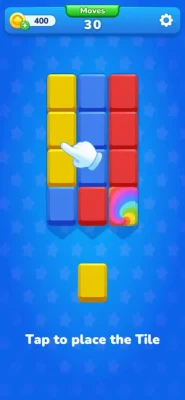
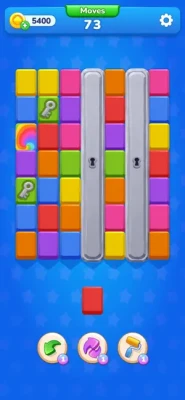
You begin with a colorful tile and choose a suitable column for it. After the tile is placed, another tile is revealed or falls out, giving you the next piece to work with. Your objective is to organize the board so that tiles of the same color are properly sorted.
The challenge comes from thinking several moves ahead. A placement that looks useful immediately may create a difficult situation later, while a seemingly small move can open up an important section of the board.
Tessora therefore rewards patience rather than speed.
How the Tile Sorting Works
The central mechanic revolves around placing and organizing colored tiles.
A typical round follows this basic pattern:
- Examine the available tile.
- Look across the columns for the best placement.
- Place the tile where it can contribute to your color groups.
- Watch for the next tile revealed by your move.
- Reassess the board.
- Continue sorting until the puzzle is cleared.
Because the next piece is connected to the current move, players should avoid making decisions based only on the immediate result.
Rotating Tile Puzzle Mechanics
Tessora adds another layer to traditional sorting games through rotating tile blocks.
Instead of simply moving pieces from one location to another, players need to understand how the orientation of tile groups affects the board. Rotating the right block at the right time can create a useful opening, while an awkward placement can make later sorting considerably harder.
This gives the game a more strategic feel than a basic color-matching puzzle.
Puzzle Challenges
Tessora introduces different challenges as players progress.
Mystery Tiles
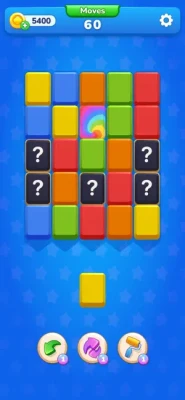
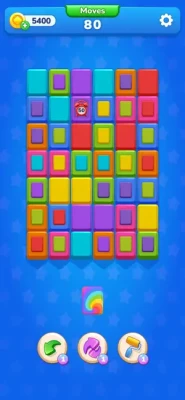
Mystery tiles add uncertainty to the board and encourage players to think beyond what is immediately visible.
Connected Columns
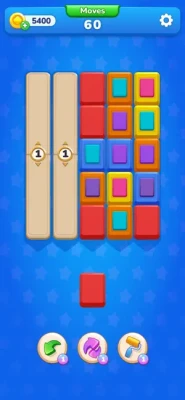
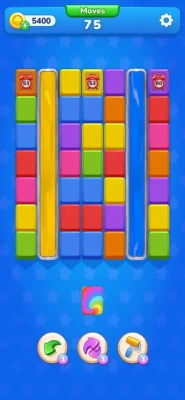
Connected columns can restrict how tiles are manipulated, forcing players to consider the relationship between different sections of the puzzle.
Stone Walls
Stone walls create additional obstacles that can limit movement and change the most effective solution.
These mechanics help prevent the core sorting system from becoming repetitive.
Boosters and Special Tiles
When a puzzle becomes difficult, Tessora provides useful tools and special mechanics.
Magnet
The Magnet booster can help influence tile placement and provide assistance when the board becomes difficult to manage.
Swap
The Swap option allows players to change tiles and potentially recover from an awkward position.
Undo
Undo provides a chance to reverse a previous decision, making it particularly useful when experimenting with a risky move.
Rainbow Tiles
Rainbow tiles introduce additional possibilities to the sorting process and can become valuable when several colors need to be managed.
Bomb Tiles
Bomb tiles add a more dynamic element to certain puzzles and can help change the state of the board.
Split Tiles
Split tiles create additional tactical possibilities and require players to consider how a single piece can affect several parts of the puzzle.
Game Difficulty
Tessora is designed around gradually changing difficulty rather than an immediate jump in complexity.
Early puzzles allow players to learn the basic sorting system without feeling overwhelmed. Later challenges introduce additional mechanics, obstacles, and more complicated arrangements.
The difficulty comes primarily from planning rather than fast reactions. Players who enjoy logic puzzles, color sorting games, and brain teasers should find the progression approachable while still having reasons to rethink their strategy.
No Timer, No Rush
One of Tessora's biggest advantages is its relaxed approach to puzzle solving.
There is no countdown forcing players to complete a level as quickly as possible. You can stop, examine the board, think through possible moves, and continue when you are ready.
That makes Tessora suitable for players looking for a calm puzzle game rather than a high-pressure arcade experience.
Offline Puzzle Gameplay
Tessora is advertised as playable offline, making it convenient for situations where an internet connection is unavailable.
Players can enjoy sorting puzzles while traveling, relaxing at home, or simply when they want a game that does not depend on an active connection.
Controls and Interface
Tessora uses a straightforward mobile-friendly interaction system centered around selecting and positioning tiles.
The interface is designed to keep the board and colorful pieces easy to understand. Because the gameplay is based mainly on choosing where tiles should go and managing their arrangement, newcomers can understand the basic interaction quickly.
Game Progression
Progression is built around increasingly varied puzzle boards.
Rather than relying on a traditional character-leveling system, Tessora's progression focuses on the player's ability to solve more complicated sorting situations.
As new mechanics appear, familiar rules gain new layers of strategy. This creates a natural learning curve where players gradually become better at predicting how one move will influence the next.
Strategy Tips for Beginners
Think About the Next Tile
Don't focus exclusively on the tile currently in front of you. Consider what your placement will reveal or cause to move next.
Keep Columns Organized
Try to avoid creating unnecessary color mixtures when a cleaner placement is available.
Don't Rush
Since there is no countdown timer, take advantage of the relaxed pace. A few seconds of planning can prevent a much harder situation later.
Save Boosters
Avoid using a booster simply because it is available. Keep powerful tools for situations where they can genuinely change the outcome.
Look for Chain Reactions
Some moves can affect multiple parts of the board. Before placing a tile, check whether the move creates a useful follow-up opportunity.
Advanced Strategy
Experienced players should begin thinking several moves ahead.
Instead of asking, "Where does this tile fit?" ask, "Where should this tile go so the next three moves remain possible?"
Pay attention to blocked columns, special tiles, and limited spaces. When the board contains connected sections or stone walls, the best move may not be the one that immediately places the most matching colors together.
Boosters can also be treated as strategic resources. An Undo, Swap, or Magnet can be more valuable when used at the right moment rather than immediately after a mistake.
Why Tessora Is Satisfying to Play
Tessora combines visual organization with simple puzzle-solving feedback.
Sorting colors into clean groups creates a satisfying sense of progress, while the rotating blocks and special tiles add enough uncertainty to keep the experience interesting.
The lack of a timer also changes the mood. Instead of constantly reacting to a clock, players can focus on the board and enjoy the process of solving it.
Game Modes
Tessora primarily focuses on its core tile-sorting puzzle experience rather than a collection of unrelated game modes.
The variety comes from different puzzle layouts, difficulty levels, obstacles, special tiles, and boosters. This keeps the central sorting mechanic familiar while changing the problems players must solve.
Graphics and Visual Style
Tessora uses a colorful, clean visual presentation designed to make the puzzle board easy to read.
The bright tile colors are an important part of the gameplay because players need to distinguish groups quickly. The simple presentation also helps keep attention on the puzzle rather than distracting from the board.
Sound and Overall Atmosphere
The overall experience is designed to feel casual and relaxing rather than intense.
Because players are not pressured by a countdown, Tessora works well as a short break game. You can play a puzzle for a few minutes or spend longer working through more challenging boards.
iPhone and iPad Support
The App Store lists Tessora: Tile Sort Puzzle for iPhone and iPad. It requires iOS 15.0 or later, while iPad requires iPadOS 15.0 or later. The listing also states that the game is available in English plus 18 additional languages.
The listed app size is approximately 284.6 MB, and the game is rated 4+. The App Store listing identifies it as a free download with advertising and optional in-app purchases.
Latest Update
The current store information shows a recent update focused on bug fixes. The Android listing reports version 3.0.1 and an August 7, 2026 update, while the App Store provides the current iOS compatibility and product information.
In-App Purchases
Tessora is free to download but includes optional in-app purchases. The App Store lists coin packs, a Starter Pack, and options for removing advertisements.
Developer
Tessora: Tile Sort Puzzle is developed and published by SayGames LTD.
Player Experience
Tessora is best suited to players who enjoy casual logic games, color sorting puzzles, and relaxing mobile challenges.
The combination of simple controls and deeper planning gives the game a broad appeal. Beginners can understand the basic objective quickly, while experienced puzzle players can spend more time optimizing their moves.
The absence of a timer is especially helpful for players who prefer solving puzzles at their own pace.
Pros and Cons
Pros
- Simple tile-sorting concept
- Colorful and easy-to-read puzzle boards
- Increasingly challenging levels
- Rotating tile mechanics
- Mystery tiles and environmental obstacles
- Magnet, Swap, and Undo boosters
- Rainbow, bomb, and split tiles
- No countdown timer
- Offline gameplay
- Available on iPhone and iPad
Cons
- Ads are included
- Optional in-app purchases are available
- Some later puzzles can become challenging
- Players looking for action or fast-paced gameplay may find it too relaxed
Who Should Play Tessora?
Tessora is a strong choice for players who enjoy:
- Tile sorting games
- Color matching puzzles
- Logic games
- Brain teasers
- Casual mobile puzzles
- Relaxing games
- Offline games
- Strategic sorting challenges
- Short gaming sessions
- Puzzle games without timers
If you enjoy thinking through a board rather than reacting quickly, Tessora is worth trying.
Tessora vs Traditional Sorting Games
Many sorting games use a straightforward formula where players repeatedly move matching colors into containers.
Tessora builds on that familiar idea by introducing rotating blocks, connected columns, stone walls, mystery tiles, and special pieces. Boosters such as Magnet, Swap, and Undo provide additional ways to approach difficult boards.
The result is a sorting puzzle that keeps its basic rules approachable while adding more strategic depth as the challenges progress.
Expert Rating
Overall: 8.4/10
Gameplay: 8.5/10
Puzzle Design: 8.7/10
Accessibility: 9/10
Replay Value: 8.2/10
Visual Presentation: 8.3/10
Relaxation Factor: 9/10
The strongest part of Tessora is its ability to make a very simple sorting concept progressively more interesting without relying on a timer or complicated controls.
Final Verdict
Tessora: Tile Sort Puzzle is a polished casual puzzle experience for players who like sorting colors, organizing tiles, and solving increasingly challenging boards.
Its greatest strength is the balance between simplicity and strategy. The rules are easy to understand, but the interaction between columns, rotating tile blocks, special tiles, obstacles, and boosters gives experienced players plenty to think about.
With offline play and no countdown timer, Tessora is particularly well suited to relaxed gaming sessions. Whether you have five minutes to spare or want to work through several puzzles, the game offers an approachable way to exercise your problem-solving skills.
Frequently Asked Questions
Is Tessora: Tile Sort Puzzle free?
Yes. Tessora is listed as a free game, although it contains advertising and optional in-app purchases.
Can I play Tessora offline?
Yes. The game's store description specifically promotes offline gameplay.
Does Tessora have a timer?
No. Tessora is designed without a countdown timer, allowing players to solve puzzles at their own pace.
What is the objective in Tessora?
The main objective is to sort colorful tiles into their appropriate columns while managing the pieces and obstacles presented by each puzzle.
Does Tessora have boosters?
Yes. The game includes tools such as Magnet, Swap, and Undo, along with special tiles including rainbow, bomb, and split tiles.
Is Tessora available for iPhone?
Yes. The App Store lists Tessora for iPhone and iPad and requires iOS 15.0 or later.
Is Tessora suitable for children?
The App Store currently gives Tessora an age rating of 4+, although parents should always review the game's advertising and in-app purchase features before allowing children to make purchases.
Who developed Tessora: Tile Sort Puzzle?
Tessora: Tile Sort Puzzle was developed by SayGames LTD.
Does Tessora contain ads?
Yes. The App Store lists advertising as part of the game, with optional purchases available for removing ads.
Rate the Game
User Reviews







Popular Games



















 Android
 iOS
iOS Windows
 Xbox
Xbox