

Latest Version
September 09, 2026
Tripledot Studios
Card
iOS
0
Report a Problem
More About :game
Spider Solitaire Associations is a casual card puzzle game from Tripledot Studios that puts a word-based spin on the classic Spider Solitaire formula.
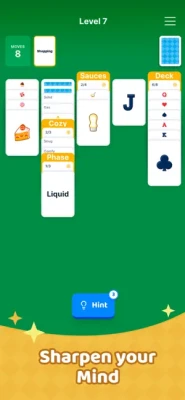
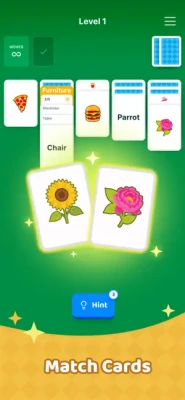
The basic idea is easy to understand: cards are arranged across multiple columns, but the cards contain words rather than relying on conventional suits. Your objective is to recognize relationships between words, organize them correctly, uncover hidden cards, and eventually remove complete groups from the board.
This creates an interesting combination of solitaire strategy, word association, logic puzzles, and brain-teasing gameplay.
The App Store lists the game as free with optional in-app purchases, including a Remove Ads option, and it supports iPhone and iPad. It requires iOS 15 or later.
How to Play Spider Solitaire Associations
The core gameplay follows several straightforward steps:
1. Examine the Columns
Start by looking carefully at every visible card. Don't immediately move the first card that appears to have an obvious connection.
Look for:
- Related words
- Possible category groups
- Cards blocking other cards
- Columns that could become useful after a move
- Groups that are close to completion
The most important skill is seeing the board as a whole rather than concentrating on one card at a time.
2. Build Related Word Stacks
Move cards between columns in the same general spirit as Spider Solitaire.
The difference is that relationships between words determine how you should organize the stacks.
For example, if several words clearly belong to the same category, consider how arranging them together could help you expose another hidden card.
3. Reveal Hidden Cards
One of your highest priorities should be opening up cards that are currently hidden.
A move that doesn't immediately clear a group can still be excellent if it exposes a previously unavailable card.
This creates a useful rule:
Opening the board is often more valuable than making the quickest obvious match.
4. Complete Word Groups
When you have assembled a complete association, the group can be cleared from the board.
Clearing a group creates additional space and can open new opportunities for the remaining cards.
5. Avoid Blocking Your Columns
Every move changes the shape of the board.
A seemingly good placement can become a problem if it leaves important cards buried or makes a column difficult to use.
Before moving a card, ask:
What will this column look like after I make the move?
That simple question can prevent many unnecessary dead ends.
Full Strategy Guide
Strategy 1: Don't Chase Every Immediate Match
One of the biggest mistakes in word-based solitaire is assuming that the first logical association you see is automatically the best move.
It isn't.
A move should be judged by what it enables next.
Suppose you can make one association immediately, but another move would reveal a hidden card. The second move may be considerably stronger even though it produces less visible progress.
Think one or two moves ahead whenever possible.
Strategy 2: Prioritize Hidden Cards
Hidden cards are valuable because you cannot plan around information you cannot see.
Whenever you have a choice between:
- clearing a group immediately, or
- making a safe move that reveals another card,
consider the second option.
More information gives you more possible solutions.
Strategy 3: Keep Columns Flexible
Avoid filling a useful column with cards that have very few possible destinations.
A flexible board gives you more options when the puzzle becomes complicated.
Before placing a card, consider whether the cards underneath or above it could still be moved later.
Strategy 4: Think in Categories
Don't just read individual words.
Try to identify broader relationships.
A word may belong to several possible conceptual groups, and recognizing the strongest relationship can help you decide where it belongs.
When you see several potentially connected words, compare the entire group before committing to a move.
Strategy 5: Clear Completed Groups Carefully
Completing a group is usually valuable because it removes cards and creates space.
However, don't sacrifice board flexibility simply to complete a group one move earlier.
A good clearing move should ideally accomplish more than one thing:
complete a group + open space + reveal information.
Those are the strongest turns.
Strategy 6: Don't Fill Every Available Space
Empty space is extremely useful in solitaire-style games.
If you create an open position, don't immediately fill it just because you can.
Sometimes leaving a space available gives you a valuable destination for a more important sequence later.
Strategy 7: Look for Forced Moves
Sometimes several cards appear playable, but only one move keeps the puzzle alive.
Look for situations where:
- A card blocks a hidden card.
- A column has very limited movement options.
- A word clearly completes an existing association.
- Moving one card opens multiple possibilities.
These are often the moves that deserve priority.
Strategy 8: Avoid Tunnel Vision
Don't focus exclusively on the largest or most obvious group.
Scan every column after each significant move.
The board changes whenever cards are moved or removed, so an association that was invisible a few seconds earlier may suddenly become possible.
Strategy 9: Plan Before You Move
Because there is no timer, there is little reason to rush.
The App Store specifically describes the game as a no-timer experience, making thoughtful play part of its appeal.
Use that to your advantage.
Before moving a card, quickly consider:
- What does this move accomplish?
- Does it reveal anything?
- Does it create space?
- Does it make another association possible?
- Could this card be more useful somewhere else?
Strategy 10: Treat the Board Like a Puzzle, Not a Race
The goal isn't to make the most moves.
The goal is to reach a winning board position.
A slow sequence of carefully chosen moves can be much better than a fast sequence that leaves several cards trapped.
Advanced Tips for Difficult Boards
Work Backward From Potential Clears
When you notice a nearly completed association, don't immediately move cards into it.
Instead, determine what is preventing the group from being completed.
Then work backward:
What card needs to move? Where can it go? What must be uncovered first?
This approach is especially useful when several columns are crowded.
Preserve Rare Opportunities
If a word has only one obvious relationship, be careful about moving it prematurely.
A flexible word can often serve several purposes, while a highly specific word may be essential for completing one particular group.
Create Space With a Purpose
An empty column or open position is most valuable when you already know what you want to place there.
Don't create space simply for the sake of creating space.
Try to create space that enables a future sequence.
Re-scan After Every Clear
Clearing a complete association can dramatically change the board.
Immediately scan again for:
- newly exposed words
- newly available moves
- completed categories
- blocked columns
- opportunities to create additional space
This habit can turn one successful clear into a chain reaction.
Beginner Mistakes to Avoid
Moving too quickly: The lack of a timer means you can take your time.
Ignoring hidden cards: A move that exposes a hidden card can be more valuable than an immediate match.
Filling open spaces immediately: Keep useful space available when possible.
Thinking only about individual words: Associations are about relationships between groups of words.
Making moves without looking ahead: A legal move isn't necessarily a good move.
Focusing on one column: The solution may depend on a completely different part of the board.
Best Way to Approach a New Level
When a new puzzle begins, use this routine:
First: Scan all visible columns.
Second: Identify obvious word relationships.
Third: Locate cards that are blocking hidden information.
Fourth: Look for moves that both organize cards and expose something new.
Fifth: Preserve flexible spaces.
Sixth: Complete groups when doing so improves the overall board.
Finally: After every major clear, stop and reassess the entire layout.
This approach is more reliable than simply matching the first two words that appear related.
Why Spider Solitaire Associations Is Different
Traditional Spider Solitaire is built around suits, sequences, and card ranks. Spider Solitaire Associations replaces much of that familiar structure with word relationships and category recognition.
That changes the experience considerably.
You aren't simply asking:
"Which card goes next?"
You're also asking:
"Which words belong together?"
That extra layer makes the game appealing to players who enjoy both solitaire and word puzzles.
The official App Store description highlights the combination of Spider Solitaire mechanics, word associations, hidden-card discovery, and strategic planning.
Difficulty and Learning Curve
The controls are relatively easy to understand, but solving boards efficiently requires more thought.
Beginner
Focus on understanding how word groups work and learning not to block your columns.
Intermediate
Start planning several moves ahead and prioritize revealing hidden cards.
Advanced
Think about board flexibility, future placements, forced moves, and the consequences of completing each association.
The result is a game that is easy to pick up but can demand considerably more thought once you stop relying on obvious matches.
Game Features
- Spider Solitaire-inspired card gameplay
- Word association puzzle mechanics
- Multiple columns to organize
- Hidden cards to uncover
- Complete word groups to clear the board
- Strategic card movement
- Relaxing gameplay without a timer
- Simple mobile controls
- Short sessions or longer puzzle sessions
- Combination of vocabulary, logic, and solitaire strategy
- Free to play with optional purchases
- Remove Ads purchase available
Controls
The game is designed around simple mobile interactions. Players move cards between columns to build useful word associations and reorganize the board.
The controls are deliberately straightforward, allowing the challenge to come from decision-making rather than complicated inputs.
Is Spider Solitaire Associations Good for Solitaire Fans?
Yes, particularly if you enjoy traditional solitaire but want something that feels different.
The familiar column-based structure makes the game immediately recognizable, while the word-association system introduces another layer of decision-making.
It is also a good choice for players who enjoy:
- Word puzzles
- Brain games
- Logic games
- Card puzzles
- Casual strategy games
- Category-matching games
- Relaxing mobile games
Is Spider Solitaire Associations Good for Word Puzzle Fans?
It can be.
The game doesn't play like a conventional crossword or word-search puzzle. Instead, vocabulary and conceptual relationships are incorporated into a solitaire-style board.
That makes it particularly interesting for players who enjoy discovering connections between words while also managing limited board space.
Pros and Cons
Pros
- Fresh take on Spider Solitaire
- Combines card strategy with word associations
- Easy controls
- No timer pressure
- Encourages planning and logical thinking
- Suitable for short gaming sessions
- More strategic than a simple matching game
Cons
- Players expecting traditional Spider Solitaire may need time to adjust
- Some puzzles can require considerable forward planning
- Word associations may feel subjective in certain situations
- Advertising is included, although a Remove Ads purchase is available
Spider Solitaire Associations Tips for Winning
If you're struggling with a puzzle, use this quick checklist:
1. Stop making random moves.
Look at the complete board first.
2. Find the cards preventing progress.
Ask which cards need to move before hidden cards become accessible.
3. Search for strong associations.
Don't settle for a weak connection when a clearer group is available.
4. Preserve open space.
Space gives you options.
5. Reveal information.
Hidden cards can completely change your plan.
6. Think two moves ahead.
Before every important move, consider its consequence.
7. Reassess after clearing a group.
New opportunities can appear immediately.
Frequently Asked Questions
What is Spider Solitaire Associations?
Spider Solitaire Associations is a word-based card puzzle that combines Spider Solitaire-style column management with word association challenges.
How do you play Spider Solitaire Associations?
You move cards between columns, organize related words, reveal hidden cards, and complete word groups to clear them from the board.
Is Spider Solitaire Associations free?
Yes. The App Store lists it as free with optional in-app purchases.
Does Spider Solitaire Associations have a timer?
No. The game is designed around relaxed, no-timer gameplay.
Is Spider Solitaire Associations available on iPhone?
Yes. It is available for iPhone and iPad and requires iOS 15 or later.
Can I play Spider Solitaire Associations on iPad?
Yes. The App Store lists iPad compatibility and requires iPadOS 15 or later.
Is this the same as classic Spider Solitaire?
No. It uses Spider Solitaire-inspired column mechanics but replaces traditional suit-based play with word associations.
What is the best strategy for Spider Solitaire Associations?
Prioritize moves that reveal hidden cards, preserve flexible columns, create useful space, and set up future word-group clears rather than simply taking the first available match.
Is Spider Solitaire Associations a word game or a card game?
It is essentially both. The board and movement are inspired by solitaire, while the main matching decisions depend on word relationships.
Final Verdict
Spider Solitaire Associations is an interesting hybrid for players who have already seen plenty of traditional solitaire games and want a different kind of challenge. Its strongest idea is the combination of Spider Solitaire-style card management and word association puzzles.
The game doesn't depend on fast reactions. Instead, success comes from recognizing relationships, opening blocked cards, maintaining useful space, and thinking about what each move will make possible next.
If you enjoy Spider Solitaire, word games, logic puzzles, brain games, and relaxing card games, this is a particularly natural combination to try.
Rate the Game
User Reviews











Popular Games




















 Android
 iOS
iOS Windows
 Xbox
Xbox