

Latest Version
September 02, 2026
Supercharge Mobile Corp
Role Playing
iOS
0
Report a Problem
More About :game
With 9 unique castles, more than 76 creatures to hunt, 150+ furniture items, 10 weapons, 12 skills, and an elemental combat system, the game gives players plenty of ways to develop their character and personalize their medieval kingdom.
Medieval Life - Middle Ages Overview
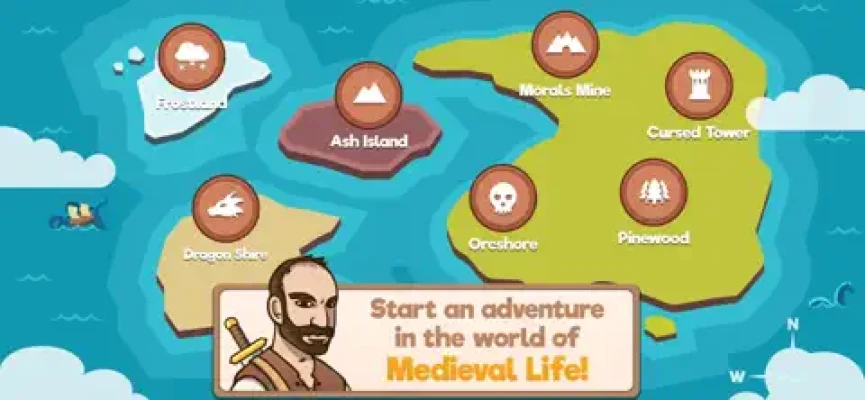
Step into a world inspired by the European Middle Ages and begin building your own medieval legacy.
Medieval Life - Middle Ages blends several genres into one experience. It has the progression and battles of an RPG, the management elements of a tycoon game, the exploration and hunting of an adventure title, and a surprisingly deep castle customization system.
Instead of simply fighting from one mission to the next, you can develop your character, earn a fortune, purchase castles, decorate your home, hunt mythical creatures, complete quests, and work toward becoming a powerful ruler.
The game is developed by Supercharge Mobile Corp, the studio behind Nautical Life: Boat Tycoon. The current U.S. App Store listing categorizes Medieval Life as a Simulation game and describes it as a free title with optional in-app purchases.
A Medieval World to Explore
The game takes inspiration from the classic European medieval era, creating a setting filled with castles, monsters, weapons, magic, quests, and mythical creatures.
Your journey is not restricted to a single location. The game offers quests around the world, allowing you to explore different environments while hunting creatures and developing your fortune.
The day-and-night cycle also affects the experience, making the world feel more dynamic as you move between different activities.
Build Your Own Medieval Empire
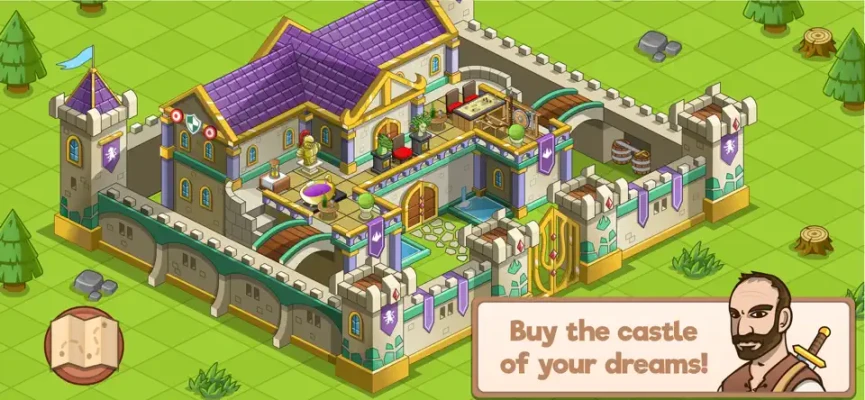
One of the game's defining features is the ability to purchase castles and develop them into personalized homes.
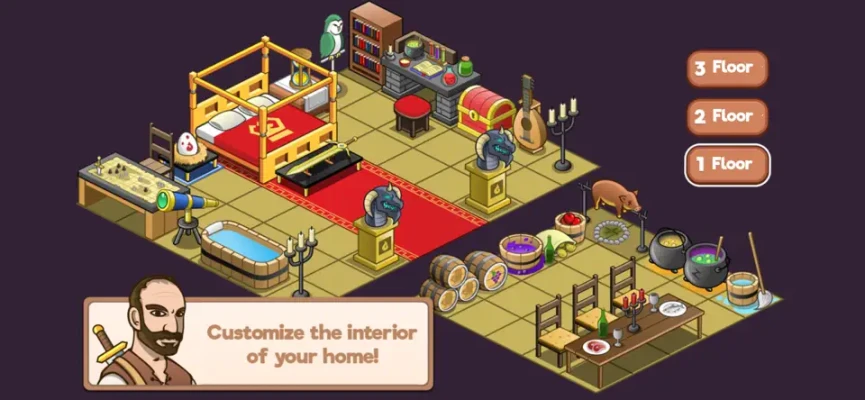
You can choose from 9 unique castles and customize their interiors with more than 150 furniture items.
This gives the game a creative side that separates it from many traditional medieval RPGs.
Your castle can become more than a place to return after an adventure. It represents your progress and gives you an opportunity to create a medieval home that reflects your personal style.
Castle Customization
Castle decoration is a major part of the game's management experience.
With a large collection of furniture available, you can arrange and decorate the interior of your castle in different ways.
Customization options allow you to create:
- Royal-style rooms
- Comfortable medieval homes
- Grand castle interiors
- Treasure-filled residences
- Personalized living spaces
The castle system adds a relaxing activity between battles and quests.
Turn-Based Medieval Combat
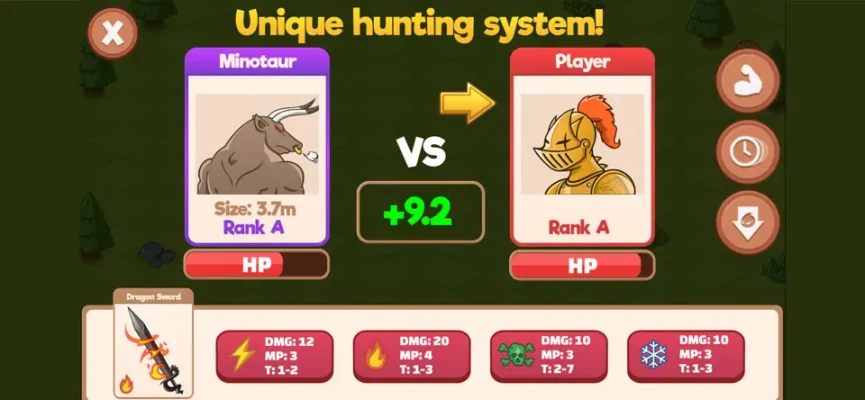
Combat uses a turn-based battle system, allowing you to think about your actions rather than relying entirely on fast reflexes.
The system gives you time to consider your weapon, abilities, elemental advantages, and the type of creature you're fighting.
The game has also received major combat-system updates during its development, including new spells, balancing changes, and improvements to the battle interface.
Weapons and Equipment
Medieval Life includes 10 weapons with different attributes.
Each weapon can play a different role depending on the situation, giving equipment selection greater importance than simply choosing the item with the highest basic value.
Weapons are particularly important when dealing with creatures that have different elemental strengths and weaknesses.
The game's updates have also introduced additional weapons and armor over time.
Magic Skills and Abilities
Combat isn't limited to physical weapons.
The game features 12 skills with different magical effects, allowing players to add special abilities to their combat strategy.
Learning when to use these abilities can make a significant difference in difficult battles.
Instead of repeatedly attacking an enemy with the same move, you can build a strategy around your available skills and the opponent's weaknesses.
Eight-Element Combat System
One of the more interesting RPG mechanics is the game's elemental system.
Medieval Life features 8 elements, with different strengths and weaknesses affecting combat.
This means that simply having powerful equipment isn't always enough.
Understanding elemental matchups can help you choose better weapons and abilities before entering a difficult fight.
A smart player will consider:
- Enemy element
- Weapon attributes
- Skill effects
- Defensive weaknesses
- Available potions
- Battle strategy
This adds strategic depth to the otherwise accessible turn-based combat.
Hunt More Than 76 Creatures
Creature hunting is another major part of the game.
The App Store listing advertises more than 76 different creatures to hunt, including legendary and mythical creatures.
Some creatures can be much more difficult to defeat than ordinary enemies, turning the hunt into a long-term collection challenge.
Capturing legendary creatures also contributes to your reputation and fortune.
Legendary Creature Hunting
For completion-focused players, hunting every legendary creature provides a major long-term goal.
The game encourages you to become famous by capturing legendary creatures and building a collection of rare encounters.
This gives exploration and combat a purpose beyond simply earning experience.
If you're the type of player who enjoys completing collections, finding rare enemies, and unlocking everything a game has to offer, the creature-hunting system can become one of Medieval Life's most rewarding activities.
Quests and Adventures
Medieval Life includes several quests spread throughout its world.
Quests provide objectives that encourage you to explore, fight creatures, earn rewards, and continue developing your character.
Rather than focusing exclusively on castle management, the quest system gives you reasons to leave your home and venture into the medieval world.
Day and Night Cycle
The world features a day-and-night cycle that affects scenery and hunting.
This adds a changing atmosphere to the game and creates different challenges depending on when you're exploring.
The changing environment also reinforces the feeling that you're living in a persistent medieval world rather than simply moving through disconnected battle screens.
Traps and Fortune
Medieval Life also includes a trap system that can be used to increase your fortune.
This adds another activity outside direct combat and gives players a way to approach progression from a more strategic perspective.
Instead of relying entirely on fighting, you can use the game's other systems to build your wealth.
Pets
Previous major updates introduced a pet system featuring creatures such as:
- Dragon
- Wild boar
- Goblin
The same updates also added new character skins, furniture, monsters, weapons, potions, and other content.
Pets add another collectible element to the medieval adventure.
PvP and Multiplayer
Medieval Life has included competitive multiplayer features during its development.
The game's update history specifically mentions a PvP invasion system with ranks, along with battle events featuring waves of monsters and exclusive rewards.
The App Store description also highlights multiplayer functionality, allowing players to show friends their customized castles.
This combination of competitive and social features gives players reasons to develop both their characters and castles.
Dracula Castle and Special Content
The game's update history includes special medieval-fantasy content such as Dracula Castle, additional monsters, new weapons and armor, skins, and battle events.
These additions broaden the game's fantasy side while keeping the core European medieval atmosphere intact.
Progression System
Medieval Life has several progression paths running at the same time.
You can progress by:
- Improving your combat abilities
- Collecting stronger weapons
- Learning and upgrading skills
- Hunting creatures
- Completing quests
- Building your fortune
- Purchasing castles
- Decorating your castle
- Collecting rare creatures
- Participating in multiplayer activities
This makes progression feel less linear than in a straightforward RPG.
You can spend time fighting, hunting, decorating, collecting, or building your wealth depending on your preferred play style.
How to Play Medieval Life
Step 1: Explore the Medieval World
Begin by learning how the different areas, quests, creatures, and activities work.
Step 2: Improve Your Combat Setup
Experiment with different weapons and skills to discover combinations that work well against different enemies.
Step 3: Learn Elemental Weaknesses
Pay attention to the eight-element system and use advantageous equipment whenever possible.
Step 4: Hunt Creatures
Defeat and capture creatures to build your collection and increase your fortune.
Step 5: Complete Quests
Use quests to discover new areas and earn useful rewards.
Step 6: Build Your Wealth
Use combat, hunting, quests, and traps to increase your resources.
Step 7: Buy a Castle
Once you have enough resources, invest in one of the available castles.
Step 8: Customize Your Home
Use furniture and decorations to create a unique medieval residence.
Step 9: Pursue Legendary Creatures
Work toward collecting the rarest creatures in the game.
Beginner's Guide
New players should avoid trying to master every system immediately.
Start by becoming comfortable with the turn-based battle mechanics. Once you understand how attacks, skills, weapons, and elemental strengths work, progression becomes much easier.
Beginner Tips
- Learn elemental strengths and weaknesses early.
- Don't ignore magical skills.
- Experiment with different weapons.
- Complete quests regularly.
- Hunt creatures whenever you have an opportunity.
- Save resources for useful upgrades.
- Take advantage of traps when available.
- Customize your castle gradually rather than spending everything immediately.
- Keep exploring to discover new creatures and activities.
The key is to treat Medieval Life as a combination of RPG and management game rather than a pure combat experience.
Advanced Strategy
Use Elemental Advantages
Before difficult battles, consider whether your current weapon and skills are suited to the enemy's element.
Build a Flexible Combat Setup
Don't depend on one weapon or skill for every encounter. Different creatures may require different approaches.
Prioritize Rare Creatures
If you're interested in completion, start keeping track of creatures you've already captured and focus on finding missing entries.
Manage Your Fortune
Don't spend all of your resources immediately. Castle purchases and customization can consume significant amounts of currency.
Combine Combat and Management
Your strongest progression comes from using multiple systems together rather than repeatedly grinding a single activity.
Castle Collection
The game offers 9 unique castles, giving players multiple properties to pursue.
Each castle provides another opportunity to create a distinctive home.
For players who enjoy simulation and decoration games, this collection system adds a satisfying long-term objective alongside the RPG content.
Furniture and Interior Design
With more than 150 furniture items, castle decoration is one of the deepest non-combat features in the game.
You can treat your castle as a personal creative project and arrange furniture according to your preferred medieval aesthetic.
This makes Medieval Life appealing to two different audiences:
RPG players can focus on battles, quests, weapons, skills, and creatures.
Simulation players can concentrate on castles, furniture, wealth, and customization.
Game Difficulty
The basic combat system is easy to understand because battles are turn-based, but the elemental system and different enemy types add strategic complexity.
The challenge becomes more noticeable when fighting stronger creatures and attempting to collect rare or legendary enemies.
Players who enjoy careful preparation will generally get more out of the combat system than players who rely on repeating the same attack.
Graphics and Atmosphere
Medieval Life uses colorful 3D graphics to create a stylized interpretation of the European Middle Ages.
Its visual identity combines medieval castles, fantasy creatures, weapons, magical effects, and detailed interior spaces.
The changing day-and-night cycle adds variety to the environments and contributes to the game's medieval adventure atmosphere.
Controls and Interface
The game is designed around mobile touchscreen interaction and uses straightforward menus for combat, equipment, castle customization, and progression.
Turn-based combat means you don't need lightning-fast reactions. Instead, the emphasis is on selecting the right action at the right moment.
This makes the game approachable for players who prefer strategic RPG mechanics over fast-paced action.
Game Modes and Activities
Medieval Life offers a mixture of activities rather than relying on a single game mode.
RPG Combat
Fight creatures using weapons, skills, magic, and elemental advantages.
Creature Hunting
Search for and capture more than 76 different creatures.
Questing
Complete objectives across the medieval world.
Castle Management
Purchase and develop unique castles.
Interior Customization
Decorate your castle with more than 150 furniture items.
Multiplayer
Show your castle to friends and participate in multiplayer features.
PvP
The game's historical updates introduced invasions, ranks, and competitive activities.
Events
Monster-wave battles and special events have appeared through previous updates.
Updates and Development History
Medieval Life has received several substantial updates since its original release.
The game's update history includes a redesigned turn-based combat system, new spells, elemental effects, potions, monsters, weapons, pets, castles, furniture, character skins, PvP invasions, battle events, and performance improvements.
The latest version shown on the current App Store listing is 3.2.1, released June 15, 2023, with bug fixes and performance improvements.
Because the latest listed App Store update is from 2023, it is best to describe update availability carefully rather than suggesting that the game is receiving frequent current updates.
Technical Details
Game: Medieval Life - Middle Ages
Genre: Simulation / RPG / Adventure / Tycoon
Developer: Supercharge Mobile Corp
Platforms: iPhone and iPad
Category: Simulation
App Size: 147.6 MB
Current App Store Requirement: iOS 12.0 or later
Age Rating: 13+
Language: English
Business Model: Free with in-app purchases
Multiplayer: Supported
Game Center: Leaderboards and achievements are supported
Pros and Cons
Pros
- Unique combination of RPG and tycoon gameplay
- Medieval European setting
- Turn-based combat
- Eight-element combat system
- 10 weapons
- 12 magical skills
- More than 76 creatures
- 9 castles
- 150+ furniture items
- Castle customization
- Day-and-night cycle
- Quests and exploration
- Creature hunting
- Multiplayer features
- PvP content introduced in previous updates
- Pets and collectible content
Cons
- Some progression can feel repetitive
- The game is more suited to players who enjoy grinding and collecting
- Older update history means players should not expect a constantly evolving live-service experience
- Some historical player reviews reported bugs and combat-related issues
Player Experience
The appeal of Medieval Life comes from its unusual combination of systems.
A typical session might involve fighting a creature, completing a quest, earning resources, checking your equipment, purchasing a castle, and then spending time decorating its interior.
That mixture gives the game a slower and more varied pace than a conventional action RPG.
The current U.S. App Store listing shows a 4.2/5 rating from 25 ratings. Because the number of ratings is relatively small, this score should be treated as a limited sample rather than a broad measure of player opinion.
The Google Play listing currently shows 4.0 stars from approximately 25.5K reviews and 1M+ downloads, providing a much larger Android-side sample.
Medieval Life vs Traditional RPG Games
Traditional RPGs generally concentrate on character progression, combat, quests, and equipment.
Medieval Life adds another dimension through castle ownership and customization.
You can spend one part of your gaming session fighting monsters and another decorating your castle.
That makes it particularly interesting for players who enjoy both:
RPG progression + simulation management
rather than wanting a combat-only medieval game.
Who Should Play Medieval Life?
Medieval Life is a good choice for players who enjoy:
- Medieval RPG games
- Castle-building games
- Medieval simulation games
- Turn-based RPGs
- Fantasy creature hunting
- Tycoon games
- Castle customization
- Magic and fantasy combat
- Collection-based games
- Quest adventures
- Medieval strategy games
- Mobile simulation games
It is especially appealing if you like having multiple goals to work toward rather than following one strictly linear campaign.
Is Medieval Life Worth Playing?
Medieval Life - Middle Ages is an unusual mobile game because it doesn't force you to choose between RPG combat and simulation gameplay.
You can battle monsters, hunt legendary creatures, complete quests, build your fortune, purchase castles, and decorate your medieval home.
The eight-element combat system gives battles some strategic depth, while the large collection of furniture and castles provides a creative alternative when you want a break from fighting.
Players looking for a fast-paced action RPG may find its slower progression less exciting, but fans of medieval games, castle simulators, RPG adventures, creature hunting, and customization should find plenty to explore.
Frequently Asked Questions
What is Medieval Life - Middle Ages?
Medieval Life - Middle Ages is a mobile RPG and simulation game set in a European medieval-inspired world. It combines turn-based combat, creature hunting, quests, castle ownership, customization, and empire-building.
Is Medieval Life free?
Yes. The current App Store listing identifies the game as free with optional in-app purchases.
Can you build a castle?
Yes. Players can purchase castles and customize their interiors with more than 150 furniture items.
How many castles are available?
The game advertises 9 unique castles.
How many creatures can you hunt?
The App Store listing advertises more than 76 different creatures to hunt.
Does Medieval Life have turn-based combat?
Yes. Turn-based combat is one of the game's main RPG systems.
How many weapons are available?
The game features 10 weapons with different attributes.
Does Medieval Life have magic?
Yes. There are 12 skills with different magical effects.
Does the game have elemental weaknesses?
Yes. Medieval Life features eight elements with different strengths and weaknesses.
Can you play with friends?
The App Store listing includes multiplayer functionality, while the game's update history also documents PvP invasions and ranked multiplayer features.
Does the game have a day-and-night cycle?
Yes. The game includes a day-and-night cycle that affects the scenery and hunting experience.
What devices support Medieval Life?
The current App Store listing supports iPhone and iPad and requires iOS 12.0 or later.
Final Verdict
Medieval Life - Middle Ages offers a refreshing combination of medieval RPG adventure, creature hunting, castle management, and simulation.
Its biggest strength is variety. You can fight using weapons and magic, study elemental weaknesses, hunt dozens of creatures, complete quests, build your fortune, purchase castles, and decorate your own medieval home.
With 9 castles, 150+ furniture items, 76+ creatures, 10 weapons, 12 skills, eight elements, quests, multiplayer features, and turn-based combat, there is a surprisingly broad selection of activities packed into this mobile medieval adventure.
For players searching for a medieval RPG with castle customization, a fantasy creature hunting game, or a mobile medieval simulation with combat, Medieval Life - Middle Ages is an interesting title to explore.
Rate the Game
User Reviews












Popular Games

















 Android
 iOS
iOS Windows
 Xbox
Xbox