



Latest Version
March 05, 2024
CASUAL AZUR GAMES
Action
0
com.games.layerman
Report a Problem
More About :game
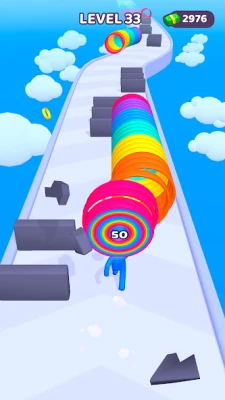
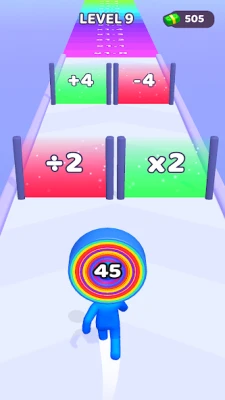
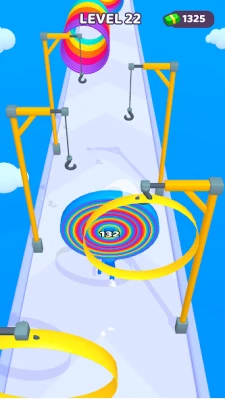
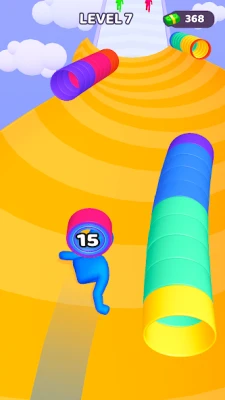
The basic controls are easy to understand. Your character moves forward automatically while you guide them across the track, collecting useful layers and avoiding obstacles that can strip away part of your stack. The bigger your slinky becomes, the better your chances of making the most of the final section.
The game combines lane-changing, quick reactions, collection, obstacle avoidance and light progression into short rounds. Google Play currently lists it as an action/platformer/runner, with 10M+ downloads and a 4.3-star rating from more than 18,000 reviews.
How Layer Man 3D Works
The central objective is straightforward:
Run → collect layers → avoid losing them → reach the finish → build the biggest possible slinky.
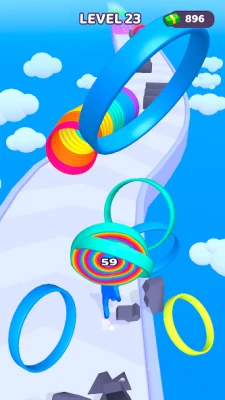
Layers are scattered along the running track. Every useful ring you collect increases the size of your stack. Obstacles, on the other hand, can reduce the number of layers you have gathered.
The official description specifically highlights the importance of collecting hoops while navigating a crowded runway and explains that a larger stack can provide an advantage during the final stage of a level.
That makes Layer Man more than a simple reaction game. You constantly have to decide whether a particular ring is worth moving toward or whether taking a safer route will preserve a larger stack.
Core Gameplay Features
Fast 3D Running
The character automatically moves forward, keeping the focus on steering rather than complicated controls.
Ring and Layer Collection
Collecting rings is the heart of every run. The more you gather, the longer your slinky becomes.
Obstacle Avoidance
The track contains hazards designed to knock layers away. A careless collision can turn a strong run into a mediocre one.
Increasing Challenge
The game gradually introduces more difficult situations, requiring better timing and faster reactions as you progress.
Simple Controls
The controls are designed around quick movement rather than complicated combinations, making the game easy to pick up for short sessions.
Final-Stage Challenge
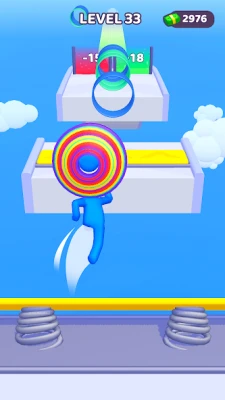
Your accumulated layers matter most near the end of the course, where building a large stack can give you a stronger finish.
Full Layer Man 3D Strategy Guide
1. Collect First, But Don't Chase Everything
A common mistake is treating every visible ring as mandatory.
It isn't.
If collecting one group of rings requires you to pass directly through an obstacle, calculate the likely loss before moving. A short detour that protects a large stack can be better than grabbing a few extra rings and losing many more.
Rule of thumb: prioritize safe collections over risky collections.
2. Look Beyond the Next Ring
Don't steer based only on what's directly in front of your character.
Watch the track a little farther ahead. If the next section contains an obstacle, start positioning yourself early instead of waiting until the last second.
This becomes increasingly important when several objects appear close together.
3. Protect Your Stack
Your collected layers represent your progress during the current run.
Once you have built a large stack, preserving it becomes increasingly valuable. Avoid unnecessary movements simply because another ring is available on the opposite side.
A good run is not necessarily the one with the most aggressive movement. It is the run where you finish with the largest useful stack.
4. Use Controlled Lane Changes
Rapid swiping can cause you to move farther than intended.
Instead, make small, deliberate movements whenever possible. Think about where you want your character to be after the next obstacle rather than reacting only when the obstacle is already beside you.
This is particularly useful when two hazards appear close together.
5. Learn the Track Rhythm
Layer Man 3D is easier once you recognize the rhythm of its courses.
You will often encounter a sequence that feels like:
collect → reposition → avoid → collect → reposition → finish
Instead of treating every section as a completely new puzzle, learn to anticipate this rhythm.
6. Don't Panic After Losing Layers
A collision does not automatically mean the run is ruined.
If you lose part of your stack, immediately switch from aggressive collection to preservation. Look for the safest available rings and rebuild gradually.
Trying to recover everything in one risky move can cause a second collision.
7. Build Momentum Through Consistency
The most reliable players are not necessarily the fastest.
They are the ones who make fewer unnecessary mistakes.
Focus on:
- Smooth movement
- Early positioning
- Safe ring collection
- Avoiding repeated collisions
- Maintaining a large stack
- Reaching the finish consistently
Once these habits become automatic, difficult sections become much easier.
Best Way to Handle Obstacles
When approaching an obstacle, ask three questions:
Where is the safest lane?
Identify the open route before moving.
What happens immediately afterward?
Sometimes the safest lane for one obstacle leads directly into another. Look ahead before committing.
How many layers am I risking?
If you already have a huge stack, preservation should normally take priority over a small collection opportunity.
This simple decision-making process can dramatically improve your consistency.
How to Get a Bigger Slinky
Building a large character is mainly about maximizing useful collections while minimizing losses.
A strong run usually follows this pattern:
- Start collecting immediately.
- Stay near safe groups of rings.
- Avoid unnecessary collisions.
- Position early for upcoming obstacles.
- Keep your stack intact through the middle of the course.
- Take advantage of safe collections near the finish.
- Enter the final section with as many layers as possible.
The official game description confirms that collecting more layers makes the slinky longer and can help during the final stage.
Beginner Tips
Don't Swipe Constantly
Constant movement makes it harder to judge the next obstacle. Move when there is a reason to move.
Prioritize Survival
A large number of rings means little if you immediately lose most of them to a hazard.
Watch the Whole Track
Your attention should move between your character, the next obstacle and the upcoming collection path.
Practice Before Chasing Perfect Runs
The game is designed around short attempts, so use early runs to learn how the course behaves.
Keep Your Movements Predictable
Controlled movement is much more reliable than frantic reactions.
Advanced Strategy
Create a Safe Route
Instead of choosing individual rings one at a time, mentally map a short route through several upcoming sections.
For example:
left collection → center lane → right collection → center → finish
Planning several moves ahead reduces unnecessary swiping.
Preserve Large Stacks
When your character is already very large, the value of protecting that stack increases. Don't sacrifice a substantial portion of it for a tiny collection opportunity.
Use Risk Management
There are essentially three types of decisions:
Safe gain: collect without significant danger.
Small risk: take a slightly less convenient route for additional layers.
High risk: move through a dangerous section for a large potential reward.
Early in a run, small risks may be reasonable. Near the finish, protecting your accumulated layers is often the better choice.
Improve Your Reaction Timing
If you repeatedly hit the same type of obstacle, don't simply try to react faster. Try to react earlier.
The difference between noticing an obstacle when it is directly ahead and noticing it several moments earlier is enormous in a runner game.
Common Mistakes to Avoid
Chasing every ring: More collection isn't useful if the route causes major losses.
Waiting too long to move: Late reactions are usually harder than early positioning.
Overcorrecting: A large swipe can turn a near miss into a direct collision.
Ignoring what comes after an obstacle: Escaping one hazard only to hit the next one is a common mistake.
Playing too aggressively: A safe finish with a large stack is usually better than a spectacular but unsuccessful attempt.
Expecting a complex progression system: Layer Man 3D is intentionally simple. Its appeal comes mainly from the run-and-collect loop rather than a deep RPG-style progression system.
Does Layer Man 3D Have a Real Long-Term Goal?
This is one area where recent player feedback is mixed.
A July 2026 reviewer enjoyed the game but felt that the repeated gameplay needed a stronger sense of purpose. Another recent reviewer criticized the frequency of advertising, while also noting that the game does not require a purchase or subscription simply to play.
That criticism is worth considering before recommending the game to someone looking for a deep progression system.
Layer Man 3D works best as a quick arcade game rather than a long-form adventure. If you enjoy short rounds, collecting objects and improving your execution, its simplicity can be appealing. If you need extensive character development, story progression or complex objectives, the repetitive structure may feel limited.
Ads and In-App Purchases
Google Play currently lists Layer Man 3D as containing ads and offering in-app purchases.
Advertising is also one of the clearest complaints in recent reviews. A September 2026 player specifically complained that a very short round could be followed by an advertisement, making the player spend more time watching ads than playing.
So while the core gameplay is accessible, the advertising experience is something potential players should know about.
Graphics and Presentation
Layer Man 3D uses colorful 3D environments and a deliberately simple visual style. The presentation is designed to make the important gameplay elements easy to recognize while keeping the action readable.
The Google Play description emphasizes vibrant graphics and a smooth, intuitive interface.
The presentation is functional rather than aiming for console-level visual detail.
Difficulty
Early levels: Easy to understand and forgiving.
Middle progression: Requires better positioning and obstacle awareness.
Later sections: More dependent on timing, anticipation and maintaining your stack.
The challenge comes less from complicated controls and more from making good decisions quickly.
Layer Man 3D Review
What Works Well
- Very easy to learn
- Short rounds are convenient for casual play
- Simple swipe-based movement
- Satisfying collection mechanic
- Growing the slinky gives every run an obvious objective
- Colorful 3D presentation
- Suitable for quick gaming sessions
- Available on Android and Windows through Google Play's listed availability
What Could Be Better
- The core loop can become repetitive
- Advertising is a significant complaint in recent reviews
- The game offers less depth than a full progression-based arcade title
- Some players want a stronger purpose for collecting layers
- Visual quality has received mixed feedback from players
Current Game Information
| Feature | Details |
|---|---|
| Game | Layer Man 3D: Run & Collect |
| Developer | CASUAL AZUR GAMES |
| Genre | Arcade / Action / Platformer / Runner |
| Business model | Free with ads and in-app purchases |
| Google Play rating | About 4.3★ |
| Reviews | 18K+ |
| Downloads | 10M+ |
| Age rating | 7+ / mild violence |
| Platforms | Android, Windows |
| Latest listed update | May 22, 2026 |
Google Play currently lists more than 10 million downloads, a 4.3-star rating and an update dated May 22, 2026.
Recent Updates
The current Google Play listing shows May 22, 2026 as the latest update date.
A third-party app listing identifies the Android version as 2.4.1.0 and describes the latest release as containing minor fixes and improvements.
Because update information can change between storefront regions and versions, the Google Play listing should be treated as the primary reference for the current Android release.
Frequently Asked Questions
What is Layer Man 3D: Run & Collect?
It is a casual 3D runner where you collect layers or hoops, avoid obstacles and try to build the largest possible slinky before reaching the end of the course.
Is Layer Man 3D easy to play?
Yes. The basic concept and controls are simple, although later sections require better timing and obstacle awareness.
What is the main objective?
The main objective is to collect layers while running and avoid losing them to obstacles. A larger stack can help during the final part of the level.
Does Layer Man 3D have ads?
Yes. Google Play explicitly lists the game as containing ads, and recent reviews frequently mention advertising as a drawback.
Does Layer Man 3D have in-app purchases?
Yes. Google Play currently lists in-app purchases.
Can I play Layer Man 3D on Windows?
Google Play currently lists Android and Windows availability.
Is Layer Man 3D suitable for casual players?
Yes. Its short rounds, simple controls and straightforward objective make it particularly suitable for quick gaming sessions.
How do I get better at Layer Man 3D?
Focus on collecting safe groups of layers, move early when approaching obstacles, avoid unnecessary swipes and protect your stack once it becomes large.
Final Strategy Tips
The secret to Layer Man 3D is not complicated:
Collect intelligently. Move early. Avoid unnecessary collisions. Protect your stack.
Don't confuse aggressive movement with good play. The strongest runs usually come from reading the track ahead and making controlled decisions before obstacles become dangerous.
Once you stop trying to collect every single ring and start thinking about the entire route, the game becomes much easier to manage.
For a quick arcade runner with a distinctive slinky-building mechanic, Layer Man 3D: Run & Collect is easy to pick up and understand. Its biggest weakness is also its simplicity: players looking for deep progression may eventually find the repeated run-and-collect formula less satisfying, while players who enjoy short casual challenges may find exactly what they are looking for.
Rate the Game
User Reviews










Popular Games

















 Android
 iOS
iOS Windows
 Xbox
Xbox