
Latest Version
May 17, 2024
JMH Developers OU
Educational
Android
19
Report a Problem
More About :game
With its dinosaur theme and focus on younger players, the game is suited to children who love discovering different dinosaurs and engaging with simple mobile entertainment. Parents can use dinosaur-themed play as an opportunity to talk about animal names, sizes, shapes, sounds, and the ancient world.
Game Overview and Main Features
Game Name: Kids Dinosaur Games for Baby
Developer: Brainytrainee Ltd
Game Category: Educational, Kids, Preschool, Puzzle
Platform: Android
Recommended Audience: Toddlers and preschool children, approximately ages 2–5
Gameplay Style: Mini-games, puzzles, memory challenges, sorting activities, dinosaur care, and simple races
Internet Connection: Many activities are described as playable offline.
Main Objective: Complete fun activities with dinosaur characters, solve puzzles, collect stars, and explore simple educational challenges.
1. Eight Mini-Games for Young Children
The game features a collection of eight mini-games designed around dinosaurs and early-learning activities. Each activity gives children a different way to interact with colorful characters while practicing simple tasks.
Rather than focusing on competition or complicated rules, the experience emphasizes exploration, matching, problem-solving, and completing small challenges. This variety can help keep young children interested as they move between activities.
2. Dinosaur Pet Care
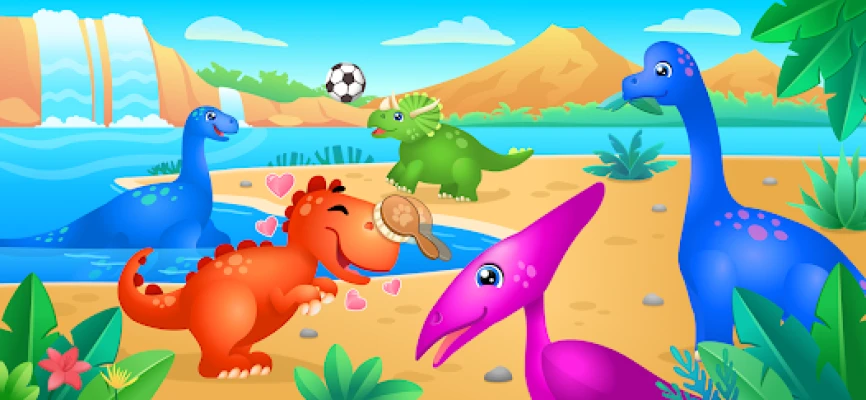
One of the more charming features is the opportunity to care for dinosaur characters before starting their adventures.
Children can brush their dinosaur companions and feed them appropriate food, including meat or grass, depending on the character. These simple interactions introduce a gentle sense of responsibility and give players a playful break between puzzles.
Parents can make this activity more engaging by asking children what their dinosaur might eat, how it looks, and what makes it different from other dinosaurs.
3. Dinosaur Jigsaw Puzzles
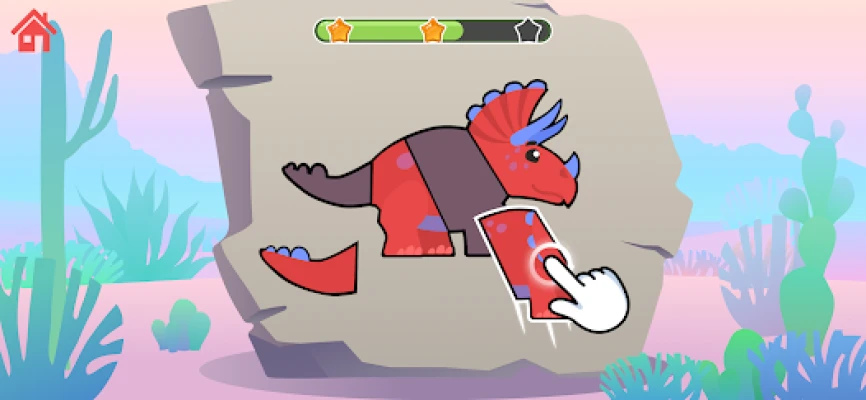
The puzzle activities challenge children to assemble dinosaur pictures from separate pieces. Players must identify where individual parts belong and match the correct sections to complete an image.
These puzzles encourage visual recognition, patience, and basic problem-solving. They are particularly useful for introducing the idea that a complete picture consists of smaller parts.
4. Sorting Objects by Size
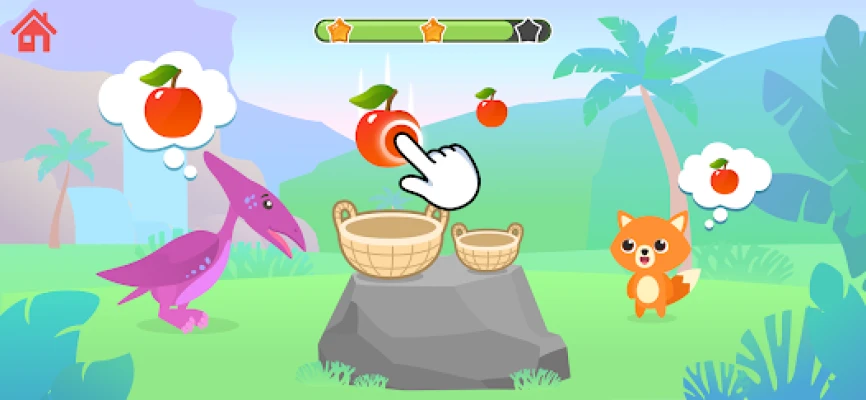
Some activities involve sorting fruit into baskets according to size. Children drag larger items into larger baskets and smaller items into smaller baskets.
This straightforward mechanic helps introduce comparison, categorization, and size recognition while encouraging controlled touchscreen movements.
5. Memory-Matching Challenges
The memory mini-game asks children to find matching pairs of pictures. Players briefly view the images, remember their locations, and turn them over to locate identical pairs.
As the number of pictures increases, remembering their positions can become more challenging. Younger children can begin with a small number of pairs and gradually work toward completing the entire board.
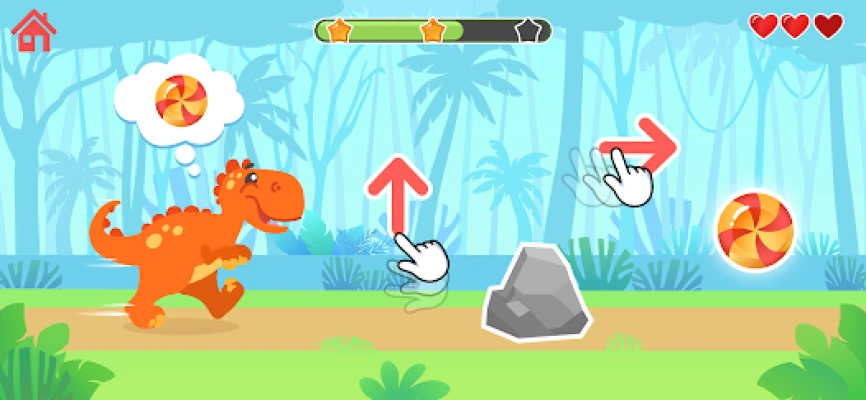
6. Races and Simple Quests
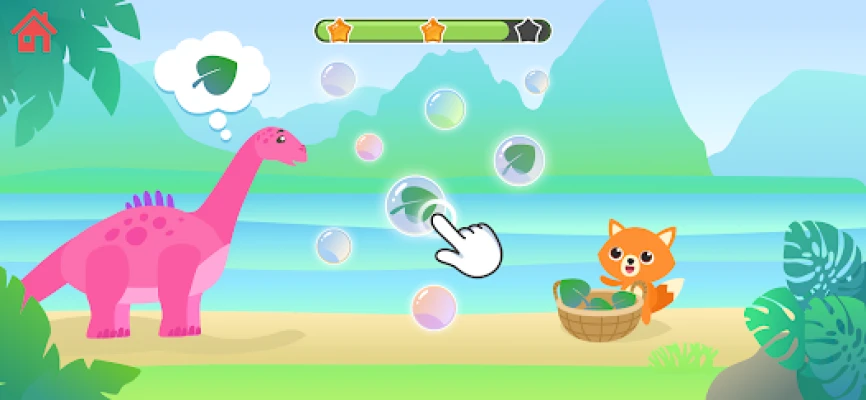
The game also includes races and small tasks that give children a change of pace from puzzles. These activities provide opportunities to follow simple instructions, make choices, and work toward a clear goal.
The exact mechanics may vary by mini-game, so children can explore each activity with parental guidance when necessary.
7. Stars and Progress
Completing activities allows players to fill progress meters and earn stars. These rewards provide a simple indication of progress and give children a reason to finish a task before moving on.
Parents can encourage children to focus on completing activities carefully rather than collecting stars as quickly as possible.
Full Strategy Guide: How to Play Better
Although this is an educational game for young children rather than a traditional competitive adventure, a few simple strategies can make the experience more enjoyable and productive.
Step 1: Start With the Easiest Activities
Begin with a familiar activity, such as dinosaur pet care or a straightforward matching puzzle. Let the child become comfortable with the touchscreen and understand how the game responds to taps and drags.
Avoid switching between too many activities immediately. A short introduction helps children learn the controls without feeling overwhelmed.
Step 2: Learn the Dinosaur Puzzle Shapes
When completing a dinosaur jigsaw puzzle, look at the shape and appearance of each piece before moving it.
Find pieces that contain recognizable parts of the dinosaur.
Look for matching edges and picture details.
Try to identify the head, body, tail, and legs.
Place one piece at a time rather than moving several pieces randomly.
If a child gets stuck, offer a small hint instead of completing the entire puzzle for them. This encourages independent problem-solving.
Step 3: Master the Size-Sorting Game
The fruit-sorting activity is easier when children compare objects before dragging them.
First, identify which basket is larger and which is smaller. Next, compare the fruit with the available baskets. Finally, move each item to the appropriate destination.
Parents can reinforce the lesson by asking questions such as, "Which apple is bigger?" or "Can you find something smaller?"
This turns a simple game mechanic into a useful introduction to comparison and classification.
Step 4: Improve Memory Matching
The best approach to the memory game is to pay attention to picture locations.
Watch each picture carefully when it is revealed.
Remember where similar dinosaurs or objects appear.
Turn over a picture and look for its matching partner.
If the pictures do not match, try to remember both locations.
Repeat the process until all pairs have been found.
For younger children, it helps to name the pictures aloud. Saying "green dinosaur" or "long tail" can create an additional memory cue.
Step 5: Take Time With Dinosaur Care
The pet-care activities should be treated as relaxed play rather than a race.
Follow the available grooming and feeding actions, observe how the dinosaur responds, and let the child explore the interactions. This is also a good opportunity to discuss different animals and their food.
Keep explanations short and age-appropriate so the activity remains enjoyable.
Step 6: Approach Races and Quests Patiently
For activities involving movement or completing objectives, let the child discover what each control does.
If a task is confusing, demonstrate the basic action once and then allow the child to try again. Repeated practice can make the controls easier to understand.
The objective is not to achieve a perfect score on every attempt. Learning how to respond to instructions and recover from mistakes is part of the experience.
Step 7: Collect Stars Naturally
Stars provide a useful reward for completing activities, but they should not become the only reason to play.
Encourage children to finish a puzzle, sort all the objects correctly, or find the matching pairs. Celebrate the completed task rather than focusing entirely on the reward.
This approach keeps the emphasis on exploration and learning.
Step 8: Choose Activities According to Your Child's Interests
Different children enjoy different types of play. A child who likes animals may prefer dinosaur care, while another may spend more time solving puzzles or matching pictures.
Rotate between activities when attention begins to fade. Short sessions with a clear stopping point are often more suitable for toddlers than long periods of continuous screen time.
Tips for Parents and Preschool Learning
Dinosaur Games for Toddlers and Kids can serve as a starting point for conversations about dinosaurs, colors, sizes, shapes, and memory.
Here are some practical ways to get more from the experience:
Practice dinosaur vocabulary: Ask children to describe the dinosaurs they see.
Explore colors: Encourage them to identify the colors of characters and objects.
Compare sizes: Use the sorting activities to discuss big, small, longer, and shorter.
Build memory skills: Ask children to remember where a picture appeared.
Encourage independence: Let them attempt a puzzle before offering assistance.
Connect play with real life: Use toy dinosaurs, drawings, or storybooks to extend the activity beyond the screen.
Keep sessions manageable: Stop when a child becomes tired or loses interest.
The game may support practice with these basic concepts, but it should complement, rather than replace, hands-on play, conversation, reading, and interaction with other children.
Graphics, Controls, and Overall Experience
Visual Style
The dinosaur theme is designed to appeal to younger players through recognizable characters and simple activity-based environments. The emphasis is on making objects easy to identify and tasks straightforward to understand rather than delivering realistic prehistoric scenery.
Controls
The main interactions include tapping objects, dragging pieces into position, selecting pictures, and following simple on-screen instructions. These actions are generally accessible to children who are developing their touchscreen coordination.
Some younger players may still need help understanding what to do in a particular activity.
Difficulty
The overall experience is intended for toddlers and preschoolers, so its challenges focus on basic recognition, matching, sorting, and memory rather than advanced strategy.
Difficulty can depend on the child's age, familiarity with mobile games, and experience with puzzles.
Offline Play
The game has been described as supporting offline activities, which can be useful during travel or in places without reliable internet access. Parents should check the installed version to confirm which features are available offline.
Ads and Purchases
Available third-party descriptions report an ad-free experience, but parents should verify the current app behavior and any purchase options before allowing a child to play independently. Check whether additional activities require payment or a subscription.
Advantages and Disadvantages
Pros
Eight mini-games offer variety for young players.
Dinosaur characters appeal to children interested in prehistoric animals.
Memory games encourage attention and picture recognition.
Jigsaw puzzles introduce simple problem-solving.
Sorting tasks provide practice with sizes and categories.
Dinosaur care adds a relaxed activity between challenges.
Simple touchscreen interactions are suitable for early learners.
Offline play can be convenient when an internet connection is unavailable.
Cons
Children may need adult guidance during their first sessions.
Activities may become repetitive for older children.
The educational depth is limited compared with a structured preschool learning program.
Some children may find particular puzzles difficult without assistance.
Parents should verify current purchase and subscription requirements.
Children looking for complex dinosaur exploration or action gameplay may prefer a different type of game.
Is Dinosaur Games for Toddlers and Kids Worth Playing?
For families looking for dinosaur games for toddlers, preschool puzzle games, or simple educational mobile activities, this title is worth considering.
Its strongest appeal is the combination of dinosaur pet care, memory matching, picture puzzles, and sorting tasks in one child-oriented package. Instead of concentrating on a single activity, it gives young players several ways to interact with the same theme.
It is best suited to children who enjoy short, structured challenges and benefit from occasional parental guidance. Older children seeking detailed dinosaur facts, realistic simulations, or more demanding gameplay may find the experience too simple.
Overall, it is a potential option for adding dinosaur-themed activities to a child's playtime, especially when the game is used alongside real-world learning and age-appropriate screen-time limits.
Frequently Asked Questions
What is Dinosaur Games for Toddlers and Kids?
It is a dinosaur-themed educational mobile game featuring mini-games intended for toddlers and preschool children. Activities include puzzles, memory matching, object sorting, dinosaur care, and other simple challenges.
What age group is the game designed for?
The game is aimed at young children, with available descriptions highlighting an approximate age range of 2–5 years. Parents should consider their child's individual abilities and the age guidance shown in the current store listing.
What can children do in the game?
Children can care for dinosaur characters, assemble dinosaur pictures, sort fruit by size, find matching images, participate in races, complete tasks, and earn stars.
Does the game help children learn?
Its activities provide opportunities to practice picture recognition, memory, size comparison, visual coordination, and simple problem-solving. These activities can support early learning, although the game is not a substitute for formal education.
Can the game be played offline?
Available descriptions indicate that offline play is supported. Parents should test the installed version to confirm whether every activity is accessible without an internet connection.
Is the game suitable for toddlers?
It is designed for young children, but toddlers may need help with touchscreen controls and instructions. Parents should supervise play and choose activities appropriate to the child's development.
Does the game include dinosaur puzzles?
Yes. The described activities include jigsaw-style puzzles in which children assemble dinosaur pictures from smaller pieces.
How do children earn stars?
Stars are awarded through progress in the mini-games. Completing the required actions and finishing activities helps children advance toward the available rewards.
Is the game suitable for older children?
Older preschoolers may enjoy the memory and puzzle activities, but children who want more complex challenges may outgrow the gameplay quickly.
What makes this game different from dinosaur action games?
Its main focus is simple educational activities for young children rather than combat, survival, or realistic dinosaur simulation. The experience centers on matching, sorting, caring for characters, and completing small tasks.
Final Verdict
Dinosaur Games for Toddlers and Kids combines a popular dinosaur theme with accessible mini-games for early learners. Its mixture of memory challenges, jigsaw puzzles, sorting activities, and dinosaur care gives children a variety of simple tasks to explore.
For parents searching for dinosaur learning games, toddler puzzle games, or preschool games for young dinosaur fans, it offers a straightforward option to consider. The best results come from keeping sessions short, encouraging children to solve challenges independently, and connecting the activities to learning away from the screen.
Rate the Game
User Reviews


Popular Games



















 Android
 iOS
 Windows
 Xbox