
Latest Version
October 01, 2026
Edujoy Games Sociedad Limitada
Educational
iOS
0
Report a Problem
More About :game
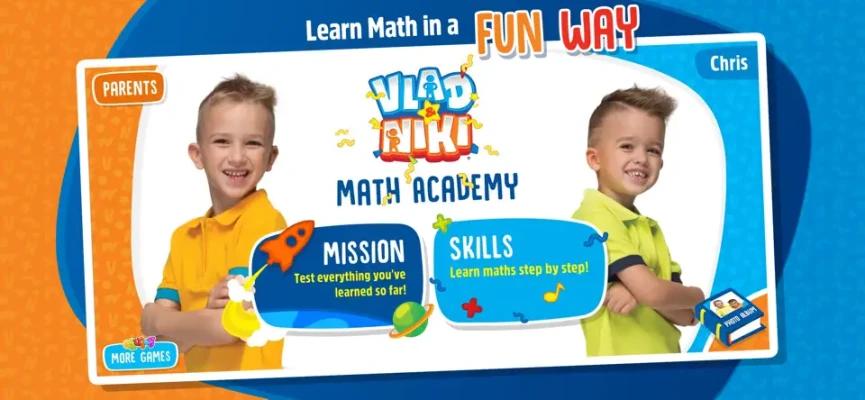
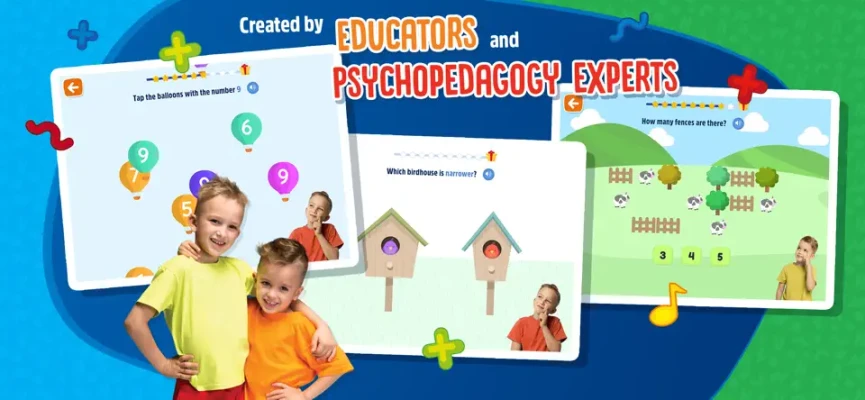
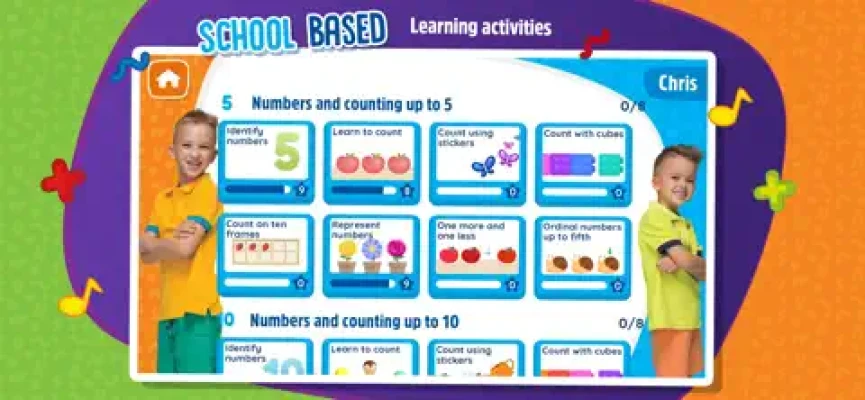
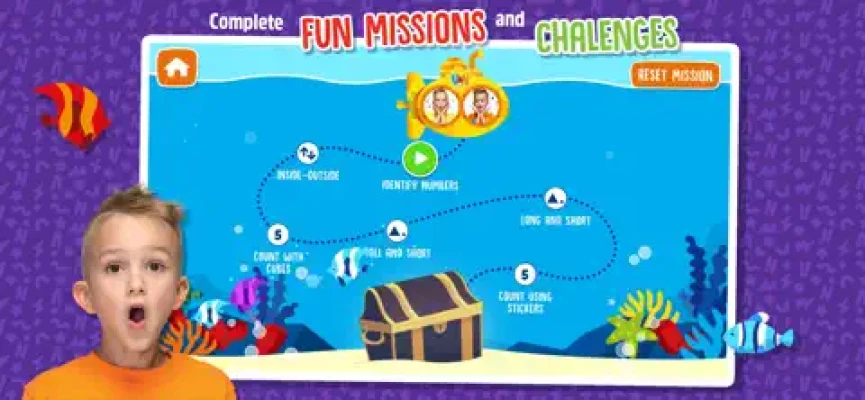
Vlad and Niki - Math Academy is an educational math game that turns early learning into a collection of colorful challenges featuring the popular characters Vlad and Niki. Children can practice counting from 1 to 20, simple addition and subtraction, shapes, sequences, object classification, positions, and weight comparisons through interactive activities.
Instead of presenting mathematics as a traditional lesson, the game uses short challenges and missions so children can learn one concept at a time and gradually build confidence.
What Is Vlad and Niki - Math Academy?
Vlad and Niki - Math Academy is a children's educational puzzle game from Edujoy Games S.L. The App Store classifies it as a Puzzle app and gives it an age rating of 4+. It is available for iPhone and iPad and requires iOS 14 or later.
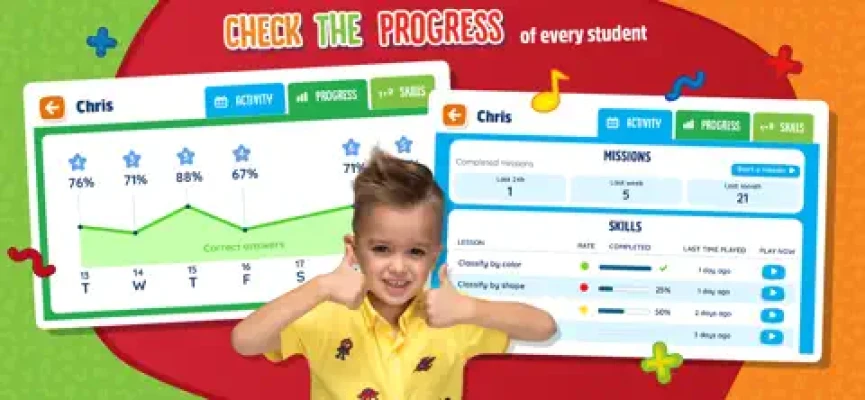
The main idea is simple: complete playful mathematical activities while learning fundamental concepts. The game also includes statistics and graphs that can help parents see areas where a child is doing well and topics where additional practice may be useful.
Main Math Activities
Counting Numbers From 1 to 20
The game introduces numbers from 1 through 20, giving young players opportunities to recognize quantities and practice counting.
A useful approach is to encourage the child to count objects aloud rather than simply selecting an answer. This turns each challenge into active practice.
Addition and Subtraction
Simple addition and subtraction activities introduce basic calculations in an approachable format.
Children can first work out the answer visually and then connect the result with the correct number. This can help bridge the gap between counting physical quantities and understanding basic arithmetic.
Shapes and Classification
Vlad and Niki - Math Academy includes activities involving geometric shapes and object classification.
Children can practice identifying objects based on:
Shape
Size
Color
Other visible characteristics
These activities add an important visual-learning component to the mathematics exercises.
Sequences and Patterns
Sequence challenges ask players to recognize what comes next in a series.
The best way to solve these activities is to look carefully at the repeated pattern instead of guessing the next item.
Position and Spatial Understanding
Some challenges focus on identifying objects by position.
These exercises help children become more comfortable with the idea that an object's location can be described and compared with other objects.
Comparing Weight
The game also introduces simple comparisons involving the weight of objects.
Rather than concentrating only on numbers, these challenges encourage children to observe relationships and decide which object is heavier or lighter.
Key Gameplay Features
Short Mathematical Challenges
The app breaks learning into smaller activities rather than relying on one long lesson. This makes it easier for younger players to switch between different mathematical concepts.
Missions and Quests
Mathematical missions give children a reason to keep completing exercises and provide a more game-like structure to learning.
Simple Controls
The interface is designed around straightforward interactions, making it suitable for young children who may still be developing their confidence with mobile devices.
Vlad and Niki Characters
The familiar Vlad and Niki characters are integrated into the learning experience, giving the activities a recognizable theme rather than presenting them as conventional worksheets.
Colorful Visuals and Animations
The app uses playful designs, animations, and original Vlad and Niki sounds and voices to make the activities more engaging.
Progress Statistics
One of the more useful features for parents is the statistics section. The app provides graphs and information about mathematical content, including areas with more errors or topics where the child may need additional practice.
Full Vlad and Niki Math Academy Strategy Guide
Although this is an educational game rather than a traditional puzzle adventure, a good approach can make the learning activities much more productive.
1. Start With Counting
Begin with the counting activities before moving quickly into calculations.
Have the child count each object individually. For example, if there are several objects on screen, encourage them to point at each one while saying the numbers aloud.
This reinforces the connection between a number and an actual quantity.
2. Don't Guess Addition Answers
When solving addition exercises, encourage the child to visualize both groups first.
For example:
3 + 2
Count the first group, then continue counting two more objects.
This creates a natural transition from counting to arithmetic.
3. Use the Same Method for Subtraction
Subtraction can be easier when children visualize something being removed.
If there are five objects and two disappear, ask:
How many are left?
This makes subtraction feel like an action rather than an abstract mathematical formula.
4. Look Carefully at Shape Challenges
When classifying objects, don't immediately focus on color.
Ask the child what shape the object has first. Then introduce other characteristics such as size and color.
This helps prevent children from assuming that two objects belong together simply because they look similar in one way.
5. Study the Pattern Before Selecting an Answer
For sequence challenges, take a moment to examine what changes from one item to the next.
Ask questions such as:
Does the color change?
Does the shape change?
Does the size change?
Is something repeating?
Is there an alternating pattern?
Recognizing the rule is more useful than simply finding the correct answer by trial and error.
6. Practice Position Words
When the game presents positional challenges, encourage children to describe what they see.
Words such as:
Above
Below
Next to
In front
Behind
Left
Right
can help build spatial awareness.
7. Compare Objects Carefully
For weight-related activities, ask the child to predict the answer before selecting it.
Then discuss why one object might be heavier or lighter.
The goal is not just getting the question right; it is learning how to compare two things.
8. Review Mistakes Instead of Repeating Randomly
If a child repeatedly makes mistakes in one type of activity, that is useful information.
The app's statistics and graphs can help identify areas that may require additional practice.
Spend more time on the specific concept instead of simply repeating every activity.
9. Increase Difficulty Naturally
Don't rush through the easiest activities.
Early counting and classification provide the foundation for later arithmetic and reasoning challenges.
A child who understands the basics well will usually have an easier time progressing to more complicated tasks.
10. Keep Sessions Short
Young children can lose concentration during long sessions.
Short play sessions with regular breaks can make mathematical practice feel more enjoyable and less like homework.
Tips for Parents
Vlad and Niki - Math Academy can work particularly well when an adult participates occasionally rather than simply handing the device to a child.
Try asking:
"How did you get that answer?"
instead of only asking:
"Is that correct?"
The first question encourages the child to explain the reasoning behind the answer.
Parents can also use the statistics and progress graphs to identify topics that deserve extra practice.
What Skills Does the Game Practice?
The activities cover several early-learning skills, including:
Counting
Number recognition
Basic addition
Basic subtraction
Shape recognition
Classification
Pattern recognition
Spatial awareness
Comparing quantities
Comparing weight
Logical thinking
Problem solving
Attention and observation
The App Store specifically describes activities covering counting from 1 to 20, addition and subtraction, shapes, sequences, positions, weight comparisons, and object classification.
Graphics and Atmosphere
The game has a bright, child-friendly presentation built around Vlad and Niki.
Its atmosphere is more playful than academic. Colorful designs, animations, character appearances, and original sounds help make the mathematical exercises feel like mini-games rather than traditional lessons.
This is particularly useful for children who respond better to visual and interactive activities than to written exercises.
Difficulty
Difficulty: Easy to Moderate
The core activities are aimed at young learners, so the individual exercises are relatively accessible. The challenge comes from learning several different concepts rather than from complicated controls.
The most difficult activities will vary depending on the child's existing skills. A child comfortable with counting may find number exercises easy but need more practice with sequences, positions, or comparisons.
Game Information
| Feature | Details |
|---|---|
| Game | Vlad and Niki - Math Academy |
| Developer | Edujoy Games S.L. |
| Genre | Educational / Puzzle |
| Age Rating | 4+ |
| Platforms | iPhone, iPad |
| Language | English |
| App Size | 270.6 MB |
| Requires | iOS 14.0 or later |
| Price | Free with in-app purchases |
| Latest listed version | 7.2 |
| Latest listed update | February 28, 2025 |
| App Store Rating | 4.4/5 from 146 ratings on the U.S. listing |
The App Store currently lists version 7.2, released February 28, 2025, and notes that the update included optimizations and bug fixes.
In-App Purchases
The App Store lists in-app purchases including monthly subscription and lifetime-access options, as well as options described as playing without interruptions.
Parents should check the current purchase details inside the App Store before subscribing, as pricing and purchase options can change.
Pros and Cons
Pros
Fun introduction to early mathematics
Counting activities from 1 to 20
Addition and subtraction practice
Shape and classification activities
Sequence and pattern exercises
Position and weight comparisons
Progress statistics and graphs
Simple interface for young children
Familiar Vlad and Niki characters
Colorful animations and sounds
Cons
Designed primarily for younger learners
Some activities may become easy once the child masters the basics
In-app purchases are available
The app requires a relatively modern iOS version
The latest listed App Store update is from February 2025
Who Is Vlad and Niki - Math Academy For?
The game is primarily suited to young children beginning to develop foundational mathematics skills.
It can be particularly useful for children practicing:
Numbers 1–20
Basic addition
Basic subtraction
Shapes
Patterns
Classification
Position
Simple comparisons
The 4+ age rating on the App Store also reflects its intended young audience.
Frequently Asked Questions
Is Vlad and Niki - Math Academy free?
The app is listed as free on the App Store, with optional in-app purchases.
What can children learn in Vlad and Niki Math Academy?
Children can practice counting from 1 to 20, addition, subtraction, geometric shapes, sequences, object classification, positions, and weight comparisons.
Is Vlad and Niki Math Academy suitable for preschool children?
The App Store gives the game a 4+ age rating, and its activities focus on foundational mathematics concepts suitable for young learners.
Does the game track progress?
Yes. The app includes statistics and graphs designed to show progress and highlight mathematical areas where more practice may be useful.
Can children practice addition and subtraction?
Yes. Basic addition and subtraction are among the mathematical activities included in the game.
Does it teach geometric shapes?
Yes. Learning basic geometric shapes is one of the listed educational areas.
What devices support the game?
The App Store lists support for iPhone and iPad, requiring iOS 14.0 or later. It also lists Mac compatibility for Macs with an Apple M1 chip or later, although the listing notes that the app is not verified for macOS.
Final Thoughts
Vlad and Niki - Math Academy takes familiar early-math concepts and presents them through short, colorful interactive challenges. Its combination of counting, arithmetic, shapes, sequences, classification, spatial activities, and comparisons gives young learners several different ways to practice foundational skills.
The progress statistics are also useful because they give parents more information than simply knowing whether a child completed a level. They can reveal which areas are comfortable and which concepts may need more attention.
For families looking for a playful introduction to counting and basic mathematics, the game provides a character-driven alternative to conventional math exercises.
Rate the Game
User Reviews






Popular Games


















 Android
 iOS
iOS Windows
 Xbox
Xbox