


Latest Version
January 02, 2026
GoKids! publishing
Educational
0
com.gokids.transport2
Report a Problem
More About :game
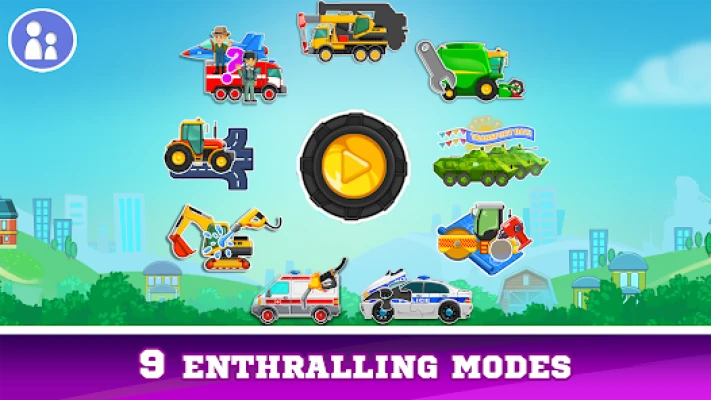
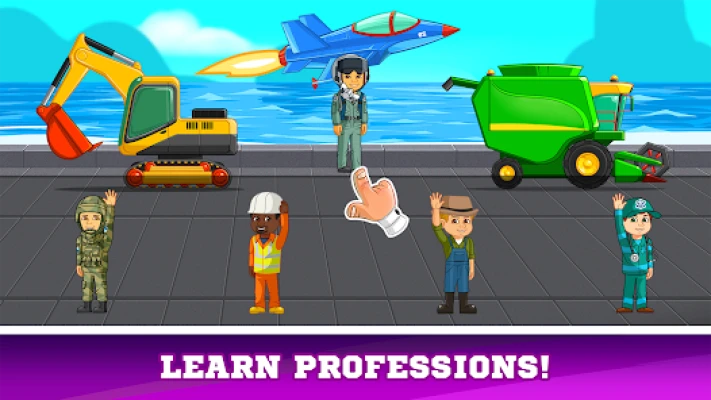
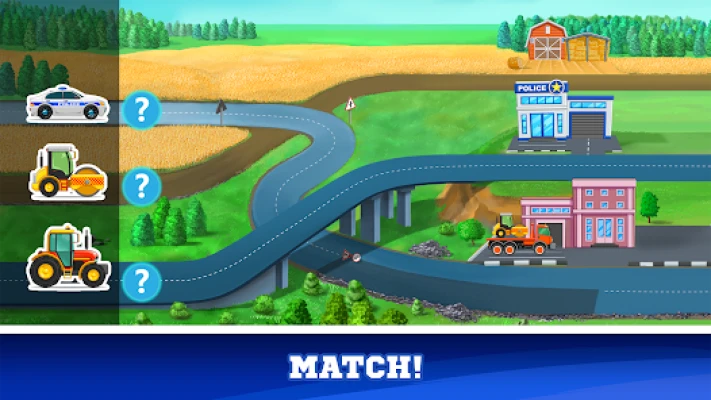
The game features 15 vehicles, including emergency vehicles, construction machinery, farming equipment, military vehicles, aircraft and water transport. Children can match vehicles to shadows, repair missing parts, wash vehicles, refuel them and complete additional mini-puzzles while learning vehicle names and sounds.
The current Google Play listing shows 10M+ downloads, a 4.0-star rating from 31.3K reviews, an Everyone rating and offline gameplay.
What Is Kids Cars Games Build a Truck?
Kids Cars Games Build a Truck is designed to make learning about transportation interactive.
The game introduces children to different types of vehicles while giving them simple activities to complete. Rather than requiring complicated controls, each activity uses straightforward touch interactions suitable for young players.
The main learning categories include:
- Rescue vehicles
- Construction machines
- Farming equipment
- Military transport
- Air transport
- Water transport
- Vehicle parts
- Vehicle sounds
- Vehicle names
The developer says the game is intended to support attention, logical thinking, curiosity, imagination, perseverance and fine-motor skills.
The 15 Vehicles
The current game description identifies 15 vehicles and pieces of equipment across several categories.
Emergency and Rescue Vehicles
Children can learn about:
- Ambulance
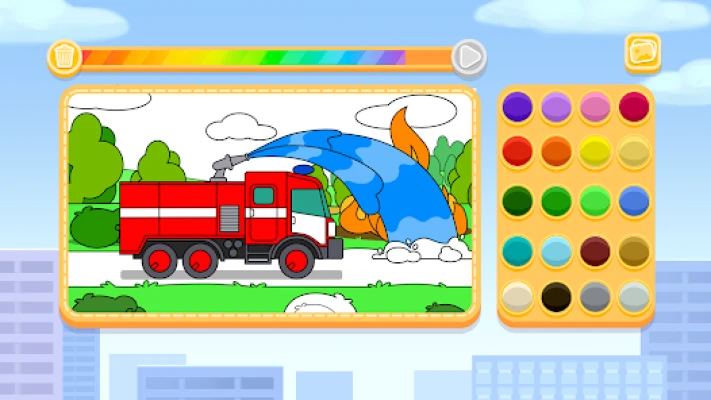
- Fire engine
- Police car
- Rescue helicopter
- Lifeboat
Construction and Working Machines
The construction and working group includes:
- Crane
- Excavator
- Tractor
- Asphalt roller
- Harvester
Military Vehicles
The game also introduces:
- Tank
- Armored personnel carrier
- Bomber
- Warship
These categories give children exposure to vehicles that perform very different jobs.
How to Play
The game is built around several short activities rather than one continuous driving experience.
1. Match the Vehicle With Its Shadow
The first activity involves matching a vehicle to the correct outline.
A child moves the vehicle image toward its corresponding shadow.
This is a simple visual-recognition exercise that encourages children to compare shapes and identify differences.
Strategy
Don't immediately show the correct answer.
Let the child compare:
- Overall shape
- Wheels
- Size
- Cab
- Equipment attached to the vehicle
Then move the vehicle into the matching outline.
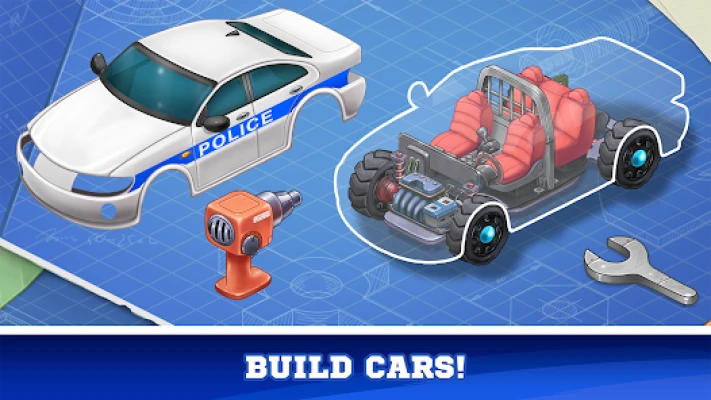
2. Repair the Vehicle
The repair activity asks children to put missing parts back onto a vehicle.
This turns a simple puzzle into a vehicle-maintenance activity.
Vehicles mentioned in the current game description include helicopters, lifeboats, police cars, excavators, fire engines, tractors and asphalt pavers.
Learning Tip
Ask the child:
“What part is missing?”
Then:
“What do you think this vehicle needs it for?”
This turns the activity into a conversation about how vehicles work.
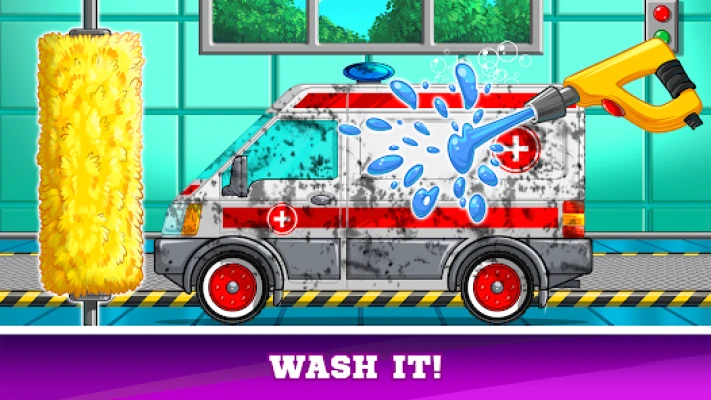
3. Wash the Vehicles
The washing activity gives children another interactive task.
The objective is straightforward: clean the vehicle.
Although simple, this activity gives young players another way to interact with the vehicles while reinforcing recognition.
Parents can use the opportunity to introduce words such as:
- Clean
- Dirty
- Wash
- Water
- Vehicle
- Wheels
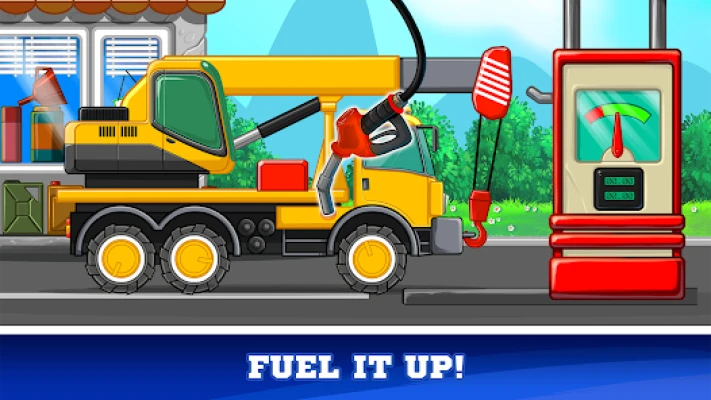
4. Refuel the Vehicle
The game also includes a gas-station activity where children can refuel vehicles.
This introduces the basic idea that some vehicles require fuel before they can operate.
Parents can use this moment to explain the difference between vehicles and the different ways real-world transportation gets energy.
5. Identify Types of Transport
Another activity asks children to distinguish different types of equipment and transportation.
This can include recognizing whether something is:
- A rescue vehicle
- A construction machine
- Farm equipment
- Military equipment
- Air transport
- Water transport
This is particularly useful because it moves beyond simply memorizing vehicle names.
6. Complete Vehicle Puzzles
The game contains five mini-puzzles designed to reinforce what children have learned.
These activities give children another opportunity to recognize vehicle shapes and parts after encountering them in the main activities.
Complete Strategy Guide
Because this is an educational game for young children, the best strategy isn't about speed or high scores.
The goal is to encourage recognition, problem-solving and independent interaction.
Start With Familiar Vehicles
Begin with vehicles the child already knows.
For example:
- Car
- Police car
- Fire engine
- Tractor
Once those are familiar, introduce less common machines such as construction equipment or military transport.
This makes new vocabulary easier to understand.
Learn the Vehicle Name First
When a new vehicle appears, say its name aloud.
For example:
“This is an excavator.”
Then ask the child to repeat it.
Afterward, ask:
“Can you find the excavator?”
This turns the activity into active recall rather than passive viewing.
Listen to the Vehicle Sounds
The game includes sounds associated with different forms of transportation.
Encourage children to listen carefully.
You can ask:
“What vehicle makes that sound?”
This adds an auditory recognition exercise to the visual learning.
Use the Repair Activity for Problem Solving
When a vehicle is missing a component, don't immediately point to the correct piece.
Ask:
“Which piece fits here?”
Let the child test different possibilities.
This makes the repair activity more of a puzzle-solving exercise.
Use the Shadow Puzzle for Shape Recognition
The shadow activity is particularly useful for teaching children to look at overall shapes.
Ask them to compare the silhouette with the available vehicles.
If the child chooses incorrectly, ask:
“Look at the wheels. Does that shape match?”
This encourages observation rather than guessing.
Vehicle Learning Progression
A simple learning progression can make the game more educational.
Stage 1 – Recognition
Learn the names of familiar vehicles.
Stage 2 – Classification
Group vehicles according to their jobs.
For example:
Rescue → Construction → Farming → Military
Stage 3 – Parts
Use the repair activity to recognize different vehicle components.
Stage 4 – Sounds
Listen to vehicle sounds and identify the corresponding transportation type.
Stage 5 – Independent Play
Allow the child to complete activities without assistance.
This final stage is particularly useful because it shows whether the child has started remembering the vehicles independently.
Tips for Parents
Ask Questions Instead of Giving Answers
Instead of:
“That's a fire truck.”
Try:
“What vehicle is that?”
This encourages recall.
Connect the Game to Real Life
When a child sees a real fire engine, tractor or police car outside, mention the same vehicle from the game.
Real-world recognition helps reinforce the vocabulary.
Use the Repair Activity to Teach Parts
A repair activity can lead to simple questions:
- Where are the wheels?
- Where is the cabin?
- What does the vehicle carry?
- What does this machine do?
Compare Vehicles
Ask:
“Which is bigger?”
“Which vehicle flies?”
“Which one works on a farm?”
These questions introduce classification and comparison.
Don't Rush
There is no advantage to completing every activity as quickly as possible.
Let children explore the vehicles and repeat activities they enjoy.
Educational Benefits
The game has several learning-oriented elements.
Vehicle Vocabulary
Children learn names for different types of transportation.
Visual Recognition
Shadow matching and vehicle puzzles require children to recognize shapes.
Fine-Motor Practice
Moving parts, matching vehicles and interacting with repair activities require controlled touch movements.
Logical Thinking
Repair and matching activities encourage children to work out where pieces belong.
Attention
Children need to observe shapes and details to complete the activities.
Curiosity
Different vehicles naturally encourage questions about how machines work.
Imagination
The large variety of rescue, construction, farming and transportation equipment gives children opportunities to imagine different real-world roles.
The developer specifically lists perseverance, attentiveness, logical thinking, imagination, curiosity and fine-motor skills among the intended developmental benefits.
Vehicle Categories Explained
Rescue Vehicles
Ambulances, fire engines, police cars and rescue helicopters introduce children to vehicles used during emergencies.
Construction Equipment
Cranes and excavators demonstrate how machines are used for building and heavy work.
Farming Equipment
Tractors and harvesters introduce agricultural machinery.
Air Transport
Helicopters and bombers provide examples of vehicles that operate in the air.
Water Transport
Lifeboats and warships demonstrate transportation on water.
Military Equipment
Tanks and armored vehicles introduce another category of specialized transportation.
This variety helps children understand that vehicles aren't all designed for the same purpose.
Atmosphere and Presentation
Kids Cars Games Build a Truck uses bright, colorful graphics and simple interfaces aimed at very young children.
The Google Play listing describes the game as stylized, casual, educational, single-player and offline.
Realistic vehicle sounds are another important part of the presentation.
The overall atmosphere is playful rather than competitive. There is no need for complicated driving controls or advanced simulation mechanics.
Features
- 15 vehicles and machines
- Rescue vehicles
- Construction equipment
- Farming machinery
- Military transport
- Air and water transportation
- Vehicle names
- Vehicle sounds
- Shadow-matching puzzles
- Vehicle repair
- Vehicle washing
- Refueling activity
- Vehicle-type identification
- Five mini-puzzles
- Fine-motor activities
- Logical-thinking exercises
- Bright child-friendly graphics
- Simple touch controls
- Multilingual learning
- Native-speaker voice recordings
- Offline gameplay
- Single-player
- Android support
- Windows availability
The current Google Play listing confirms offline play, Android and Windows availability and the game's educational classification.
Reviews and Player Feedback
Google Play currently shows 4.0 stars from 31.3K reviews.
Recent feedback includes enthusiastic comments from children and families who enjoy the vehicle theme. One August 2026 reviewer described the game as fun and said they had been searching for it for a long time.
However, advertising has been a recurring criticism in older highly-rated reviews. One parent said frequent advertisements interrupted their toddler's play and made it difficult for the child to return to the game. The developer responded that an in-app purchase could remove the ads.
Another parent liked the game but wanted more freedom to select which vehicle puzzle to build instead of following the available sequence. The developer acknowledged the suggestion.
Honest Assessment
The game's vehicle variety and simple interactive activities are its strongest points.
The biggest consideration for parents is the advertising experience. Since young children can have difficulty closing advertisements or navigating back to the game, adult supervision is useful when playing the free version.
Pros and Cons
Pros
- Large variety of vehicles
- Educational vehicle vocabulary
- Vehicle sounds
- Repair activities
- Washing activity
- Refueling activity
- Matching puzzles
- Five additional mini-puzzles
- Simple controls
- Fine-motor practice
- Logical-thinking activities
- Multilingual support
- Offline gameplay
- 10M+ downloads
Cons
- Contains advertisements
- Contains in-app purchases
- Some parents have criticized the frequency of ads
- Some players have requested greater freedom over vehicle selection
- Gameplay is intentionally simple and aimed at young children
Platforms and Requirements
The current Google Play listing supports:
Android
Windows, through the Google Play Windows experience powered by Intel technology.
Third-party current version information identifies Android 7.0 or later for recent builds of the app.
The Google Play listing shows the game was updated on August 24, 2026.
Ads and In-App Purchases
Google Play currently identifies both ads and in-app purchases.
The game is also listed as available through Google Play Pass, where applicable.
Parents should review purchase settings and consider supervising younger children during the free version because advertisements have been a recurring subject in player feedback.
Data Safety
Google Play currently states that the app may share:
- App activity
- App info and performance
The same categories may be collected by the app.
Google Play also states that data is encrypted in transit and currently indicates that collected data cannot be deleted.
Parents should check the current Google Play Data Safety section and the developer's privacy policy for the latest information.
Who Is Kids Cars Games Build a Truck For?
The game is primarily aimed at:
- Toddlers
- Preschool children
- Kindergarten-age children
- Children interested in cars and trucks
- Children learning transportation vocabulary
- Children practicing basic problem-solving
- Parents looking for vehicle-themed educational activities
It is not intended to be a realistic driving simulator. The emphasis is on learning vehicles through interactive puzzles and activities.
Frequently Asked Questions
What is Kids Cars Games Build a Truck?
It is an educational vehicle game from GoKids! publishing that teaches children about different types of transportation through puzzles, repair, washing, refueling and other interactive activities.
How many vehicles are in the game?
The current Google Play description identifies 15 vehicles and machines.
What types of vehicles can children learn?
The game includes rescue vehicles, construction machines, farming equipment, military vehicles, air transport and water transport.
Can children repair vehicles?
Yes. One of the main activities involves putting missing parts back onto vehicles.
Can children wash vehicles?
Yes. Vehicle washing is one of the interactive activities described by the developer.
Can children refuel vehicles?
Yes. The game includes a gas-station activity where children refuel vehicles.
Does the game teach vehicle sounds?
Yes. Children can hear sounds associated with different types of transportation.
Is the game educational?
Yes. It is categorized as an educational game and is designed around vehicle recognition, puzzles, vocabulary and fine-motor activities.
Can it be played offline?
Yes. Google Play currently lists it as an offline game.
Is Kids Cars Games Build a Truck multiplayer?
No. Google Play currently lists it as a single-player game.
Does it contain ads?
Yes. Google Play currently lists ads and in-app purchases.
Final Thoughts
Kids Cars Games Build a Truck takes a familiar subject—cars, trucks and machines—and turns it into a collection of simple educational activities.
The game goes beyond showing vehicle pictures. Children can match vehicles to shadows, repair missing parts, wash machines, refuel them, listen to transportation sounds and complete puzzles.
Its biggest educational advantage is the variety of vehicle categories. A child can encounter an ambulance, fire engine, excavator, tractor, harvester, helicopter, lifeboat and military equipment within the same experience.
The gameplay is intentionally straightforward, so it should not be judged as a conventional driving game. Its purpose is to help young children recognize transportation, learn vocabulary and practice basic interactive skills.
For parents, the main issue to keep in mind is advertising. Player feedback has repeatedly mentioned interruptions from ads, so younger children may benefit from supervision.
Overall, the game works best as a short, interactive learning activity for children who are fascinated by vehicles and machines.
Rate the Game
User Reviews














Popular Games



















 Android
 iOS
 Windows
 Xbox