

Latest Version
January 02, 2026
GoKids! publishing
Educational
0
com.gokids.farm
Report a Problem
More About :game
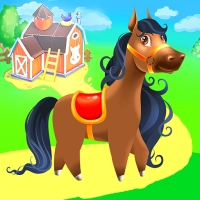
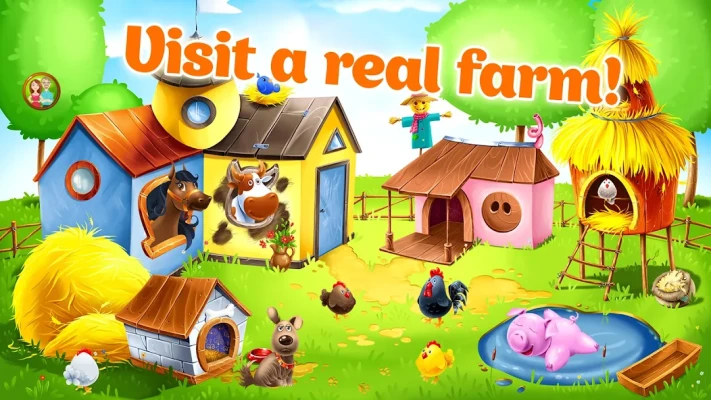
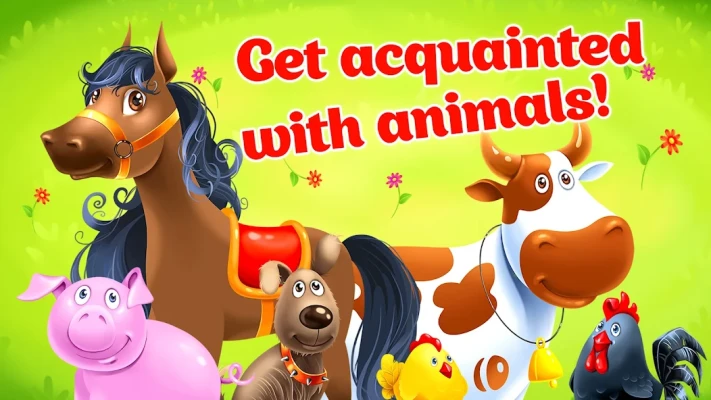
Children can meet a dog, horse, cow, piglets and chickens while learning what different animals eat, where they live and how people care for them. The game also introduces simple farming activities such as preparing soil, watering a meadow and gathering crops.
The current Google Play listing shows 10M+ downloads, a 4.1-star rating and more than 32K reviews. It is rated Everyone, supports offline play and is available on Android and Windows.
What Is Kids Animal Farm Toddler Games?
Kids Animal Farm Toddler Games is designed to turn basic farm knowledge into interactive activities.
Instead of simply showing pictures of animals, the game lets children take care of them and perform simple farm tasks.
The main animals include:
- Dog
- Horse
- Cow
- Piglets
- Chickens
Each animal has its own activities.
The developer describes the game as being aimed particularly at children around 3–5 years old, with an emphasis on animal care, patience, logic, fine-motor skills and early understanding of farming.
One useful feature is that the available activities are not presented as a strict linear campaign. The developer says the levels are available at once, allowing a child to start with an animal of their choice.
How to Play
Dog Activities
The dog has two main activities.
First, the child uses the dog to protect carrot patches from rabbits.
This gives the child a simple introduction to the idea that farm animals can have practical jobs.
Afterward, the dog wants to play.
Children can throw a stick or ball for the puppy, turning the activity into a simple interaction based around caring for and playing with an animal.
Learning Opportunity
Parents can ask:
- What animal is this?
- What does a dog do?
- What is the dog protecting?
- What does the dog like to play with?
This turns a simple mini-game into a short vocabulary lesson.
Horse Activities
The horse introduces several different farm tasks.
Feeding the Horse
The child gives the horse fresh hay.
This provides a straightforward introduction to the idea that farm animals need appropriate food.
Fixing the Horseshoe
The horse then needs help with its hoof.
Children attach a horseshoe using a hammer and nails.
This activity introduces a simple repair process while requiring controlled touch movements.
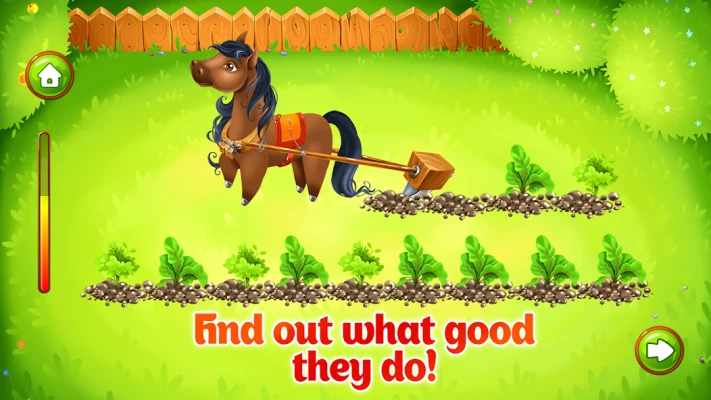
Plowing the Soil
The child uses a plow to turn the soil.
This provides an introduction to preparing farmland before growing crops.
Harvesting
After preparing the soil, the child can gather the resulting crop.
The horse section therefore connects animal care with farming rather than treating them as completely separate activities.
Cow Activities
The cow has several activities focused on feeding, milking and caring for the surrounding land.
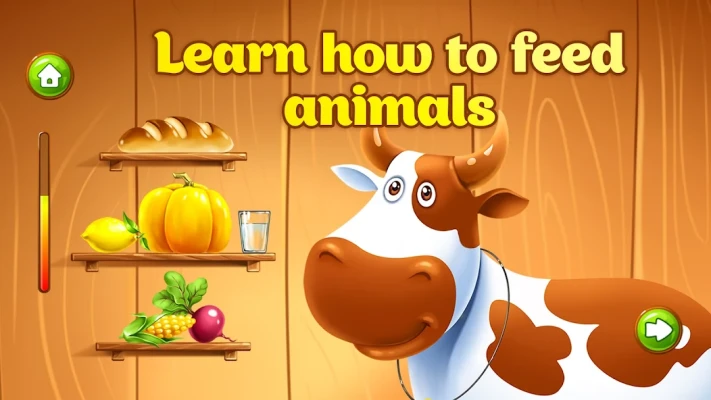
Feeding the Cow
The game allows children to give the cow different foods, including vegetables, fruit, grass, flowers and other items.
This is a playful activity, so parents can use it as an opportunity to discuss which foods real farm animals normally eat.
Milking the Cow
Children can also participate in a simple milking activity.
This introduces an everyday farming task in a very simplified form.
Watering the Meadow
The cow section also includes watering the meadow.
This connects the animal area with the broader idea that plants and farmland need water.
Pig Activities
The piglets have their own sequence of activities.
Feeding the Piglets
The first task is to provide food.
This reinforces the game's recurring theme that farm animals depend on people for care.
Mud Play
After feeding the piglets, children can let them play in the mud.
This makes the experience more playful while introducing a behavior associated with pigs.
Bubble Bath
The piglets can then splash around in a bubble bath.
This provides another simple care activity and keeps the interaction varied.
Chicken Activities
The chicken area combines animal care with a small reaction-based activity.
Feed the Chickens
Children scatter grain for the chickens.
This introduces another example of feeding domestic animals.
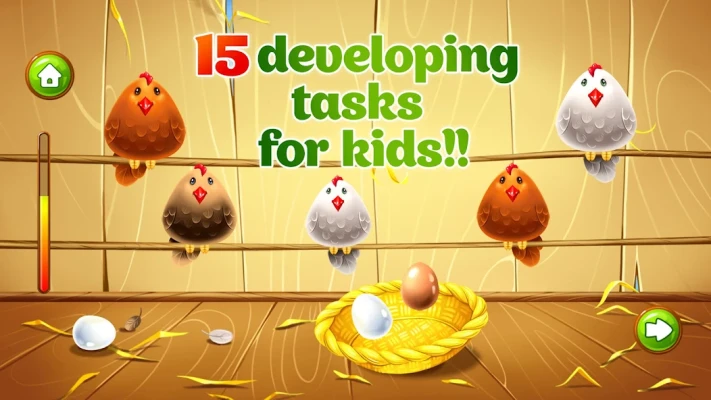
Catch the Eggs
Eggs fall while the child moves a basket to catch them.
This is one of the more action-oriented activities in the game.
It encourages:
- Reaction
- Accuracy
- Hand-eye coordination
- Controlled movement
The developer specifically describes the egg-catching activity as useful for reaction and precision training.
Put the Chickens on the Perch
The final activity involves placing the birds on their perch.
This rewards patience and careful interaction rather than speed.
Complete Strategy Guide
Because Kids Animal Farm Toddler Games is an educational children's game, there is no traditional winning strategy.
The most effective approach is to use each activity as an opportunity to recognize animals, understand their needs and practice basic interactive skills.
Start With the Child's Favorite Animal
There is no need to force a particular order.
The developer states that the levels are available from the beginning, allowing children to choose which animal they want to explore.
If a child loves horses, start with the horse.
If they are interested in chickens, begin with the chicken activities.
This can make the first session more engaging.
Strategy 1: Learn the Animal Name
Before starting an activity, say the animal's name.
For example:
“This is a horse.”
Then ask the child to repeat it.
After several activities, ask:
“Where is the horse?”
This encourages active recognition.
Strategy 2: Learn What Animals Need
Use each feeding activity to introduce the concept of animal care.
Ask:
- What does the animal need?
- What does it eat?
- Where does it live?
- How do we take care of it?
The goal is not to memorize every item shown on screen but to help children understand the basic idea of caring for animals.
Strategy 3: Practice Fine-Motor Control
Many activities require children to:
- Drag objects
- Move baskets
- Place objects
- Use tools
- Feed animals
- Catch falling eggs
- Interact with farm equipment
Encourage slow, controlled movements rather than rushing.
Strategy 4: Use the Farm as a Story
Rather than treating each activity as a disconnected mini-game, explain the farm as a living place.
For example:
Feed the horse → repair the horseshoe → prepare the soil → harvest the crop.
This creates a simple cause-and-effect story.
Strategy 5: Use the Egg Game for Accuracy
The falling-egg activity is particularly useful for practicing hand-eye coordination.
Encourage children to watch the egg carefully and move the basket into position.
There is no need to turn it into a competition.
The important skill is controlled movement.
Strategy 6: Repeat Favorite Activities
Young children often benefit from repetition.
If a child particularly enjoys feeding the cow or catching eggs, repeating the activity is perfectly reasonable.
The purpose is learning through repeated interaction rather than rushing through all available content.
Farm Learning Progression
A simple progression for parents can make the game more educational.
Stage 1 – Animal Recognition
Learn:
- Dog
- Horse
- Cow
- Pig
- Chicken
Stage 2 – Animal Care
Learn that animals need:
- Food
- Attention
- Cleaning
- Safe places
- Appropriate care
Stage 3 – Farm Jobs
Introduce:
- Plowing
- Planting/growing
- Watering
- Harvesting
- Collecting eggs
- Milking
Stage 4 – Problem Solving
Use activities such as repairing the horse's horseshoe and protecting the carrot patch.
Stage 5 – Independent Play
Allow the child to choose an animal and complete its activities without immediate parental help.
Tips for Parents
Ask Questions
Instead of explaining everything, ask questions.
For example:
“Which animal is that?”
“What does the horse need?”
“Where should the chicken go?”
This encourages children to think about what they are doing.
Connect the Game With Real Life
The developer itself suggests showing children a real farm and its animals to reinforce the learning experience.
If visiting a farm isn't possible, picture books and real animal videos can provide similar context.
Teach Real-World Differences
The game is designed for entertainment and early education, so some activities are intentionally simplified.
Parents can explain that real farming and animal care are more complicated.
For example, the game may allow playful food choices, while real animals have specific dietary requirements.
Let Children Explore
Because activities are available without a strict linear progression, children can explore the animals that interest them most.
This can make the game feel more like exploration than a lesson.
Educational Benefits
The game has several clearly stated educational goals.
Animal Recognition
Children become familiar with common farm animals and their characteristics.
Animal Sounds
Farm animals provide opportunities to connect animals with the sounds they make.
Fine-Motor Skills
Dragging, placing, catching and interacting with objects require controlled movements.
Logic
Repair and matching-style activities require children to determine what belongs where.
Patience
Activities such as caring for animals and placing chickens on the perch encourage slower, deliberate interaction.
Responsibility
The central idea of feeding, cleaning and looking after animals introduces the concept of responsibility.
Early Agricultural Awareness
Plowing, watering, harvesting and collecting eggs introduce children to simplified farming activities.
Atmosphere and Presentation
Kids Animal Farm Toddler Games uses a bright, colorful cartoon style designed for young children.
Google Play categorizes the game as Educational, Drawing, Casual, Single Player, Stylized, Cartoon, Farm and Cute, while also listing offline support.
The atmosphere is playful rather than competitive.
There are no complicated controls to learn, making the game accessible to children who are still developing basic touchscreen skills.
Features
- Farm animal learning
- Dog activities
- Horse activities
- Cow activities
- Piglet activities
- Chicken activities
- Animal feeding
- Animal care
- Horse repair activity
- Horseshoe activity
- Plowing
- Crop harvesting
- Cow milking
- Meadow watering
- Piglet mud play
- Bubble bath activity
- Chicken feeding
- Egg-catching mini-game
- Chicken-perch activity
- Animal sounds
- Fine-motor activities
- Logic exercises
- Reaction practice
- Cartoon graphics
- Simple touch controls
- Open activity selection
- Single-player gameplay
- Offline play
- Android support
- Windows availability
The current listing confirms Android and Windows availability, offline play and the single-player format.
Reviews and Player Feedback
The current Google Play page shows approximately 4.1 stars from 32.2K reviews, with more than 10 million downloads.
Player feedback is mixed in some important areas.
One older highly-rated review praised the game and said a child remained interested as new content was added over time.
However, another highly helpful review complained about a previous system involving random animal cards being required to unlock animals. The developer responded that it would investigate and resolve the issue.
A 2025 review from a longtime user also complained that the farm/map presentation had changed and that the animal activities felt less enjoyable after the change. The developer acknowledged the feedback and said it would be passed to the developers.
Third-party tracking of reviews also reports recurring complaints about intrusive advertising and occasional bugs or changes to the farm interface.
Honest Assessment
The game's strongest feature is its variety of simple animal-care activities. Children aren't simply looking at farm animals—they feed them, play with them, repair equipment, collect eggs and participate in farming tasks.
The main concerns raised by users involve advertising, changes to the interface or content, and occasional technical issues. These are worth considering when evaluating the free version.
Pros and Cons
Pros
- Large variety of farm activities
- Multiple animals
- Simple controls
- Educational focus
- Animal-care activities
- Farming activities
- Fine-motor practice
- Reaction and accuracy activity
- Animal sounds
- Offline gameplay
- Open activity selection
- 10M+ downloads
- Teacher Approved designation
Cons
- Contains advertisements
- Contains in-app purchases
- Some users have criticized advertising
- Some longtime players have disliked changes to the farm/interface
- Player feedback includes reports of bugs and content changes
- The farming mechanics are intentionally simplified for young children
Platforms and Requirements
The current Google Play listing supports:
Android
Windows, powered by Intel technology through the Google Play Windows experience.
A third-party app-tracking record identifies the current Android version as 7.7.1, with the latest update recorded on August 24, 2026.
Google Play itself confirms the August 24, 2026 update date.
Ads and In-App Purchases
Google Play currently identifies both ads and in-app purchases.
The game is also listed as compatible with Google Play Pass, which may provide an alternative experience under the applicable Play Pass subscription.
Parents should review purchase settings before giving the game to a young child.
Advertising is particularly worth considering because some player reviews have specifically mentioned interruptions from ads.
Data Safety
Google Play currently states that the app may share app activity and app info/performance with third parties and may collect those categories of data.
Google Play also states that data is encrypted in transit and currently indicates that collected data cannot be deleted.
Parents should check the current Data Safety section and privacy policy before use because these practices can change over time.
Who Is Kids Animal Farm Toddler Games For?
The game is primarily designed for:
- Toddlers
- Preschool children
- Kindergarten-age children
- Children interested in animals
- Children learning farm vocabulary
- Children practicing fine-motor skills
- Children beginning to understand farming
- Parents looking for animal-themed educational games
The developer specifically targets children around 3–5 years old.
Frequently Asked Questions
What is Kids Animal Farm Toddler Games?
It is an educational farm game where young children interact with animals and complete simple farming and animal-care activities.
Which animals are included?
The current description specifically features a dog, horse, cow, piglets and chickens.
Can children feed the animals?
Yes. Feeding is one of the central activities throughout the game.
Can children milk the cow?
Yes. Milking the cow is one of the activities in the cow section.
Can children collect eggs?
Yes. Children move a basket to catch falling eggs in the chicken activity.
Can children grow crops?
The horse/farm activities include plowing soil and taking the harvest, while the game also includes watering the meadow.
Is the game educational?
Yes. Google Play categorizes it as an educational game, and the developer specifically describes goals involving animal care, logic, fine-motor skills, patience and early agricultural understanding.
Can children choose which animal to play with?
The developer states that the levels are available at once, allowing children to start with an animal of their choice.
Can the game be played offline?
Yes. Google Play currently lists it as an offline game.
Is Kids Animal Farm Toddler Games multiplayer?
No. It is listed as a single-player game.
Does the game contain ads?
Yes. Google Play currently lists ads and in-app purchases.
Final Thoughts
Kids Animal Farm Toddler Games takes the familiar idea of a farm and turns it into a collection of simple interactive lessons for young children.
Its strongest feature is the variety of activities. Children can feed animals, play with a dog, repair a horse's horseshoe, plow soil, harvest crops, milk a cow, wash piglets and catch eggs from chickens.
That variety makes the game more than a simple animal encyclopedia. It gives children an introduction to care, responsibility, farming and animal behavior through short interactive activities.
The game is intentionally simple, so older children looking for a detailed farming simulator will quickly find that it is not designed for them. Its audience is primarily toddlers and preschoolers who are learning basic concepts and touchscreen interaction.
Parents should also be aware of the recurring feedback concerning advertising and some changes to the game's interface and content over time.
For its intended audience, the most useful way to approach the game is as a short educational activity that can be combined with real-world conversations about animals and farming.
Rate the Game
User Reviews





Popular Games



















 Android
 iOS
 Windows
 Xbox