

Latest Version
October 14, 2024
Codigames
Simulation
0
com.codigames.idle.hospital.empire.tycoon
Report a Problem
More About :game
Hospital Empire Tycoon challenges you to manage a hospital where patient care and financial performance must work together. Your objective is to expand the facility, provide medical services, treat more patients, and maintain a profitable operation.
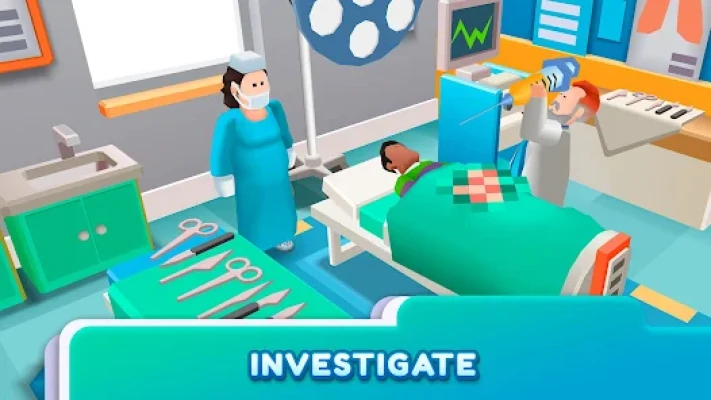
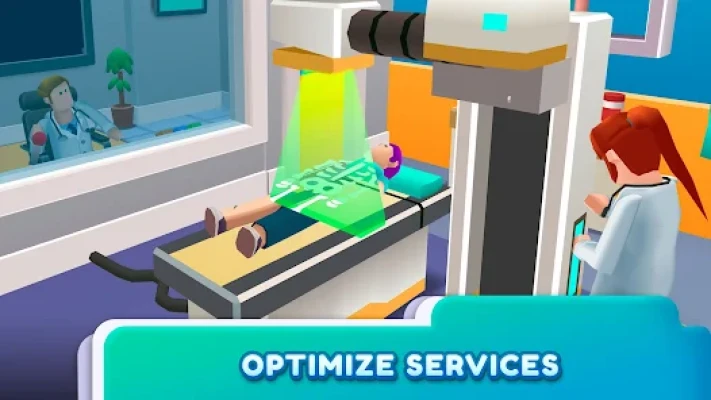
The game begins with a relatively small clinic. As you earn money and complete progression goals, you can unlock additional departments and improve existing rooms. These include areas such as radiology, traumatology, the infirmary, the emergency room, waiting areas, and operating rooms.
However, opening new departments is only part of the challenge. Each area needs suitable staff, equipment, supplies, and effective management. A hospital may look impressive after expansion, but understaffed rooms, long queues, and supply problems can prevent it from operating efficiently.
The idle gameplay allows your business to progress over time, while active decisions help you improve its performance. You must decide which facilities deserve investment, which staff members are needed, and how to balance patient demand with the cost of running the hospital.
Main Features of Hospital Empire Tycoon
1. Build and Expand Your Hospital
Start with a small medical clinic and develop it into a larger healthcare business. Unlock new rooms, improve existing facilities, and invest in equipment that helps your hospital serve more patients.
2. Unlock Specialized Medical Departments
Different departments handle different medical needs. Radiology, traumatology, the infirmary, emergency services, and operating rooms help create a more complete hospital.
Each new department expands your management responsibilities, so plan your investments carefully.
3. Manage a Diverse Hospital Workforce
Your hospital relies on more than doctors. Nurses, specialists, assistants, receptionists, ambulance drivers, stretcher handlers, cleaners, janitors, and security guards all contribute to daily operations.
A well-balanced workforce helps patients move through the hospital and reduces problems caused by missing services.
4. Handle Emergency Patients
The emergency room introduces a more demanding part of the gameplay. Ambulances bring patients who need attention, and successfully handling emergency cases can provide valuable rewards.
Keeping emergency services prepared is important if you want to benefit from this system.
5. Improve Patient Care and Waiting Times
Hospital upgrades and boosters can help increase patient capacity, reduce waiting times, or improve the profitability of certain treatments.
Choosing the right improvements for your current situation is more effective than spending resources without a clear plan.
6. Upgrade Rooms and Equipment
Many rooms and objects can be unlocked and upgraded. Improving medical facilities supports the hospital's development and helps you progress toward more advanced areas.
7. Earn Idle Income
The hospital generates money as a business, allowing you to return later and collect earnings. Reinvesting those funds is essential for unlocking facilities and improving performance.
8. Experience a Colorful 3D Hospital
The game uses stylized, low-poly 3D graphics, animated characters, and a miniature hospital environment. You can watch patients and staff move around the facility as your business grows.
9. Adapt Your Management Strategy
The booster system gives you choices about how to improve the hospital. Depending on your needs, you can focus on serving more patients, reducing delays, or increasing the profitability of specific medical services.
How to Play Hospital Empire Tycoon
Step 1: Learn the Starting Hospital
Explore your available rooms and inspect their upgrade menus. Pay attention to the hospital's immediate needs before opening new areas.
Your first objective should be to create a stable operation that can generate enough income to support expansion.
Step 2: Observe Patient Movement
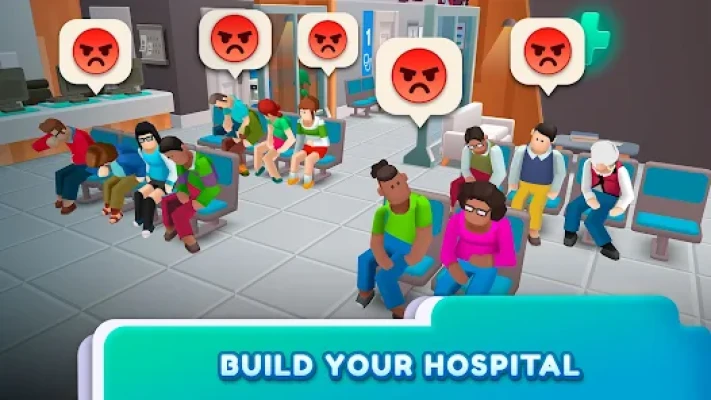
Watch how patients enter the hospital, reach the required departments, and receive treatment. If patients are waiting too long or cannot reach a room, investigate the cause rather than automatically buying more equipment.
Step 3: Hire the Right Staff
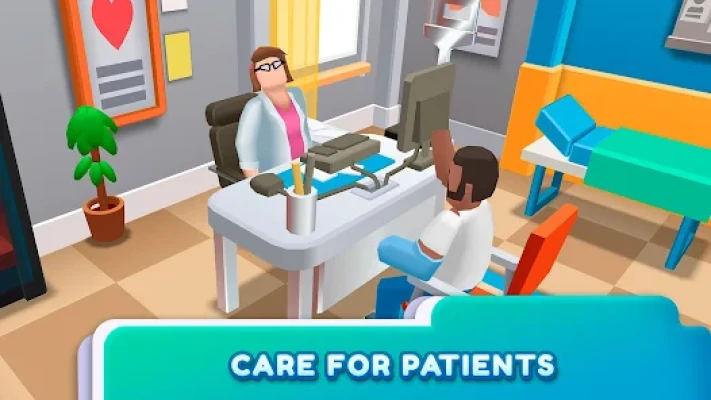
Check whether each department has the workers needed to function. Doctors and nurses are essential for medical care, while receptionists, cleaners, and other support workers help the hospital operate smoothly.
Step 4: Upgrade Important Facilities
Use your earnings to improve rooms, equipment, and other essential services. Prioritize upgrades that address current bottlenecks or help you complete progression objectives.
Step 5: Respond to Emergencies
Keep an eye on ambulance arrivals and emergency-room activity. Successful treatment can provide rewards, so avoid neglecting this department while concentrating on ordinary patient services.
Step 6: Unlock New Departments
As your income and progression improve, invest in additional medical areas. Check the requirements for each unlock and make sure your existing hospital can support the extra workload.
Step 7: Reinvest Your Profits
Collect your available income and put it toward improvements that offer meaningful benefits. A balanced hospital is more likely to progress steadily than one that spends everything on a single department.
Complete Strategy Guide: How to Build a Successful Hospital
1. Focus on Your Biggest Bottleneck First
The most expensive upgrade is not necessarily the most useful one. A hospital can struggle because of limited treatment capacity, insufficient staff, long queues, or missing supplies.
Before spending money, watch what happens during normal operations. Identify the point where patients stop progressing efficiently.
If reception is overloaded, improving a distant operating room may not solve the immediate problem. If medical rooms are waiting for supplies, adding more patient capacity could make the situation worse.
Strategy: Find the main cause of the slowdown, improve that area, and then observe whether patient flow gets better.
2. Build a Balanced Workforce
Hospital management requires coordination between medical and support workers. Hiring additional doctors may not solve a problem if nurses, receptionists, or other essential employees are missing.
Likewise, too many workers in one area can increase running costs without improving the hospital's overall performance.
Check the requirements and workload of each department before hiring.
Strategy: Staff the hospital according to actual demand. Improve the departments that need help instead of expanding every team at the same time.
3. Invest in Essential Medical Rooms
Medical departments are central to the hospital's ability to treat patients. Improve the rooms that handle the largest share of your current workload or are required to progress.
Specialized facilities may be valuable later, but opening them too early can put pressure on your budget.
Strategy: Strengthen your existing medical services before committing heavily to expensive expansion. A reliable starting hospital gives you a stronger foundation for future departments.
4. Treat the Emergency Room as a Priority
Emergency patients create opportunities to earn additional rewards, but the emergency room must be able to handle the incoming workload.
Check whether the necessary staff and equipment are available. If emergency patients are not being processed effectively, investigate the department's requirements and current capacity.
Strategy: Keep emergency services functional and improve them when the hospital can afford it. Do not ignore emergency activity simply because ordinary patients are easier to manage.
5. Use Boosters to Solve Specific Problems
Hospital Empire Tycoon allows you to choose upgrades that support different objectives. Some can help increase the number of patients served, while others can reduce waiting times or improve the earnings associated with surgery.
The best choice depends on what is holding your hospital back.
For example, a hospital struggling with queues may benefit more from improvements that support patient flow than from a profitability boost that leaves the queue unchanged.
Strategy: Choose boosters to address a clearly identified problem. Review your priorities as the hospital develops rather than using the same approach at every stage.
6. Improve Patient Flow Before Expanding Too Quickly
More patients do not automatically mean more profit. If the hospital cannot process its current visitors efficiently, increasing demand may create additional congestion.
Look at the complete journey from arrival to treatment. Reception, waiting areas, medical rooms, and support services all contribute to the experience.
Strategy: Improve the weakest part of the patient journey before trying to attract or serve significantly more patients.
7. Keep Medical Supplies Moving
Supply problems can leave rooms unable to operate even when the staff and equipment appear ready. If a room seems stuck, check whether it has the required medical supplies and whether the distribution system is working.
Do not assume that buying another upgrade will fix a delivery problem.
Strategy: Investigate the supply chain whenever a department stops functioning. If supplies fail to arrive or remain incomplete, use the game's troubleshooting guidance and check whether the issue is temporary or persistent.
8. Understand Room Requirements
A medical room may need several conditions to be met before it operates at full capacity. These can involve equipment, staffing, supplies, or other requirements displayed in its management panel.
When a room is not performing as expected, inspect its status rather than guessing.
Strategy: Use the room's information and upgrade menus as a checklist. Resolve the listed requirements one by one.
9. Upgrade Facilities With Long-Term Value
Some improvements support your hospital for an extended period, while others provide a narrower benefit. Consider how frequently a facility is used and whether the upgrade addresses a recurring problem.
A room that processes many patients may deserve attention before a rarely used facility. However, an upgrade needed to unlock a new stage can also be a worthwhile investment.
Strategy: Compare the cost of an upgrade with its likely benefit to your current hospital. Prioritize improvements that support both present operations and upcoming objectives.
10. Control Operating Costs
Hiring workers and improving rooms can increase your expenses. If you spend too quickly, the hospital may struggle to save enough money for the next expansion.
Avoid hiring every available employee or upgrading every room simply because the option appears.
Strategy: Expand in stages. Make sure your current operation can support its costs before adding more departments and staff.
11. Improve Reputation and Star Ratings
The game includes reputation and star-related systems that form part of hospital progression. These should not be treated as decorative statistics; check the game's menus to understand how they affect your current goals.
Patient treatment, service quality, and the overall operation of the hospital may influence the progress you can make.
Strategy: When reputation or stars become important, review the relevant information panel and focus on the actions the game identifies as useful. Avoid spending resources without understanding the requirement.
12. Use the Solve Button When You Get Stuck
The game's support guidance identifies a Solve button for situations where players cannot progress. This is useful when a room or objective seems blocked and the next step is unclear.
Use it to help identify what needs attention instead of repeatedly making unrelated purchases.
Strategy: If progress stops unexpectedly, inspect the affected room and use the available troubleshooting feature. It can help distinguish a missing requirement from a more general operational issue.
13. Be Careful With Staff Salary or Raise Requests
Staff management can become more demanding as the hospital grows. Employee-related costs and requests can put pressure on your budget if you respond to everything without considering the wider operation.
Check the available staff information and the effect of each decision before spending money.
Strategy: Maintain a financial reserve and avoid making several expensive staffing decisions at once. If costs rise faster than income, pause expansion and strengthen the hospital's financial position.
14. Make Expansion Decisions Based on Readiness
Opening a new department is exciting, but it also introduces new operational demands. You may need additional workers, equipment, and supplies before the new area can contribute effectively.
If your existing departments are struggling, rapid expansion can multiply the problems.
Strategy: Before unlocking a major area, make sure your current hospital can cover its regular expenses and handle patient demand. Expand when the new department can be supported.
15. Collect Income and Plan Your Next Upgrade
Idle games reward regular check-ins, but repeatedly collecting money without a plan can lead to inefficient spending.
When you return to the game, review your finances, inspect room performance, and identify the next important goal. Then invest your earnings accordingly.
Strategy: Use each session to make measurable progress: resolve a bottleneck, complete an objective, improve an essential room, or prepare for expansion.
16. Troubleshoot Stalled Rooms
If a room remains inactive or appears unable to progress, work through a simple checklist:
Confirm that the room has been unlocked correctly.
Check whether its required staff are available.
Inspect its equipment and upgrade status.
Look for missing medical supplies.
Check whether patients can reach the room.
Review any displayed warnings or requirements.
Use the Solve button or the game's help guidance if the problem persists.
Strategy: Diagnose the specific issue before investing more money. This is especially important when a department appears fully upgraded but still does not function as expected.
17. Prepare for Special Events
The game includes seasonal events and special accident scenarios. These can offer additional activities and rewards beyond routine hospital management.
When an event becomes available, review its rules and requirements before spending resources. Some event opportunities may be limited or depend on particular conditions.
Strategy: Participate when you can meet the event requirements without weakening your main hospital. Treat event rewards as a bonus rather than a reason to neglect essential departments.
18. Make Progress Without Rushing
Hospital Empire Tycoon is designed around gradual development. Some upgrades take time, and later stages can require more resources than the early game.
Trying to rush every unlock may make the experience more expensive and less efficient.
Strategy: Concentrate on sustainable improvements. A stable hospital with reliable patient flow, adequate staffing, and controlled costs is a better foundation than a large facility that cannot operate efficiently.
Best Beginner Tips
Inspect your hospital before making your first major upgrade.
Watch patient movement to identify queues and operational delays.
Hire staff according to each department's actual needs.
Keep emergency services prepared for incoming patients.
Upgrade the rooms that handle your current workload.
Use boosters to address specific problems rather than spending randomly.
Check supply delivery when a room stops operating.
Maintain enough money for regular costs and future upgrades.
Read room requirements before assuming an upgrade has failed.
Use the Solve button if you cannot identify the next step.
Review reputation and star requirements when they affect progression.
Expand only when your current hospital can support the additional workload.
Common Mistakes to Avoid
Opening Too Many Departments Too Early
New departments increase the complexity of your hospital. Expand gradually so you can afford the required staff, equipment, and supplies.
Hiring Without Checking Demand
Adding employees everywhere can increase costs without improving patient flow. Identify the department that needs support first.
Ignoring Supply Problems
A room may appear ready but remain unable to treat patients because supplies are missing. Investigate delivery issues before spending on unrelated upgrades.
Choosing the Wrong Booster
A profitability upgrade will not necessarily solve a queue or staffing shortage. Match each booster to the problem you are trying to fix.
Spending All Available Money
Using every coin immediately can leave you unable to handle unexpected costs or important progression requirements. Keep a financial reserve where possible.
Assuming Every Room Is Fully Operational
Unlocking a room does not guarantee that every requirement has been met. Check staffing, equipment, and supplies when performance is lower than expected.
Expanding Without Improving Patient Flow
Serving more patients can make congestion worse if your existing services are already overloaded. Improve efficiency before increasing demand.
Ignoring Stalled-Room Warnings
If a room repeatedly stops working, investigate the underlying cause. Repeated upgrades without diagnosis can waste money and delay progress.
Is Hospital Empire Tycoon an Idle Game?
Yes. Hospital Empire Tycoon combines idle income with active hospital management. You can collect earnings and reinvest them in your facility, but you also need to make decisions about staff, departments, equipment, patient flow, and emergency cases.
Its idle mechanics make it suitable for short sessions, while its management systems provide goals to work toward whenever you return.
Is Hospital Empire Tycoon Free to Play?
The game is available as a free-to-play title with advertisements and in-app purchases. Optional purchases can provide additional convenience, but players can begin by developing their hospital through the regular progression systems.
If you prefer not to spend money, focus on essential rooms, careful staffing, and upgrades that solve immediate problems. Progress may take time, particularly as expansion becomes more expensive.
Graphics and Gameplay Experience
Hospital Empire Tycoon uses colorful low-poly 3D graphics and animated characters to present hospital operations in a miniature environment. Patients arrive, staff move between areas, and rooms become more advanced as the hospital develops.
The visual style is approachable and light-hearted, although the management systems require some planning. The most satisfying moments come from seeing a previously small clinic develop into a larger facility with more departments and a more capable workforce.
The main limitation is the potential for slower progression. Waiting for upgrades, managing recurring expenses, and resolving operational problems may become repetitive for players who prefer constant action.
Pros and Cons
Pros
Combines idle gameplay with hospital business management.
Offers several medical departments to unlock and improve.
Includes a varied workforce with medical and support roles.
Emergency cases add another source of activity and rewards.
Boosters allow players to adapt their management approach.
Colorful 3D graphics make the hospital easy to follow.
Multiple upgrade paths give players different goals.
Suitable for casual players who enjoy gradual progression.
Cons
Some upgrades and expansion stages can take time.
Managing staff and operating costs can become demanding.
Supply problems may interrupt room operations.
Rapid expansion can create additional management pressure.
Repeated upgrading and waiting may feel repetitive.
Players looking for a realistic medical simulator may find the systems simplified.
Game Information
Game title: Hospital Empire Tycoon – Idle
Developer: Codigames
Genre: Hospital simulation, idle management, tycoon
Gameplay mode: Single-player
Visual style: Stylized low-poly 3D
Main activities: Hospital expansion, medical department management, staff hiring, patient treatment, emergency response, facility upgrades, and financial planning
Platforms: Android and Windows through Google Play's supported PC option
Monetization: Free to play, with advertisements and in-app purchases
Main objective: Build an efficient and profitable hospital by treating patients, improving medical services, and managing staff and resources.
Frequently Asked Questions
How do you earn more money in Hospital Empire Tycoon?
Improve the hospital's ability to treat patients efficiently, upgrade useful rooms, and reinvest your earnings carefully. A larger hospital is not automatically more profitable if its expenses and operational problems are not under control.
How do you unlock new departments?
Progress through the available objectives and meet the requirements shown for each new area. Some departments may require earlier rooms or upgrades to be completed first.
How do you treat more patients?
Improve the parts of the hospital that limit patient flow. Depending on the situation, this may involve staffing, room capacity, equipment, or reducing waiting times.
Why are patients waiting too long?
Long waits can result from congestion, insufficient staffing, or a lack of treatment capacity. Observe where patients are waiting and improve the specific department causing the delay.
Why is a medical room not working?
Check its staffing, equipment, supplies, and listed requirements. If the room remains stuck, use the Solve button and consult the game's troubleshooting guidance.
What does the emergency room do?
The emergency room handles patients arriving through emergency scenarios, including ambulance arrivals. Successfully treating these patients can provide rewards and add another management challenge.
Which staff members should I hire first?
Prioritize the workers required to operate your current departments. Medical staff provide treatment, while reception and support workers help maintain the hospital's daily operations. The best hiring decision depends on which department is currently struggling.
How do boosters help?
Boosters let you improve different aspects of the hospital, such as patient capacity, waiting times, or surgery profitability. Choose improvements based on your current needs rather than using the same option for every situation.
What are reputation and star points used for?
The game includes reputation and star-related progression systems. Check the relevant in-game information to see how these points affect your current goals and which actions help you improve them.
Can you play Hospital Empire Tycoon without spending money?
Yes, you can begin playing without making an in-app purchase. Careful management of earnings, staffing, and upgrades helps you progress, although some stages may require patience.
Is Hospital Empire Tycoon suitable for casual players?
Yes. Its simple controls and idle income make it accessible to casual players who enjoy building and upgrading businesses. The deeper management elements may also appeal to players who like solving efficiency problems.
Is Hospital Empire Tycoon worth playing?
It is worth considering if you enjoy tycoon games, gradual progression, and managing multiple departments. Its strongest features are staff management, emergency scenarios, and the challenge of improving patient flow. Players who dislike waiting, repeated upgrades, or balancing operating costs may find the later stages less engaging.
Final Verdict
Hospital Empire Tycoon – Idle is a hospital management game that combines business growth with the challenge of keeping medical departments running smoothly. Its appeal comes from developing a small clinic into a larger hospital, managing a varied workforce, responding to emergencies, and deciding where to invest your earnings.
The strongest strategy is to improve efficiency before expanding too quickly. Watch patient movement, maintain the right staff, resolve supply problems, choose boosters with a clear purpose, and keep enough money available for essential upgrades. With thoughtful management, you can steadily build a more capable hospital while avoiding unnecessary expenses and frustrating bottlenecks.
Rate the Game
User Reviews















Popular Games



















 Android
 iOS
 Windows
 Xbox