
Latest Version
August 11, 2026
Blizzard Entertainment, Inc.
Strategy
iOS
0
Report a Problem
More About :game
Hearthstone is a collectible card game built around the heroes, classes, creatures, spells, and locations of the Warcraft universe.
The concept is easy to understand: you build a deck, draw cards, spend resources to play them, summon minions, cast spells, and try to reduce your opponent's Health to zero.
What makes Hearthstone interesting is how much strategic depth develops from those simple rules.
Every deck can follow a different game plan. You might attack quickly with inexpensive minions, control the board with removal spells, build toward powerful late-game combinations, or use a more specialized strategy based around a particular class.
The current Hearthstone experience includes several ways to play, from traditional one-on-one card battles to the eight-player Battlegrounds auto-battler.
How Hearthstone Gameplay Works
A typical Hearthstone match begins with each player bringing a constructed deck into battle.
During your turn, you can use your available resources to play cards from your hand.
Cards generally fall into several important categories:
- Minions
- Spells
- Weapons
- Location and other specialized cards
- Hero-related cards and effects
The objective depends on the mode, but traditional Hearthstone matches generally revolve around controlling the board, managing resources, and defeating the opposing hero.
A strong player is constantly making decisions about whether to attack, defend, develop the board, remove an opposing minion, or save resources for a stronger future turn.
Mana and Resource Management
Mana is one of the foundations of Hearthstone strategy.
Each turn gives you access to a certain amount of Mana, allowing you to play cards whose costs fit within your available resources.
This creates a constant question:
What is the best way to spend this turn's Mana?
You might spend it all developing several smaller minions, use it on one powerful card, or deliberately save certain resources for a future combination.
Good Mana management is one of the first skills new players should learn.
Minions
Minions are the creatures that fight on your behalf.
They can attack opposing minions or, when permitted, attack the enemy hero directly.
Minions come in many different forms, from inexpensive early-game creatures to powerful Legendary threats.
A successful deck usually has a clear idea of how its minions interact with the rest of its cards.
Some decks want to establish a wide board quickly, while others rely on a smaller number of powerful minions.
Spells
Spells allow you to influence the battlefield without necessarily relying on minions.
Depending on the card, a spell can:
- Deal damage
- Destroy or weaken minions
- Draw cards
- Generate additional resources
- Buff your own units
- Create new cards
- Alter the state of the board
Learning when to spend removal and when to save it is a major part of advanced Hearthstone strategy.
Hero Powers
Every playable Hearthstone class has its own Hero Power.
Hero Powers help define the identity and strategy of each class and provide another resource to consider during your turns.
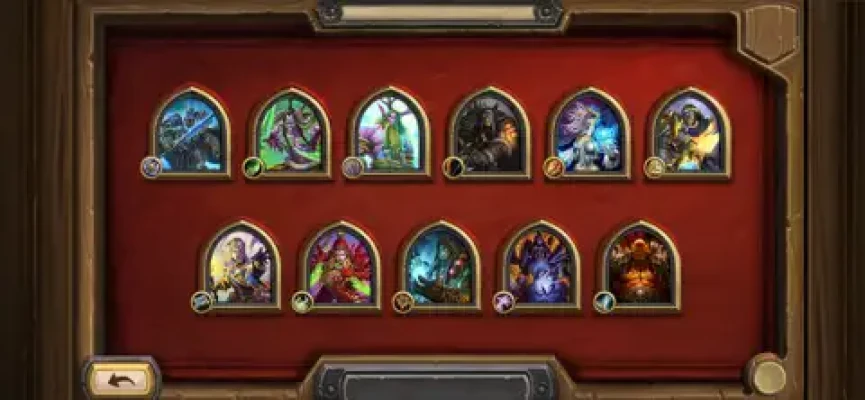
Examples of Hearthstone classes include:
- Death Knight
- Demon Hunter
- Druid
- Hunter
- Mage
- Paladin
- Priest
- Rogue
- Shaman
- Warlock
- Warrior
Each class offers a different collection of cards and a distinctive approach to deck building.
Hearthstone Classes
Death Knight
The Death Knight class uses the power of the Scourge and its Rune system to create distinctive strategies.
Demon Hunter
Demon Hunter focuses on aggressive combat, mobility, demonic allies, and Fel magic.
Druid
Druid strategies often revolve around nature, powerful creatures, resource development, and flexible gameplay.
Hunter
Hunter is known for aggressive pressure, beasts, direct damage, and efficient attacks.
Mage
Mage combines Arcane, Fire, and Frost magic with spells and minions that can create powerful board swings.
Paladin
Paladin combines powerful minions, defensive tools, buffs, and the forces of the Light.
Priest
Priest specializes in healing, control, minion manipulation, and powerful late-game strategies.
Rogue
Rogue emphasizes deception, efficient removal, weapons, and carefully planned combinations.
Shaman
Shaman uses elemental power and a range of board-focused tools to control the game.
Warlock
Warlock trades Health and resources for powerful effects, demons, card advantage, and unusual strategies.
Warrior
Warrior can combine weapons, armor, durable minions, and strong defensive or aggressive strategies.
Deck Building
Deck building is at the heart of Hearthstone.
You can build a deck from scratch, copy a friend's deck list, customize an existing deck, or use a premade deck to get started more quickly.
Building a successful deck requires more than selecting your strongest cards.
You need to think about:
- Mana curve
- Card synergy
- Removal
- Board presence
- Win conditions
- Card draw
- Defensive tools
- Matchup strategy
A deck that contains individually powerful cards can still perform poorly if those cards do not work well together.
Standard Mode
Standard is the primary constructed format for players who want the most current card pool.
It focuses on recent card sets, making it the recommended starting point for players returning to Hearthstone and those learning the modern game. Blizzard's current returning-player guide specifically recommends Standard for experiencing the most up-to-date Hearthstone environment.
Standard also provides the main competitive ladder for players who want to climb the ranks.
Ranked Hearthstone
Ranked mode is where competitive players can test their decks against other players and work toward higher ranks.
The goal isn't simply to win individual games. You also need to understand the broader competitive environment, identify popular strategies, refine your deck, and learn how different matchups work.
Ranked play provides a long-term challenge for players who enjoy competitive card games.
Casual Mode
Casual matches provide a less competitive environment for experimenting with decks and learning new strategies.
This makes Casual particularly useful when:
- Testing a new deck
- Practicing unfamiliar cards
- Learning a new class
- Playing without focusing heavily on rank
Wild Mode
Wild allows players to use a much broader collection of cards.
Unlike Standard, Wild isn't restricted to only the most recent card sets.
For longtime players, Wild provides an opportunity to revisit older cards and combine them with newer mechanics.
The current App Store listing specifically highlights Wild as the mode where returning players can use their cards more broadly.
Battlegrounds
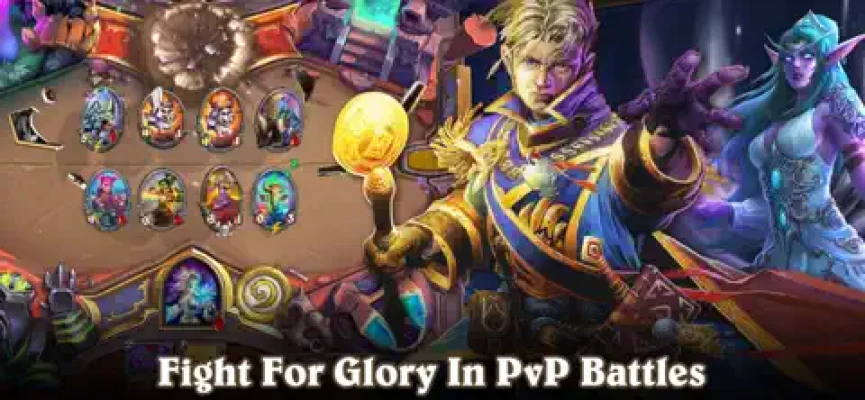
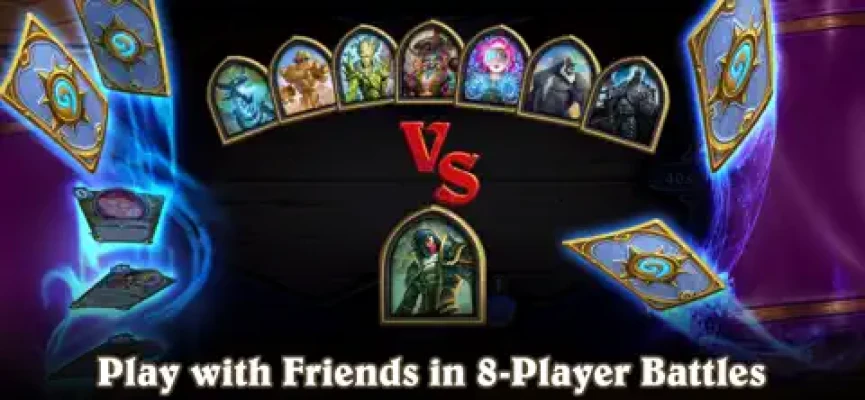
Hearthstone Battlegrounds is a major alternative mode that transforms the game into an eight-player auto-battler.
Instead of bringing a traditional constructed deck, players recruit minions and develop a board over a series of rounds.
Eight players enter the Battlegrounds match, with the goal of being the final player standing.
Battlegrounds requires a different skill set from traditional Hearthstone.
Players need to understand:
- Minion synergies
- Economy
- Tavern upgrades
- Positioning
- Combat outcomes
- Scaling
- Timing
- Adaptation
Battlegrounds Season 14
The current App Store version history lists Battlegrounds Season 14, featuring Dark Gifts and the Activate keyword, along with new event cards and rewards.
This demonstrates that Battlegrounds continues to receive its own seasonal content alongside the main card game.
Arena
Arena is a draft-based Hearthstone mode.
Instead of simply bringing a normal constructed deck, players build their deck through a draft and then compete against other Arena players.
The draft itself becomes part of the strategy.
You must evaluate cards individually while also considering how they fit together as a potential deck.
Recent 2026 updates have continued to introduce new Arena seasons and refresh the available draft environment.
Tavern Brawl
Tavern Brawl is Hearthstone's experimental mode.
Its rules can change regularly, creating unusual challenges that are different from ordinary Ranked or Casual matches.
The current App Store listing describes Tavern Brawl as a limited-time mode with changing rules and rewards.
This makes it a good place to try unusual strategies without committing to the normal constructed formats.
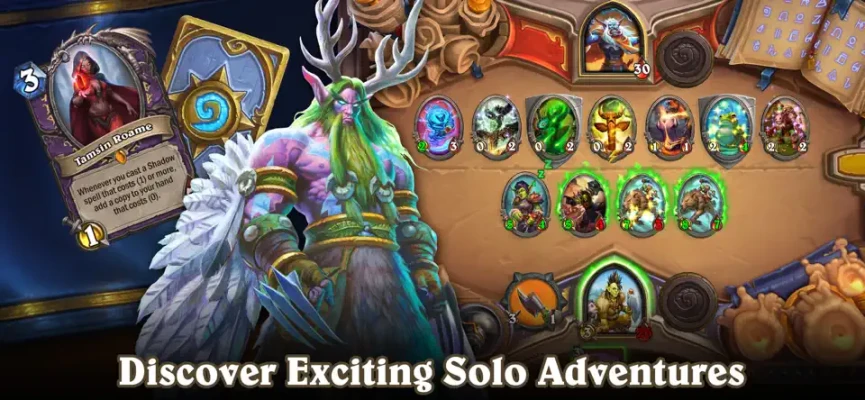
PvE and Solo Content
Hearthstone also includes player-versus-environment content.
PvE activities provide a way to practice, explore Warcraft-themed encounters, and play outside traditional competitive matches.
Solo content can be particularly useful for new players who want to become familiar with cards and game mechanics before entering Ranked competition.
Warcraft Universe
One of Hearthstone's biggest attractions is its connection to Warcraft.
Players encounter familiar heroes, characters, creatures, spells, and locations from Azeroth.
The current App Store listing highlights heroes including:
- The Lich King
- Illidan Stormrage
- Thrall
- Jaina Proudmoore
- Garrosh Hellscream
alongside many other Warcraft characters.
The Warcraft setting gives Hearthstone a recognizable identity while allowing the card game to create its own playful interpretation of the universe.
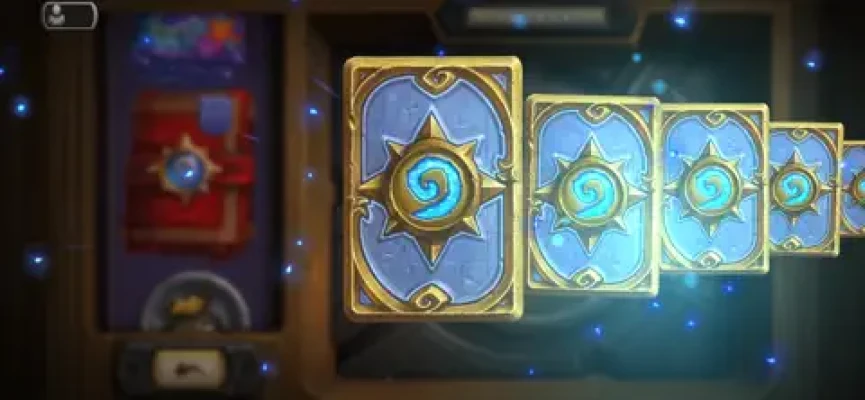
Collecting Cards
Card collection is a major part of Hearthstone's long-term progression.
Players can acquire cards through gameplay and rewards, then use them to expand their collection and create new decks.
The enormous variety of cards gives players considerable freedom to experiment with different classes and strategies.
Crafting Cards
Hearthstone includes a crafting system that allows players to turn unwanted cards into Arcane Dust and use that resource to craft cards they want.
This is particularly useful when you need a specific Legendary or another important card for a deck.
Careful collection management can therefore be an important part of building a competitive library without obtaining every card individually.
Legendary Cards
Legendary cards are among Hearthstone's most recognizable and powerful collectible cards.
They are generally designed around distinctive effects and can become central pieces of specific decks.
Some Legendary cards define entire strategies, while others are flexible additions to a range of decks.
Card Synergy
One of the most important Hearthstone concepts is synergy.
A card may look ordinary by itself but become extremely powerful when combined with the right cards.
Examples of synergy can involve:
- Minion types
- Spells
- Weapons
- Death effects
- Battlecries
- Card generation
- Resource management
- Class-specific mechanics
Understanding these interactions is essential for moving from beginner-level play to more advanced strategy.
Tempo and Board Control
Two concepts every new Hearthstone player should understand are tempo and board control.
Tempo refers broadly to how efficiently you use your resources to develop your position.
Board control means maintaining favorable minions and limiting your opponent's ability to establish their own threats.
Sometimes the best move isn't dealing damage to the enemy hero.
Removing an important opposing minion may be more valuable because it prevents your opponent from gaining control of the board.
Card Advantage
Card advantage describes the value you gain from having access to more useful cards than your opponent.
Card draw, efficient removal, and effects that generate additional cards can all contribute to maintaining resources.
A player who constantly runs out of cards may struggle even if their early turns were successful.
Beginner's Guide to Hearthstone
Start With One Class
Don't try to master every class immediately.
Choose one class that matches your preferred style and learn its basic cards.
Use a Premade Deck
New and returning players can use premade decks to get into Ranked play more quickly. Blizzard currently recommends this approach for returning players who want an easier entry point.
Learn the Mana Curve
A deck with too many expensive cards may do nothing during the early turns.
A healthy curve gives you useful plays throughout the game.
Protect Your Board
Don't automatically attack the enemy hero.
Sometimes trading a minion into an opponent's creature is the stronger play.
Think One Turn Ahead
Before ending your turn, ask what your opponent is likely to do next.
Learn Your Win Condition
Every deck should have a reason it expects to win.
Understanding that win condition makes your decisions much easier.
Advanced Hearthstone Strategy
Track Your Opponent's Resources
Pay attention to which cards and resources your opponent has already used.
This can help you estimate what remains in their deck.
Calculate Damage Carefully
Before committing to an attack, calculate your potential damage and consider the opponent's likely response.
Don't Waste Removal
Using an expensive removal spell against an insignificant target can leave you without an answer for a much more dangerous threat.
Plan Your Mana
Consider not only what you can do this turn but how your current play affects the next several turns.
Understand Matchups
Different decks have different strengths and weaknesses.
Knowing whether you are favored to play aggressively or defensively can dramatically improve your results.
Adapt Your Deck
If the competitive environment changes, your deck may need to change with it.
New expansions, balance changes, and popular strategies can all influence deck-building decisions.
Escape from Violet Hold
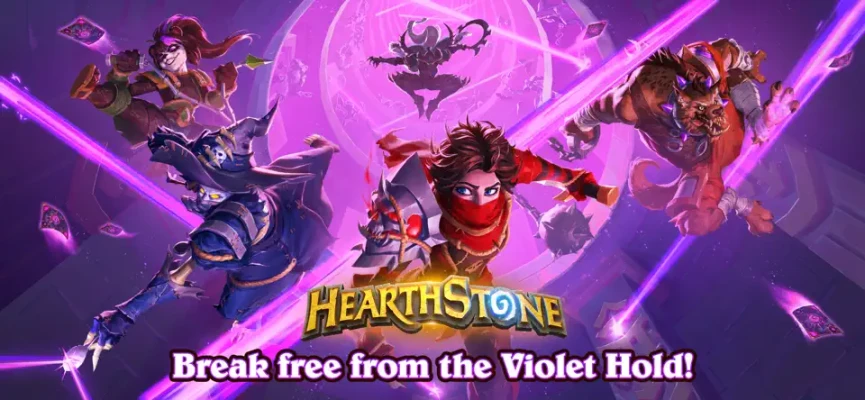
Hearthstone's current 2026 expansion is Escape from Violet Hold.
The expansion launched on July 7, 2026 with 135 cards and introduced several new mechanics, including Prepare, Disguised minions, Bribe cards, and a Legendary Rulebreaker minion for each class.
The expansion follows Vanessa VanCleef and a crew of outlaws attempting to escape the Violet Hold in Dalaran while Maiev Shadowsong works to keep the prison under control.
This latest expansion adds another substantial layer of cards and deck-building possibilities to the current Hearthstone environment.
Class Sets
Hearthstone also introduced Class Sets as part of the Restoration of Azeroth content.
The first wave gave Druid, Hunter, Paladin, and Mage focused sets containing seven cards each, including one Legendary, two Epics, two Rares, and two Commons.
Class Sets provide another way to strengthen and define class-specific strategies.
Free Rewards and Progression
Hearthstone has a progression system that includes quests, achievements, rewards, and other ways to build your collection.
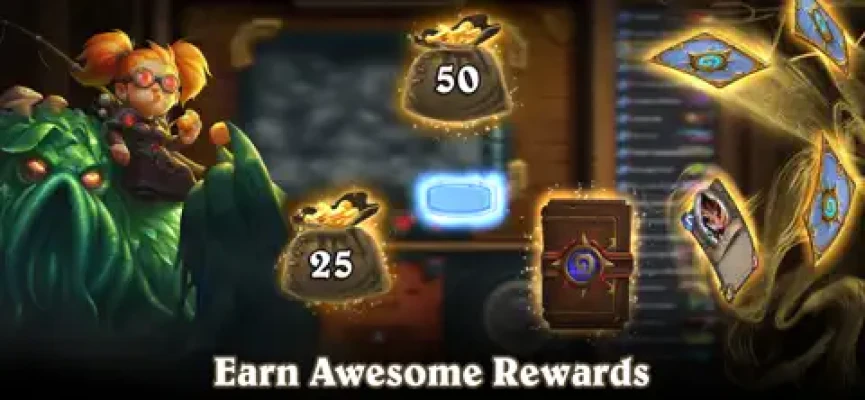
The Rewards Track provides a central progression path for earnable rewards outside Ranked play, while daily and weekly quests provide additional objectives.
For returning players, Blizzard also provides special rewards and Catch-Up Packs designed to help rebuild collections more quickly.
Cross-Platform Progression
Hearthstone supports cross-progression across supported devices.
With a Battle.net account, players can continue their Hearthstone experience across PC, phone, and tablet.
This is especially useful for players who want to use a computer for longer sessions and a phone or tablet for quick matches.
Mobile Experience
The iPhone and iPad version brings the full Hearthstone concept to touchscreen devices.
The mobile interface allows players to:
- Build decks
- View collections
- Play cards
- Attack with minions
- Cast spells
- Manage resources
- Complete quests
- Play competitive modes
- Participate in Battlegrounds
- Access different game modes
The current U.S. App Store listing identifies Hearthstone as a strategy card game for iPhone and iPad, with Mac support also listed.
Game Modes Overview
| Mode | Main Experience |
|---|---|
| Standard | Current constructed card battles |
| Wild | Expanded card pool using older cards |
| Casual | Relaxed constructed matches |
| Ranked | Competitive ladder progression |
| Battlegrounds | Eight-player auto-battler |
| Arena | Draft-based card competition |
| Tavern Brawl | Rotating rule-based events |
| PvE | Solo and practice-focused content |
The current App Store description confirms these major gameplay options.
Main Features
- Free-to-play strategy card game
- Warcraft universe
- Collectible cards
- Deck building
- Eleven playable classes
- Unique Hero Powers
- Minions and spells
- Ranked PvP
- Standard mode
- Wild mode
- Casual matches
- Battlegrounds
- Arena
- Tavern Brawl
- PvE content
- Solo adventures
- Daily and weekly quests
- Achievements
- Rewards Track
- Card crafting
- Legendary cards
- Cross-platform progression
- Regular expansions
- Seasonal content
- Limited-time events
- iPhone and iPad support
These features reflect the current official and App Store information.
Controls and Interface
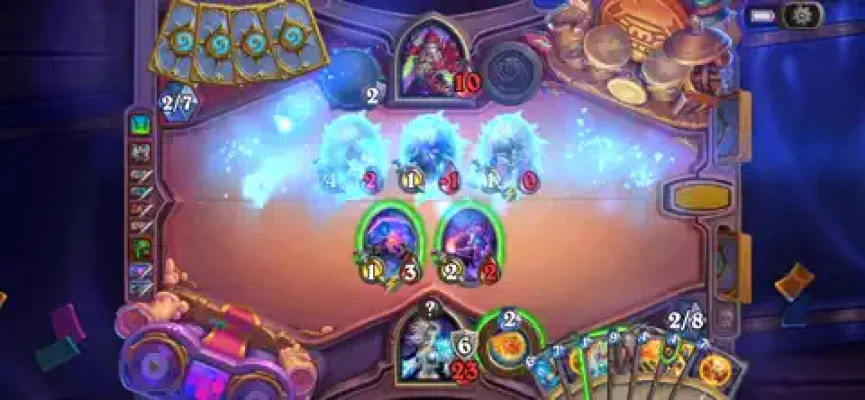
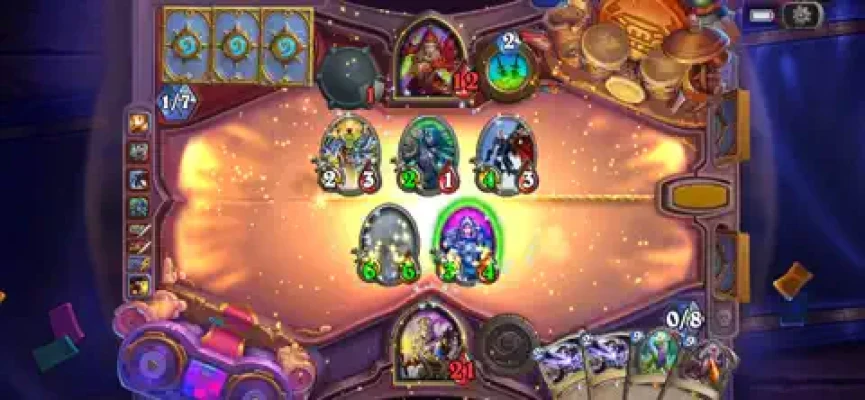
Hearthstone uses touchscreen controls designed around direct interaction with cards.
Typical actions include:
- Dragging cards onto the battlefield
- Selecting targets
- Attacking with minions
- Activating Hero Powers
- Choosing spell targets
- Reviewing your hand
- Managing your deck
- Inspecting card details
The interface is designed to make the fundamental actions easy to understand while leaving the strategic complexity to the player.
Difficulty
Hearthstone is famously easy to begin but difficult to master.
The basic rules can be learned quickly, but advanced play requires understanding:
- Mana efficiency
- Card advantage
- Tempo
- Board control
- Deck archetypes
- Matchups
- Card probability
- Resource management
- Opponent prediction
- Expansion mechanics
The current official description similarly emphasizes that the game is easy to get into while offering significant depth.
Visual Style and Presentation
Hearthstone uses a colorful fantasy presentation inspired by Warcraft.
Cards, minions, spells, heroes, boards, animations, and sound effects work together to create a lively tabletop atmosphere.
The game does not attempt to look like a realistic physical card table. Instead, it embraces exaggerated fantasy effects and expressive character animations.
Audio Experience
Sound is an important part of Hearthstone's personality.
Heroes and minions have recognizable voices, while spells, attacks, and board interactions use distinct audio effects.
These small details help make matches feel more animated and connected to the Warcraft universe.
Player Ratings and Reception
The current U.S. App Store listing shows Hearthstone with a 4.1 out of 5 rating from approximately 121,000 ratings, and it carries an Editors' Choice designation.
The large number of ratings provides a much broader indication of player reception than games with only a handful of reviews.
Player feedback commonly highlights Hearthstone's replayability, strategic variety, deck-building possibilities, and large selection of game modes, while some reviews also raise concerns about collection costs, card acquisition, and the amount of grinding required for certain goals.
Updates and New Content
Hearthstone continues to receive substantial updates.
Recent 2026 updates include:
- Escape from Violet Hold
- New Prepare mechanic
- Disguised minions
- Bribe cards
- Rulebreaker Legendary minions
- New Arena seasons
- Class Sets
- Battlegrounds balance changes
- New Battlegrounds seasons
- Events and free rewards
- Tavern Brawl content
- New cosmetics
- Bug fixes and gameplay improvements
The game's 36.0 update launched the countdown to Escape from Violet Hold, while version 36.2 introduced the current Battlegrounds Season 14 content listed on the App Store.
Technical Information
Game: Hearthstone
Developer: Blizzard Entertainment, Inc.
Genre: Strategy Card Game
Platform: iPhone, iPad, Mac, and other supported platforms
Price: Free
In-App Purchases: Yes
Age Rating: 13+
Current App Size: Approximately 864.1 MB on the U.S. App Store
Languages: English plus 11 additional languages
Multiplayer: Online PvP
Cross-Progression: Yes with Battle.net
Category: Strategy
The current U.S. App Store listing provides these specifications and identifies Hearthstone as free with optional in-app purchases.
In-App Purchases
Hearthstone is free to download and play, but optional purchases are available.
These can include card packs, bundles, Tavern Pass content, and other items associated with Hearthstone's ongoing collection and progression systems.
Blizzard states that purchasing cards is optional, while the game's reward and progression systems provide additional ways to earn content.
Pros and Cons
Pros
- Deep strategic card gameplay
- Easy-to-learn core mechanics
- Huge card collection
- Many deck-building possibilities
- Distinctive Warcraft setting
- Multiple game modes
- Ranked competitive play
- Battlegrounds auto-battler
- Arena drafting
- Tavern Brawl
- PvE content
- Regular expansions
- Frequent balance updates
- Cross-platform progression
- Strong mobile implementation
- Large player community
Cons
- Large app size
- Online connection required for the main experience
- Building a large collection can take time
- Optional purchases may appeal to players who want faster collection growth
- The competitive environment changes regularly
- The large number of cards and mechanics can overwhelm new players
Who Should Play Hearthstone?
Hearthstone is especially suitable for players who enjoy:
- Digital card games
- Strategy games
- Deck-building games
- Warcraft
- Competitive PvP
- Collectible card games
- Tactical games
- Auto-battlers
- Fantasy games
- Online multiplayer games
It is also a strong choice for players who prefer games that can be played in relatively short sessions but offer significant long-term strategic depth.
Who Might Not Enjoy Hearthstone?
Hearthstone may be less suitable for players who prefer:
- Completely offline games
- Simple card games with few mechanics
- One-time purchases with no optional spending
- Games without collection management
- Games with no competitive ladder
- Very lightweight mobile apps
The game's large card pool and continuously changing competitive environment are part of its appeal, but they can also make it demanding for players who prefer a static experience.
Hearthstone vs Traditional Card Games
Traditional physical card games require players to own and organize physical decks.
Hearthstone digitizes that experience and adds:
- Automated rules
- Animated battles
- Digital card collection
- Online matchmaking
- Ranked ladders
- Live events
- Regular balance changes
- Multiple game modes
- Cross-platform progression
The result is a card game that can evolve continuously rather than remaining tied to a fixed physical ruleset.
Why Hearthstone Stands Out
Hearthstone's biggest strength is its combination of accessibility and depth.
A new player can understand the basic objective within minutes.
But mastering the game requires considerably more:
Which cards should you keep?
When should you trade?
When should you attack the hero?
Which cards should you craft?
How should your deck respond to the current meta?
What is your opponent likely holding?
Those decisions create the long-term strategic appeal.
Tips for Building Your First Deck
Pick One Main Class
Focus on learning one class before expanding your collection across every class.
Start With a Proven List
A premade or recommended deck can help you understand how a coherent deck works.
Don't Craft Everything
Save Arcane Dust for cards that meaningfully improve the decks you actually want to play.
Learn Your Curve
Make sure your deck has useful plays across multiple Mana costs.
Identify Your Win Condition
Know exactly how your deck expects to finish games.
Practice Before Ranked
Use Casual or PvE content to learn your cards before entering serious competitive matches.
Frequently Asked Questions
What is Hearthstone?
Hearthstone is a free-to-play digital strategy card game from Blizzard Entertainment based on the Warcraft universe. Players build decks, summon minions, cast spells, and compete in multiple game modes.
Is Hearthstone free on iPhone?
Yes. Hearthstone is free to download and play on iPhone and iPad, with optional in-app purchases.
Can you play Hearthstone on iPad?
Yes. Hearthstone supports iPad as well as iPhone.
Is Hearthstone a multiplayer game?
Yes. Hearthstone includes online competitive multiplayer, including Ranked, Casual, Arena, Battlegrounds, and other modes.
What is Hearthstone Battlegrounds?
Battlegrounds is an eight-player auto-battler mode where players recruit minions and compete to become the last player standing.
What is Hearthstone Standard mode?
Standard is the main constructed format using the current card environment. It is also recommended by Blizzard as a good starting point for players returning to Hearthstone.
What is Hearthstone Wild mode?
Wild is a constructed mode that allows players to use a much broader selection of cards from Hearthstone's history.
How many classes are in Hearthstone?
The current App Store listing features eleven playable classes: Death Knight, Demon Hunter, Druid, Hunter, Mage, Paladin, Priest, Rogue, Shaman, Warlock, and Warrior.
Can you build your own Hearthstone deck?
Yes. You can build decks from scratch, copy a friend's deck list, customize existing decks, or use premade decks.
Can you craft cards in Hearthstone?
Yes. Hearthstone includes a crafting system using Arcane Dust to create cards you want for your collection.
What is Escape from Violet Hold?
Escape from Violet Hold is Hearthstone's 2026 expansion featuring 135 cards and new mechanics including Prepare, Disguised minions, Bribe cards, and class-specific Legendary Rulebreakers.
Does Hearthstone support cross-platform progression?
Yes. With a Battle.net account, players can continue their progression across supported PC, phone, and tablet versions.
Does Hearthstone have PvE content?
Yes. Hearthstone includes solo and PvE content in addition to its competitive multiplayer modes.
Does Hearthstone require in-app purchases?
Purchases are optional. The game is free to play, although players can purchase optional content such as card packs and other items.
Final Verdict
Hearthstone remains one of the most recognizable digital strategy card games, and its current mobile version offers considerably more than the original card-battle formula.
The core experience remains beautifully straightforward: choose a class, build a deck, play minions and spells, manage your resources, and outthink your opponent. But the modern game has expanded into a large ecosystem featuring Standard, Wild, Ranked, Casual, Battlegrounds, Arena, Tavern Brawl, PvE content, seasonal events, achievements, rewards, and regular expansions.
The 2026 Escape from Violet Hold expansion and ongoing Battlegrounds seasons demonstrate that Hearthstone continues to evolve, while Class Sets and new mechanics add additional options for deck builders.
For players searching for a strategy card game for iPhone, Warcraft card game, collectible card game, deck-building game, online card game, or competitive mobile card game, Hearthstone remains a particularly strong option.
Rate the Game
User Reviews






Popular Games













 Android
 iOS
iOS Windows
 Xbox
Xbox