

Latest Version
September 12, 2024
AKPublish pty ltd
Role Playing
0
com.akpublish.g2
Report a Problem
More About :game
The game blends traditional gem-matching puzzles with role-playing elements, creating battles where planning and combat decisions matter. Players who enjoy fantasy adventures, strategic puzzles, magical powers, and weapon-based combat will find an interesting mix of genres to explore.
Whether you are a new player learning the basics or an experienced puzzle fan looking to improve your battle strategy, Gunspell 2 offers a different kind of mobile RPG experience.
What Is Gunspell 2: Match Gems?
Gunspell 2: Match Gems is a mobile fantasy puzzle game developed by AKPublish pty ltd. It combines match-three puzzle gameplay with RPG-style battles and a setting where magic and modern weapons exist together.
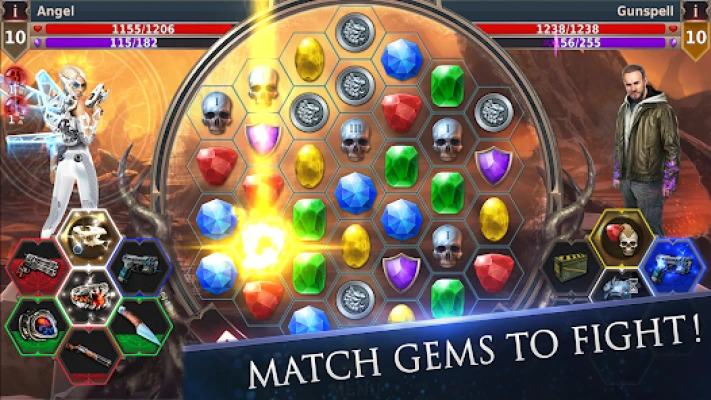
The central idea is straightforward: match gems on the puzzle board while making decisions that help you defeat opponents. Successful play requires more than finding easy combinations. You need to consider which matches are useful, how your available resources support your attacks, and how to prepare for the next stage of a battle.
The result is a game that appeals to players who enjoy both casual puzzle games and more thoughtful combat systems.
Main Features of Gunspell 2
1. Match-Three Puzzle Battles
Matching gems is the foundation of the gameplay. Players look for groups of matching pieces and choose moves that contribute to their battle progress.
The challenge comes from making each move count. A combination that looks attractive may not always be the most useful option, particularly when an opponent is putting pressure on you.
2. Fantasy RPG Combat
Gunspell 2 adds role-playing combat to its puzzle mechanics. Battles require players to consider their offensive opportunities and the resources available to them rather than treating every level as a simple matching challenge.
3. Magic and Firearms
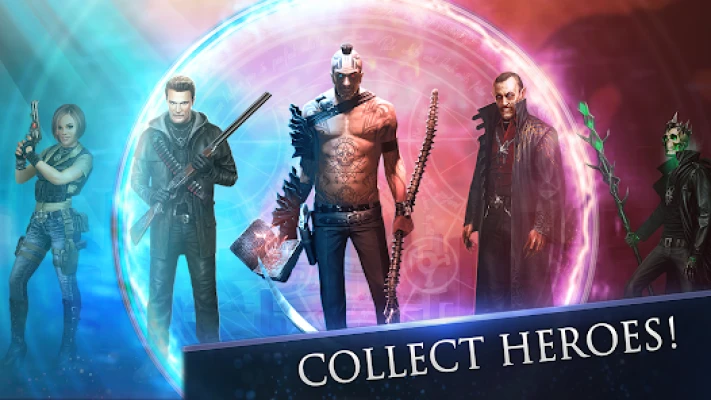
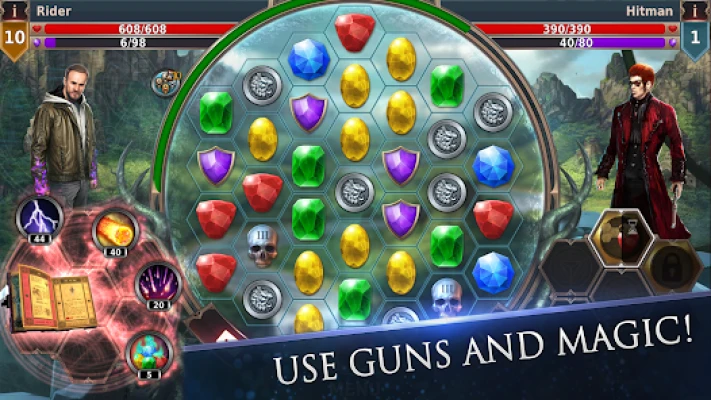
One of the game's defining ideas is its combination of magical abilities and guns. This unusual mixture gives the game a distinct identity compared with fantasy puzzle games that rely exclusively on spells, swords, or traditional fantasy weapons.
4. Tactical Decision-Making
Players must evaluate the available board, identify useful combinations, and consider how their choices affect the battle. Planning ahead can be more valuable than immediately taking the first available match.
5. Progression and Challenges
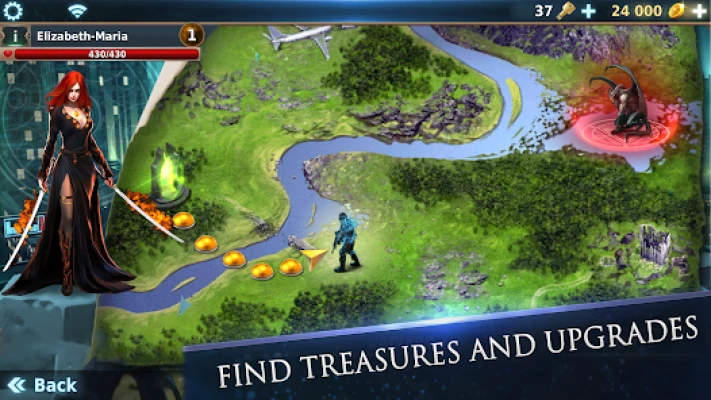
The RPG structure provides reasons to continue playing, learn the combat system, and improve your approach as challenges become more demanding.
6. Mobile-Friendly Gameplay
The game is designed for mobile play, making it suitable for shorter gaming sessions as well as longer periods spent working through its battles and progression systems.
Gameplay Guide: How to Play Gunspell 2
Understanding the Puzzle Board
Your first priority is learning to recognize matching gems and understanding how different matches contribute to combat.
Before making a move, take a moment to inspect the entire board. Look for straightforward matches, opportunities to create larger combinations, and moves that may open better possibilities after the pieces disappear.
Avoid concentrating exclusively on the most obvious group of gems. A slightly less impressive match may be more useful if it supports your immediate combat needs.
Turning Matches Into Effective Attacks
Puzzle matches are part of the battle system, so your decisions should serve a purpose beyond clearing pieces.
Consider what you need most at that moment. You might prioritize generating resources for an attack, preparing for an upcoming threat, or making a move that creates better combinations on the board.
The most effective approach is to connect every puzzle decision with your wider combat objective.
Learning the Role of Magic
Magic adds another strategic dimension to the experience. As you become familiar with the abilities available to your character, pay attention to when each option provides the greatest benefit.
Avoid using a powerful ability simply because it is ready. Consider whether it will solve an immediate problem or whether saving it for a more difficult encounter would produce a better result.
Using Weapons Effectively
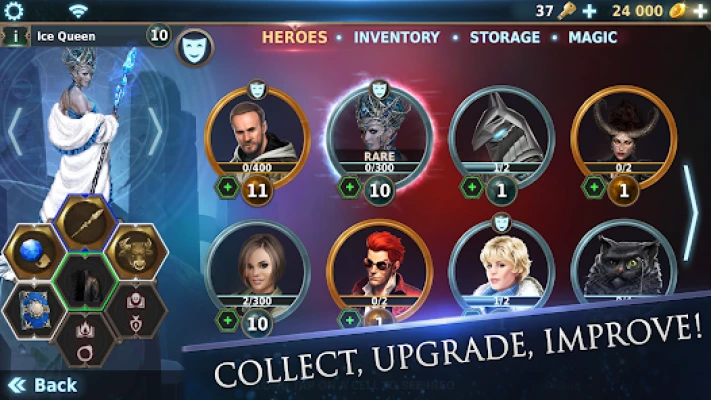
Firearms contribute to Gunspell 2's distinctive combat identity. Learn how the weapon-related mechanics interact with the rest of the battle system and identify which upgrades or abilities best support your preferred approach.
Rather than spreading your attention across every available option, focus on understanding the equipment and combat mechanics you use most frequently.
Complete Gunspell 2 Strategy Guide
1. Examine the Board Before Every Move
One of the easiest mistakes in a match-three RPG is moving too quickly.
Before selecting a match, check for other combinations that might be more useful. Consider the resources you need, the potential result of the move, and whether removing certain pieces could create a better opportunity.
A few seconds of planning can prevent unnecessary mistakes and help you make more consistent progress.
Pro tip: Make a habit of checking the entire board before committing to a move, especially when the battle becomes difficult.
2. Prioritize Useful Matches Over Random Matches
Not every match offers the same strategic value.
A large combination may be satisfying, but the best move depends on your current situation. If you need a particular resource to support your combat options, prioritize moves that help you work toward that goal.
When several combinations are available, compare their immediate benefits and possible follow-up opportunities.
3. Think One Move Ahead
Whenever possible, consider what the board might look like after your current match.
Removing a group of gems changes the remaining arrangement, potentially creating new combinations. Look for moves that open useful spaces or position pieces in ways that could help you on the following turn.
You cannot predict every result, but developing this habit makes your decisions more deliberate.
4. Learn From Difficult Battles
Losing a battle does not necessarily mean you need better equipment. Sometimes the problem is the way you approach the puzzle.
After a failed attempt, consider whether you made unnecessary matches, ignored useful combinations, or spent important abilities at the wrong time.
Change one aspect of your approach during the next attempt. This makes it easier to identify which decisions are helping and which are holding you back.
5. Manage Your Combat Resources Carefully
Puzzle RPGs reward players who understand the relationship between board decisions and combat resources.
Pay attention to what your matches generate and how those resources can be used. Avoid making moves without considering whether they contribute to your current objective.
When a battle is going well, continue building on your advantage. When you are struggling, prioritize the moves that help you regain control instead of pursuing unnecessary combinations.
6. Make Better Use of Special Abilities
Powerful abilities can be valuable when a fight becomes challenging, but timing matters.
Consider saving a useful ability for an enemy that poses a serious threat or for a situation in which an ordinary match is unlikely to provide enough support.
At the same time, do not hold every ability indefinitely. If using one now can prevent a defeat or create a decisive advantage, spending it may be the smarter choice.
7. Improve Your Equipment Progressively
When the game offers equipment upgrades or other forms of character progression, prioritize improvements that support the battles you find most difficult.
Avoid assuming that every upgrade is equally valuable. Consider whether a particular improvement helps you deal with enemies more effectively or makes your preferred combat approach more reliable.
Review your available progression options regularly rather than waiting until you become stuck.
8. Adapt Your Strategy to Different Opponents
A strategy that works well in one encounter may be less effective in another.
Pay attention to how opponents behave and what makes each battle difficult. Some encounters may reward aggressive play, while others require more careful resource management and better timing.
When your usual approach stops working, change your priorities instead of repeating the same sequence of moves.
9. Avoid Wasting Moves
Every decision should have a clear purpose.
Before making a match, ask yourself three questions:
Does this move help my current combat objective?
Is there a more useful combination available?
Could this move create a better opportunity on the next turn?
These questions are simple, but they help eliminate impulsive decisions and encourage more consistent play.
10. Develop a Reliable Playing Style
As you gain experience, identify the combination of puzzle decisions, abilities, and equipment that works best for you.
You do not need to use the same approach in every battle. Instead, develop a reliable foundation that you can adjust to meet different challenges.
The goal is to understand why your strategy works, not simply repeat a sequence of moves without considering the situation.
Beginner Tips for Gunspell 2
Learn the basic matching and combat mechanics before focusing on advanced tactics.
Inspect the board before every move.
Prioritize matches that support your immediate battle objective.
Think about the possible results of a move before committing to it.
Learn how magic and firearms fit into your combat strategy.
Use special abilities when they offer meaningful advantages.
Invest in useful upgrades as you progress.
Treat difficult encounters as opportunities to improve your decisions.
Avoid spending resources without considering the consequences.
Experiment with different approaches when a strategy stops working.
Advanced Tips for Better Results
Evaluate the Entire Board
Experienced players should look beyond individual matches. Consider how a move changes the available options and whether it creates opportunities for subsequent turns.
Balance Immediate Gains With Future Opportunities
The best move is not always the one that produces the largest immediate reward. Sometimes a smaller combination creates a better board for your next action.
Recognize When to Change Tactics
If an opponent repeatedly defeats you, examine your decisions rather than assuming the encounter requires more grinding. Better timing, more useful matches, or a different use of your abilities may improve your chances.
Understand Your Preferred Combat Options
Learn which abilities and equipment suit your playing style. A clear understanding of your strongest options makes it easier to decide how to approach demanding battles.
Common Mistakes to Avoid
Matching gems without a plan: Making the first available match can mean missing a more useful opportunity.
Ignoring the combat situation: Puzzle decisions should support the battle rather than being made in isolation.
Using abilities too early: Spending a powerful option without considering its impact can leave you with fewer answers later.
Repeating an unsuccessful strategy: If the same approach keeps failing, change your priorities and learn from the result.
Overlooking progression: Useful equipment and character improvements can make challenging encounters more manageable.
Expecting every battle to have the same solution: Different situations may require different priorities, even when the basic mechanics remain unchanged.
Graphics, Atmosphere, and Overall Experience
Gunspell 2 stands out primarily because of its combination of fantasy magic, firearms, and match-three puzzle combat. Rather than separating its puzzle and RPG elements into unrelated activities, it brings them together within the central battle experience.
This combination gives the game a different feel from a traditional casual gem-matching title. Players must think about their choices while also considering the broader combat situation.
Its appeal is strongest for people who enjoy games that are easy to begin playing but offer room to develop better strategies over time.
Who Should Play Gunspell 2?
Gunspell 2: Match Gems is worth considering if you enjoy:
Match-three puzzle games with additional strategic depth.
Fantasy RPGs with magical abilities.
Games that combine guns and supernatural elements.
Tactical battles that reward planning.
Mobile games that can be played in short sessions.
Puzzle challenges that require more than matching pieces as quickly as possible.
Players looking primarily for a traditional action shooter or a large open-world RPG may find the puzzle-based battle structure different from what they expect.
Advantages and Disadvantages
Advantages
Combines match-three puzzles with RPG combat.
Offers a distinctive mixture of magic and firearms.
Rewards planning and thoughtful decision-making.
Provides a different alternative to conventional puzzle games.
Combines accessible puzzle mechanics with strategic considerations.
Disadvantages
Players who prefer direct action combat may not enjoy the puzzle-focused battles.
Random board arrangements can influence available opportunities.
Some encounters may require repeated attempts and adjustments to your strategy.
Players who dislike resource management may find the tactical elements less appealing.
Frequently Asked Questions
What is Gunspell 2: Match Gems?
Gunspell 2: Match Gems is a fantasy puzzle RPG developed by AKPublish pty ltd. It combines match-three puzzles with battles involving magic, guns, and strategic decision-making.
How do you play Gunspell 2?
You match gems on the puzzle board and use the resulting opportunities to support your battles. Success depends on understanding the mechanics, selecting useful moves, and making good combat decisions.
Is Gunspell 2 a puzzle game or an RPG?
It combines both genres. The match-three system provides the central puzzle mechanics, while the combat and character progression elements give the game its RPG identity.
Does Gunspell 2 feature magic and guns?
Yes. The combination of magical abilities and firearms is one of the game's defining features.
What is the best strategy for beginners?
Start by learning the basic mechanics, inspecting the board before every move, and prioritizing matches that support your combat objectives. Gradually improve your understanding of abilities and progression.
How can I win difficult battles?
Review the available matches, consider your resource needs, and use your abilities at appropriate moments. If you repeatedly lose, change your strategy and examine which decisions may be causing problems.
Is Gunspell 2 suitable for casual players?
Its match-three mechanics make it approachable for puzzle fans, while the RPG and tactical elements offer additional depth for players who enjoy planning.
Does Gunspell 2 have character progression?
The game combines puzzle battles with RPG-style gameplay. For the exact available upgrades and progression options, consult the current in-game menus.
Can I play Gunspell 2 on Android?
Gunspell 2: Match Gems is listed as an Android game on Google Play.
Final Verdict
Gunspell 2: Match Gems offers a distinctive combination of puzzle solving, fantasy combat, magic, and firearms. Its strongest appeal is the way it turns familiar gem-matching mechanics into part of a broader battle system where thoughtful decisions matter.
For players who enjoy match-three games but want more strategic depth than simply clearing a board, Gunspell 2 provides an interesting alternative. Learning to evaluate the board, use abilities carefully, and adapt to difficult encounters is the key to getting more out of the experience.
If you enjoy mobile puzzle RPGs that reward patience and planning, Gunspell 2 is worth exploring.
Rate the Game
User Reviews












Popular Games



















 Android
 iOS
 Windows
 Xbox