


Latest Version
August 20, 2026
Voodoo
Strategy
iOS
0
Report a Problem
More About :game
Fort Guardian Overview
In Fort Guardian, your goal is simple: protect your fort from relentless waves of enemies. The challenge comes from deciding how to use limited space, which facilities to build, when to merge upgrades, and which skills will give your defense the greatest advantage.
Rather than relying on a single tower or fixed strategy, the game encourages you to adapt as each run develops. Enemy waves become more demanding, while random elements and skill choices give different playthroughs their own rhythm.
The result is a combination of tower defense, merge gameplay, roguelike strategy, base defense, and tactical resource management.
What Makes Fort Guardian Different?
Fort Guardian stands out by combining several familiar strategy concepts into one compact mobile experience.
You are not simply placing towers and watching them attack. You must think about how your facilities work together, how much room you have available, which upgrades are worth merging, and how your chosen skills complement your current defensive setup.
Every decision can affect how well your fort handles the next wave.
Gameplay Overview
The core gameplay revolves around building and strengthening your defensive position.
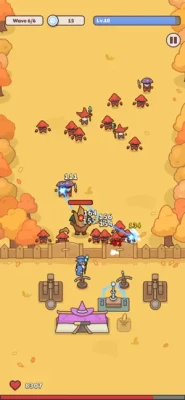
As enemies approach your fort, you develop facilities, traps, and turrets designed to stop them. Matching and merging upgrades can improve your defensive capabilities, while skill choices allow you to customize the direction of your run.
The game becomes increasingly tactical as enemy waves grow stronger. A defensive setup that works early may not be enough later, so adapting your strategy is an important part of surviving.
According to the App Store listing, Fort Guardian features fast-paced tactical combat, random challenges, skill selection, upgrade systems, and roguelike replayability.
Merge Mechanics
The merge system is one of Fort Guardian's defining features.
Facilities, traps, and turrets can be combined to create stronger defensive options. Because available space is limited, every placement matters.
A good player needs to consider:
- Which facilities should be merged?
- Which defensive structures should remain separate?
- Where should important defenses be positioned?
- When is it better to upgrade instead of expanding?
- Which combination will help against the next enemy wave?
This creates a constant balance between immediate survival and long-term development.
Tower Defense and Fort Protection
Fort defense is at the heart of the experience.
Your stronghold must withstand increasingly difficult attacks, making defensive planning essential. Instead of building randomly, you should create a setup where different facilities support one another.
Strong defensive positioning can help you get more value from your available space, while poorly planned layouts can leave weaknesses that enemies exploit.
Enemy Waves
Fort Guardian throws increasingly difficult waves at your defenses.
Each wave can require a different approach, especially when enemy abilities and increasing difficulty put pressure on your existing setup. The game therefore rewards players who can recognize when their current strategy is no longer enough.
Survival is not only about having powerful defenses. It is also about knowing when to change your strategy.
Skills and Strategic Choices
Skill selection gives players another layer of control.
During a run, you can choose powerful skills and look for combinations that complement your defensive build. The right skill can potentially strengthen an otherwise weak strategy, while an unsuitable choice may provide little value.
This makes skill selection an important part of the game's roguelike structure.
Roguelike Replayability
One of Fort Guardian's biggest strengths is replayability.
Random elements mean that every playthrough does not have to follow exactly the same path. Different upgrades, facilities, skills, and challenges can change how a run develops.
This encourages experimentation rather than following one fixed solution every time.
Upgrade and Progression System
Progression focuses on making your defenses stronger over time.
You can unlock facilities, merge upgrades, and improve your defensive capabilities as you progress through the game. The App Store also lists equipment and facility progression as part of the broader upgrade experience.
The progression system gives players a reason to keep experimenting with different defensive combinations rather than simply repeating the same build.
Facilities, Traps, and Turrets
Fort Guardian gives you several categories of defensive tools.
Facilities
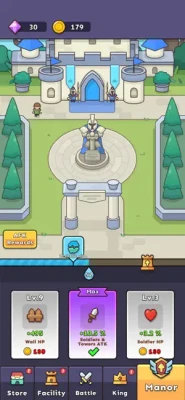
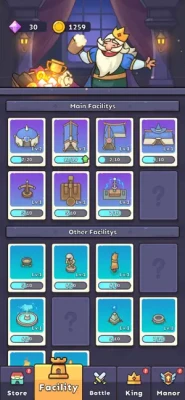
Facilities form the foundation of your defensive setup. Their placement and upgrade potential make them important when planning your limited building area.
Traps
Traps provide another method of controlling incoming enemies and strengthening your defensive line.
Turrets
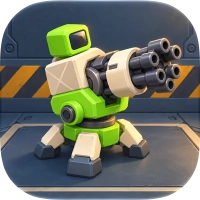
Turrets contribute direct offensive power and can become especially valuable when positioned effectively within your overall defense.
The key is not necessarily to make every individual structure powerful. The stronger approach is to build a setup where your facilities work together.
Game Modes
Fort Guardian has expanded beyond its original core experience through updates.
One notable addition is Royale Challenge, introduced in version 0.14.5. The game's update history also shows the addition of maps, events, bosses, new systems, skins, localization, cloud saving, and other improvements over time.
Because the game continues to receive updates, its available content can change over time.
Royale Challenge
The Royale Challenge was added as a new game mode in January 2026 according to the App Store version history.
For players looking for an additional challenge beyond the standard defensive progression, this mode provides another reason to return to Fort Guardian.
Maps, Events, and Bosses
Fort Guardian has received updates introducing new maps, events, and bosses.
The version history records new maps and bosses in April 2025, a new map and difficulty balancing in May, and later events including Blue Sea Adventure and new unit skins.
These additions help expand the game beyond its initial defensive gameplay loop.
Game Atmosphere
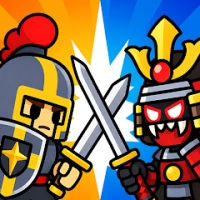
Fort Guardian uses a stylized fantasy and medieval-fantasy presentation built around defending a stronghold from invading forces. Its focus is less on an elaborate narrative and more on tactical defense, upgrades, and surviving successive battles.
The atmosphere works particularly well for players who enjoy compact strategy games where the main focus is building a stronger defense and overcoming progressively tougher challenges.
Controls and Interface
Fort Guardian is designed for touchscreen play on iPhone and iPad. The interface centers on selecting facilities, managing your defensive space, merging upgrades, choosing skills, and monitoring the battle.
The controls are designed around straightforward touch interactions, allowing the strategic decisions to remain the main challenge rather than complicated controls.
How to Play Fort Guardian
1. Build Your Defense
Start by establishing a defensive setup capable of handling the opening waves.
2. Manage Your Space
Do not fill your available area without considering future upgrades. Limited space makes positioning an important strategic decision.
3. Merge Wisely
Combine compatible facilities, traps, and turrets to improve your defenses.
4. Select Useful Skills
Choose skills that complement your current build rather than selecting upgrades without considering your overall strategy.
5. Watch Enemy Patterns
Pay attention to how enemies approach your fort and adjust your defense when necessary.
6. Upgrade Your Stronghold
Use progression rewards to improve your facilities and equipment and make future runs more effective.
7. Adapt Every Run
Because roguelike elements can change the available options, avoid depending entirely on one build.
Beginner's Guide
New players should focus on learning how the game's merge system and defensive space work before worrying about perfect builds.
A useful beginner approach is to:
- Keep your layout organized.
- Avoid merging everything immediately.
- Think about the next wave before making an upgrade.
- Prioritize defensive combinations that work well together.
- Experiment with different skills.
- Learn which facilities provide the most value for your play style.
- Avoid wasting valuable space on upgrades that do not improve your immediate defense.
The most important lesson is to adapt instead of forcing one strategy through every level.
Advanced Strategy Tips
Experienced players can get more from Fort Guardian by treating every placement as part of a larger defensive plan.
Think Ahead
Do not make a merge simply because the upgrade is available. Consider what your board may need during later waves.
Protect Your Weak Side
A powerful defensive area does not help much if another section of your fort remains vulnerable.
Build Around Synergy
Try to create combinations where your facilities, traps, turrets, and selected skills support one another.
Manage Limited Space
Space management is one of the game's central strategic challenges. Keep your layout flexible enough to accommodate valuable upgrades.
Adapt to Randomization
Roguelike mechanics mean that you may not always receive your preferred options. Learn to create the strongest possible build from what is actually available.
Difficulty
Fort Guardian starts with an approachable strategy concept but becomes more demanding as enemy waves become stronger.
The difficulty comes from several factors:
- Increasing enemy strength
- Limited defensive space
- Randomized choices
- Upgrade decisions
- Skill selection
- Resource management
- The need to adapt your build
This makes the game suitable for players who enjoy strategy games where planning becomes increasingly important.
Pros and Cons
Pros
- Creative combination of merge and tower defense mechanics
- Roguelike replayability
- Strategic use of limited space
- Multiple defensive facilities
- Skill selection adds variety
- Upgrade and progression systems
- Increasingly challenging enemy waves
- Regular content additions
- Available on iPhone and iPad
Cons
- Some players may find later progression demanding
- Randomized choices can make certain runs feel less predictable
- The gameplay loop may feel repetitive for players who prefer story-driven games
- Player reviews have reported balance, pathing, crashing, and progression concerns on some versions or devices.
Player Reception
The US App Store currently lists Fort Guardian at 4.4 out of 5 from 5.7K ratings, while the game is categorized under Strategy and is rated 13+.
Player feedback is mixed in detail. Some reviewers praise the game's accessible strategy mechanics and overall concept, while others have raised concerns about balance, progression, bugs, and performance.
This makes Fort Guardian an interesting choice for players who enjoy experimenting with defensive builds but may want to keep in mind that individual experiences can vary by device and game version.
Technical Details
| Detail | Information |
|---|---|
| Game | Fort Guardian |
| Developer | Voodoo |
| Genre | Strategy |
| Subgenres | Tower Defense, Merge, Roguelike |
| Platforms | iPhone, iPad |
| Business Model | Free with In-App Purchases |
| Age Rating | 13+ |
| App Size | 440.9 MB |
| Languages | English plus additional supported languages |
| Multiplayer | Single-player focused |
| Mac Support | Not verified for macOS |
The current US App Store listing identifies Voodoo as the developer, lists iPhone and iPad compatibility, and reports a 440.9 MB app size.
Updates and New Content
Fort Guardian has received a substantial sequence of updates.
The App Store history includes new maps, bosses, events, difficulty balancing, localization, cloud saving, the Artisan system, new unit skins, Blue Sea Adventure, Royale Challenge, bug fixes, and optimization improvements.
The listed version history currently shows version 0.15.0, with minor fixes and optimization noted in the release information.
Fort Guardian vs. Traditional Tower Defense Games
Traditional tower defense games generally focus on fixed tower placement and predetermined upgrade paths.
Fort Guardian adds a different layer through its merge mechanics and roguelike structure. Your available options can change, and you must make decisions based on the resources and upgrades presented during a run.
That makes the game feel more dynamic than a purely traditional tower defense experience.
Fort Guardian vs. Merge Games
Unlike a conventional merge puzzle, Fort Guardian uses merging as part of a larger tactical combat system.
The objective is not simply to create higher-level objects. Your merges directly contribute to defending the fort and surviving enemy attacks.
This gives the merge mechanic a strategic purpose beyond simple progression.
Who Should Play Fort Guardian?
Fort Guardian is a good fit for players who enjoy:
- Tower defense games
- Merge strategy games
- Roguelike mobile games
- Base defense games
- Tactical combat
- Upgrade-heavy progression
- Fantasy strategy games
- Short strategic gaming sessions
- Experimenting with different builds
Players who strongly prefer linear stories or highly predictable gameplay may find the randomized structure less appealing.
Is Fort Guardian Worth Playing?
If you enjoy mobile strategy games that combine merge mechanics, tower defense, roguelike replayability, and fort defense, Fort Guardian offers an interesting combination.
Its strongest idea is the way limited space forces you to think about every facility and upgrade. Instead of simply collecting stronger units, you need to build a defensive system that can survive increasingly difficult waves.
The game also has an active history of content additions, including new maps, bosses, events, systems, skins, and game modes.
Expert Rating
Overall Rating: 8.0/10
Gameplay: 8.2/10
Strategy: 8.4/10
Replayability: 8.3/10
Progression: 7.8/10
Presentation: 7.9/10
Accessibility: 8.1/10
Verdict: Fort Guardian successfully combines several popular mobile strategy mechanics into a distinctive defensive experience. Its merge system and roguelike structure give the familiar tower defense formula more variety, although progression and balance may not appeal equally to every player.
Frequently Asked Questions
What is Fort Guardian?
Fort Guardian is a strategy defense game developed by Voodoo that combines merge mechanics, roguelike elements, tactical combat, facility upgrades, and enemy waves.
Is Fort Guardian free?
Yes. The App Store lists Fort Guardian as free with in-app purchases.
Is Fort Guardian available on iPhone?
Yes. Fort Guardian is available for iPhone and iPad.
What type of game is Fort Guardian?
It is primarily a strategy game combining tower defense, merge mechanics, roguelike progression, and tactical combat.
Can you merge upgrades in Fort Guardian?
Yes. The game specifically allows players to merge facilities, traps, and turrets to strengthen their defensive setup.
Does Fort Guardian have roguelike elements?
Yes. The game uses dynamic challenges and random elements so individual playthroughs can differ.
Does Fort Guardian have different game modes?
Yes. Its update history includes the Royale Challenge mode, along with other events and content additions.
Does Fort Guardian receive updates?
Yes. The App Store version history shows numerous updates featuring new content, balancing changes, events, bug fixes, and optimization.
Is Fort Guardian multiplayer?
The available store information presents Fort Guardian as a single-player-focused strategy game.
Where can I play Fort Guardian?
Fort Guardian is available on iPhone and iPad through the Apple App Store.
Fort Guardian brings together merge mechanics, tower defense, roguelike replayability, tactical skills, facility upgrades, and escalating enemy waves in a fantasy-inspired mobile strategy game.
The limited defensive space gives the gameplay its central strategic tension: every facility, merge, and skill choice needs to serve a purpose. As the enemy waves become harder, successful players must adapt their layouts and make better decisions rather than relying on one permanent strategy.
Rate the Game
User Reviews









Popular Games



















 Android
 iOS
iOS Windows
 Xbox
Xbox