

Latest Version
September 14, 2026
Al Games FZ
Strategy
iOS
0
Report a Problem
More About :game
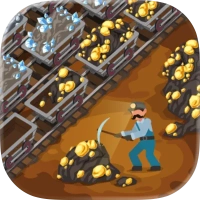
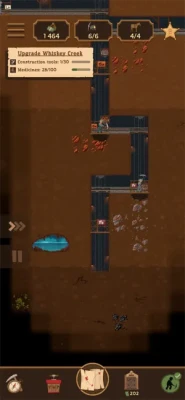
You must explore underground areas, find valuable deposits, dig tunnels, assign miners, organize warehouses, manage mine carts, connect production facilities, manufacture goods, and deliver supplies to frontier towns.
The game becomes increasingly interesting because every part of the economy is connected. A mine that produces resources is only useful if those resources can be stored, transported and turned into something valuable. A factory is only productive when it receives the materials it needs, while towns depend on successful deliveries and restoration projects.
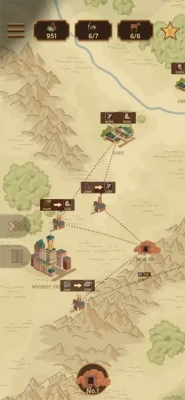
You also take on the role of governor, giving the game another layer beyond running your mining company. Completing town orders can provide money, workers and opportunities for expansion, while failing important requests can hurt your approval rating.
What Makes Deep Corp Different?
Deep Corp combines several management systems into one connected gameplay loop:
- Underground mining
- Geological exploration
- Worker management
- Warehouse placement
- Mine-cart transportation
- Logistics networks
- Factory production
- Resource conversion
- Town orders
- Frontier restoration
- Economic expansion
- Governor responsibilities
The key to success is understanding that these systems cannot be managed independently.
A highly productive mine can still be inefficient if carts cannot move resources quickly enough. A factory can remain idle if its supply chain is poorly organized. Likewise, producing large amounts of materials is not enough if you cannot deliver finished goods to the towns that need them.
How to Start in Deep Corp
Your early objective should not be to build everything immediately.
Instead, establish a reliable foundation.
Start by identifying the resources available around your mining operation. Explore the underground area, locate useful deposits and plan where your tunnels should go.
Then:
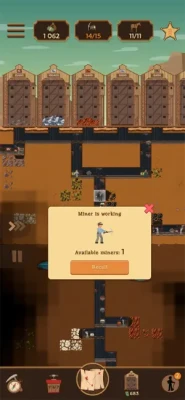
- Assign miners to productive areas.
- Create sensible routes between important locations.
- Place storage where it can serve your mining operation efficiently.
- Watch the movement of mine carts.
- Begin connecting your resources to production.
- Complete useful town orders.
- Reinvest your earnings into the parts of the economy that are slowing you down.
The biggest early mistake is expanding faster than your logistics network can support.
Mining Strategy
Mining is the foundation of the entire economy.
Deep Corp requires you to actively organize extraction rather than simply waiting for resources to accumulate. The game specifically emphasizes geological surveys, tunnel construction, miner assignments and mine layouts.
Survey Before Expanding
Before sending your operation in every direction, look for valuable deposits and consider how easily they can be connected to your existing infrastructure.
A resource that is technically valuable may not be worth prioritizing if transporting it creates a major bottleneck.
Think about:
Deposit → Mine → Warehouse → Transport → Factory → Town
The shorter and cleaner this chain is, the easier it becomes to manage.
Do Not Overbuild Tunnels
More tunnels are not automatically better.
Every additional branch can increase the complexity of your underground operation. If workers and carts have to travel through unnecessarily complicated routes, productivity can suffer.
Build tunnels with a purpose.
A good tunnel should either:
- Reach a useful deposit.
- Improve access to an important area.
- Reduce transportation distance.
- Support future expansion.
Managing Miners
Workers are one of your most important resources.
Assign miners where their work contributes directly to your current objective rather than spreading them across too many areas.
If you need a particular material for a factory recipe or town order, temporarily concentrating workers on that resource can be more useful than trying to maintain equal production everywhere.
Worker Management Rule
Prioritize what your economy currently needs, not what happens to be available.
This simple rule prevents a common problem: having plenty of one resource while an important production chain is waiting for something else.
Warehouse Placement Strategy
Warehouses are an important part of Deep Corp's logistics system.
Poor storage placement can create unnecessary transportation distances and contribute to inefficient movement underground. The official description specifically highlights warehouse positioning and mine-cart traffic management.
Try to position storage so that it serves several important routes rather than just one isolated production point.
A useful warehouse location should ideally sit close to:
- Active mining areas
- Major transportation routes
- Factories
- Resource transfer points
Avoid creating a maze of unnecessary storage locations.
Mine Cart Traffic
Transportation is one of the most important strategic systems in Deep Corp.
Resources do not magically teleport from mines to factories. They need to move through your transportation network.
The game warns about underground traffic jams, making route planning an important part of efficient mining.
How to Reduce Traffic Problems
Watch for areas where several carts repeatedly converge.
If multiple production chains depend on the same narrow route, that area can become a bottleneck.
When traffic becomes slow:
- Identify the busiest route.
- Determine what resources are using it.
- Check whether every shipment actually needs that path.
- Improve the route where possible.
- Upgrade transportation capacity when necessary.
- Avoid adding more production until the bottleneck is under control.
A faster mine does not help if the transportation system cannot move its output.
Building an Efficient Logistics Network
Your logistics network eventually connects the entire economy.
The basic structure is:
Mining → Storage → Factory → Storage/Transport → Town
Each step needs to function.
If your mines produce quickly but factories are starved of materials, your problem is transportation or storage.
If factories are producing goods but towns are not receiving them, the problem is likely in your delivery network.
Build Around Demand
Do not create transportation routes simply because you can.
Build routes around actual demand.
If a town needs a particular product, trace that product backward:
Town order → Finished product → Factory → Ingredients → Mines
This tells you exactly which parts of the economy need attention.
Transport Upgrades
Upgrading carts can improve the movement of resources and finished products.
However, do not upgrade transportation blindly.
First determine whether transportation is actually the bottleneck.
If the mine is producing too slowly, buying faster carts will not solve the fundamental problem.
If production is healthy but deliveries are consistently delayed, transportation upgrades become much more valuable.
Factory Strategy
Factories transform raw materials into more valuable goods.
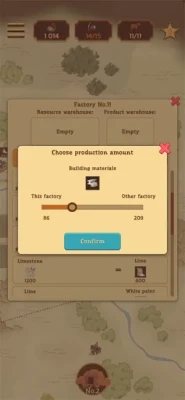
Deep Corp allows you to unlock recipes and combine materials from different production sites, making factory management one of the most important parts of the game.
Think in Production Chains
Never look at a factory as an isolated building.
Think of it as part of a chain.
For example:
Raw Material A + Raw Material B → Factory → Finished Good → Town
If the factory stops working, investigate the entire chain rather than immediately blaming the factory.
Check:
- Is the required resource being mined?
- Is enough being produced?
- Is it reaching the warehouse?
- Can carts transport it?
- Is the factory receiving it?
- Is storage full?
- Is the finished product reaching its destination?
This diagnostic approach saves a lot of time.
Production Chain Strategy
As your operation becomes more advanced, production chains become more complicated.
A good strategy is to stabilize one chain before creating several others.
Recommended approach
First: Establish reliable raw-material production.
Second: Make sure transportation works.
Third: Keep enough storage capacity available.
Fourth: Start the factory.
Fifth: Monitor the finished product.
Sixth: Expand only after the complete chain is working consistently.
This is much safer than opening several factories simultaneously.
How to Handle Town Orders
Town orders are more than optional side objectives.
They connect your industrial economy with the governor system.
Successful deliveries can reward you with money, workers and additional opportunities, while failing important orders can reduce your approval rating.
Prioritize Orders Carefully
Before accepting or focusing heavily on an order, determine what it requires.
Ask:
- Do I already produce the required materials?
- Is the factory available?
- Do I have enough transportation?
- Can I deliver within the required timeframe?
- Will completing the order interfere with another important objective?
If the answer to several of these questions is no, strengthening your economy first may be the better choice.
Governor Strategy
The governor role gives Deep Corp an additional strategic layer.
You are not only trying to maximize mining profits. You are also helping restore a struggling frontier.
This creates an important balance between:
Company growth and regional development.
A profitable company that ignores town requirements may not progress as efficiently as one that keeps the local economy moving.
Money Management
Avoid spending every available resource on expansion.
Keep enough flexibility to respond to unexpected shortages.
A good economic cycle is:
Produce → Deliver → Earn → Upgrade → Expand → Produce More
If you skip the delivery and income stages and simply keep building, you can end up with an expensive network that is difficult to operate.
Where to Spend First
When deciding between upgrades, prioritize the part of your economy that currently limits production.
For example:
- Mine too slow → improve mining.
- Workers overloaded → improve worker allocation.
- Carts delayed → improve transportation.
- Factory waiting for resources → fix supply chain.
- Finished products accumulating → improve delivery.
- Town requests failing → prioritize the required production chain.
How to Find Your Biggest Bottleneck
When your economy slows down, do not upgrade random buildings.
Find the bottleneck.
Use this simple checklist:
If miners are idle
Check whether they have a useful resource to extract and whether the mining layout supports their assignments.
If resources pile up
Your transportation or storage network may be insufficient.
If factories are idle
Check incoming materials.
If factories are full but towns are waiting
Your delivery network needs attention.
If carts are constantly delayed
Look for congested routes and weak links.
If everything appears productive but income is poor
Check whether you are producing goods that actually support current demand.
Best Expansion Strategy
Expansion should happen in stages.
Stage 1: Establish the Mine
Create a reliable extraction operation.
Stage 2: Stabilize Logistics
Make sure resources can move efficiently.
Stage 3: Build Production
Introduce factories that support your current needs.
Stage 4: Support Towns
Complete useful orders and develop the surrounding region.
Stage 5: Scale the Economy
Only after the previous systems are stable should you expand aggressively.
This prevents the classic management-sim problem of having a large empire that looks impressive but operates inefficiently.
Advanced Strategy: Build Around the Supply Chain
Experienced players should stop thinking about individual buildings and start thinking about flows.
Every resource should have a destination.
Every factory should have a supply source.
Every finished product should have a customer.
Every transportation route should serve a purpose.
The ideal economy resembles a connected network rather than a collection of independent buildings.
How to Recover From a Bottleneck
If your economy suddenly slows down, avoid making several major changes at once.
Instead:
- Pause your expansion plans.
- Identify the resource or product causing the delay.
- Trace it back to its source.
- Check transportation.
- Check storage.
- Check worker assignments.
- Fix the weakest link.
- Resume expansion after the flow becomes stable.
This approach is especially useful when multiple production chains depend on the same resource.
Beginner Mistakes to Avoid
Expanding too quickly
A larger operation requires a stronger logistics network.
Ignoring transportation
Mining is only the first step.
Building factories without supplies
A factory cannot compensate for an unreliable mining operation.
Creating unnecessary routes
More routes can mean more complexity.
Ignoring storage
Full or poorly positioned warehouses can interfere with resource movement.
Producing without demand
A large stockpile is not necessarily a successful economy.
Neglecting town orders
The governor system is an important part of progression.
Fixing the wrong problem
Always identify the bottleneck before purchasing an upgrade.
Deep Corp: Mining Strategy Tips for Beginners
If you are starting the game, remember these ten rules:
- Explore before committing to major expansion.
- Build short, useful transportation routes.
- Keep warehouses strategically positioned.
- Watch mine-cart traffic regularly.
- Assign workers according to current demand.
- Stabilize one production chain before adding another.
- Upgrade transportation when logistics actually become the bottleneck.
- Use town orders to guide your production priorities.
- Keep money available for important upgrades.
- Expand only when your existing economy can support it.
Deep Corp: Mining Strategy Features
The current App Store listing highlights several major features:
- Strategic mining and tunnel construction
- Geological surveys
- Miner recruitment and worker assignments
- Resource management
- Warehouse organization
- Mine-cart transportation
- Logistics networks
- Cart upgrades
- Factory production
- Recipe unlocking
- Multi-stage production chains
- Town orders
- Frontier restoration
- Governor responsibilities
- Wild West economic management
Platforms and Availability
The App Store version is available for iPhone and iPad and is listed as a free game with in-app purchases. The current U.S. App Store listing shows a size of approximately 750.5 MB, an age rating of 4+, and the developer as AI Games FZ.
The game is also available on Android, and Google Play currently lists 100K+ downloads. Google Play additionally lists Windows availability through Google Play Games.
Ratings and Player Feedback
The U.S. App Store currently shows a 2.6/5 rating from 30 ratings, although ratings vary considerably between countries as the game is still relatively new.
The gameplay itself has received positive comments from some players, particularly around the management mechanics and overall concept. However, recent reviews also raise concerns about advertising frequency, the cost structure for removing advertisements, and some technical issues such as miners becoming stuck or pathfinding problems.
That makes the game somewhat unusual: its core management concept appears to be one of its strongest points, while monetization and occasional technical problems are recurring criticisms in current player feedback.
Pros and Cons
Pros
- Interesting mining-management concept
- Underground mine planning
- Worker management
- Production chains
- Logistics and transportation
- Factory management
- Town restoration
- Wild West setting
- Governor mechanics
- Multiple interconnected economic systems
Cons
- The management systems can become complicated.
- Transportation bottlenecks can be frustrating.
- Recent players have reported pathfinding and freezing issues.
- Advertising has received significant criticism.
- The App Store rating is currently relatively low in the U.S.
Is Deep Corp: Mining Strategy Worth Playing?
If you enjoy management games where mining is only the beginning, Deep Corp has an interesting foundation.
Its strongest feature is the connection between mining, logistics, manufacturing and town development. Instead of simply upgrading a single resource generator, you are effectively building a small industrial economy.
The biggest question for players may be the current balance between the enjoyable management gameplay and the advertising/monetization experience. Recent reviews show that this is an important consideration.
Final Verdict
Deep Corp: Mining Strategy is best approached as an industrial management puzzle disguised as a Wild West mining game.
The key is not simply digging deeper. You need to build an economy in which resources move smoothly from deposits to warehouses, factories turn those resources into useful products, transportation keeps everything connected, and towns receive what they need.
If you master the supply chain, identify bottlenecks quickly and expand at a controlled pace, your mining operation can grow from a small frontier business into a much larger industrial network.
Dig smart, transport efficiently, produce with purpose, and expand only when your economy is ready.
Frequently Asked Questions
What is Deep Corp: Mining Strategy?
Deep Corp: Mining Strategy is a Wild West management game focused on mining, resource management, logistics, factories, production chains and town restoration.
How do you play Deep Corp?
You explore and mine deposits, assign workers, manage storage, transport resources, operate factories and fulfill orders from frontier towns.
What is the best beginner strategy in Deep Corp?
Focus on building a reliable mining and transportation system before expanding into multiple production chains. Fix bottlenecks before adding more factories.
How do you prevent mine-cart traffic problems?
Plan routes carefully, avoid unnecessary intersections and monitor areas where several transportation routes converge.
What are factories used for?
Factories transform raw resources into more valuable products and allow you to unlock increasingly complex production chains.
Why are town orders important?
Town orders connect your industrial operation to the governor system. Successful deliveries can provide money, workers and additional expansion opportunities, while failed key orders can reduce approval.
Can you play Deep Corp on iPhone?
Yes. The App Store lists Deep Corp: Mining Strategy for iPhone and iPad.
Is Deep Corp free?
The App Store lists the game as free with in-app purchases.
Is Deep Corp available on Android?
Yes. Google Play currently lists Deep Corp: Mining Strategy for Android, with 100K+ downloads shown on the current listing.
Is Deep Corp available on PC?
Google Play currently lists Windows availability through Google Play Games, with PC requirements including Windows 10, 8 GB RAM and an SSD with 10 GB of available storage.
Rate the Game
User Reviews














Popular Games



















 Android
 iOS
iOS Windows
 Xbox
Xbox