









Latest Version
October 17, 2026
Snapbreak Games
Adventure
iOS
0
Report a Problem
More About :game
Rather than relying on fast reflexes, success comes from paying attention to your surroundings, examining unusual objects, and understanding how different clues fit together. Each location offers opportunities to investigate the environment and uncover the secrets hidden within it.
What Is Faraway: Tropic Escape?
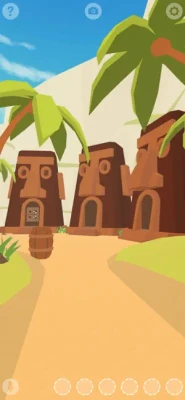
Faraway: Tropic Escape is an exploration-focused puzzle game designed for players who enjoy mysterious locations, immersive scenery, and thoughtful problem-solving. The tropical setting gives the adventure a distinctive atmosphere, with secluded paths, ancient ruins, and environmental details that encourage players to look beyond the obvious.
The central challenge is to work through puzzles by observing the world carefully. Doors, symbols, mechanisms, and objects may provide clues to the next step. Players must use logic rather than guess randomly, making the experience rewarding for anyone who enjoys solving escape-room-style challenges.
The game is particularly suitable for casual players who want an adventure that can be enjoyed at their own pace.
Game Information and Main Features
Game title: Faraway: Tropic Escape
Genre: Adventure, puzzle, room escape
Developer: Snapbreak Games
Platforms: iPhone and iPad
Game perspective: First-person 3D exploration
Main objective: Solve puzzles, discover hidden notes, and progress through mysterious locations.
Level design: 18 main levels, with additional bonus levels available.
Game style: Exploration, logic puzzles, environmental clues, and narrative discovery.
Sound: Atmospheric background music and environmental audio.
Pricing: Free to start, with optional in-app purchases for additional content.
Suitable for: Players who enjoy escape rooms, brain teasers, exploration, and mystery adventures.
Multiplayer: Primarily a single-player experience.
Story and Setting
The story of Faraway: Tropic Escape follows a journey to prevent a looming catastrophe connected to the protagonist's daughter, Una. After awakening from a catatonic state, the protagonist begins searching for answers in a mysterious world where access to Faraway must be earned through a series of demanding trials.
The adventure unfolds across beautiful tropical locations filled with strange mechanisms, concealed passages, and ancient structures. Although the scenery initially feels peaceful, the puzzles reveal a deeper mystery involving previous explorers and the events that led to the current crisis.
Missing notes provide additional pieces of the story. By finding these records, players can learn more about the journey that came before theirs and gradually understand why the challenges matter.
The narrative is deliberately mysterious, encouraging players to discover the truth through exploration rather than relying entirely on lengthy dialogue or cutscenes.
Gameplay Mechanics and Puzzle Types
1. First-Person Exploration
Movement and observation are central to the experience. Players navigate each environment, turn to examine their surroundings, and interact with objects that may unlock new paths.
A seemingly ordinary wall, container, symbol, or platform can conceal an important clue. Thorough exploration is therefore just as important as solving the main puzzle.
2. Environmental Puzzles
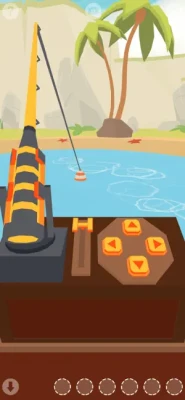
Many challenges require players to interpret patterns and manipulate mechanisms. These puzzles may involve matching symbols, activating switches, moving objects, or following clues discovered elsewhere in a level.
The important skill is recognizing the connection between the environment and the mechanism that needs to be activated.
3. Hidden Notes and Collectibles
Collecting missing notes is an important part of the adventure. These items add context to the story and reward players who investigate areas beyond the obvious route.
Completing a level and finding everything it contains are two different goals. Players who want a complete playthrough should search thoroughly before leaving.
4. Mechanisms and Interactive Objects
Levers, doors, movable pieces, switches, and other interactive objects help create the game's escape-room challenges. Some mechanisms open pathways, while others reveal patterns or provide access to another puzzle.
If a mechanism does not respond as expected, examine the surrounding area for an item or clue that may be missing.
5. Relaxing Tropical Environments
The game's three-dimensional environments and atmospheric soundtrack create a slower, more thoughtful experience than action-oriented adventure games.
There is little need to rush. Taking time to inspect the scenery can reveal details that are easy to overlook when moving too quickly.
Complete Strategy Guide for Faraway: Tropic Escape
Step 1: Survey Every New Location
When entering a new area, resist the temptation to move directly toward the most obvious door.
Turn around, examine the sides of the room, and look at nearby structures. Check containers, unusual markings, platforms, and objects that appear out of place.
Before proceeding, establish which objects can be interacted with and which paths are currently blocked.
Step 2: Collect Every Visible Clue
Look for notes, symbols, diagrams, and distinctive patterns as you explore. A clue discovered early in a level may be required much later.
Pay particular attention to markings on walls, floors, stones, and puzzle devices. If a pattern contains several shapes or symbols, record their order rather than relying on memory.
A useful habit is to inspect each new area before activating a mechanism that changes the environment.
Step 3: Solve Pattern-Matching Puzzles Methodically
When faced with a symbol or tile puzzle, study the original pattern before touching the controls.
Follow this process:
Identify every symbol and its position.
Check whether the puzzle uses rows, columns, directions, or a sequence.
Reproduce the pattern carefully.
Observe the mechanism after each attempt.
Compare any new pattern with the original clue.
Avoid random button pressing. Even when a puzzle seems abstract, its solution is often connected to a pattern or object elsewhere in the level.
Step 4: Understand Levers and Switches
Some puzzles involve moving levers or handles into specific positions. Others require a sequence of activations.
Before experimenting, check for nearby markers or matching symbols. These can indicate the correct position or order.
If a switch changes another part of the level, revisit the area that was previously inaccessible. Environmental changes may create a new route or reveal an object you could not reach earlier.
Step 5: Examine Movable Objects
Objects such as tiles and mechanical pieces may serve more than one purpose.
If you discover an item with an unusual pattern, inspect it closely before using it. The design may correspond to a separate panel, a set of symbols, or a sequence of environmental interactions.
Do not assume that picking up an object means it should be used immediately. First determine where its markings might fit.
Step 6: Search Containers and Hidden Corners
Barrels, chests, and other containers can conceal notes or useful items. Examine these objects whenever you encounter them.
Also revisit corners, side paths, and spaces behind large structures. Collectibles may be placed away from the main route, so a quick journey through the level can leave important discoveries behind.
If you reach a portal or exit, consider completing one final sweep of the surrounding area before moving on.
Step 7: Connect Clues Across the Level
Not every puzzle explains itself in isolation. You may need to remember a pattern from an earlier room or carry an object to another mechanism.
When stuck, ask yourself three questions:
What information have I discovered but not used?
Which mechanism is still incomplete?
Has a newly activated switch changed a previous area?
This approach is more reliable than repeatedly interacting with the same object without a clear plan.
Step 8: Find All Three Notes Where Available
The walkthrough structure for the game's early levels includes three notes to discover. These collectibles are worth seeking even if your immediate objective is simply to reach the exit.
Use a systematic search:
Inspect the starting area.
Follow each available route.
Open or examine containers.
Check puzzle rooms after unlocking them.
Revisit earlier locations when new paths become available.
Confirm that you have collected the available notes before completing the level.
The exact placement and collection requirements vary by level, so do not assume that every note will be directly beside the main puzzle.
Step 9: Use Portals Only After Checking for Missing Objectives
Portals serve as important progression points. Before entering one, make sure the level's main mechanism has been completed and any collectible notes you want have been found.
If a portal requires a special tile, inspect the tile and compare its markings with nearby clues. A matching pattern may be the final step needed to activate the exit.
Step 10: Handle Difficult Puzzles Without Guessing
When progress stops, take a short break from the mechanism and explore the surrounding environment again.
Try changing your viewing angle, inspecting the puzzle's edges, or returning to a previously visited location. Sometimes the missing information is visible but easy to overlook.
If the game offers a hint feature, use it after making a genuine attempt. For a complete walkthrough, consult the relevant level rather than watching an entire playthrough unnecessarily.
Beginner Tips for Faster Progress
Explore before interacting. A few seconds of observation can save several minutes of trial and error.
Keep track of symbol sequences. Small differences in order can matter.
Investigate every container. Hidden notes may be tucked away inside.
Revisit old areas. A mechanism may unlock a route you passed earlier.
Separate the main objective from optional collectibles. Reaching the exit does not necessarily mean the level is complete.
Inspect movable items. Their markings may contain the next puzzle's solution.
Avoid random tapping. Work from the available clues and test one idea at a time.
Take your time. The game rewards careful observation more than speed.
Check the level selection screen. Bonus content may be available separately from the main progression.
Advanced Puzzle-Solving Techniques
Pattern Recognition
Look for repeated shapes, colors, symbols, and directional clues. A pattern shown on a wall may correspond directly to buttons or tiles in another location.
Environmental Memory
Remember where you found unusual objects. When a later puzzle refers to a symbol you recognize, return to the relevant area and compare the two.
Controlled Experimentation
If the solution is unclear, change one variable at a time. This helps you understand what each switch or button does instead of losing track of previous attempts.
Complete-Level Exploration
For players aiming to find every note, treat each level as a checklist. Search the main route, optional paths, containers, and areas that become accessible after solving puzzles.
Common Problems and How to Fix Them
I cannot open a door.
Inspect nearby switches, levers, and puzzle panels. The door may depend on a mechanism located in another part of the level.
I cannot solve a symbol puzzle.
Find the original clue and reproduce it carefully. Check the orientation and order of the symbols.
I cannot find the final note.
Search side paths and containers, then revisit areas that became accessible after completing a puzzle.
I have a special tile but do not know where to use it.
Examine its pattern and look for a matching portal or mechanism. It may be necessary to solve another puzzle before using it.
I keep returning to the same area.
Check whether a switch has changed the environment or whether an item remains unused. Review the routes that were blocked earlier.
The game does not respond properly.
Try restarting the level or the application if an interaction appears stuck. If the problem continues, check whether an update is available for your device.
Graphics, Sound, and Overall Experience
Faraway: Tropic Escape uses stylized three-dimensional environments to create a tropical adventure that feels mysterious without depending on constant danger or combat.
Its main attraction is the balance between peaceful scenery and increasingly demanding puzzles. The soundtrack supports exploration, while the first-person perspective makes examining objects and mechanisms feel like part of the adventure.
The visual style also serves a practical purpose: environmental details become part of the puzzle-solving process. Players who enjoy carefully examining a location may find this more satisfying than games that explain every objective directly.
Difficulty and Replay Value
The difficulty comes mainly from interpreting clues, remembering patterns, and finding hidden collectibles. Players familiar with escape-room games may recognize some puzzle conventions, while newcomers may need more time to understand how the mechanisms work.
The main story provides a clear progression through the levels, and collecting the missing notes adds another objective for completion-focused players.
Replay value comes primarily from revisiting levels to find overlooked items or completing optional bonus content, rather than from competitive modes or character customization.
Pros and Cons
Pros
Attractive tropical environments with a distinctive atmosphere.
First-person exploration that encourages careful observation.
A variety of environmental puzzles and mechanical challenges.
A mysterious story developed through exploration and missing notes.
A relaxed pace suitable for casual puzzle sessions.
Additional collectible objectives for players who enjoy completion challenges.
Cons
Some puzzle solutions can feel unclear without finding the right clue.
Missing collectibles may require backtracking.
Players who prefer fast action may find the pace slow.
The complete experience may require an optional purchase.
Certain interactions can be frustrating when the correct viewing angle or sequence is not immediately obvious.
Is Faraway: Tropic Escape Worth Playing?
Faraway: Tropic Escape is a good choice for players who enjoy first-person puzzle adventures, room escape games, hidden collectibles, and atmospheric exploration.
Its strongest feature is the way it encourages players to study their surroundings and connect clues without constantly interrupting the experience with instructions. The combination of tropical scenery, mysterious mechanisms, and story-related notes makes it appealing to fans of thoughtful adventure games.
However, players looking for combat, competitive multiplayer, or fast-paced progression may prefer a different genre. The game is best enjoyed by people who like to slow down, investigate a location, and experience the satisfaction of solving a puzzle independently.
Frequently Asked Questions
What is Faraway: Tropic Escape?
Faraway: Tropic Escape is a first-person puzzle adventure in which players explore tropical environments, solve escape-room challenges, and uncover a mystery through hidden notes.
How many levels are in Faraway: Tropic Escape?
The game features 18 main levels, with additional bonus levels introduced through updates and available in the bonus section.
Is Faraway: Tropic Escape free to play?
The game can be started for free, while additional content is available through optional in-app purchases.
How do you solve puzzles in Faraway: Tropic Escape?
Examine the environment, locate clues, compare symbols and patterns, and use the information to activate switches or mechanisms. Avoid guessing when a clue can be found nearby.
How do you find hidden notes?
Explore side paths, inspect containers, and revisit locations after unlocking new routes. Notes are not always placed directly along the main path.
Does Faraway: Tropic Escape have a story?
Yes. The story follows a journey connected to Una and a looming catastrophe. Missing notes reveal more about earlier explorers and the mysteries surrounding Faraway.
Can you play Faraway: Tropic Escape offline?
Offline availability can depend on the version and any services required by the application. Check the current app behavior on your device before relying on offline play.
Is Faraway: Tropic Escape suitable for beginners?
Yes. Players new to puzzle adventures can enjoy the game by exploring thoroughly and solving challenges one step at a time. Some puzzles may require patience and careful observation.
What should I do if I get stuck?
Return to nearby rooms, search for missing objects, inspect the original pattern, and check whether an earlier switch has opened a new route. A level-specific walkthrough can help if these steps do not work.
Is Faraway: Tropic Escape suitable for children?
The game's puzzle-focused adventure and non-combat gameplay may appeal to younger players. Parents should still consider the game's age rating and the child's preferences.
Final Thoughts
Faraway: Tropic Escape offers a thoughtful blend of tropical exploration, environmental puzzles, and mystery-driven storytelling. Its appeal lies in discovering how each location works, finding hidden notes, and gradually piecing together the story behind the journey.
For players searching for a tropical puzzle game, a first-person escape adventure, or a detailed Faraway: Tropic Escape walkthrough, the best strategy is to explore carefully, record important patterns, and treat every unusual object as a possible clue.
Rate the Game
User Reviews















Popular Games


















 Android
 iOS
iOS Windows
 Xbox
Xbox