



Latest Version
October 17, 2026
Snapbreak Games
Adventure
iOS
0
Report a Problem
More About :game
Game Overview and Key Information
Game Title: Dreamcage Escape: Two Towers
Developer: Snapbreak Games
Genre: Puzzle, escape room, adventure
Platform: iPhone and iPad
Gameplay Style: Single-player exploration and puzzle-solving
Setting: A strange miniature world trapped inside a mysterious birdcage
Main Objective: Solve puzzles, discover hidden objects, unlock mechanisms, and escape each area
Game Content: 15 rooms with numerous puzzles and quests
Download Model: Free to download with optional in-app purchases
Languages: English, French, German, Italian, Portuguese, and Spanish
Age Rating: 4+
Game Focus: Exploration, observation, logic, and environmental puzzles
Story and Atmosphere
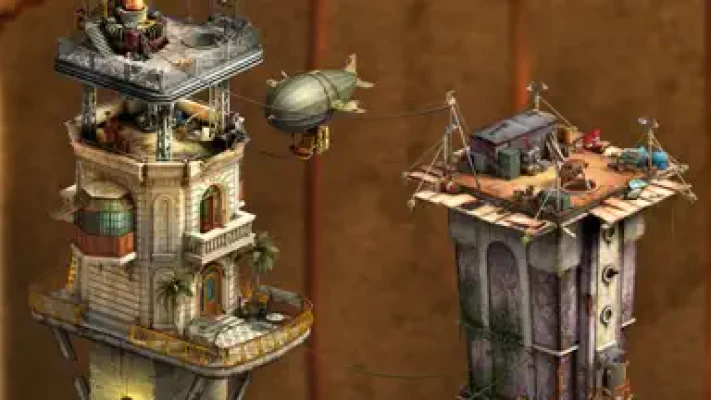
Dreamcage Escape: Two Towers introduces players to a strange world where entire miniature environments exist inside enormous birdcages. You begin in Cage 28 without knowing exactly what happened or why you are trapped. The Giant Caretaker, who once looked after these unusual cages, appears to have disappeared, leaving the surrounding world in a state of decay.
The atmosphere combines beauty, mystery, and a slightly unsettling sense of isolation. Rather than relying on fast action or combat, the game encourages you to examine your surroundings and uncover the secrets hidden within each room.
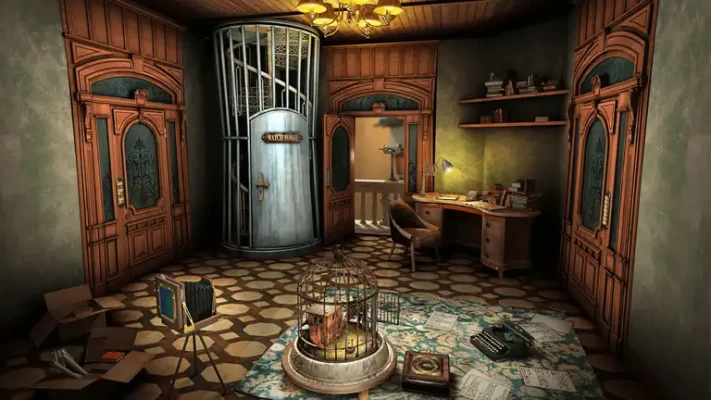
The environments are an important part of the experience. Buildings, machinery, unusual structures, and small interactive objects help create the feeling of exploring a world that is both fascinating and deeply unfamiliar.
Gameplay and Main Features
1. Exploration and Hidden Objects
Exploration is central to the game. Each room contains objects and environmental details that may help you progress. Some useful items are easy to overlook, so carefully examining the entire scene is essential.
2. Logic-Based Puzzles
The puzzles challenge you to recognize patterns, understand mechanisms, interpret clues, and determine how different objects interact. Progress often depends on connecting information discovered in separate parts of the environment.
3. Interactive Environments
Objects are not simply decorative. Certain items can be examined, collected, moved, or used to activate mechanisms. Learning which parts of a room are interactive helps you avoid unnecessary guesswork.
4. Mini-Games and Mechanical Challenges
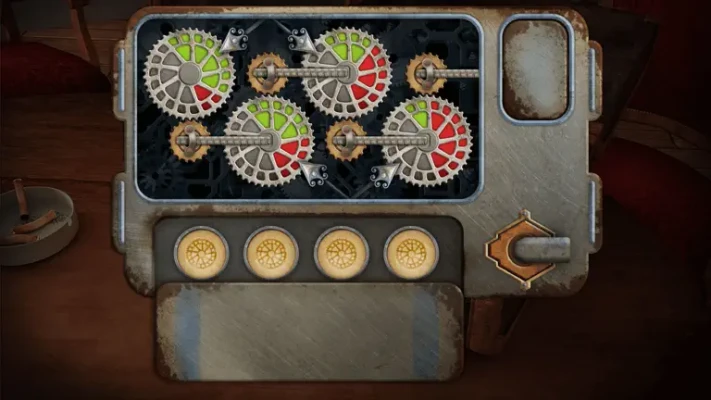
Some puzzles involve manipulating mechanisms or completing smaller challenges within a larger room. These sections require patience and a clear understanding of how each movement affects the result.
5. Collectible Coins
The game includes coin-finding activities in its rooms. Searching carefully can help you discover additional collectibles and provides another reason to inspect the environment thoroughly.
6. Multiple Rooms to Complete
The game offers 15 rooms to explore, with a variety of puzzles and objectives. Each completed challenge brings you closer to escaping the mysterious Dreamcage.
Full Strategy Guide: How to Play Dreamcage Escape
Step 1: Examine Every Room Before Acting
When entering a new room, resist the temptation to interact with the first object you notice. Look at the entire environment, including the floor, walls, machinery, furniture, doors, and unusual decorations.
Pay particular attention to objects that appear out of place. A missing component, an unusual symbol, or a mechanism that seems incomplete may indicate your next objective.
Strategy tip: Divide the room into sections and inspect each one systematically. This is more reliable than tapping randomly across the screen.
Step 2: Collect Useful Objects
Whenever an object appears collectible, examine it and consider whether it might be needed elsewhere.
Keep track of the items you discover and remember where they were found. A component that seems useless at first may become important after you activate another mechanism or uncover a new clue.
If you have collected an item but cannot use it, do not assume it is irrelevant. You may need to solve another puzzle first.
Step 3: Inspect Items Closely
Some objects contain details that are difficult to notice at normal viewing size. Examine suspicious items carefully, especially those with buttons, symbols, markings, moving parts, or unusual shapes.
Look for patterns, numbers, directional indicators, and differences between similar objects. These details may provide the information needed to unlock a device or complete a puzzle.
Step 4: Connect Clues to Their Mechanisms
A puzzle may present a locked device without immediately explaining how to open it. Search the surrounding area for information that could relate to the mechanism.
For example, a sequence of symbols might correspond to a nearby control panel, while a visual pattern could indicate the correct order for moving several components.
Avoid trying every possible combination. First, identify what the puzzle is asking you to determine.
Step 5: Solve Combination and Code Puzzles
When you encounter a coded lock or sequence puzzle, search for clues before entering random answers.
Use the following approach:
Identify the symbols, numbers, shapes, or colors used by the puzzle.
Search the room for matching patterns or references.
Determine whether the order of the clues matters.
Test the most logical solution.
Recheck your observations if the mechanism does not respond.
If a solution fails, change one assumption at a time. This makes it easier to understand what went wrong.
Step 6: Learn How Mechanical Puzzles Work
Some challenges require you to move objects or operate mechanisms in a particular sequence. Before making repeated attempts, study the relationship between the controls and the result.
Observe whether moving one component changes another, whether a mechanism has several possible positions, and whether an action must be completed before another becomes available.
For puzzles involving wheels, rotating components, or directional movement, work methodically. Record successful positions mentally and avoid undoing progress without a reason.
Step 7: Search for Coins and Optional Collectibles
Coins can be easy to miss when you focus only on the main escape objective. After solving a major puzzle, take another look around the room.
Check corners, platforms, machinery, and areas partially hidden by larger objects. If something looks unusual, inspect it more closely.
A useful approach is to perform one dedicated collectible search before leaving a room. This reduces the chance of overlooking optional rewards while concentrating on the main puzzle.
Step 8: Revisit Previously Examined Areas
If progress stops, return to objects and mechanisms you have already investigated.
A newly collected item may unlock a previously inaccessible feature. Similarly, a clue discovered later might explain the purpose of something that initially seemed meaningless.
Think of the room as a connected puzzle rather than a collection of unrelated objects. Every discovery may help clarify another part of the environment.
Step 9: Approach Difficult Mini-Games Carefully
Mini-games can require a different approach from ordinary object puzzles. Some depend on understanding movement, timing, spatial relationships, or a sequence of actions.
Start by identifying the goal and available controls. Make small, deliberate movements and observe the result before continuing.
If a challenge seems difficult, take a short break and return with a fresh perspective. Repeating the same unsuccessful actions is rarely the best solution.
Step 10: Prepare to Leave Each Room
Before moving on, confirm that you have completed the main objective and activated any mechanism necessary to progress.
If you are interested in collecting everything, conduct a final search for coins and overlooked interactive objects. Check whether any doors, switches, or devices remain unused.
The most effective approach is to combine careful observation with logical experimentation rather than rushing toward the exit.
Advanced Tips for Experienced Players
Think Beyond the Obvious
An object may serve a purpose different from what its appearance suggests. Consider whether it can be examined more closely, combined with another item, or used in a different part of the room.
Look for Visual Relationships
Repeated shapes, matching symbols, similar colors, and unusual arrangements may connect separate puzzles. When two objects appear related, investigate that connection before trying random solutions.
Avoid Unnecessary Tapping
Repeatedly tapping every part of the screen can become frustrating. Search systematically, interact with objects that show meaningful details, and keep track of what you have already checked.
Take Mental Notes
Remember where important objects were found, which mechanisms you activated, and which puzzles remain incomplete. This is especially useful when several clues are spread across the same environment.
Use Walkthroughs as a Last Resort
If you are completely stuck, look for a walkthrough covering the exact room or puzzle. Try to identify the specific action you missed rather than watching the entire solution immediately.
This preserves the satisfaction of solving the rest of the game independently.
Common Mistakes to Avoid
Leaving a room without thoroughly searching for useful objects.
Ignoring small symbols or markings on interactive items.
Entering random codes without looking for clues.
Repeating the same failed action without changing your approach.
Forgetting where previously collected objects might be useful.
Overlooking coins while concentrating on the main objective.
Assuming decorative-looking objects cannot contain useful information.
Using a walkthrough before attempting to understand the puzzle yourself.
Graphics, Sound, and Overall Experience
Dreamcage Escape: Two Towers stands out through its unusual miniature-world concept and atmospheric presentation. The environments combine intricate structures with a sense of mystery, while the sound and music help reinforce the feeling of being trapped in an unfamiliar place.
The gameplay is deliberate rather than fast-paced. Players who enjoy taking their time, examining environmental details, and working through logical challenges will likely appreciate its approach.
The main limitation is that some puzzles can feel less intuitive when an important interactive object is difficult to identify. Players who prefer clear instructions or constant action may find the slower pace less appealing.
Pros and Cons
Pros
A distinctive world built around miniature environments inside cages.
A mysterious atmosphere supported by environmental design and music.
A variety of puzzles and exploration challenges.
Hidden collectibles that reward thorough searching.
A good fit for players who enjoy escape room adventures.
Simple gameplay built around observation and problem-solving.
Cons
Some interactive objects may be difficult to spot.
Certain puzzles can require trial and error.
The experience may feel short to players who prefer lengthy adventures.
Additional content may require in-app purchases.
Players seeking action, combat, or multiplayer features may prefer another genre.
Is Dreamcage Escape: Two Towers Worth Playing?
Dreamcage Escape: Two Towers is worth considering if you enjoy atmospheric escape games that reward curiosity and logical thinking. Its unusual setting gives the adventure a distinctive identity, while the combination of hidden objects, codes, and mechanical puzzles provides a variety of challenges.
It is particularly suitable for players who prefer thoughtful exploration over action-heavy gameplay. However, those expecting a long, continuously expanding adventure should keep the game's room-based structure and optional paid content in mind.
Overall, it is a good choice for fans of puzzle adventures who enjoy discovering secrets one room at a time.
Similar Games to Try
If you enjoy the exploration and puzzle-solving in Dreamcage Escape: Two Towers, consider these games:
Faraway: Puzzle Escape – An exploration-focused puzzle adventure built around mysterious structures and environmental challenges.
Faraway 2: Jungle Escape – A sequel featuring ancient environments, hidden clues, and spatial puzzles.
Doors: Awakening – A visually detailed puzzle game centered on mysterious miniature structures and interactive mechanisms.
Boxes: Lost Fragments – A puzzle adventure featuring intricate mechanical boxes and complex object interactions.
Escape Machine City: Airborne – An escape adventure that challenges players to investigate environments and solve interconnected puzzles.
Frequently Asked Questions
What is Dreamcage Escape: Two Towers?
Dreamcage Escape: Two Towers is a puzzle escape game in which players explore a strange miniature world, collect objects, solve codes, and find ways to escape.
Who developed Dreamcage Escape: Two Towers?
The game is published by Snapbreak Games, with the original copyright credited to Big Loop Studios.
How many rooms are in Dreamcage Escape: Two Towers?
The game description lists 15 rooms to explore, featuring numerous puzzles and quests.
Is Dreamcage Escape: Two Towers free to play?
The game is listed as free to download, with optional in-app purchases for additional content and other items.
What is the main objective?
Your goal is to escape the mysterious Dreamcage by exploring its rooms, discovering useful objects, solving puzzles, and unlocking mechanisms.
How do you solve difficult puzzles?
Inspect the environment carefully, collect relevant items, examine symbols and patterns, and connect clues to the mechanisms they may control. Change your approach if an attempted solution fails.
Does the game include hidden collectibles?
Yes. The game includes coins that players can search for in its rooms.
Is Dreamcage Escape: Two Towers suitable for beginners?
Its point-and-click-style exploration and logical puzzles make it approachable for many puzzle fans. Some challenges may still require careful observation and patience.
Can you play without a walkthrough?
Yes. The puzzles are designed around observation and reasoning. A walkthrough can help if you become stuck, but solving challenges independently is part of the experience.
Is Dreamcage Escape: Two Towers an action game?
No. It is primarily a puzzle and escape adventure. Exploration, object interaction, and solving mysteries are its main activities.
Final Thoughts
Dreamcage Escape: Two Towers offers a distinctive escape room experience built around mystery, exploration, and logical problem-solving. Its miniature environments encourage players to pay attention to small details, while its puzzles reward patience and experimentation.
The best strategy is simple: inspect every room carefully, collect useful objects, connect clues logically, and revisit earlier discoveries whenever progress slows. With a systematic approach, you can enjoy the mystery of the Dreamcage without relying on a walkthrough for every challenge.
Rate the Game
User Reviews













Popular Games


















 Android
 iOS
iOS Windows
 Xbox
Xbox