






Latest Version
October 17, 2026
Snapbreak Games
Adventure
iOS
0
Report a Problem
More About :game
What Is Faraway: Galactic Escape About?
Faraway: Galactic Escape is the sixth chapter in the Faraway puzzle adventure series. It follows Allison as she finally reaches Faraway, where the mission to save her family becomes more urgent and the mystery surrounding this strange place grows deeper.
The game blends first-person exploration with escape-room puzzles. Rather than relying on combat or fast reflexes, it challenges players to inspect their surroundings, interpret clues, manipulate mechanisms, and work out how to move forward.
This chapter also serves as the finale of the larger story. Diary notes scattered throughout the levels provide additional details about Faraway’s origins, its purpose, and the family’s connection to the adventure.
Main Features
1. Eighteen Puzzle Levels
The game offers 18 levels set across unfamiliar galactic environments. Each location presents new objects to inspect, mechanisms to operate, and puzzles to solve before you can continue.
2. First-Person 3D Exploration
Move your viewpoint around each environment to examine objects and discover details that are easy to miss at first glance. Looking carefully from different angles is often essential to understanding a puzzle.
3. Hidden Diary Notes
Collectible notes add depth to the story. They are more than optional discoveries for completionists: gathering them helps reveal the history behind Faraway and the events that led Allison’s family on this journey.
4. Atmospheric Music and Environments
The soundtrack and visual design give each location a mysterious, otherworldly mood. The quieter presentation encourages players to slow down and study their surroundings instead of rushing through each stage.
5. A Story-Focused Finale
The adventure builds toward answers about Faraway’s nature and the family’s involvement. Players who have followed the earlier games will get more context from this final chapter.
6. Free Trial with Optional Purchase
The game can be tried for free, while additional levels and the complete experience are available through an in-app purchase. Check the current in-game options for the exact access available in your version.
Gameplay and Controls
Faraway: Galactic Escape is built around exploration and puzzle-solving. You examine a location, search for useful clues, interact with objects, and use what you discover to unlock the route forward.
Look around: Rotate your view to inspect walls, platforms, corners, devices, and objects from several angles.
Interact with objects: Tap or select objects that appear usable. These may contain clues, trigger mechanisms, or provide access to another part of the puzzle.
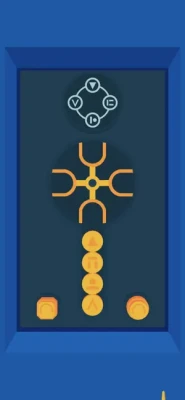
Study symbols and patterns: Markings, numbers, shapes, and repeated visual elements may indicate how a mechanism should be operated.
Collect diary notes: Search each level carefully for story-related collectibles, including notes that may be tucked away from the main route.
Test your deductions: When you find a clue, connect it to the object or mechanism it appears to describe. Avoid trying random combinations without a reason.
Controls are designed for touch-based play on compatible Apple devices. Exact interactions can vary according to the puzzle, so pay attention to what changes after each tap or action.
Beginner’s Guide: How to Get Started
Step 1: Inspect the Entire Area
When entering a new level, resist the temptation to interact with the first object you see. Rotate the camera and take in the whole environment. Look for unusual shapes, switches, panels, symbols, openings, and objects that seem out of place.
Step 2: Identify the Main Obstacle
Work out what is preventing you from progressing. It might be a locked mechanism, an inactive device, a blocked passage, or a sequence that has not yet been completed. Having a clear objective makes the search for clues easier.
Step 3: Search for Related Clues
Look for patterns or information that might explain the obstacle. A symbol on one surface may correspond to a device elsewhere in the same area. A number sequence might be relevant to a panel, while a visible arrangement may suggest an order of operations.
Step 4: Try One Logical Solution at a Time
Change one thing, then check the result. If a mechanism reacts, note what changed and use that information for your next move. This approach is more reliable than tapping every available object repeatedly.
Step 5: Check for Collectibles Before Leaving
Once the exit becomes available, make one final sweep of the environment. Hidden diary notes can be easy to overlook when your attention is focused on the main puzzle.
Full Strategy Guide
Strategy 1: Treat Every Level as a Small Investigation
Each stage should be approached as a self-contained problem. Start by gathering information, then determine which objects are connected. If a puzzle seems confusing, return to the beginning and inspect the area again rather than assuming you need a complicated solution.
Strategy 2: Use Visual Clues as Instructions
The game often communicates through the environment rather than lengthy explanations. Pay attention to repeated symbols, unusual arrangements, color differences, and the position of objects. These details may suggest a sequence, a matching pattern, or a relationship between separate parts of a mechanism.
Strategy 3: Remember What You Have Already Tried
When a puzzle involves several controls or possible combinations, keep track of your attempts. Repeating the same failed action wastes time and makes it harder to identify the correct pattern. If an attempt changes nothing, return to the clues and reconsider your interpretation.
Strategy 4: Explore Beyond the Obvious Route
Do not focus exclusively on the most visible device. Check side areas, corners, and objects that appear decorative. Some may contain diary notes or information that helps explain the location’s history.
Strategy 5: Separate Story Clues from Puzzle Clues
A diary note may reveal something important about Faraway without providing a direct answer to the current mechanism. Read the notes for narrative context, but evaluate puzzle symbols and interactive objects separately unless the game clearly connects them.
Strategy 6: Revisit the Area After Activating a Mechanism
A successful interaction may change the environment or make another object usable. After solving one part of a puzzle, look around again. A new route or previously inactive mechanism may now be available.
Strategy 7: Slow Down When a Puzzle Feels Difficult
There is no benefit in rushing through an observation-based puzzle. Take a short break if necessary, then return with fresh eyes. A clue that seemed meaningless may become clear when you compare it with other details in the level.
Strategy 8: Aim for Both Completion and Discovery
Finishing a level and finding every collectible are different goals. If you want to uncover as much of the story as possible, make exploration part of your routine instead of treating it as an optional task at the end.
How to Find Hidden Diary Notes
Collecting notes is one of the most important parts of a thorough playthrough. Use this routine in every level:
Rotate your view through a full sweep of the area.
Inspect corners and less obvious surfaces.
Look closely at objects that stand apart from the surrounding design.
Check accessible side areas before solving the final mechanism.
After opening a new route, inspect the newly accessible space.
Before leaving, revisit any section you explored quickly.
Some collectibles may require you to solve a puzzle or activate a mechanism before they become accessible. If a note seems missing, check whether you have overlooked an interaction that changes the environment.
Common Mistakes to Avoid
Rushing toward the exit: You may finish the level but miss important notes and story details.
Ignoring the surroundings: A small symbol or unusual object can be more important than a large, obvious feature.
Trying random combinations: Unfocused guessing makes it harder to learn from the puzzle. Look for a clue that supports your next attempt.
Forgetting to revisit areas: Activating a mechanism can reveal new possibilities in a section you have already explored.
Expecting every note to explain a puzzle: Collectibles mainly enrich the narrative; not every note is a direct instruction.
Assuming a difficult puzzle requires speed: The core challenge is careful observation and reasoning, not quick reactions.
Difficulty and Estimated Play Style
Faraway: Galactic Escape is best suited to players who enjoy thoughtful exploration and environmental puzzles. The main challenge comes from noticing details, interpreting clues, and connecting information across a location.
Players familiar with earlier Faraway games may recognize the general approach, while newcomers can still enjoy the standalone puzzle-solving experience. Those who want to understand the complete story should pay particular attention to the collectible notes.
The game is designed for a measured pace. It is a good choice for short puzzle sessions, although players seeking every collectible may spend longer examining each level.
Graphics, Sound, and Atmosphere
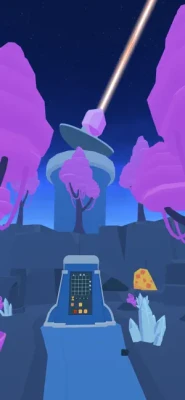
The galactic environments give this chapter a distinct identity compared with more grounded escape-room games. The 3D presentation helps make exploration feel tangible, while the soundtrack supports the sense of mystery.
The atmosphere is deliberately quieter than an action game. Much of the enjoyment comes from studying the setting and gradually understanding how the pieces fit together. Players who prefer constant action may find the pace slow, but fans of immersive puzzle adventures will likely appreciate it.
Pros and Cons
Pros
Eighteen levels built around exploration and puzzle-solving.
Distinctive galactic environments with a strong atmosphere.
Hidden diary notes add narrative depth.
A concluding chapter for the larger Faraway story.
Touch-based controls suit mobile puzzle play.
Free access lets players try the experience before purchasing additional content.
Cons
Players looking for action or combat may find the gameplay too quiet.
The full experience requires an optional purchase.
Hidden collectibles can be easy to miss.
Some puzzles may require repeated inspection before their logic becomes clear.
Players unfamiliar with the earlier story may not catch every narrative connection.
Who Should Play Faraway: Galactic Escape?
This game is a strong fit for fans of 3D escape rooms, environmental riddles, exploration-focused adventures, and story-driven puzzle games. It is particularly appealing to players who enjoy discovering hidden notes and piecing together a larger mystery.
It may be less suitable for players who prefer fast-paced combat, extensive character progression, competitive multiplayer, or constant action.
Final Verdict
Faraway: Galactic Escape delivers a calm but engaging puzzle adventure built around unusual locations, environmental logic, and the mystery of Faraway. Its 18 levels give players plenty of opportunities to inspect their surroundings, solve mechanisms, and collect notes that add meaning to the story.
The best way to enjoy the game is to explore carefully, test ideas methodically, and make a final search for collectibles before leaving each stage. For players who have followed Allison’s journey, this chapter offers a chance to pursue the remaining answers; for puzzle fans in general, it provides a focused mobile escape-room experience.
Frequently Asked Questions
What is Faraway: Galactic Escape?
Faraway: Galactic Escape is a 3D puzzle adventure developed by Snapbreak Games. Players explore strange galactic locations, solve escape puzzles, collect diary notes, and uncover the mystery behind Faraway.
How many levels are in Faraway: Galactic Escape?
The game features 18 levels, including additional free levels introduced after its original release.
Is Faraway: Galactic Escape free to play?
The game can be started for free, but additional levels and the complete experience require an optional in-app purchase.
What is the main objective?
The main goal is to progress through the galactic environments by solving puzzles, while following Allison’s attempt to save her family and uncover the truth about Faraway.
Why should I collect diary notes?
Diary notes reveal additional story information about Faraway, its origins, and the events connected to Allison’s family. Collecting them provides a fuller understanding of the narrative.
Is Faraway: Galactic Escape difficult?
The difficulty mainly comes from observation and logical reasoning. Some puzzles can take time to understand, especially when clues are subtle or collectibles are hidden.
Can beginners enjoy the game?
Yes. Players who are new to the series can enjoy its exploration and puzzles. Those who have played previous Faraway games may appreciate more of the story’s background and connections.
What should I do if I get stuck on a puzzle?
Inspect the environment from different angles, compare symbols and patterns, and look for objects that may be connected. Try to make one reasoned change at a time, and revisit the area after activating a mechanism.
Is Faraway: Galactic Escape focused on action?
No. It focuses on exploration, environmental puzzles, and story discovery rather than combat or fast-paced action.
Is it worth playing for the story?
For players who enjoy mysteries and gradual narrative reveals, the diary notes and the game's role as the finale of the Faraway journey add a meaningful reason to explore every level.
Similar Games to Try
Players who enjoy Faraway: Galactic Escape may also like:
Faraway: Puzzle Escape – a previous adventure built around exploration and environmental puzzles.
Faraway 2: Jungle Escape – another chapter featuring mysterious locations and escape-room challenges.
Faraway 3: Arctic Escape – a puzzle adventure set in cold, isolated environments.
Doors: Origins – a 3D puzzle game focused on mechanisms, hidden clues, and unlocking mysterious structures.
Tiny Robots Recharged – a colorful 3D puzzle adventure that rewards careful observation and problem-solving.
Final Tips for Completing Every Level
Explore the whole environment before interacting with the main mechanism.
Look for visual patterns that explain how objects work together.
Recheck areas after solving a puzzle.
Collect diary notes to uncover more of the story.
Avoid random guessing; use each attempt to test a specific idea.
Before moving on, make sure you have searched the level thoroughly.
Faraway: Galactic Escape is most rewarding when you approach it as both a puzzle game and a mystery. Take your time, observe the details, and follow every clue that brings you closer to understanding Faraway.
Rate the Game
User Reviews















Popular Games


















 Android
 iOS
iOS Windows
 Xbox
Xbox