
Latest Version
July 15, 2024
Vroom - Apps & Games
Role Playing
Android
0
com.yhi.real.cruise.ship.transport.simulator.driving.game
Report a Problem
More About :game
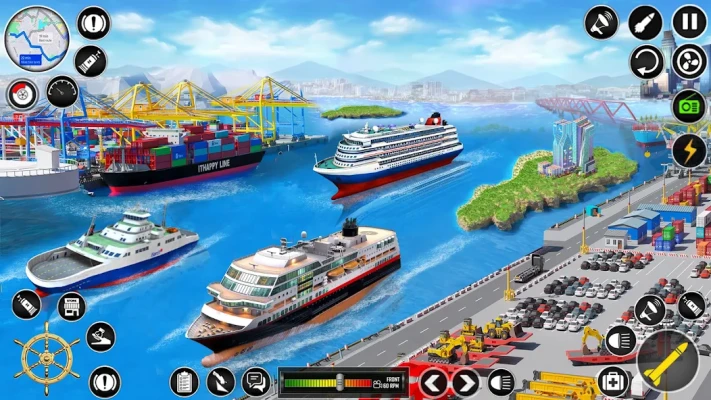
Players can practice steering, navigate between mission points, and learn to control large vessels while keeping an eye on fuel. With multiple ship-driving missions, accessible controls, and maritime-inspired environments, the game offers an alternative to traditional car, truck, and racing simulators.
What Is Cruise Ship Driving Simulator?
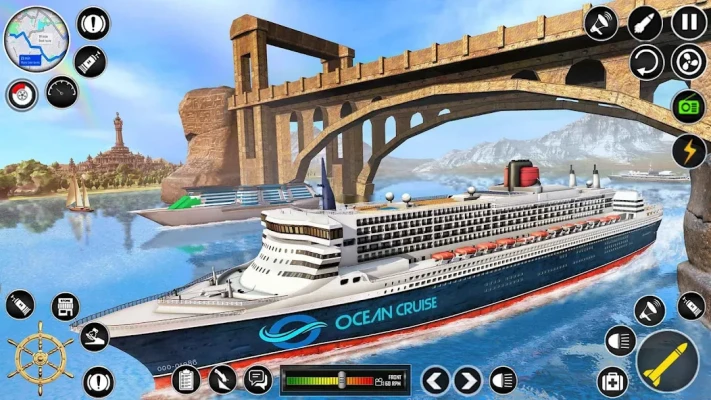
Cruise Ship Driving Simulator brings the experience of piloting large vessels to mobile devices. Instead of driving on busy roads, players take command of ships and navigate open water while working toward mission objectives.
The main attraction is learning to handle a vessel that responds differently from a car. Steering requires planning, turns need room, and approaching a destination calls for patience. These elements make the game appealing to fans of ship simulators, boat driving games, and transport simulation experiences.
The game combines straightforward driving mechanics with mission-based challenges. Players can take on passenger transport duties, explore different ship types, and complete naval training tasks while becoming more comfortable with the controls.
Main Features of Cruise Ship Driving Simulator
1. Cruise Ship and Cargo Ship Driving
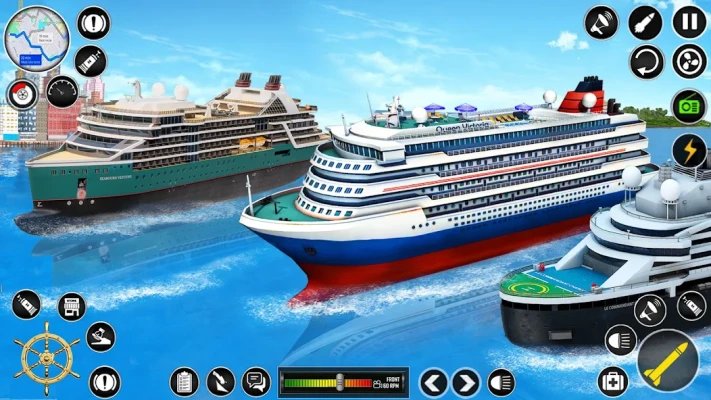
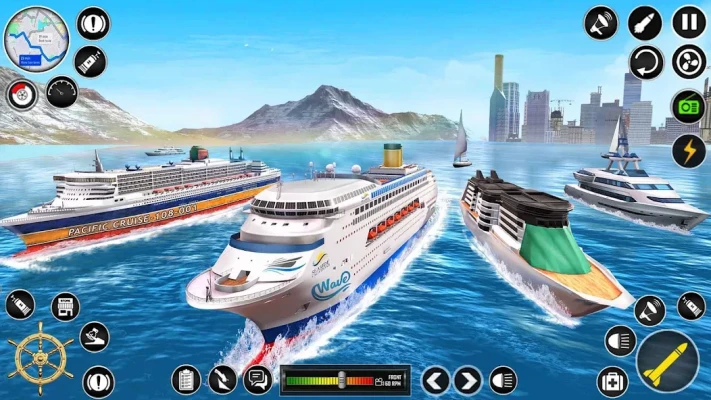
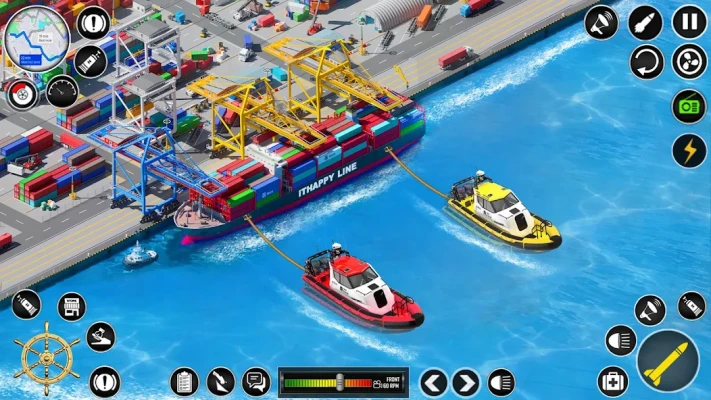
Take control of large vessels and experience the challenge of moving a ship across open water. The different ship types give the game a broader transport-simulation theme than a standard speedboat game.
2. Mission-Based Gameplay
The game includes multiple ship-driving missions. Each task encourages players to follow objectives, steer carefully, and reach the required destination rather than simply sailing without a purpose.
3. 3D Ocean Environments
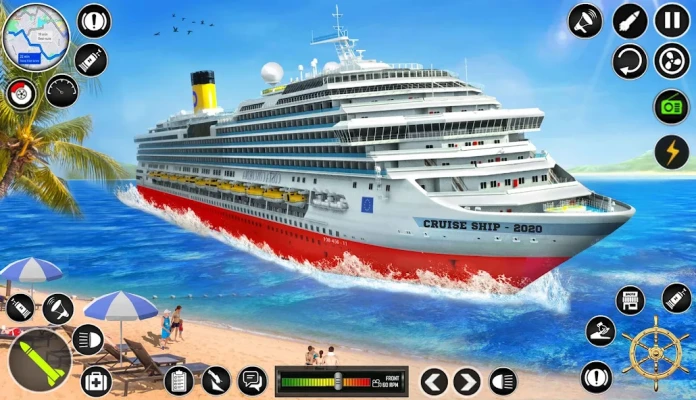
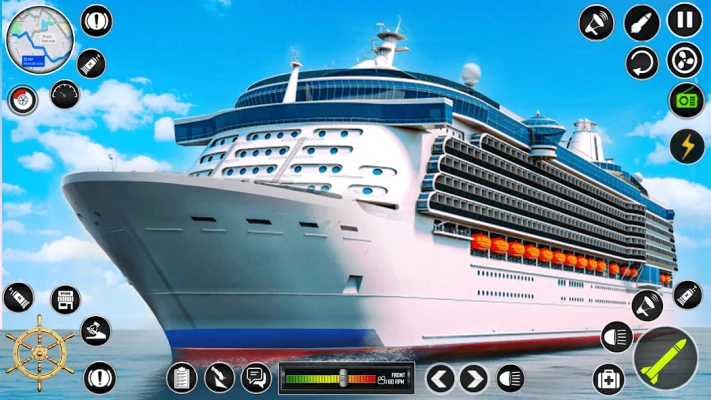
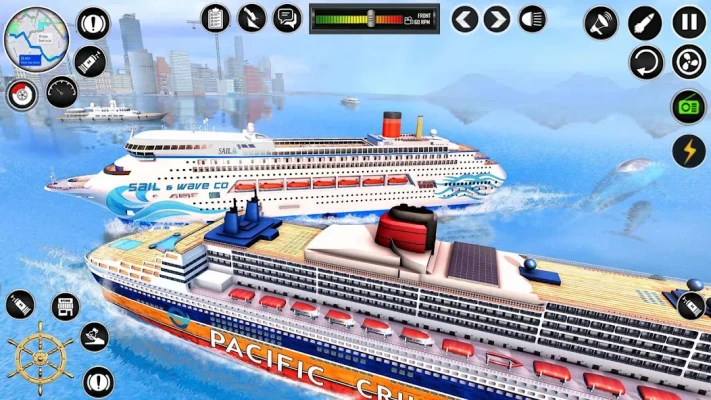
The game presents maritime environments with 3D graphics, water scenery, ship animations, and vessel sound effects. The ocean setting provides a different atmosphere from land-based driving games.
4. Accessible Ship Controls
The controls are designed to make ship movement manageable on mobile devices. Beginners can learn the basic steering and movement mechanics before attempting more demanding routes.
5. Passenger and Transport Duties
Passenger transportation and other transport-related objectives are part of the game's central theme. Successful navigation means balancing forward movement with careful positioning near destinations.
6. Fuel Management
Fuel is an important consideration during missions. Players should avoid unnecessary movement and pay attention to the available fuel supply to reduce the risk of running out before reaching an objective.
7. Different Maritime Challenges
The game describes a variety of naval and transport missions, providing several objectives for players who enjoy completing tasks and improving their ship-handling skills.
Gameplay and Controls Explained
Cruise Ship Driving Simulator is built around controlling a vessel, following mission objectives, and navigating toward designated destinations. Although the basic idea is simple, large ships can be less forgiving than smaller boats when changing direction.
Steering
Use the available steering controls to adjust the vessel's direction. Make small corrections rather than repeatedly turning sharply. A large ship needs time and distance to change its heading.
Acceleration and Movement
Control your speed according to the space available. Moving quickly across open water may help you cover distance, but approaching a destination requires more careful movement.
Mission Navigation
Read the current objective before setting off. Identify the direction you need to travel and keep your approach as direct as practical. Avoid unnecessary detours that waste time and fuel.
Fuel Awareness
Keep fuel consumption in mind while moving between mission points. If the game provides a fuel indicator, check it regularly, especially during longer trips.
Note: Exact button layouts, ship statistics, and individual mission requirements may vary by version and are best confirmed in the game itself.
Full Strategy Guide: How to Play Better
Step 1: Learn the Controls Before Attempting Difficult Missions
Start with an accessible mission and spend time understanding how the ship responds to steering and movement inputs. Avoid making aggressive turns until you know how much room the vessel needs.
Practice changing direction gradually, maintaining a steady heading, and slowing down when approaching a target.
Pro tip: Smooth movements are usually more reliable than constant corrections. If the ship begins drifting away from your intended route, make a measured adjustment instead of turning sharply in the opposite direction.
Step 2: Read the Objective Carefully
Before moving, determine what the mission asks you to accomplish. A passenger transport objective may require reaching a particular destination, while another task may focus on navigating a designated route.
Knowing the goal in advance helps prevent wasted movement and makes it easier to plan your approach.
Step 3: Plan Your Route Across Open Water
Look toward your destination and choose a sensible direction before accelerating. When possible, avoid unnecessary changes in heading.
If the route includes several checkpoints, approach each one deliberately. Do not focus exclusively on the final destination if the mission requires you to pass through intermediate points.
Pro tip: Think ahead rather than reacting at the last second. Early steering adjustments give a large vessel more room to respond.
Step 4: Control Your Speed Near Destinations
One of the most useful ship-driving skills is knowing when to slow down. A fast approach can make it harder to line up with a destination or complete a precise maneuver.
Reduce speed as you get closer, make smaller steering adjustments, and allow enough room to correct your direction.
Pro tip: Begin adjusting your approach before you reach the target. Waiting until the ship is almost there can leave too little room to turn.
Step 5: Conserve Fuel
Fuel management can make a difference between completing a trip and having to restart a mission.
Use direct routes when appropriate, avoid unnecessary circling, and limit repeated steering corrections that take you away from the intended path.
Check the fuel indicator whenever the interface provides one. For a longer mission, make fuel awareness part of your routine rather than waiting until the supply becomes critically low.
Step 6: Approach Checkpoints with Patience
If a mission requires passing through checkpoints, aim to approach them from a controlled direction. Abrupt turns close to a checkpoint can send the ship off course.
Try to establish your heading before reaching the checkpoint, then make only the adjustments needed to continue toward the next objective.
Step 7: Adapt to Different Ships
Different vessels may feel different to control. A large ship can require more room to turn than a smaller boat, so avoid assuming that every vessel will respond identically.
When switching ships, spend a little time learning the steering response and movement speed before attempting a demanding mission.
Step 8: Learn from Failed Attempts
If you miss a destination or run out of fuel, identify the reason before trying again.
Ask yourself three questions:
Did I take an unnecessarily long route?
Did I approach the destination too quickly?
Did I make too many steering corrections?
Changing one habit at a time can make the next attempt easier to manage.
Step 9: Prioritize Reliable Completion Over Speed
Moving quickly is not always the best strategy. A controlled approach can prevent missed checkpoints and unnecessary detours.
First learn to complete missions consistently. Once you understand the route and the vessel's handling, work on improving your time without sacrificing control.
Step 10: Check Your Progress Before Moving On
After completing a mission, take note of the controls, approach angles, and movement patterns that worked well. Apply those lessons to the next task.
Building consistent habits is more useful than relying on last-second corrections.
Beginner Tips and Tricks
Start slowly: Learn the controls before trying to complete missions at high speed.
Look ahead: Plan turns before reaching the destination.
Use gradual steering: Small adjustments help maintain a predictable heading.
Watch your fuel: Avoid wasting movement on unnecessary detours.
Slow down near targets: Give yourself room to align the ship correctly.
Understand each mission: Check the objective before setting off.
Practice unfamiliar ships: Learn how each vessel handles before attempting harder tasks.
Avoid panic corrections: If you drift off course, make a controlled adjustment.
Repeat difficult routes: Familiarity makes navigation easier.
Be patient: Large-vessel handling is about planning as much as steering.
Advanced Ship-Driving Strategies
Improve Your Turning Technique
Start a turn early enough to account for the ship's size and movement. Avoid waiting until the destination is directly beside you. Gradual steering gives you more control over the final approach.
Make Your Routes More Efficient
Every unnecessary loop adds movement and may consume fuel. Identify the destination early and maintain a sensible course whenever the mission allows it.
Prepare for Timed Objectives
If a mission includes a time limit, learn the route before trying to complete it quickly. On your next attempt, maintain a steady pace across open water and slow down only when careful positioning becomes necessary.
Balance Speed and Precision
Fast movement is useful when there is room to travel, but precision matters when reaching checkpoints or destinations. Switching between these priorities is an important part of effective ship handling.
Develop a Repeatable Routine
Before every mission, check the objective, understand the route, assess fuel, and begin with controlled movement. Near the destination, reduce speed and prepare for the final maneuver.
A repeatable routine reduces avoidable mistakes and makes the game easier to approach.
Graphics, Sound, and Atmosphere
Cruise Ship Driving Simulator uses a 3D maritime setting to create the feeling of piloting vessels across open water. Ship models, ocean scenery, animations, and vessel sound effects help establish the atmosphere.
The experience is more focused on operating ships and completing transport tasks than on telling a detailed story. Players looking for a straightforward simulation-style game may appreciate the emphasis on movement, navigation, and objectives.
However, players expecting highly detailed nautical physics or a complex professional bridge simulator should keep their expectations realistic. The game is a casual mobile simulation, not a substitute for real maritime training.
Is Cruise Ship Driving Simulator Worth Playing?
Cruise Ship Driving Simulator may appeal to players who enjoy vehicle simulators but want something different from cars and trucks. Its large vessels, open-water setting, transport objectives, and fuel considerations give it a recognizable ship-simulation identity.
Its straightforward premise makes it approachable for casual players, while controlling a large vessel can provide a modest learning curve for beginners.
The main consideration is the overall mobile experience. Store reviews include complaints about frequent advertisements and criticism of aspects of the graphics and controls. Experiences can vary, so it is sensible to try the available gameplay before making any optional purchases.
Pros and Cons
Pros
A different take on traditional driving simulators.
Cruise ship and cargo ship themes.
Multiple ship-driving missions.
3D maritime environments and vessel sound effects.
Accessible controls for casual play.
Fuel awareness adds an extra consideration to navigation.
Cons
Some players report frequent advertisements.
The ship-handling experience may feel simplified compared with dedicated simulators.
Graphics and controls may not satisfy everyone.
Optional purchases may affect access to some content or modes.
Who Should Play This Game?
Cruise Ship Driving Simulator is worth considering if you enjoy:
Ship and boat driving games.
Cruise ship simulator experiences.
Cargo and passenger transport missions.
Casual 3D vehicle simulation.
Open-water navigation challenges.
Learning controls and completing objectives.
Mobile games that offer an alternative to road racing.
It may be less suitable for players seeking realistic maritime navigation systems, deep ship customization, or a highly detailed commercial shipping simulator.
Difficulty and Progression
The game is best approached as a learn-by-playing simulation. The initial challenge is understanding how steering and movement work. As missions become less familiar, planning the route, managing fuel, and approaching destinations carefully become increasingly important.
Rather than judging difficulty by speed alone, focus on whether you can maintain a steady heading and reach objectives without unnecessary detours.
The exact mission order, unlock conditions, and difficulty curve should be checked in the current game version.
Game Information
Game title: Cruise Ship Driving Simulator
Developer: Vroom - Apps & Games
Platform: Android
Genre: Ship simulation and vehicle driving
Gameplay perspective: 3D ship-driving simulation
Core activities: Ship steering, transport missions, naval objectives, and fuel management
Environment: Open-water and maritime settings
Monetization: Contains ads and in-app purchases
Google Play content rating: Everyone
Internet requirements: Check the current store listing and in-game behavior for the latest requirements
Multiplayer: No multiplayer mode is confirmed by the available game description
Release and update details: These may change as the developer releases new versions
Frequently Asked Questions
1. What is Cruise Ship Driving Simulator?
Cruise Ship Driving Simulator is an Android game in which players control ships, navigate open water, and complete transport and ship-driving missions.
2. Is Cruise Ship Driving Simulator free to play?
The game is listed on Google Play with advertisements and in-app purchases. Check the current listing for any changes to its pricing or available purchases.
3. Can you drive large cruise ships?
Yes. The game description highlights cruise ship driving alongside cargo ship and other vessel-related experiences.
4. Does Cruise Ship Driving Simulator have missions?
Yes. The store description advertises multiple ship-driving and naval training missions with transport-related objectives.
5. How do you control the ship?
Use the available on-screen controls to steer and move the vessel. Learning to make gradual turns and adjusting speed near destinations can help you navigate more effectively.
6. How can you avoid running out of fuel?
Watch the fuel indicator if available, choose sensible routes, and avoid unnecessary circling or repeated corrections.
7. Is the game suitable for beginners?
Its accessible mobile controls and mission-based structure can make it approachable for beginners. New players should spend time learning the controls before attempting more difficult tasks.
8. Does the game feature cargo transport?
Cargo ship driving is part of the game's advertised theme, alongside cruise ship and passenger transport activities.
9. Is Cruise Ship Driving Simulator realistic?
It offers a simplified 3D ship-driving experience. Players should not expect the depth of a professional maritime simulator or real-world sailing instruction.
10. Does Cruise Ship Driving Simulator contain advertisements?
Yes. The Google Play listing states that the game contains ads and in-app purchases.
11. Can you play Cruise Ship Driving Simulator offline?
Offline availability is not clearly confirmed by the available listing information. Check the game directly to determine whether your preferred modes work without an internet connection.
12. What is the best strategy for completing missions?
Read the objective, plan a direct route, maintain a controlled speed, monitor fuel, and slow down before approaching your destination.
Final Verdict
Cruise Ship Driving Simulator offers a mobile alternative to conventional driving games by placing the player at the helm of large vessels. Its combination of cruise ship driving, cargo transport themes, mission-based gameplay, and fuel awareness provides a simple starting point for fans of maritime simulations.
The best way to approach the game is to prioritize control over speed, plan turns early, and conserve fuel throughout each mission. Although the experience may not meet the expectations of players seeking advanced nautical realism, it can still interest casual gamers who want to try their hand at ship driving.
If you enjoy boat simulators, cruise ship games, and transport challenges on Android, Cruise Ship Driving Simulator is a title you may want to explore.
Rate the Game
User Reviews















Popular Games



















 Android
 iOS
 Windows
 Xbox